 Blaine Siding
 Exterior Work in Custer, Washington
Custer sits in the northwest corner of Whatcom County, close enough to the Strait of Georgia and Birch Bay to feel the marine influence in every season. It's a mixed community of farmland, rural properties, and residential pockets, and the homes here take a steady beating from weather that doesn't let up for long. Blaine Siding Contractors works throughout this part of the county, and Custer is one of the areas where we see, year after year, exactly what happens to exterior materials that weren't built for this climate.
This page walks through what Custer homes typically face, how our siding, roofing, window, and deck work addresses it, and why we standardized on one product line instead of offering a menu of options that all perform differently in the real world.
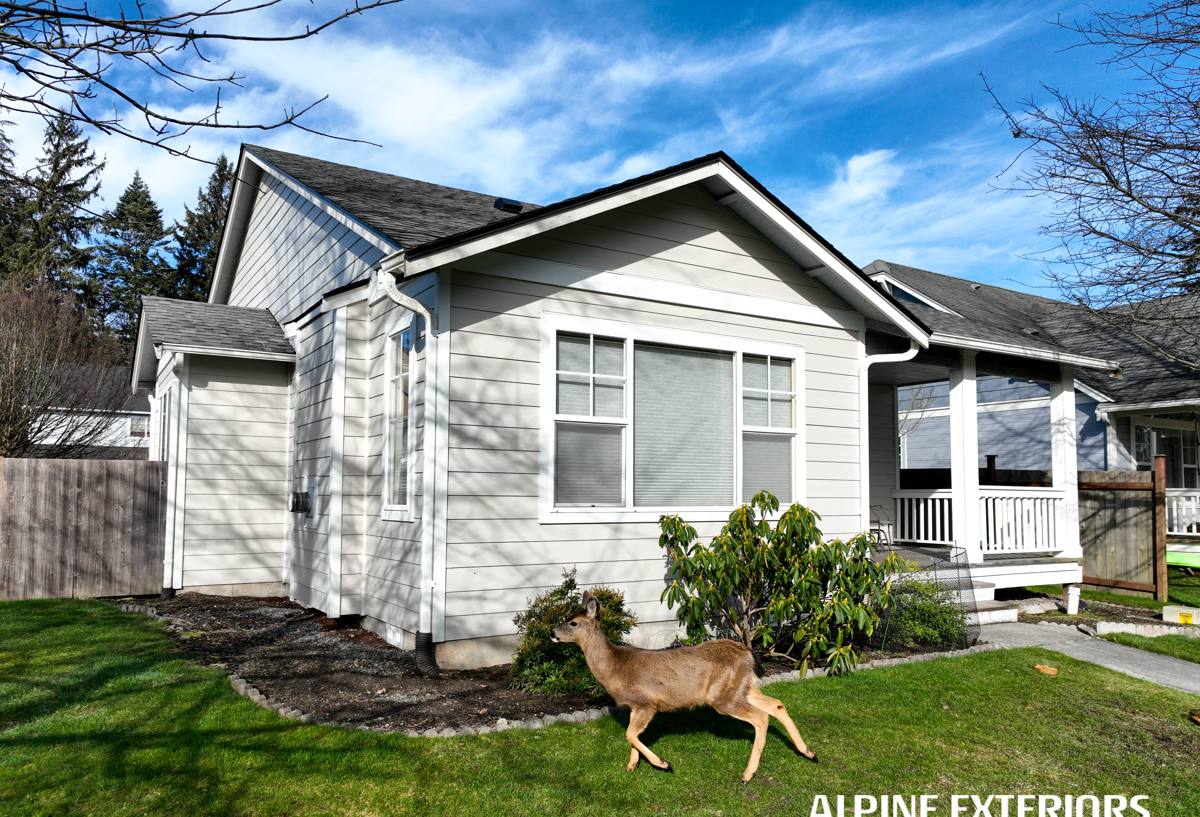
What the Custer Climate Does to a House
Salt Air
Proximity to Puget Sound and the Strait of Georgia means a fine, near-constant load of salt-laden moisture moving through the air, especially on windier days. Salt air accelerates corrosion on fasteners, flashing, and any exposed metal trim. It also works its way into porous or poorly sealed siding materials, contributing to swelling, cracking, and paint failure faster than the same product would experience further inland.
Driving Rain
Whatcom County doesn't just get rain — it gets rain pushed sideways by wind coming off the water. Driving rain finds every gap in flashing, every unsealed seam, and every spot where caulking has started to fail. Over years, that's the difference between a house that stays dry behind its siding and one that develops hidden rot in the sheathing.
Moss Season
Between the rainfall totals and the number of overcast, damp days Custer gets through fall, winter, and spring, moss and algae have a long window to establish themselves on roofs, north-facing siding, and shaded trim. Left unaddressed, moss holds moisture against the surface it's growing on, which is a slow but real threat to both roofing materials and the siding underneath overhangs and eaves.
How These Conditions Show Up on Real Homes
We don't need to guess at this — it's visible on houses throughout Custer and the surrounding area. Common patterns include:
- Paint and finish failure on the south and west-facing walls that take the most direct wind-driven rain
- Soft or swollen siding near ground level, downspouts, and roof-to-wall transitions where water tends to collect
- Rust streaking below nail heads and metal trim on older installations
- Moss buildup on north-facing siding and roof valleys that stays shaded most of the day
- Caulking and sealant that has dried out and cracked faster than expected, opening small gaps for water intrusion
None of this is unusual for the area. It's simply what happens to a home exposed to this specific combination of salt, wind-driven moisture, and long damp stretches. The materials and installation details matter more here than they would in a drier, more sheltered part of the state.
Why We Install Only James Hardie Fiber Cement Siding
Blaine Siding Contractors installs James Hardie fiber cement siding exclusively. We don't offer vinyl, LP SmartSide, Cemplank, Allura, primed spruce, or cedar as alternatives, and that's a deliberate standard, not a limitation in what we're capable of installing.
Fiber cement is non-combustible and dimensionally stable — it doesn't expand and contract with moisture the way wood-based products do, and it doesn't degrade under UV and salt exposure the way vinyl can over a couple of decades. James Hardie's factory-applied ColorPlus finish is baked on and warrantied against fading and peeling, which matters directly in a climate where field-applied paint takes a beating from driving rain and coastal air. Hardie also engineers specific product lines (HZ5, for example) for regions with more moisture exposure, which is relevant for a location like Custer.
We're not going to claim other products are junk — vinyl siding is inexpensive and easy to find, LP SmartSide has genuine fans, and cedar has real aesthetic appeal. But each of those comes with a trade-off that shows up specifically in this climate: vinyl can warp and fade under sustained UV and salt exposure, engineered wood products need vigilant maintenance to keep moisture out at every seam, and cedar requires ongoing refinishing to keep performing. We made a call to install one product because we believe it's the one best matched to what Custer weather actually does to a house, and we'd rather stand fully behind one system than split our attention across several.
Material Comparison
| Material | Moisture Behavior in Coastal Climate | Maintenance Need | Finish Longevity |
|---|---|---|---|
| James Hardie Fiber Cement | Dimensionally stable, doesn't swell or rot | Low — occasional wash | Factory ColorPlus finish, long warranty |
| Vinyl Siding | Can warp/crack under UV and temperature swings | Low, but limited repair options | Fades over time, not refinishable |
| LP SmartSide / Engineered Wood | Vulnerable at seams and cut edges if not sealed perfectly | Moderate — inspect seams regularly | Field-applied finish wears faster |
| Cedar | Absorbs moisture, prone to rot without upkeep | High — regular refinishing required | Needs recoating every few years |
Roofing, Windows, and Decks for the Same Climate
Siding is only part of the exterior envelope, and in a place like Custer, the roof, windows, and any exterior decking face the same salt air and moss pressure.
Roofing
Roof valleys and north-facing slopes are where moss takes hold first. Proper roofing installation includes attention to ventilation and drainage details that reduce how long moisture sits on the surface — that matters more here than in a drier climate, because the moss season is genuinely long.
Windows
Window flashing and sealant are common failure points in driving rain. Properly flashed, well-sealed window installations keep wind-driven water from tracking behind the trim and into the wall assembly — a detail that's easy to get wrong and expensive to fix once water's been getting in unnoticed.
Decks
Exterior decks in this climate deal with the same repeated wet-dry cycling as siding, plus foot traffic and UV. Fastener choice and board spacing for drainage matter as much as the decking material itself.
What a Proper Installation Looks Like
Fiber cement siding performs the way it's designed to only when it's installed correctly. Key details we pay attention to on every job:
- Correct fastener type and placement to avoid the corrosion issues common with lower-grade hardware in salt air
- Proper flashing at every window, door, and roofline transition — the spots where driving rain finds its way in
- Adequate clearance between siding and grade, decking, and roof lines to prevent constant ground moisture wicking
- Correct joint and seam treatment per manufacturer spec, since gaps are where long-term moisture problems start
- Attention to ventilation behind the siding so moisture that does get in has a way to dry out
A good product installed poorly will still fail early. That's as true of Hardie siding as anything else, which is why installation quality is something we treat as seriously as the material choice itself.
Why a Local Crew Matters in Custer
A crew that works this specific corner of Whatcom County regularly knows which walls take the worst of the wind-driven rain, where moss tends to establish first, and how quickly salt air corrodes unprotected fasteners — because we see it on the next job, and the one after that. That's different from a crew passing through once. We also understand the practical side of working in Custer: rural access, agricultural neighbors, and the seasonal weather windows that make timing an exterior project correctly worth planning around.
Planning an Exterior Project in Custer
Homeowners considering siding, roofing, window, or deck work in Custer should think about timing, scope, and what's actually driving the need for the project — whether it's visible damage, an aging finish, or simply planning ahead before a small problem becomes a bigger one. A few things worth checking before starting:
- Look for soft spots, swelling, or discoloration near the ground, downspouts, and roof transitions
- Check north-facing walls and eaves for moss or algae buildup
- Inspect fasteners and metal trim for rust streaking
- Note any areas where caulking has visibly cracked or pulled away
- Consider whether current materials are original to the home or a prior partial replacement
If you're weighing a siding replacement or repair in Custer, or want a second opinion on roofing, windows, or decking, we're glad to take a look and give you a straightforward, no-pressure estimate — no obligation, just an honest read on what your home actually needs.