 Blaine Siding
 Vinyl Siding Isn't a Bad Product — It's a Bad Fit for This Coastline
We get asked about vinyl siding often enough that it's worth explaining plainly: we don't install it, and it's not because vinyl is junk. Vinyl siding is inexpensive, widely available, and low-maintenance in the right climate. Millions of homes across the country wear it just fine. The issue isn't the product in a vacuum — it's the product on a home two miles from Semiahmoo Bay, in a county that gets driving rain off the Strait of Georgia and a moss season that can run eight months of the year.
We standardized our shop on James Hardie fiber cement siding for every job we take, and this page explains the reasoning honestly — what vinyl does well, where it struggles here specifically, and why we'd rather turn down a job than install something we don't think will hold up on a Whatcom County home.
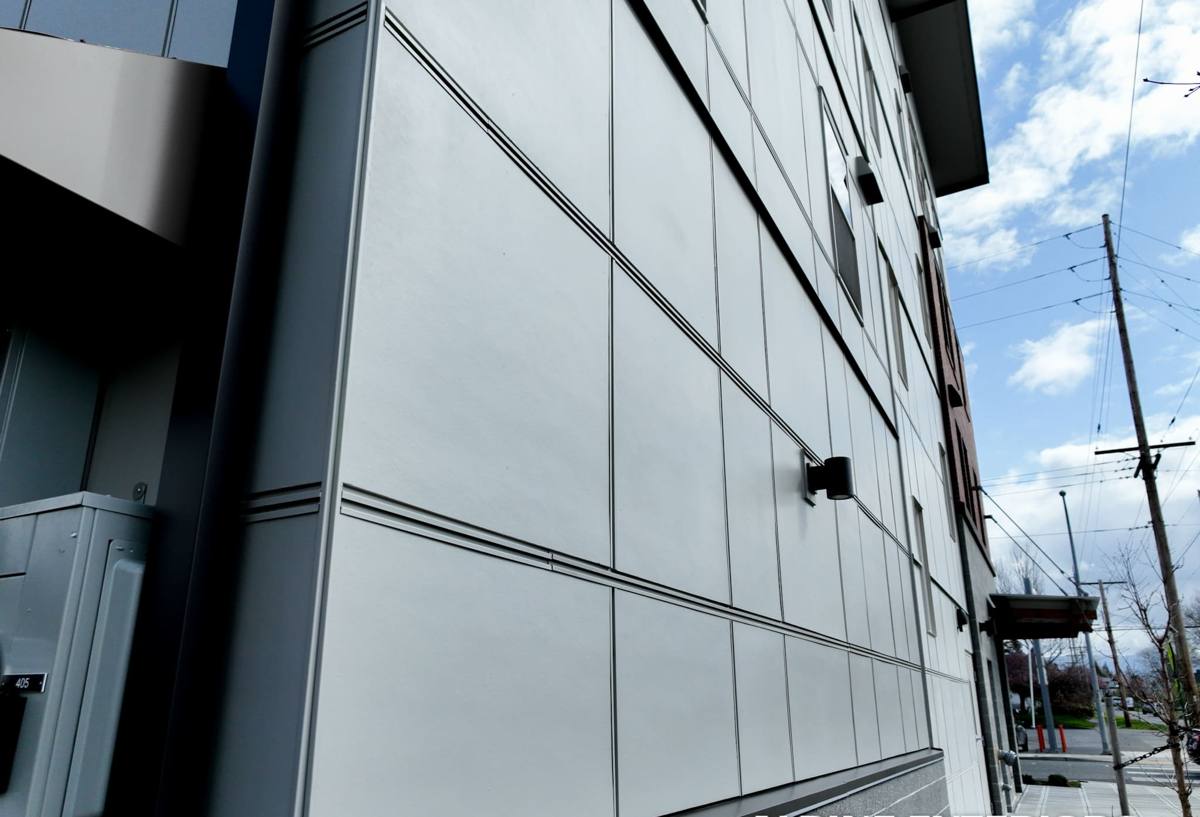
What Vinyl Siding Gets Right
Before getting into the trade-offs, credit where it's due:
- Upfront cost — vinyl is typically the cheapest siding material on a per-square-foot basis.
- No painting — the color is molded into the panel, so there's nothing to repaint under normal conditions.
- Fast installation — vinyl panels install quickly compared to more labor-intensive materials, which keeps labor costs down.
- Wide product availability — it's stocked everywhere, so replacement panels are usually easy to source.
For a dry-climate ranch house or a builder-grade spec home where the siding just needs to look presentable for a resale cycle, vinyl can be a reasonable call. That's not the situation most of our clients are in.
Why Blaine's Climate Is Hard on Vinyl
Salt Air and Coastal Exposure
Blaine sits right on the water, and a lot of the homes we work on are within a few miles of Drayton Harbor or Semiahmoo Bay. Salt-laden air accelerates the breakdown of the plasticizers that keep vinyl flexible. Over years of exposure, vinyl siding in coastal zones tends to fade unevenly, chalk on the surface, and become brittle — especially on south- and west-facing walls that also take the brunt of UV exposure. Brittle vinyl cracks more easily from incidental impacts: a ladder, a stray baseball, hail, even aggressive pressure washing.
Driving Rain and Moisture Behind the Panels
Whatcom County doesn't get the heaviest rainfall totals in the state, but it gets a lot of wind-driven rain off the Strait, and vinyl siding is, by design, not a sealed water barrier. Vinyl panels are installed loosely with expansion gaps and rely on a drainage plane behind them to manage the water that gets past the surface. That's a fine system when it's built and maintained correctly. The problem is that vinyl systems are unforgiving of small installation mistakes — a poorly lapped J-channel, a missing flashing detail around a window, a house wrap seam that wasn't taped right — and driving rain finds those gaps. Because vinyl itself doesn't absorb or show water damage the way wood-based products do, moisture problems behind vinyl siding often go unnoticed until they show up as rot in the sheathing or framing underneath.
Moss, Algae, and the Long Wet Season
Anyone who's lived in this corner of Washington knows the moss season isn't really a season — it's most of the year. Vinyl siding's textured surface and horizontal laps give moss and algae plenty of places to establish, particularly on north-facing walls and anywhere tree cover blocks direct sun. Vinyl doesn't rot from this the way wood does, but the buildup traps moisture against the panel and the house wrap behind it, and the discoloration is difficult to fully remove without pressure levels that risk driving water behind the panels — the exact problem the material was supposed to avoid.
The Installation Sensitivity Problem
This is the part homeowners underestimate most. Vinyl siding is genuinely tolerant of thermal expansion and contraction — the panels are engineered to move with temperature swings, which is important given how much our shoulder seasons swing here. But that same design makes it unusually sensitive to installation error. Nail it too tight and it can't expand, leading to buckling and waviness. Nail it too loose and it rattles or blows off in wind events, which we see regularly during winter storms off the water. Flashing details around windows, doors, and roof-to-wall transitions have to be done correctly the first time, because vinyl doesn't give you visual warning signs of a problem the way a paint failure on wood or fiber cement would.
We've been called out to enough post-storm damage calls on other companies' vinyl installs to be blunt about this: a rushed, low-labor-cost material tends to attract rushed, low-labor-cost installation. That's not a rule, but it's a pattern, and it's part of why we don't offer it.
How Vinyl and Fiber Cement Compare Over Time
| Factor | Vinyl Siding | James Hardie Fiber Cement |
|---|---|---|
| Combustibility | Melts/deforms in high heat, contributes fuel load | Non-combustible, doesn't sustain flame |
| Coastal/salt air durability | Fades, chalks, and can become brittle over time | Engineered finish resists fading; material doesn't corrode |
| Moisture behavior | Relies entirely on drainage plane behind panels | Resists moisture absorption and swelling; less installation-sensitive |
| Impact resistance | Cracks and shatters, especially when cold or aged | Resists denting and cracking under normal impact |
| Moss/algae buildup | Textured surface traps growth on shaded walls | Smoother factory finish sheds growth more easily |
| Repainting needed | No, but color can't be refreshed once faded | ColorPlus finish holds color; can be painted if ever desired |
| Warranty structure | Prorated after early years in most product lines | Long-term, transferable manufacturer warranty |
The Real Cost Picture
Vinyl wins on day-one price, every time. Where the comparison changes is over a 20-30 year ownership window, which is the timeframe that actually matters for a siding decision on a home you plan to keep.
| Cost Factor | Vinyl | Fiber Cement |
|---|---|---|
| Material + install cost | Lower | Higher |
| Maintenance over 20 years | Periodic cleaning, panel replacement after impact damage | Occasional caulk/paint touch-up at joints and trim |
| Resale perception | Neutral to negative in Pacific Northwest coastal markets | Generally viewed as a premium, durability-focused upgrade |
| Insurance/fire consideration | Not fire-rated | Non-combustible rating recognized by some insurers |
| Replacement cycle | Often replaced sooner in harsh coastal exposure | Designed and warrantied for long-term coastal service |
None of these numbers are guarantees — every home, exposure, and installer varies. But the pattern holds consistently enough across the coastal Northwest that we don't think it's honest to sell vinyl as a "lifetime" material here, even though some manufacturers market it that way.
What We Install Instead: James Hardie Fiber Cement
We install James Hardie exclusively, and the reasoning traces directly back to the problems above. Hardie's fiber cement is engineered from cement, sand, and cellulose fibers — it doesn't burn, doesn't absorb moisture the way wood does, and holds its shape and color far better under UV and salt exposure than vinyl. Hardie's HZ5 product line is specifically formulated for regions with more moisture cycling, which fits Whatcom County's rain-and-fog pattern better than a generic national product.
The ColorPlus factory finish is baked on under controlled conditions rather than applied on site, which means better UV resistance and a more even, durable color than field-applied paint. Hardie also backs its siding with a strong transferable warranty — something that matters if you sell the house before you'd otherwise replace the siding.
Fiber cement is heavier and more labor-intensive to install correctly than vinyl, which is part of why it costs more. We think that's the trade worth making on a home that has to stand up to salt air, driving rain, and a moss season that doesn't really end.
Questions Worth Asking Before You Choose a Siding Material
- How does this material perform specifically in coastal, high-moisture climates — not just the national average?
- What does the manufacturer's warranty actually cover after year 10, and does it transfer to a new owner?
- How forgiving is this material of small installation errors around windows, doors, and roof lines?
- What does long-term maintenance realistically look like — cleaning, repainting, panel replacement?
- Is the material rated non-combustible, and does that affect insurance or local fire code considerations?
- How will the color and finish look in 15 years under this area's UV and salt exposure, not just in year one?
Our Bottom Line
We're not going to tell you vinyl siding is a scam or that every vinyl install fails — that wouldn't be honest, and plenty of vinyl-clad homes do fine in the right conditions. What we will say is that after years of working on homes in Blaine and across Whatcom County, we've seen enough salt-faded, storm-battered, moss-streaked vinyl to know it's not the material we're willing to put our name behind here. James Hardie fiber cement costs more upfront and takes more skill to install, but it's built for exactly the conditions this coastline throws at a house.
If you're weighing siding options for your home, we're happy to walk the exterior with you, talk through what we're seeing, and give you a straightforward, no-pressure estimate — fill out the form below and we'll get in touch.