 Blaine Siding
 Picking a siding color feels like it should be the easy part of a project — until you're standing in a parking lot holding paint chips that all start to look the same. In Blaine, the choice matters more than it does in a lot of places, because whatever color you pick has to survive salt air off the Strait of Georgia, driving winter rain, and a moss season that runs longer here than it does twenty miles inland. This guide walks through how James Hardie's color system actually works, which finishes hold up best in Whatcom County conditions, and what to think about before you commit.
Why the Finish Matters More Than the Color Itself
Most homeowners start by picking a color first and worrying about the finish later. We'd flip that order. The finish — how the color is applied and sealed to the board — is what determines whether that color still looks good in year twelve, not just in the driveway on installation day.
James Hardie's ColorPlus Technology is a factory-applied finish, baked onto the fiber cement in a controlled environment before the boards ever reach the jobsite. That's different from field-painted siding, where color and adhesion depend on weather conditions, spray technique, and how many coats actually got applied on a given Tuesday. Factory finishing means every board gets the same multi-coat process, cured under consistent conditions, with a finish that's bonded to the substrate rather than sitting on top of it.
In a marine climate like Blaine's, that distinction shows up over time. Salt-laden air and constant moisture cycling are hard on paint film. A finish that's thin, inconsistently applied, or poorly bonded will chalk, fade unevenly, or start lifting at seams years before a properly factory-applied finish does.
What ColorPlus Actually Includes
- Multiple coats of finish applied and cured in a factory setting, not on-site
- A finish warranty that's separate from (and typically longer than) a standard field-paint warranty
- Color-matched caulk and touch-up products designed to work with the specific finish
- Consistent color across every board in a production run, so patch repairs and additions blend in years later
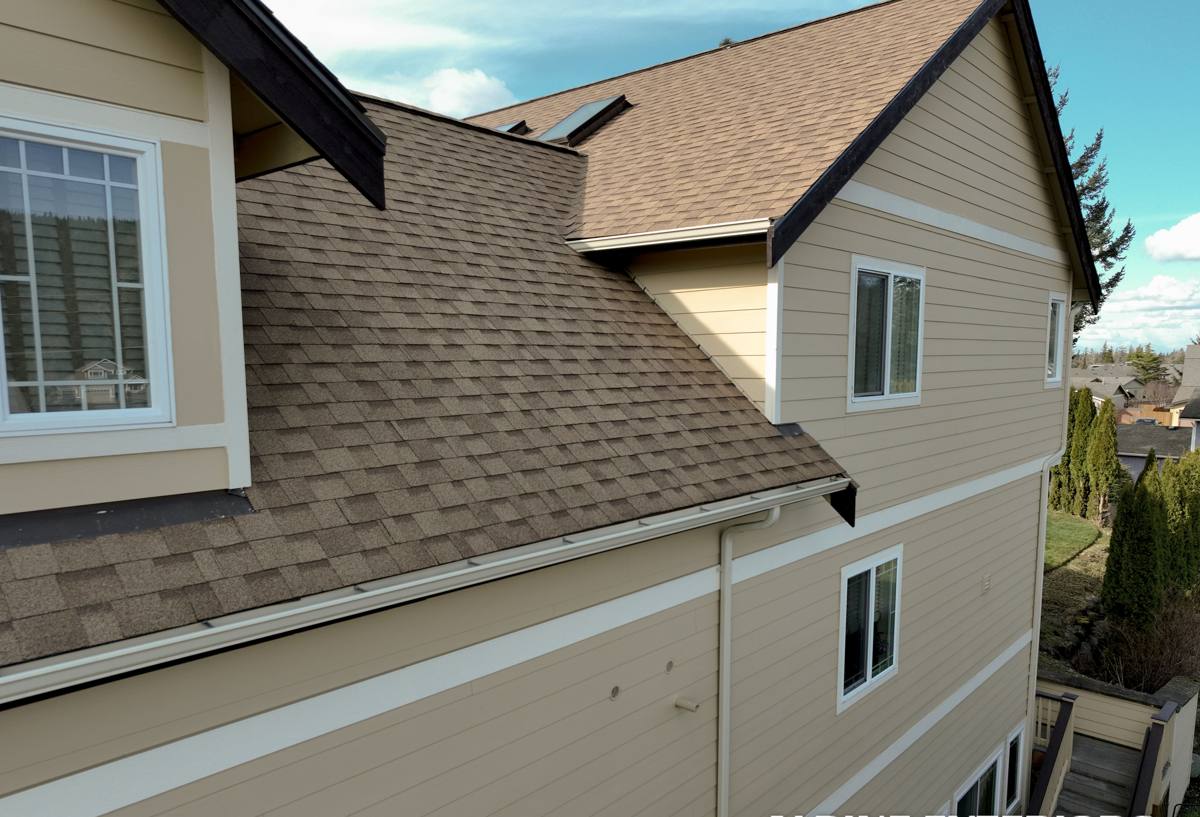
How James Hardie Organizes Its Color Palette
Hardie's ColorPlus palette runs a few dozen colors deep, organized loosely into categories: neutrals and grays, warm earth tones, deeper "statement" colors for accents or trim, and a handful of whites and near-whites. The palette is curated rather than unlimited — that's intentional. Every color in the lineup has been tested for UV stability and finish performance, which is different from a custom-tinted paint chip that hasn't been vetted for how it behaves on fiber cement over a 15-year span.
Within that palette, a few practical groupings matter for a coastal Whatcom County project:
Neutrals and Grays
These are the most popular choices in the Pacific Northwest generally, and for good reason — they read as clean and contemporary against evergreen backdrops and gray skies, and they tend to hide the dust, pollen, and light surface grime that accumulates between washings better than very dark or very light colors do.
Deep, Saturated Colors
Navy, charcoal, deep greens — these look sharp on trim, shutters, or an accent wall, but they absorb more heat and show fading and chalking faster than lighter colors, especially on south- and west-facing elevations that get direct sun exposure even in a generally overcast climate. If you want a dark color, we'll typically steer it toward accent panels rather than the full field of the house, or make sure expectations are set about long-term maintenance.
Whites and Near-Whites
Popular for trim and for full-house use on traditional and coastal-style homes. Whites show dirt and mildew streaking more visibly than mid-tone colors, which matters in a climate where moss and algae growth is a real, recurring maintenance item — not a hypothetical one.
| Color Family | Typical Use | Coastal Consideration |
|---|---|---|
| Light neutrals / grays | Full-field siding | Best balance of fade resistance and dirt-hiding |
| Warm earth tones | Full-field or accents | Ages gracefully, moderate maintenance |
| Deep/saturated colors | Accents, trim, shutters | Faster visible fade on sun-exposed elevations |
| Whites | Trim, traditional full-house | Shows moss/algae streaking soonest, needs more frequent washing |
HZ5 and Why the Product Line Underneath the Color Matters
Color is only half the equation. James Hardie engineers its product lines by climate zone, and the Pacific Northwest — including Whatcom County — falls into the HZ5 zone, engineered specifically for wet, humid, freeze-thaw-prone regions. That engineering affects moisture resistance and long-term dimensional stability, which in turn affects how well the finish holds up. A color that performs beautifully on a board engineered for a dry climate can behave differently on a board that isn't matched to local moisture conditions — which is one more reason we don't treat "fiber cement" as a single interchangeable product across brands and product lines.
Matching Color to Blaine's Architecture and Setting
Blaine's housing stock ranges from older waterfront and downtown-adjacent homes to newer construction out toward Semiahmoo and the county roads. A few practical patterns we see work well locally:
- Waterfront and view-lot homes tend to hold up visually with mid-tone grays or muted blues that don't fight the water and sky, and that don't show salt spray residue as obviously as very dark colors do.
- Wooded or tree-lined lots handle warm neutrals and greens well, since they blend with the surrounding evergreen tone rather than standing in stark contrast to it.
- Trim and accent contrast matters more in this climate than bold full-field color, since trim boards see concentrated water runoff and benefit from a finish that's proven to resist streaking.
Panel Types and Where Color Shows Up Differently
Hardie's product family isn't just one panel — it includes lap siding (in smooth and cedar-textured finishes), vertical panel siding, shingle-style siding, and trim boards. The same ColorPlus color can read slightly differently depending on the texture and reveal of the panel it's applied to. A cedar-textured lap in a given gray will look a shade darker and more dimensional in direct light than the same color on a smooth panel, because the texture creates micro-shadows. It's worth looking at physical samples in the actual panel style you're planning to use — not just a flat color chip — before finalizing a decision.
Practical Steps Before You Commit to a Color
- View large-format samples outdoors, in both direct sun and overcast light — Blaine gets plenty of the latter
- Check the color against your roof, existing stonework, and any masonry that isn't changing
- Consider how the color will look with common Whatcom County exterior fixtures — black or bronze hardware, dark window frames
- Ask about the difference in fade performance between the color you want and a slightly lighter alternative
- Confirm which trim color pairs are pre-matched by Hardie versus custom combinations
Maintenance Realities by Color Choice
No factory finish eliminates maintenance — it reduces how much you'll need and how soon. In a climate with Blaine's rain totals and moss pressure, plan on periodic gentle washing regardless of color, more frequent on north-facing and shaded elevations where moss and algae get the most encouragement. Darker colors will show chalking and fade sooner in visual terms; lighter colors will show organic growth and streaking sooner. Neither is maintenance-free — the honest answer is that mid-tone colors in the ColorPlus palette tend to go the longest between "it needs attention" moments in this specific climate.
What the ColorPlus Warranty Actually Covers
The finish warranty on ColorPlus products is separate from Hardie's substrate warranty, and it specifically addresses finish-related issues — cracking, peeling, and fading beyond the warranted threshold — under normal conditions. It's transferable to a subsequent owner within the coverage period, which is a real factor if you're thinking about resale rather than a forever home. As with any warranty, the coverage assumes correct installation to manufacturer specification, which is part of why installation quality and finish performance aren't really separate conversations — they're the same conversation.
Getting This Right the First Time
A siding color decision on a house is not a decision you get to revisit casually every few years — repainting fiber cement siding in the field is possible but it's a real project, not a weekend touch-up, and it changes the long-term performance profile of the ColorPlus finish. Taking the time to view real samples, think through sun exposure on each elevation, and understand how a color will age in Blaine's specific mix of salt air and rain is worth the extra week it takes compared to picking from a small chip in a showroom.
If you're weighing colors and product lines for a Whatcom County home, we're happy to bring samples out, walk your specific elevations, and talk through what we've seen hold up locally. Reach out for a free, no-pressure estimate — there's no obligation, just a straight conversation about what will actually work on your house.