 Blaine Siding
 Exterior Contracting for Lynden Homes
Lynden sits inland from Blaine and the saltwater shoreline of Boundary Bay, but it still falls squarely inside Whatcom County's marine-influenced weather pattern. The Nooksack River valley, the surrounding farmland, and the proximity to the Salish Sea combine to keep humidity high for much of the year. That means Lynden homes deal with a lot of the same exterior wear that coastal Whatcom County properties do — driving rain off the Pacific systems that roll through in fall and winter, a long stretch of damp, low-light months that favor moss and algae growth, and the kind of persistent moisture that finds every weak seam in a home's exterior. We built our business around understanding that pattern and building exteriors that hold up to it.
We handle siding, roofing, windows, and decks, and on every one of those we're solving the same underlying problem: keeping water, moisture, and biological growth from getting a foothold on a Whatcom County home. A siding job that ignores the roof-to-wall flashing, or a deck built without attention to how water sheds off the house above it, is a job that creates a callback. We look at the whole exterior system, not just the piece we were hired to install.
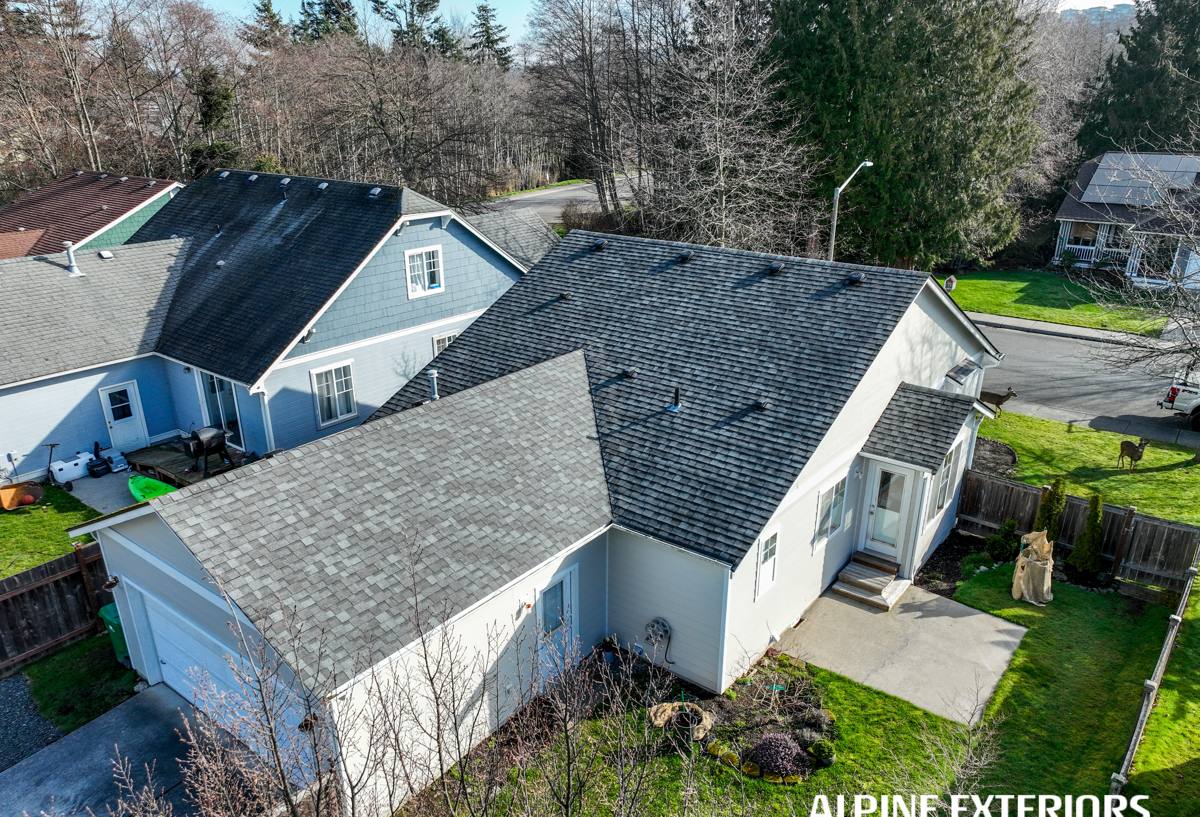
What Lynden's Climate Does to a Home's Exterior
Driving Rain and Wind-Driven Moisture
Fall and winter storms in this part of Washington don't just drop rain straight down — wind pushes it sideways into wall assemblies, around window trim, and up under lap siding edges. Over years, that wind-driven moisture is what causes rot at butt joints, staining at corner boards, and swelling in siding materials that weren't engineered to handle repeated wetting and drying.
Moss, Algae, and the Long Wet Season
Whatcom County's wet season runs long, and Lynden's flat, agricultural surroundings don't give homes much wind exposure to dry out between rain events the way a more exposed coastal or hillside lot might. North-facing walls, shaded siding under eaves, and roofs with limited sun exposure are the areas we see moss and algae take hold first. Once organic growth establishes on a wall or roof surface, it holds moisture against the material underneath it, which accelerates whatever deterioration is already happening.
Humidity and Freeze-Thaw Cycling
Whatcom County doesn't get extreme cold most winters, but it does get repeated freeze-thaw cycling — nights near or below freezing followed by daytime thaw, over and over through the winter. Any siding material that has absorbed moisture is vulnerable to that cycle, because water expands as it freezes and can crack, delaminate, or push apart materials that weren't built to shed water in the first place.
Why We Install Only James Hardie Fiber Cement Siding
We made a deliberate decision years ago to install one siding system: James Hardie fiber cement. We don't install vinyl, LP SmartSide, Cemplank, Allura, primed spruce, or cedar. That's not a marketing position — it's a standard we hold because of what we've seen these materials do over time in exactly the kind of climate Lynden sits in.
How the Trade-Offs Break Down
| Material | Where it falls short in this climate |
|---|---|
| Vinyl | Can warp or crack in temperature swings, seams allow water intrusion, doesn't hold paint if a color change is ever wanted |
| Engineered wood (LP SmartSide) | Wood-based core is vulnerable to moisture wicking at cut edges and joints if caulking and flashing aren't maintained |
| Other fiber cement (Cemplank, Allura) | Similar core material to Hardie but without the same factory finish warranty depth or regional product engineering |
| Primed spruce / cedar | Natural wood requires ongoing repainting, sealing, and is the most vulnerable to moss, rot, and insect damage of any option here |
James Hardie's fiber cement is non-combustible, dimensionally stable in wet-dry cycling, and comes with a factory-applied ColorPlus finish that's baked on rather than field-painted — which matters in a climate where field-applied paint has to cure and bond in damp, cool conditions that aren't always cooperative. Hardie also engineers specific product lines (their HZ5 line, for example) for regions that see this kind of moisture exposure, which is a level of climate-specific engineering the other materials on that table don't offer.
What We're Not Claiming
We're not going to tell you vinyl or cedar are junk — they're established products with real track records elsewhere, and cedar in particular has genuine appeal. What we are saying is that after years of doing exterior work in Whatcom County, fiber cement from Hardie is what we're willing to put our name behind and back with our own installation work. That's a professional standard, not a knock on every other product on a shelf.
Siding Installation Done Right for This Climate
Material choice only gets a homeowner halfway there. The other half is installation — and in a wet climate, installation mistakes are what actually cause failures, not the siding itself. Correct James Hardie installation in Lynden means:
- Proper house wrap and drainage plane behind the siding, so any moisture that does get past the surface has somewhere to go
- Correct fastener placement and spacing per Hardie's engineering specs — not generic siding nailing patterns
- Flashing detail at every window, door, and roof-to-wall transition, since that's where wind-driven rain actually gets in
- Proper clearance between the bottom of the siding and grade, decks, or roof lines to avoid wicking moisture up from below
- Caulking only where Hardie's install guide calls for it — over-caulking traps moisture rather than keeping it out
We follow Hardie's published installation requirements closely, in part because doing so is what keeps their warranty intact, and in part because those requirements exist specifically to address the failure points we see in this climate.
Roofing, Windows, and Decks as Part of One System
A siding job doesn't happen in isolation. Roof flashing that dumps water onto a wall below, a window that isn't properly integrated into the water-resistive barrier, or a deck ledger board attached without flashing behind the siding — any one of those undermines the rest of the exterior no matter how well the siding itself is installed. We handle all four trades so the same crew that's thinking about wind-driven rain on your siding is also thinking about how your roof edge sheds water past that siding, how your window flashing ties into the wall assembly, and how your deck attaches to the house without creating a moisture trap.
For roofing, that means attention to underlayment and flashing details in a region that gets sustained wet weather, not just shingle selection. For windows, it means proper flashing integration with whatever siding is going on around them. For decks, it means ledger attachment and water management that doesn't create a hidden rot pocket against the house — something that's a common problem on older Whatcom County homes where a deck was added without that detail handled correctly.
What to Expect from a Local Crew
Working in Whatcom County means knowing which walls on a Lynden property are going to take the brunt of driving rain, which sides are going to stay damp and grow moss faster, and how the freeze-thaw pattern here differs from what a crew coming up from a drier region might expect. It also means we're not learning the quirks of this weather on your project — we've already seen how these materials and this climate interact over repeated jobs in the area.
A local crew also means accountability. If a flashing detail needs a second look after a hard winter, or a warranty question comes up on Hardie's ColorPlus finish, you're dealing with a contractor who's still local and still standing behind the install — not a name that only shows up for the sale.
Planning a Siding Project in Lynden
Signs It's Time to Replace, Not Just Repair
- Soft or spongy spots when you press on siding, especially near the bottom courses or around windows
- Persistent moss or algae staining that comes back within a season of cleaning
- Visible warping, cupping, or gaps opening up at seams and corners
- Paint that's failing repeatedly in the same spots despite repainting
- Rising energy bills that track with drafts or cold spots along exterior walls
Cost Factors Homeowners Should Understand
| Factor | Why it matters |
|---|---|
| Home size and wall complexity | More corners, dormers, and transitions mean more flashing detail and labor time |
| Extent of existing damage | Rotted sheathing or framing found during tear-off adds repair scope before new siding goes on |
| Siding profile chosen | Hardie offers lap, shingle-style, and panel profiles at different material and labor costs |
| Trim and accent work | Window and door trim, corner treatments, and accent bands add detail time |
| Access and site conditions | Tight lots, landscaping, or multi-story sections can affect scaffolding and staging needs |
Every property is different, and the only way to get real numbers is to have someone walk the exterior with you and look at what's actually there.
Get a Free, No-Pressure Estimate
If you're noticing moss buildup, damaged siding, or you're just planning ahead for a Lynden home's exterior, we're happy to come take a look. There's no pressure and no obligation — just a straight assessment of what your home needs and what it would take to do it right with James Hardie siding, roofing, windows, or decking. Use the form below to request your free estimate.