 Blaine Siding
 What Board and Batten Siding Actually Is
Board and batten is one of the oldest siding patterns in the Pacific Northwest, and it never really went out of style. Wide vertical panels or boards run up the wall, and narrow strips called battens cover the seams between them. The result is a clean, strong vertical line that reads as farmhouse, modern, or Pacific Northwest coastal depending on the trim details and color you pair it with.
What most homeowners in Blaine don't realize is that "board and batten" describes a look, not a material. You can build it out of real wood boards, engineered wood, vinyl panels cut to mimic the pattern, or fiber cement. The material underneath the pattern is what determines whether the siding still looks good in fifteen years or has started cupping, staining, and rotting at the seams.
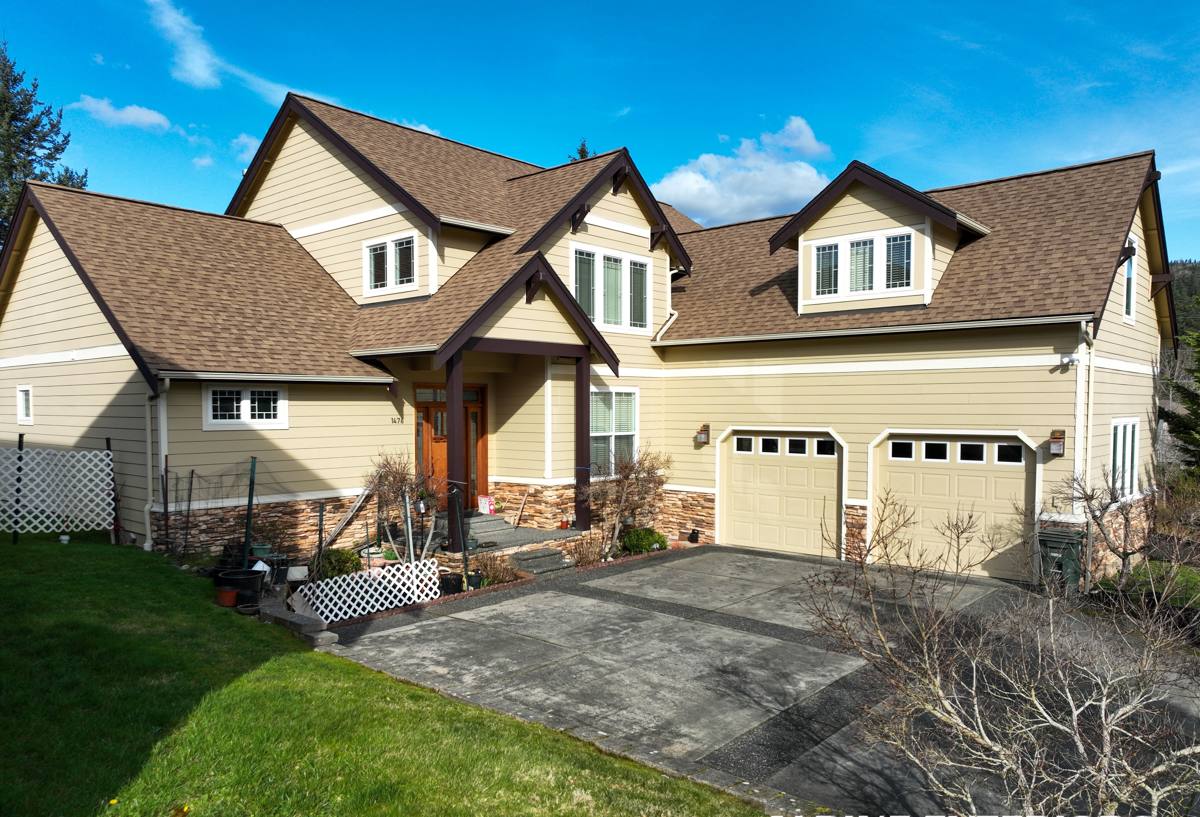
Why This Pattern Meets Its Match in Whatcom County's Climate
Blaine sits right on the water, which means every wall on a house here deals with salt-laden air, driving wind-blown rain, and a moss season that can run from October through May. Board and batten siding has more vertical seams and more exposed batten edges than a standard lap profile, and every one of those seams is a potential entry point for moisture if the material and the install aren't right.
Salt air accelerates corrosion on fasteners and metal flashing, and it breaks down cheap paint films faster than inland climates do. Driving rain off the Strait of Georgia doesn't just fall straight down — it gets pushed sideways into vertical seams and batten edges under wind pressure. And moss doesn't just grow on roofs; it takes hold in any siding material that stays damp on the surface, which is common on north-facing and shaded walls throughout Whatcom County. A board and batten system built for a drier, calmer climate will show its weaknesses here faster than it would forty miles inland.
James Hardie's Board and Batten Product Lines
James Hardie makes board and batten achievable in fiber cement, which is a non-combustible, engineered material that doesn't absorb water the way wood or wood-composite products do. There are two main ways to build the look with Hardie products.
HardiePanel Vertical Siding with Batten Strips
Large fiber cement panels are installed vertically, and separate Hardie trim battens are fastened over the seams at engineered spacing. This is the most common and most cost-effective way to get a true board and batten appearance with fiber cement, and it holds up well when the panel joints and batten fastening follow Hardie's published details.
Hardie Artisan and Reveal Panel Systems
For homeowners who want a more refined, tighter-reveal look, Hardie's Artisan and Reveal panel lines offer factory-engineered vertical siding systems with more precise joint detailing. These cost more than standard HardiePanel but come with a more polished, dimensionally consistent finish.
HZ5 and HZ10 Climate Engineering
James Hardie engineers its products in different formulations for different climate zones. In a marine climate like Blaine's — high humidity, salt exposure, freeze-thaw cycling in winter — the HZ5 and HZ10 product formulations are built to resist moisture-related damage better than the general-purpose HZ3 line sold in drier regions. This matters more than most homeowners are told; a fiber cement panel engineered for the desert Southwest and one engineered for the Pacific Northwest coast are not the same product under the hood.
Factory Finish vs. Field Painting
One of the biggest differences between a well-built board and batten job and a mediocre one is where the paint comes from. James Hardie's ColorPlus finish is baked on at the factory under controlled conditions, with a documented finish warranty covering fading and cracking. Field-painted fiber cement or wood board and batten depends entirely on the weather conditions and prep work on installation day.
| Factor | ColorPlus Factory Finish | Field-Applied Paint |
|---|---|---|
| Cure conditions | Controlled factory environment | Whatever the weather is that week |
| Coverage consistency | Uniform, multi-coat baked-on finish | Depends on crew and number of coats applied |
| Fade/chip warranty | Manufacturer-backed finish warranty | Typically only the paint manufacturer's standard warranty, if any |
| Touch-up needs in salt air | Rare in the first decade with proper care | Often needed within 3-7 years near the water |
| Cut-edge protection | Requires factory-matched touch-up sealer at cuts | Full field coat, but still relies on prep quality |
What Correct Installation Actually Involves
Board and batten fails more often from installation mistakes than from the material itself. The pattern has more seams, more fasteners, and more places for water to get trapped than a horizontal lap profile, so the install details matter more here than on most siding jobs.
- A properly lapped weather-resistive barrier behind every panel, with all penetrations and seams taped or flashed before the first panel goes up
- Correct panel gapping at butt joints, corners, and any point where fiber cement meets trim, per Hardie's published fastening and clearance specs
- Battens fastened directly into framing or proper blocking — not just into the panel — so wind load doesn't work fasteners loose over time
- Rain-screen or drainage plane detailing so water that does get behind a batten has somewhere to drain and dry out instead of sitting against the wall sheathing
- Stainless steel or hot-dip galvanized fasteners rated for the coastal environment, not standard interior-grade fasteners that will corrode in salt air
- Proper clearance between the bottom of the siding and grade, decks, or roof lines so water doesn't wick up into the panel ends
- Factory-matched touch-up paint on every field cut, especially at window and door openings, so the raw cut edge of the panel isn't left exposed
Mistakes That Show Up in a Few Years, Not Right Away
The frustrating thing about bad board and batten installs is that they often look fine on the day the crew leaves. The failures show up two, three, or five years later, once moisture has had time to work its way in. The most common issues we see on homes that were installed by crews unfamiliar with the pattern: battens face-nailed directly through the panel seam instead of anchored into framing, no gap left at panel butt joints so the material has nowhere to expand and contract, and raw cut edges left unsealed at trim returns where they're most exposed to wind-driven rain. Any one of these can lead to staining, soft spots, or paint failure well before the material itself should have worn out.
What Board and Batten Costs and What Drives the Price
Pricing for any siding job depends on the size and complexity of the house, but board and batten typically runs somewhat higher than standard lap siding because of the extra batten material and labor involved in getting the seams and fastening right.
| Cost Factor | Why It Matters |
|---|---|
| Panel vs. batten square footage | Battens add material and labor cost beyond the base panel coverage |
| Wall complexity | Dormers, gables, and multiple wall planes multiply cutting and flashing time |
| Tear-off of existing siding | Removing old material and repairing sheathing adds time before new siding starts |
| Product line | Standard HardiePanel and battens cost less than Artisan or Reveal systems |
| Color and finish | Standard ColorPlus colors are typically less than custom or premium finishes |
| Site access | Waterfront and hillside lots common around Blaine can add staging and access time |
Anyone quoting a board and batten job without walking the house and measuring wall complexity is guessing. We'd rather give you an honest number after seeing the actual walls than a low estimate that grows once material and labor get ordered.
Maintenance and Longevity Near the Water
A properly installed James Hardie board and batten system needs very little in the way of ongoing maintenance. Rinse the walls down once or twice a year to clear salt film and organic buildup before it turns into moss growth, keep gutters and downspouts clear so water isn't sheeting down the wall face, and trim back vegetation and irrigation spray that keeps siding damp longer than it needs to be. Because the panels are non-combustible fiber cement rather than wood, you're not fighting the rot and insect issues that come with traditional wood board and batten, and the factory finish means you're not on a repainting cycle every few years the way field-painted siding in this climate usually requires.
Why We Only Install James Hardie for This Pattern
We don't install board and batten in vinyl, LP SmartSide, or other fiber cement brands, and that's a deliberate standard, not a sales pitch. Board and batten has more seams and more exposed edges than any other siding pattern, which means the quality of the base material and the finish matters more here than almost anywhere else on a house. James Hardie's climate-specific HZ engineering, factory-baked ColorPlus finish, and long, transferable warranty give us a material we're confident will still look right on a Blaine home in twenty years, in a climate that doesn't forgive weak seams or thin paint. If you're weighing board and batten for a remodel or new build, we're glad to walk your walls, talk through the product options, and put together a free, no-pressure estimate.