 Blaine Siding
 Exterior Work for Sandy Point Homes
Sandy Point sits out on the water in Blaine, and that location is exactly why homes there age differently than houses just a few miles inland. Wind off the Strait of Georgia carries salt spray onto siding and trim, driving rain comes in sideways during winter storms, and the shaded, damp stretches of the year give moss and algae a long runway to take hold on roofs, decks, and north-facing walls. None of this makes Sandy Point a bad place to own a home. It just means the exterior of that home has to be chosen and installed with the actual conditions in mind, not with a generic Pacific Northwest checklist.
We work on siding, roofing, windows, and decks, and on a property like this those four systems really do function as one shell. A gap in the siding drainage plane, a roof valley that holds moisture too long, a window that isn't flashed correctly, or a deck ledger that traps water against the house — any one of those can undermine the other three. When we look at a Sandy Point home, we're looking at how water and salt air move across the whole exterior, not just at whichever single product the homeowner called about.
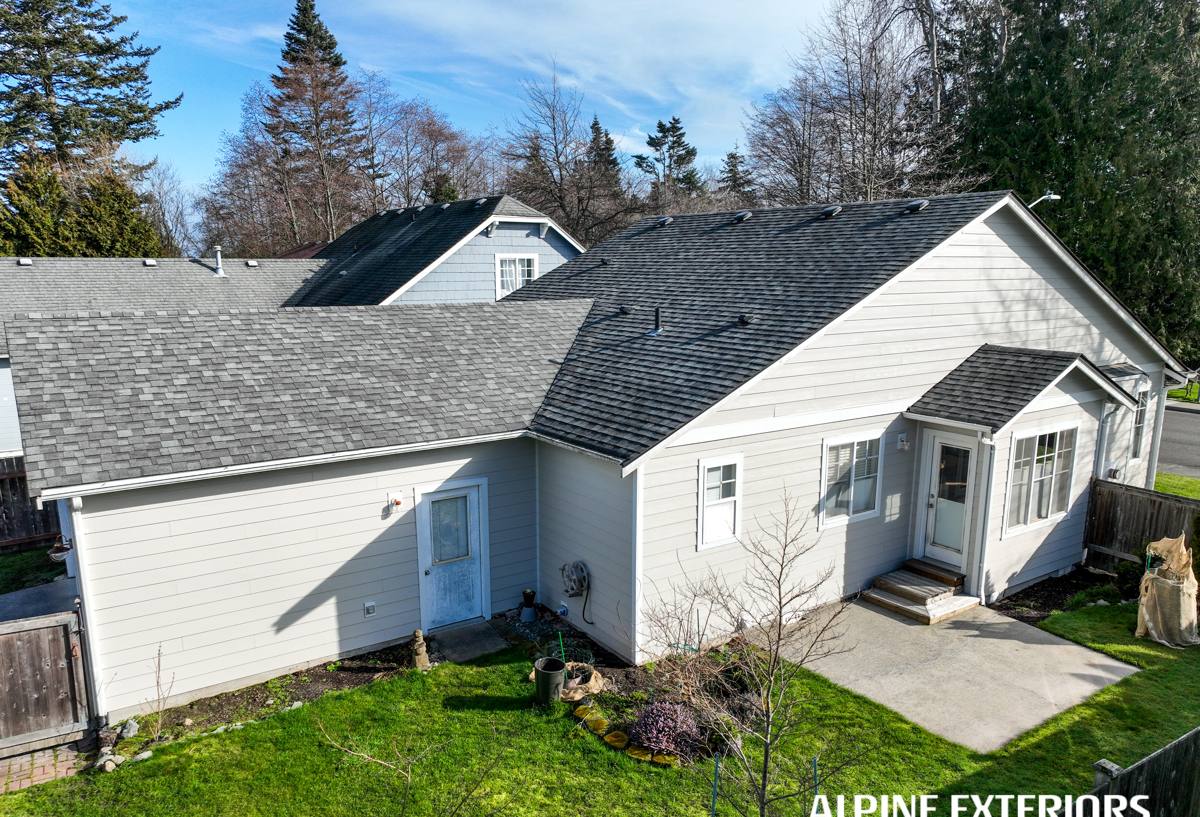
What Salt Air and Driving Rain Actually Do to a House
Salt Exposure
Airborne salt is corrosive to exposed metal fasteners, flashing, and hardware, and it accelerates the breakdown of coatings and finishes that aren't rated for coastal exposure. On siding specifically, salt residue combined with UV and moisture cycling is a common reason paint fails early on homes near the water — the surface chalks, fades unevenly, and starts needing repaint on a shorter cycle than the same product would need a few miles inland.
Driving Rain
Wind-driven rain doesn't just fall on a house, it gets pushed into laps, seams, and penetrations that would stay dry in a calmer setting. That makes water-resistive barrier detailing, proper siding overlap, and correctly flashed window and door openings more important here than they'd be on a sheltered inland lot. Cut corners on that detailing and you may not see the consequences for a year or two — by the time there's a stain on the interior wall, the damage behind the siding is usually already underway.
Moss and Algae
Whatcom County's long wet season, combined with shade from mature trees and the north sides of homes that rarely dry out, gives moss and algae plenty of time to establish. On roofs that means granule loss and shortened shingle life if it's left unaddressed. On siding and decking it means surface staining and, on the wrong materials, actual material breakdown where moisture stays trapped against the surface.
Siding: Why We Install James Hardie and Nothing Else
We install James Hardie fiber cement siding exclusively. We don't install vinyl, LP SmartSide, Cemplank, Allura, or bare wood siding like primed spruce or cedar, and on a property exposed to salt air and driving rain the reasons matter more than usual.
- Vinyl can warp or become brittle with UV and temperature cycling, and its seams and butt joints give wind-driven rain more opportunities to find a way behind the cladding over time.
- Wood-based products (including engineered wood like LP SmartSide and natural options like cedar or primed spruce) depend on an intact factory or field coating to keep moisture out. Once that coating is compromised — by a scratch, a poorly sealed cut edge, or years of salt and UV exposure — the underlying wood substrate is vulnerable to swelling, rot, and edge deterioration, especially in a damp, shaded microclimate.
- Cemplank and Allura are also fiber cement, and fiber cement as a category holds up well in coastal, high-moisture climates. Our decision to stick with Hardie specifically comes down to consistency of manufacturing, the depth of their engineered product lines for different exposure conditions, and the strength and structure of their factory-finish warranty.
James Hardie fiber cement is non-combustible, dimensionally stable, and doesn't rely on a field-applied coating to keep moisture out of the substrate the way wood products do. Its ColorPlus factory finish is baked on under controlled conditions and holds color and adhesion better than most field-applied paint, which matters directly on a home dealing with salt exposure and UV. Hardie also engineers specific product lines (their HZ5 designation, for example) for harsher climate zones, which is relevant on an exposed, waterfront lot like the ones in Sandy Point. The transferable warranty backing it gives homeowners real protection if something goes wrong with the material itself, not just with workmanship.
None of this means other siding products are junk — plenty of homes around the country do fine with vinyl or engineered wood in milder conditions. It means that for the specific combination of salt air, wind-driven rain, and a long moss season that Sandy Point sees, we've standardized on the product we're confident holds up with the least maintenance burden over the longest span of years, and we'd rather turn down a vinyl or wood-siding job than install something we don't believe is right for this location.
Fiber Cement vs. Common Alternatives
| Factor | Vinyl | Wood / Engineered Wood | James Hardie Fiber Cement |
|---|---|---|---|
| Moisture behavior | Doesn't absorb water, but seams can let it behind the cladding | Relies on intact coating; substrate vulnerable if breached | Doesn't support rot; engineered for moisture exposure |
| Salt air / coastal wear | Can chalk, fade, and become brittle over time | Coating breakdown accelerates substrate damage | Factory finish holds up well; non-combustible core |
| Maintenance | Low, but limited repair options if damaged | Regular repainting and sealing needed | Repaint cycle typically much longer than field-coated products |
| Fire rating | Can melt or deform near heat | Combustible | Non-combustible |
| Typical repaint interval | N/A (color molded in, fades over time) | Every few years depending on exposure | Well beyond a decade under normal conditions |
Roofing on an Exposed, Moss-Prone Lot
On a Sandy Point roof, ventilation, underlayment quality, and flashing detail around valleys, penetrations, and edges do most of the work of keeping wind-driven rain out. We also pay attention to the shaded and north-facing planes where moss tends to establish first, because moss and algae growth left unmanaged shortens the useful life of most roofing materials by trapping moisture against the surface and lifting shingle edges. Zinc or copper strips near the ridge and periodic gentle cleaning are simple ways to slow regrowth without damaging the roof surface, and we'll walk homeowners through what makes sense for their specific roof rather than pushing one blanket solution.
Windows
On a home taking direct wind and rain off the water, the window unit itself matters less than how it's flashed and integrated into the wall assembly. A quality window installed with poor flashing will leak; a modest window installed correctly, with proper pan flashing and integration into the water-resistive barrier, generally won't. We treat every window replacement as an opportunity to correct or improve the flashing detail at that opening, since that's usually where coastal leaks actually originate — not in the glass or the frame.
Decks
Decks on waterfront and near-waterfront lots deal with the same combination of salt exposure, driving rain, and moss growth as the rest of the exterior, plus direct sun and standing moisture on horizontal surfaces. Fastener corrosion, ledger board moisture intrusion, and slippery moss buildup on shaded boards are the most common issues we see. Material choice, proper ledger flashing against the house, and adequate gapping for drainage and airflow underneath all make a measurable difference in how long a deck stays sound and how much maintenance it needs.
Why a Local Crew Matters Here
Sandy Point's exposure isn't uniform even within the neighborhood — lots closer to the water take more direct wind and salt, while others get more tree cover and more shade-driven moss issues instead. A crew that works regularly in Whatcom County's coastal areas recognizes which failure mode a given home is more likely to face and details the work accordingly, rather than applying a one-size-fits-all approach built for a drier or more sheltered climate. It also means someone who knows the area is available for follow-up, warranty questions, or a look at how a previous installation is holding up.
What to Check Before Hiring for a Coastal Property
- Ask specifically how they detail flashing at window and door openings, not just what siding brand they install
- Confirm they carry proper licensing and insurance for exterior work in Washington
- Ask how they handle fastener selection for salt-air exposure (corrosion-resistant fasteners matter more here than inland)
- Get a clear explanation of the water-resistive barrier and drainage plane they'll use behind the siding
- Ask what warranty applies to both the material and the labor, and get it in writing
- Ask whether they've worked on other homes in Sandy Point or similarly exposed Blaine-area properties
Getting Started
Every Sandy Point home carries its own mix of wind exposure, shade, and moisture history, so we start with a straightforward look at the exterior before recommending anything. If you're dealing with failing paint, moss buildup, a leak you can't quite trace, or you're just planning ahead for a home that's going to keep facing salt air and driving rain for decades to come, we're happy to come take a look and give you a clear, no-pressure estimate.