 Blaine Siding
 Birch Point Is a Different Kind of Exterior Job
Birch Point sits out on the water in Whatcom County, and that location changes what a house needs from its exterior. Homes here don't just deal with normal Pacific Northwest rain — they take on salt-laden air coming straight off the water, wind-driven moisture that finds every gap in a wall assembly, and a moss-and-algae season that can run most of the year in shaded, north-facing spots. We've worked on enough homes along this stretch of Blaine and the surrounding coastline to know that what holds up twenty miles inland doesn't always hold up out here.
This page is about what that means in practice: what the climate does to common siding materials over time, how we approach a siding job for a Birch Point home specifically, and why we've standardized on one product system rather than offering the full menu of options most contractors carry.
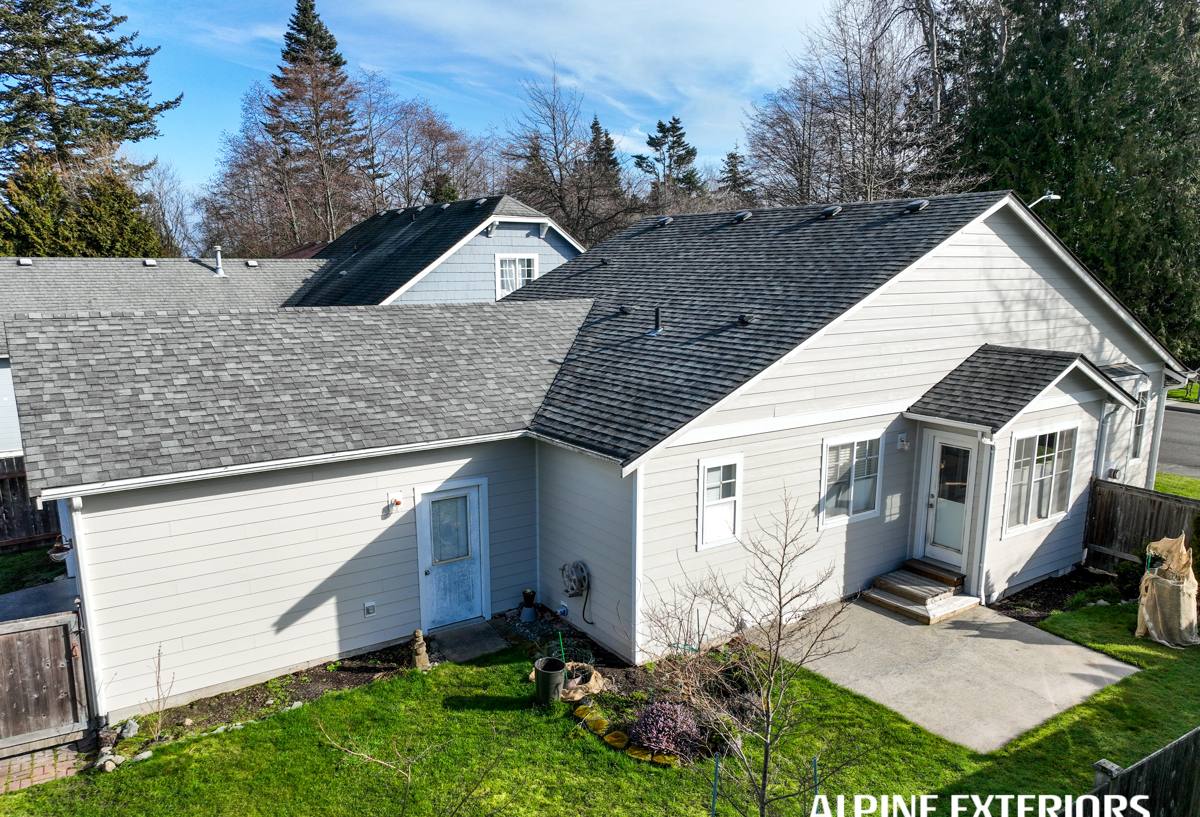
What Salt Air, Driving Rain, and Moss Actually Do to a House
Salt Air
Airborne salt is corrosive to metal fasteners, flashing, and trim, and it's abrasive to painted and coated surfaces over time. On homes close to the water, salt exposure accelerates the breakdown of finishes that weren't engineered for it — chalking, fading, and early clear-coat failure show up faster here than on a comparable house fifteen or twenty miles inland.
Driving Rain
Whatcom County gets plenty of rain, but the wind that comes with it out at Birch Point matters just as much as the volume. Wind-driven rain pushes water sideways into laps, seams, and butt joints that a calmer rain would never reach. Any siding system with weak seams, absorbent edges, or poor water-shedding detailing is going to take on moisture at those points, and moisture that gets behind siding is the real enemy — not moisture that lands on the face of it.
Moss and Algae
Shaded walls, north exposures, and anywhere airflow is limited by trees or fencing tend to stay damp longer between rain events. That extended damp period is exactly what moss and algae need to establish. Once organic growth takes hold on a porous or textured surface, it holds moisture against the wall even longer, which is how a moss problem becomes a rot problem if it's ignored for a few seasons.
Why We Only Install James Hardie Fiber Cement
We used to get asked why we don't carry vinyl, LP SmartSide, cedar, or other fiber cement brands like Cemplank or Allura. The honest answer is that after years of siding and re-siding homes in this climate, we stopped installing products that put more of the long-term burden on the homeowner. We now install James Hardie fiber cement siding exclusively, for a few concrete reasons that matter specifically in a place like Birch Point:
- Non-combustible material — fiber cement doesn't burn, which matters as wildfire risk has become a bigger conversation across Washington state.
- Engineered for wet climates — Hardie's HZ5 product line is formulated for the moisture and freeze-thaw conditions of the Pacific Northwest, not a one-size-fits-all national spec.
- Factory-applied ColorPlus finish — the color and protective coating are baked on in a controlled factory environment, which holds up better against salt air and UV than field-applied paint.
- Dimensionally stable — it doesn't expand, contract, warp, or cup the way wood-based products can when they cycle through wet and dry conditions repeatedly.
- Backed by a strong, transferable warranty — that protection follows the house, not just the original owner.
None of this means other products are without merit — vinyl is inexpensive, cedar has real aesthetic appeal, and engineered wood siding has improved over the years. But we're the ones who have to stand behind the installation, and for a coastal Whatcom County home, we've made the call that Hardie fiber cement gives homeowners the best long-term outcome for the money.
How We Approach a Siding Project at Birch Point
Assessment First
Before we talk products or pricing, we look at the house: what direction it faces, how exposed it is to wind off the water, where moisture has historically collected, and what condition the existing wall assembly and sheathing are in underneath the current siding. A house tucked back from the water with tree cover faces different pressures than one sitting exposed on a bluff.
Water Management Behind the Siding
Siding is only as good as what's behind it. On every job we address the water-resistive barrier, flashing at windows, doors, and penetrations, and proper drainage planes so that any moisture that does get past the surface has somewhere to go instead of sitting against the sheathing. This is where a lot of premature siding failure actually starts — not with the siding material itself, but with what was (or wasn't) done underneath it.
Installation to Manufacturer Spec
Hardie products are engineered to perform when installed correctly — proper fastener spacing, correct clearances from grade, decks, and roof lines, and correctly sealed and painted cut edges. Skipping these details is one of the most common ways a good product underperforms. We install to Hardie's published specifications, not shortcuts.
Comparing Exterior Materials for a Coastal Climate
Homeowners researching siding options often ask how the materials actually stack up in conditions like Birch Point's. Here's an honest comparison based on how these materials generally perform in a wet, salt-exposed environment:
| Material | Moisture Behavior | Salt Air Durability | Maintenance | Typical Warranty |
|---|---|---|---|---|
| James Hardie Fiber Cement | Dimensionally stable, engineered drainage details | Strong — factory finish resists chalking/fading | Occasional cleaning; repaint not typically needed for years | Long-term, transferable |
| Vinyl | Doesn't absorb water, but seams can allow moisture behind panels | Can become brittle and fade faster under UV/salt exposure | Low, but panels can crack, warp, or blow off in wind | Varies widely by manufacturer |
| Cedar / Primed Spruce | Absorbs moisture, prone to swelling and checking | Requires diligent sealing to resist salt and moisture damage | High — regular refinishing and moisture monitoring | Typically none on the material itself |
| LP SmartSide / Engineered Wood | Moisture-sensitive at cut edges and seams if not maintained | Manageable with strict maintenance schedule | Moderate to high — edge sealing and caulking upkeep | Manufacturer-specific, often maintenance-contingent |
It's Not Just Siding — The Whole Exterior Works Together
A house is a system. Siding, roofing, windows, and decks all interact with the same water and wind that hit a Birch Point property, and a weak point in one often shows up as damage in another. A roof that's shedding water improperly can stain or saturate siding below it. Windows with failing flashing can rot the framing around them regardless of how good the siding is. A deck ledger board attached without proper flashing is a classic source of hidden rot against the house wall.
Because we handle siding, roofing, windows, and decks, we look at a property as one exterior envelope rather than a single isolated project. If we're on-site for a siding estimate and notice a roofing or window issue that's going to undermine the new siding, we'll tell you — that's part of doing the job right, not an upsell.
Why a Local Crew Matters Here
Contractors who work primarily inland, or who fly in a crew for a job and leave, don't always account for what a coastal Whatcom County property actually needs — the extra attention to flashing details, the fastener and clearance requirements that matter more in wind-driven rain, or the reality that a house near the water needs different maintenance guidance than one in town. A local crew that regularly works this stretch of coastline knows what tends to fail first and builds the job to avoid it, rather than applying a generic approach and hoping it holds up.
Maintenance: What Birch Point Homeowners Should Watch For
Even with a durable material and a correct installation, an exterior in this climate benefits from periodic attention. Here's a practical checklist for homeowners:
- Rinse siding periodically to remove salt residue, especially on walls facing the water
- Check shaded, north-facing walls for early moss or algae growth before it spreads
- Inspect caulking around windows, doors, and trim annually for gaps or cracking
- Keep gutters clear so overflow isn't running down the face of the siding
- Trim back vegetation that's keeping any section of the wall damp or shaded longer than necessary
- Look at deck ledger and roof-to-wall transitions for staining, which can signal a hidden leak
What a Siding Project Typically Involves
Every job is different, but most Birch Point siding projects move through the same general phases:
- On-site assessment of the existing siding, sheathing condition, and water management details
- Product and color selection from the Hardie lineup suited to the home's exposure
- Removal of old siding and inspection/repair of the underlying wall assembly
- Installation of water-resistive barrier, flashing, and drainage details
- Hardie siding installation to manufacturer specification
- Final walkthrough and maintenance guidance specific to the home's location and exposure
Let's Look at Your Home
Every property along the Birch Point shoreline sits a little differently — exposure, shade, tree cover, and existing wall condition all change what a siding project should actually involve. If you're noticing moss buildup, fading, soft spots, or you're just planning ahead for a home in this climate, we're glad to come take a look and give you a straightforward, no-pressure estimate. Use the form below to get started.