 Blaine Siding
 Why Two Blaine Homes Never Get the Same Quote
Ask three contractors to price the same siding job and you'll often get three different numbers, sometimes by a wide margin. That's not because someone's padding the bid or someone else is cutting corners to win the job. Siding replacement cost is built from a stack of variables specific to your house, your site, and the conditions it sits in. In Blaine, sitting right on Semiahmoo Bay in Whatcom County, that stack includes a few things homeowners further inland never have to think about.
This page walks through what actually drives the number on a siding estimate, so you can read a bid and understand why it says what it says instead of just comparing bottom-line totals.
Square Footage Is the Starting Point, Not the Whole Story
Wall square footage sets the baseline. More wall area means more material and more labor hours, and most estimates start there. But two homes with identical square footage can land far apart in price once the other factors below get added in. Square footage tells you roughly how big the job is — it doesn't tell you how hard the job is.
Home Shape and Detail Work
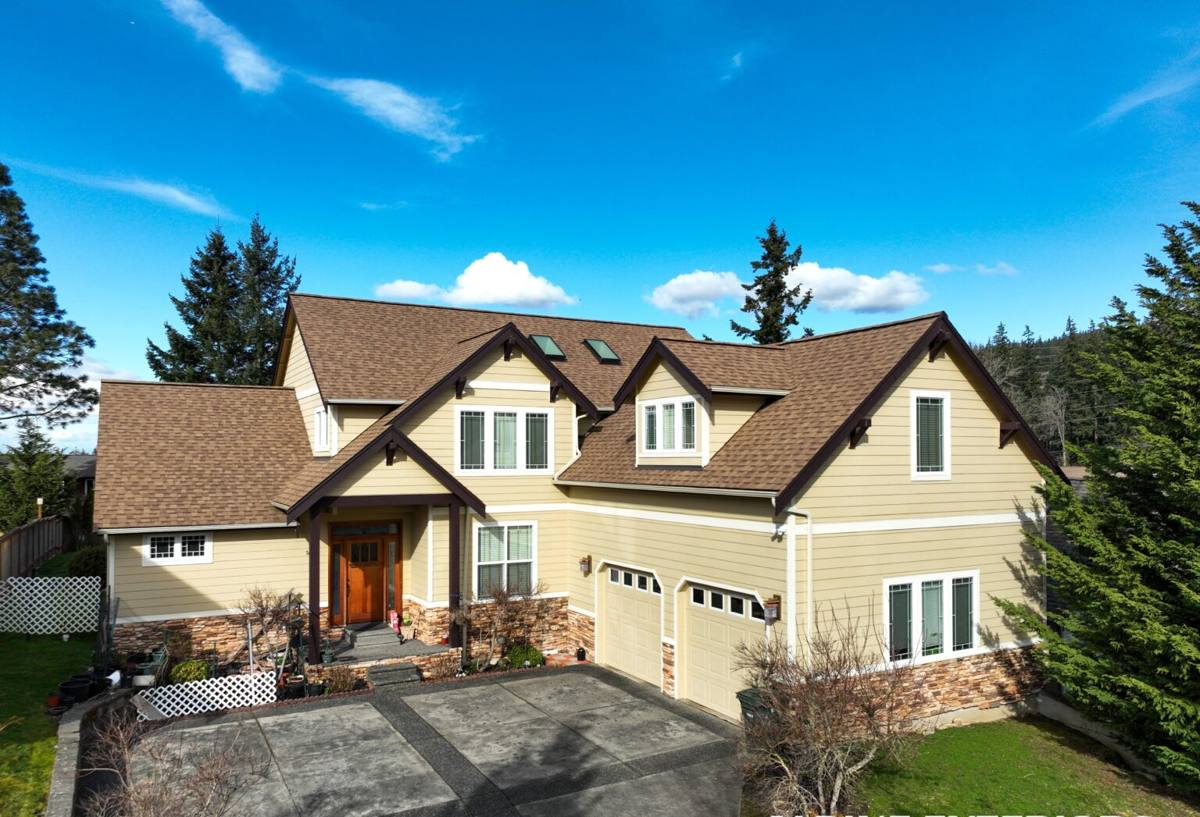
A simple rectangular single-story home with few windows is fast to side. A home with multiple gables, dormers, bump-outs, lots of window and door trim, and tight corners takes longer per square foot because so much of the work is cutting, fitting, and flashing detail — not just running long boards. Blaine's housing stock includes everything from simple ranch homes to more architecturally detailed builds near the waterfront, and detail work is where labor hours quietly stack up.
Number of Stories and Access
Second and third stories mean staging or lift equipment, more careful material handling, and slower, more deliberate work at height. A single-story home with clear access on all four sides is simply cheaper to side than a two-story home on a sloped lot with limited driveway access — the crew has to move more carefully and set up more equipment either way.
What's Underneath the Old Siding Changes Everything
The siding you see is the last five percent of the job. What's underneath it determines a lot of the cost, and you often can't know for certain until the old siding comes off.
Tear-Off and Disposal
Removing and hauling away old siding is real labor and real dump fees, and it varies by what's coming off. A single layer of cedar or vinyl comes off faster than old asbestos-cement panels or layered re-siding jobs where a previous owner sided directly over an earlier layer instead of stripping it.
Sheathing and Framing Repair
This is the variable that swings estimates the most. Once the old siding is off, a contractor can see whether the wall sheathing underneath is sound or whether years of moisture intrusion have rotted it. In a marine climate like Blaine's, with driving rain off the Strait of Georgia and near-constant humidity, water finds any gap in old flashing, caulking, or house wrap and works on the sheathing behind it for years before it ever shows on the surface. Replacing rotted sheathing, addressing water-damaged framing, or discovering hidden damage around old window and door openings adds cost that simply can't be quoted with full accuracy until the walls are open.
House Wrap and Weather Barrier
A proper water-resistive barrier, correctly lapped and flashed around every penetration, is what keeps the next twenty years of driving rain out of your walls. This isn't optional in a coastal climate, and it's not a corner worth cutting to save money on the estimate — it's the layer doing the actual work of keeping water out, with the siding as the second line of defense rather than the only one.
Coastal Whatcom County Conditions That Add to the Number
Blaine's location brings specific wear factors that don't show up on estimates for homes thirty miles inland.
- Salt air and fastener corrosion: Homes near the water need corrosion-resistant fasteners and hardware. Standard fasteners can rust and streak or fail early this close to the bay, so correct fastener spec adds a modest but real cost — and skipping it costs far more later.
- Driving rain and wind-driven moisture: Wind off the water pushes rain sideways into wall assemblies in a way calmer inland sites don't experience. That means more attention to flashing at every window, door, and penetration, which is labor, not just material.
- Long moss and algae season: Whatcom County's damp, shaded conditions for much of the year support moss and algae growth on north-facing and shaded walls. Product finish and maintenance planning both factor into cost decisions here.
Material Choice Drives a Big Share of the Total
Different siding materials carry different material costs, different installation labor, and different long-term maintenance costs — and all three matter to the real number, not just the sticker price on day one.
| Factor | What It Affects |
|---|---|
| Material cost per square foot | Upfront estimate total |
| Installation complexity | Labor hours, crew skill required |
| Finish type (factory vs. field-applied) | Upfront cost, repaint cycle, long-term maintenance cost |
| Moisture behavior of the material | Risk of hidden damage, insurance and resale considerations |
| Warranty structure and transferability | Resale value, cost of future defects |
We install James Hardie fiber cement exclusively, and cost is part of why. Hardie's factory-applied ColorPlus finish is baked on and warranted separately from the substrate, which avoids the repaint cycle that field-painted wood, primed products, and some engineered wood sidings need every several years. It's non-combustible, engineered for climate zones like ours through Hardie's HZ product lines, and backed by a strong transferable warranty. On a house that's going to sit in salt air and driving rain for decades, the material's long-term behavior is as much a "cost" question as the install price — a cheaper upfront material that needs repainting, patching, or early replacement isn't actually cheaper over the life of the siding.
Panel Style and Profile
Within Hardie's lineup, lap siding, board-and-batten, and shingle-style panels each carry different labor requirements. Board-and-batten and shingle profiles generally take more installation time per square foot than standard lap siding because of the additional pieces and fastening pattern, which shows up in the labor line of an estimate.
Labor, Permits, and Timing in Whatcom County
Permitting requirements, inspection scheduling, and contractor availability all factor into cost and timeline. Blaine and unincorporated Whatcom County both require permits for siding replacement that involves removing sheathing or altering the weather barrier, and permit timing can affect scheduling. Weather windows matter too — a crew working through the wetter months has to plan tear-off and wrap installation carefully to avoid leaving a wall open to the elements longer than necessary, and that planning is part of what you're paying for in a well-run job.
What to Ask For in a Quote
A trustworthy siding estimate should let you see where the money is going, not just the total. Before you compare bids, make sure each one addresses the following:
- Whether the price includes full tear-off and haul-away of the existing siding
- Whether sheathing repair is included as an allowance or billed separately if found
- What house wrap or weather barrier product is being used and how penetrations are flashed
- What fastener type is specified, especially for a home this close to the water
- Whether the finish is factory-applied or will need field painting, and what that warranty covers
- What the manufacturer's warranty covers and whether it's transferable if you sell the home
- A written scope that names the specific product line and profile, not just "siding"
Why the Cheapest Number Isn't Always the Cheapest Job
The lowest bid on paper is sometimes the one that skips tear-off inspection, uses standard fasteners near the bay, or leaves flashing details thin. Those choices don't show up as a line item you can compare — they show up five or ten years later as moisture damage, early repainting, or premature siding failure. Understanding what's actually inside a quote is the best protection against that gap between the number you sign and the home you end up with.
If you'd like a clear, honest look at what a siding replacement would actually cost on your specific home in Blaine, we're glad to walk your property, explain what we find, and put together a straightforward estimate — no pressure, no inflated scope, just a real number based on your walls.