 Blaine Siding
 Exterior Homes Near the Border Take a Beating
Peace Arch sits close to salt water, close to the border, and squarely in the path of the weather systems that roll off the Strait of Georgia and Boundary Bay. If you own a home in this part of Blaine, you already know the exterior takes more abuse than a house thirty miles inland. Salt-laden air moves through the neighborhood on a regular basis, driving rain comes in sideways during winter storms, and shaded, tree-lined lots stay damp long after the rain stops. All of that adds up to real wear on siding, trim, roofing, and windows — wear that shows up faster here than it does in drier parts of Whatcom County.
We're a local exterior contractor working siding, roofing, windows, and decks across Blaine and the surrounding communities, including Peace Arch. This page covers what the climate actually does to a home's exterior here, how we approach siding work in this area, and why we've standardized on one siding product instead of offering a menu of options.
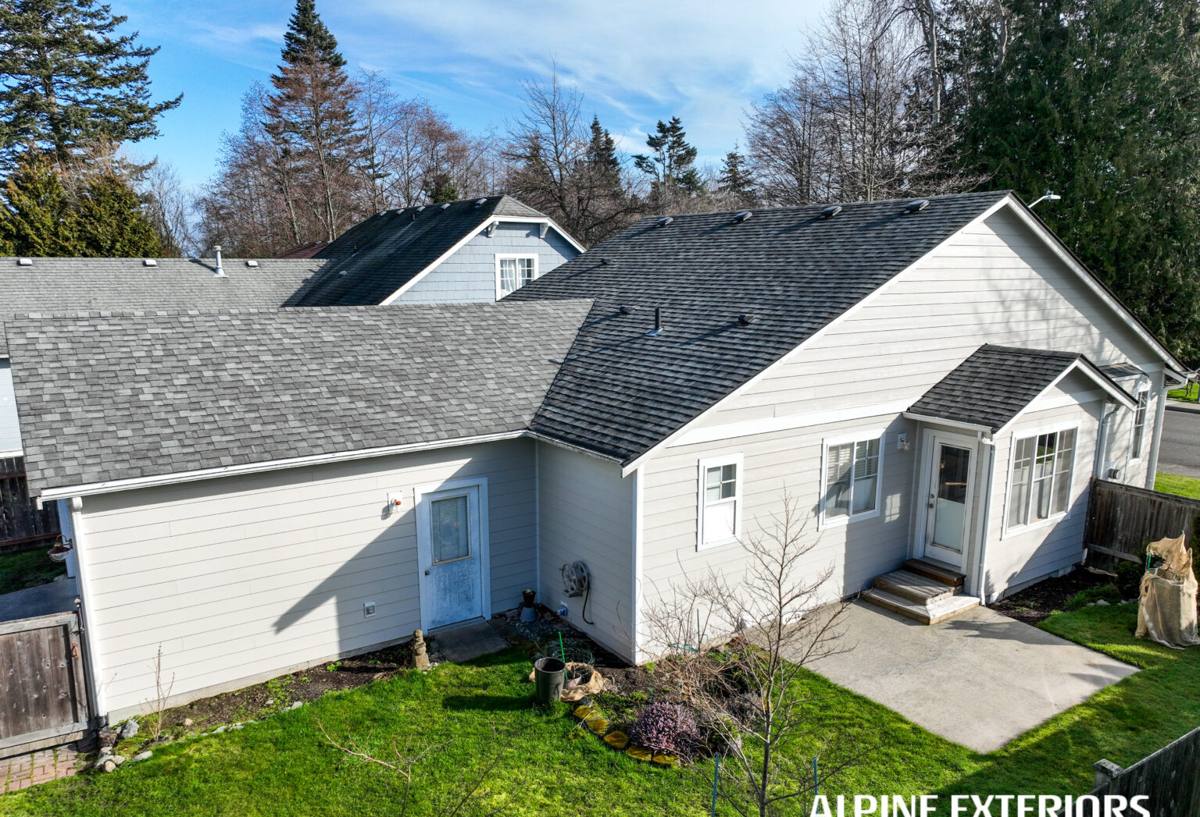
What Salt Air, Driving Rain, and Moss Actually Do
Salt Air
Homes within a few miles of Semiahmoo Bay, Drayton Harbor, and Boundary Bay are exposed to airborne salt that settles on every exterior surface. Salt is corrosive to fasteners, flashing, and metal trim, and it accelerates the breakdown of paint films and coatings that aren't built to handle it. Over years, a coating that would hold up fine in Sumas or Lynden can chalk, fade, or fail early in a coastal-influenced spot like Peace Arch.
Driving Rain
Winter storms here don't just fall straight down — wind pushes rain horizontally against west- and south-facing walls, corners, and window trim. That kind of wind-driven rain finds every weak seam, gap, or poorly lapped joint in a siding system. Water intrusion at those points is one of the most common reasons we get called out to look at an older home's exterior.
Moss and Shade
Whatcom County's wet season runs long, and many lots in and around Peace Arch have mature tree cover that keeps siding and roofing shaded and damp well after a storm passes. Moss and algae take hold on surfaces that stay wet, and on wood-based products that organic growth can work its way into the material itself, not just sit on top of it.
None of this means a home here can't hold up — it means the siding material and the installation details matter more in Peace Arch than they do in a lot of the country.
Why We Only Install James Hardie Fiber Cement
We made a decision a while back to stop offering a full menu of siding products and instead install one: James Hardie fiber cement. That's not a marketing gimmick — it's a standard we hold to because of what we've seen exterior materials do, and not do, in this exact climate.
Fiber cement is made from cement, sand, and cellulose fibers. It doesn't rot, it isn't food for moss or fungus the way wood-based products can be, and it's non-combustible. In a marine climate with long wet stretches and shaded lots, that combination matters more than it does somewhere dry and inland. We're not going to tell you every other product on the market is worthless — plenty of them are reasonable choices in the right setting. But for what Peace Arch homes face year after year, fiber cement is the material we're willing to put our name behind.
Why Not the Alternatives
Vinyl siding is affordable and low-maintenance in a general sense, but it's a thin plastic product that can warp in temperature swings, crack in cold snaps, and fade unevenly over time — and it's not repainted the way fiber cement can be. LP SmartSide, primed spruce, and cedar are all wood-based products at their core. Even with engineered strand technology or careful priming, wood-based siding depends on an intact factory or field coating to keep moisture out, and in a climate with this much sustained dampness, any breach in that coating — a nail pop, a cut edge, a caulk joint that fails — gives water and organic growth an opening. Cemplank and Allura are also fiber cement, and they're not bad products, but we've standardized on Hardie specifically for its ColorPlus factory finish, its HardieZone engineering, and the strength of its transferable warranty when the job is installed to spec.
James Hardie Product Lines We Install
James Hardie makes several distinct siding profiles, and which one fits a given home depends on its style, age, and exposure. We walk through these options during the estimate rather than defaulting to one product for every house.
| Product | Best Fit | Notes for This Climate |
|---|---|---|
| HardiePlank lap siding | Traditional and craftsman-style homes | Most common choice; multiple textures and exposures |
| HardieShingle | Accent gables, Cape Cod and cottage styles | Staggered or straight-edge panels, good for architectural detail |
| HardiePanel | Modern builds, board-and-batten look | Clean vertical lines, works well with trim accents |
| HardieTrim | Corners, window and door surrounds | Pairs with any of the above for a finished, consistent look |
Hardie also engineers its products by climate zone under the HardieZone system — HZ5 and HZ10 formulations are matched to different moisture and temperature exposures. Western Washington falls into the wetter zone classification, and we specify products and fastening accordingly rather than using a one-size-fits-all approach.
ColorPlus Factory Finish
Most of what we install uses Hardie's ColorPlus finish — a coating baked on at the factory under controlled conditions rather than sprayed on-site. In a climate where field-applied paint is fighting rain and humidity from the day it's applied, a factory finish that's cured properly before it ever reaches Peace Arch is a real advantage. It also comes with its own finish warranty separate from the product warranty on the siding substrate itself.
Roofing, Windows, and Decks — Why the Whole Exterior Matters
Siding doesn't work in isolation. Water that gets past a roof edge or a window flashing detail can travel behind siding and cause damage that looks, from the outside, like a siding problem. Because we handle roofing, windows, and decks in addition to siding, we look at a home's exterior as one connected system rather than a series of unrelated trades.
- Roofing — proper edge and valley flashing keeps water from working its way down behind wall assemblies
- Windows — flashing and sealant details at window openings are one of the most common failure points on older homes here
- Decks — exposed structures take the same salt air and rain exposure as siding, often with less protection
- Siding — the visible layer, but only as good as what's underneath and around it
When we're on-site for a siding project, we're also looking at these adjacent details, because a new siding job installed over compromised flashing or a failing roof edge doesn't solve the underlying problem.
Why a Local Crew Matters in Peace Arch
Blaine and the immediate border area have their own microclimate within Whatcom County — closer to salt water, more exposed to wind off the strait, and subject to permitting and inspection practices specific to the city and county. A crew that works this area regularly knows which walls take the worst weathering, how far back moss and algae growth tends to come after a wash, and how to sequence a project around the wetter months so materials aren't installed in conditions that compromise the work. That local knowledge doesn't replace manufacturer installation specs — it supplements them, especially around details like starter strips, flashing laps, and fastener selection that matter more in a marine environment than they do elsewhere.
What the Siding Replacement Process Looks Like
A typical Hardie siding project on a Peace Arch home follows a consistent sequence:
- On-site evaluation of existing siding, sheathing, and any water damage or moss buildup
- Written estimate covering product selection, colors, and scope
- Removal of old siding and inspection of the wall assembly underneath
- Repair of any damaged sheathing or framing found during tear-off
- Installation of a weather-resistive barrier and proper flashing at all penetrations
- Installation of Hardie siding, trim, and accessories to manufacturer spec
- Final walkthrough and cleanup
Signs It May Be Time to Replace
- Persistent moss or dark staining that returns quickly after cleaning
- Soft spots, bubbling, or visible rot at board edges and corners
- Paint that's peeling or chalking heavily, especially on west- and south-facing walls
- Visible gaps, warping, or cupping in individual boards
- Rising energy bills that suggest moisture or air intrusion behind the siding
Maintenance Expectations by Material
| Material | Typical Maintenance in This Climate |
|---|---|
| James Hardie (ColorPlus) | Periodic rinse to clear salt residue and moss; repaint interval measured in decades, not years |
| Vinyl | Low maintenance but prone to fading, cracking, and warping over time; not repaintable |
| Wood-based (LP, spruce, cedar) | Regular inspection and recaulking; repainting on a shorter cycle to protect the substrate |
Even fiber cement isn't maintenance-free — it still benefits from an occasional rinse and a caulk check at trim joints — but the maintenance burden is meaningfully lower than wood-based alternatives in a climate this wet.
If you're weighing a siding project on a Peace Arch home, we're glad to walk the exterior with you, point out what we're seeing, and put together a straightforward estimate. There's no pressure and no obligation — just a local crew looking at your house and giving you an honest read on what it needs.