 Blaine Siding
 Birch Bay's Coastal Climate Puts Real Stress on Siding
Birch Bay sits right on the water in Whatcom County, and that location is exactly what makes siding here behave differently than siding fifteen miles inland. Homes along the bay and up into the surrounding hillside neighborhoods take a steady dose of salt-laden air, wind-driven rain that hits walls sideways instead of falling straight down, and a wet season that runs long even by Pacific Northwest standards. Add in the shade from mature evergreens on many lots, and you get months at a time where exterior walls simply don't fully dry out.
None of that is a reason to panic about your siding. It's a reason to be specific about what gets installed and how. Materials that hold moisture, swell, or degrade under salt exposure will show problems in Birch Bay years before they would in a drier, more sheltered part of the county. Materials that shed water properly and resist moisture intrusion at the fiber level hold up. That distinction drives everything else on this page.
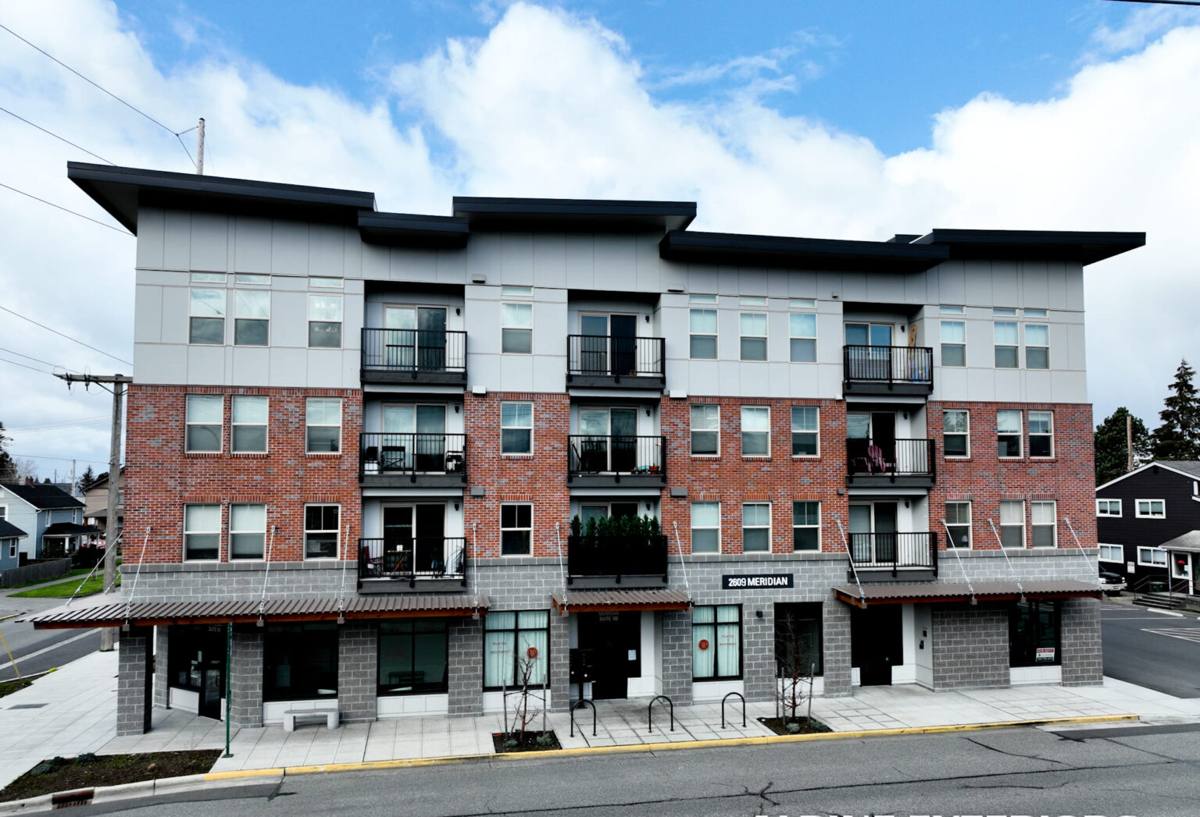
What "Correct" Siding Installation Actually Involves
Siding installation is often talked about like it's just cutting boards and nailing them up. In a climate like Birch Bay's, the visible siding is only part of the job — the assembly behind it does most of the real work of keeping water out of your walls.
Weather-Resistive Barrier and Flashing
Every wall gets a continuous weather-resistive barrier before a single piece of siding goes on. Seams get lapped correctly — upper courses over lower ones, never the reverse — so water is directed down and out instead of behind the barrier. Flashing at windows, doors, and any horizontal trim is installed so it sheds water outward, not into the wall cavity. This is the step that separates a siding job that lasts decades from one that causes hidden rot in five to eight years, and it's invisible once the siding is on. You have to trust that it was done right, which is why the crew doing it matters as much as the material.
Fastening, Gaps, and Clearances
Fiber cement siding has specific fastening requirements — nail placement, spacing, and depth all affect how the boards perform over time. Butt joints need to be sealed or flashed correctly. Siding also needs proper clearance from grade, roof lines, decks, and other transitions so water and debris don't sit against the bottom edge. In a moss-prone environment like Birch Bay, clearance and airflow around the siding also help keep moisture and organic growth from taking hold at those bottom courses and around trim.
Ventilation Behind the Cladding
A rainscreen gap or properly detailed drainage plane behind the siding lets any moisture that does get past the outer layer drain and dry out instead of sitting against the sheathing. This matters more on a shaded, coastal lot than it does on a sunny inland one, because drying time is longer here. Skipping this detail is one of the more common shortcuts in budget installations, and it's one of the hardest problems to catch later without opening up the wall.
Why We Install Only James Hardie Fiber Cement
We made a decision as a company to install James Hardie fiber cement siding exclusively. We don't install vinyl, LP SmartSide, primed spruce, cedar, or other fiber cement brands like Cemplank or Allura. That's not a marketing position — it's a standard we hold because of what we've seen these products do, and not do, in coastal Whatcom County conditions over time.
Vinyl siding is inexpensive and easy to install, but it can warp or distort in temperature swings, and its seams and J-channels give wind-driven rain more opportunities to work moisture behind the panels. Wood-based products like LP SmartSide and primed spruce depend on an intact factory coating and diligent field caulking to keep moisture out of the wood strand or wood substrate underneath — if that coating gets compromised at a cut edge, fastener, or joint, moisture can wick into the material and cause swelling or deterioration, which is a bigger risk in a climate that doesn't dry out quickly. Cedar is a genuinely attractive natural material, but it requires ongoing maintenance — refinishing, caulking, and monitoring — to hold up against salt air and constant damp, and that upkeep burden falls on the homeowner indefinitely.
James Hardie fiber cement is non-combustible, dimensionally stable, and engineered specifically for the kind of moisture exposure Birch Bay sees. Hardie's HZ5 product line is formulated for cold, wet climates like ours, and the ColorPlus factory finish is baked on under controlled conditions, which gives it more consistent, longer-lasting coverage than field-applied paint. Hardie backs the product with a substantial transferable limited warranty, which matters on a coastal home where you want assurance the material was built for these conditions, not just accepted for them. We standardized on Hardie because it's the product we're willing to stand behind on every home we touch, salt air included.
Our Installation Process for Birch Bay Homes
- On-site assessment — we look at exposure direction, shading, existing moisture damage, and how the current assembly is performing before recommending anything.
- Tear-off and substrate check — old siding comes off and sheathing gets inspected for rot or damage before anything new goes on. Hidden problems get addressed, not covered up.
- Weather-resistive barrier and flashing — installed and lapped correctly at every penetration, window, and door.
- Drainage plane detailing — set up so moisture that reaches the wall assembly has somewhere to go.
- James Hardie installation to manufacturer spec — correct fastening, joint treatment, and clearances throughout.
- Final walkthrough — trim, caulking, and touch-up review with the homeowner before we consider the job done.
We don't shortcut the barrier and flashing steps to save time, even though they're invisible once the siding goes up. On a coastal property, that's the work that determines whether the job is still performing well in twenty years.
Cost Factors for Siding Installation in Birch Bay
Every home is different, and we'll only give you real numbers after we've looked at your house, but these are the main factors that move the price of a siding installation up or down:
| Factor | Why It Matters |
|---|---|
| Existing siding removal and substrate condition | Hidden rot or damaged sheathing found during tear-off adds repair work before new siding can go on |
| Home size and wall complexity | More corners, gables, and trim details mean more cutting, flashing, and labor time |
| Siding profile and finish selection | Lap width, texture, and ColorPlus color options within the Hardie line affect material cost |
| Exposure severity | Bay-facing and wind-exposed walls often warrant extra attention to flashing and drainage detailing |
| Access and site conditions | Steep lots, tree cover, and limited staging space can affect labor time |
Signs Your Birch Bay Home May Need New Siding
- Visible warping, buckling, or soft spots when pressed gently
- Persistent moss or algae growth that returns quickly after cleaning
- Peeling or bubbling paint, especially on bay-facing or shaded walls
- Cracked or deteriorating caulk lines at joints, trim, and penetrations
- Musty odors or visible staining on interior walls near exterior corners
- Siding that's original to a home built before current moisture-barrier standards were common
If any of these sound familiar, it doesn't automatically mean full replacement — sometimes it's a sign of a specific detail failure that can be corrected. A proper inspection tells you which situation you're in.
Why Local Experience in Birch Bay Matters
A crew that regularly works in Birch Bay and the greater Blaine area already knows how differently this coastline behaves compared to more sheltered parts of Whatcom County. That shows up in small decisions — how much clearance to leave at grade on a low-lying lot, how to detail a bay-facing wall differently than a sheltered one, when a site's tree cover means extra attention to drying time and moss resistance. Those aren't things you learn from a manufacturer's install guide alone; they come from doing the work here, on homes with this exact exposure, repeatedly.
It also matters for the long run. A local crew is the one you can call back if a question comes up after the job is done, and one with direct experience in this specific coastal pocket of Whatcom County is less likely to make an assumption that works fine forty miles away but doesn't hold up on a Birch Bay waterfront lot.
Maintenance After Installation
Correctly installed James Hardie siding is low-maintenance, but "low" isn't "none," especially in this climate. A periodic rinse to keep salt residue and organic growth from building up, prompt attention to any caulk lines that start to crack, and a visual check after major storms are enough to keep a properly installed system performing for the long haul. Because the ColorPlus finish is factory-applied, you're not signing up for a repainting cycle the way you would with field-finished wood siding — that alone removes a significant recurring cost and effort from the equation.
If your Birch Bay home's siding is showing its age, or you're planning ahead for a replacement, we're happy to take a look and walk you through what we'd recommend and why — no pressure, no obligation. Reach out using the form below to schedule a free estimate.