 Blaine Siding
 Exterior Work Built for Cherry Point's Conditions
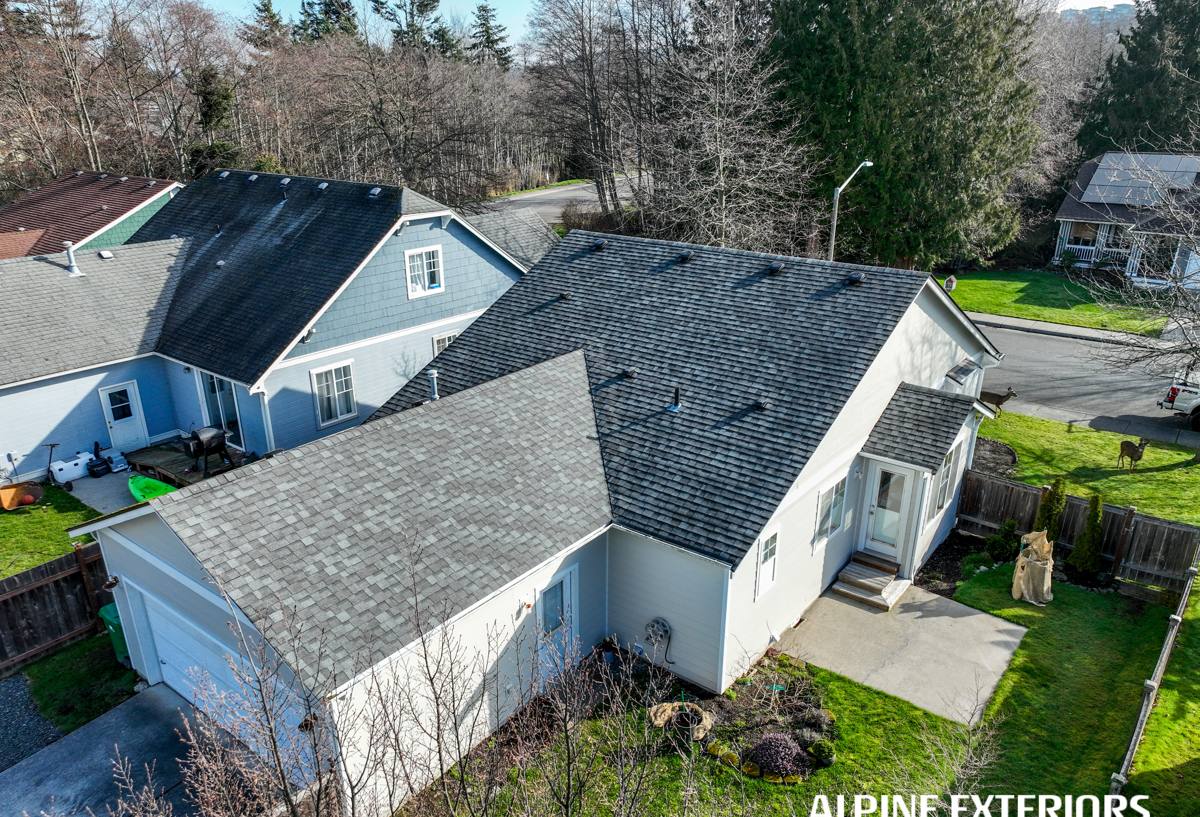
Cherry Point sits along one of the more exposed stretches of Whatcom County shoreline, and homes and outbuildings out here take a different kind of beating than a house tucked into a Bellingham subdivision. Between the salt-laden wind coming off the Strait of Georgia, driving rain that arrives sideways more often than straight down, and a moss season that can run from October clear into May, the exterior of a building here is working overtime every single day of the year. We do siding, roofing, windows, and decks for property owners in this area, and we've built our approach around what actually holds up to marine exposure, not just what looks good on install day.
This page covers what we see most often on Cherry Point properties, how we handle each part of the exterior, and why we standardized on one siding product instead of offering the usual lineup of options.
What Salt Air and Marine Exposure Actually Do to a House
Salt air isn't just a coastal cliché — it's a chemical problem. Airborne salt is hygroscopic, meaning it pulls moisture out of the air and holds it against whatever surface it lands on. That constant micro-dampness accelerates corrosion on fasteners, flashing, and hardware, and it keeps painted and coated surfaces wetter, longer, than they'd be even a few miles inland. Combine that with the wind-driven rain typical of open shoreline exposure, and you get water finding its way into joints, seams, and fastener penetrations that would stay dry on a more sheltered lot.
Where This Shows Up First
- Fastener heads and trim nails bleeding rust through paint within a few seasons
- Caulk joints failing early around windows and butt seams
- Paint film breaking down faster on south and west-facing walls that catch the prevailing weather
- Wood trim and fascia softening at end grain and joints where water sits
- Moss and algae colonizing anything with texture or shade, siding included
None of this means a house near Cherry Point is doomed — it means the materials and installation details matter more here than they would in a drier, more sheltered part of Whatcom County. That's the whole reason we pay close attention to product selection and flashing details on every job out this way.
Why We Only Install James Hardie Fiber Cement Siding
We get asked fairly often why we don't offer vinyl, LP SmartSide, Cemplank, Allura, or primed cedar and spruce siding the way some other contractors do. The honest answer is that after years of installing and repairing exteriors in this climate, we standardized on one product — James Hardie fiber cement — because it's the one that holds up best against what Whatcom County coastal exposure actually does to a building.
What Rules the Others Out for Us
| Product | Where It Falls Short in This Climate |
|---|---|
| Vinyl | Can warp or become brittle with temperature swings; seams and J-channels give wind-driven rain a path inward over time |
| LP SmartSide (engineered wood) | Wood-based substrate is more vulnerable to sustained moisture exposure at cut edges and seams if maintenance lapses |
| Cemplank / Allura fiber cement | Competent products, but we don't get the same factory-finish warranty structure and color-match support we get with Hardie |
| Primed cedar or spruce | Real wood requires the most active maintenance of any option — repainting, caulking, and moisture monitoring on a tight cycle near salt air |
Fiber cement itself is a non-combustible blend of cement, sand, and cellulose fibers, so it doesn't rot, doesn't attract insects, and doesn't expand and contract with humidity the way wood-based products do. James Hardie's HZ5 product line is specifically engineered for cold, wet, high-humidity climates like the Pacific Northwest, and their ColorPlus factory finish is baked on under controlled conditions rather than field-applied, which matters when you're trying to avoid the kind of early paint failure that salt air causes on site-painted surfaces. It also carries a strong transferable limited warranty, which matters if you ever sell the property.
We're not saying every one of those other products is a bad product in general — some are reasonable choices in the right setting. We're saying that for the specific combination of salt exposure, wind-driven rain, and moss pressure we see out here, Hardie is the one we're willing to put our name behind.
Moss: The Slow, Quiet Damage Nobody Notices Until Spring
Whatcom County's long, wet shoulder seasons give moss and algae months to establish themselves on any north-facing wall, shaded roof plane, or anything that stays damp longer than it should. Moss holds moisture against the surface beneath it, and on wood siding or aging roofing material, that trapped moisture is what eventually leads to soft spots, granule loss on shingles, and premature failure. On fiber cement, moss is mostly a cosmetic issue that pressure washing and basic upkeep handle — it doesn't have the same substrate to damage the way wood does.
Simple Habits That Cut Down on Moss Buildup
- Keep overhanging branches trimmed back so walls and roof planes get more sun and airflow
- Clean gutters at least twice a year so water isn't backing up against fascia and trim
- Rinse north- and shade-facing siding sections annually before growth gets established
- Address roof moss early with proper treatment rather than letting it mat down over a season
- Keep an eye on any spot where two roof planes or a roof and wall meet — these stay damp longest
Roofing for Coastal Whatcom County Conditions
A roof out here has to shed wind-driven rain, resist moss colonization, and handle the freeze-thaw cycles that show up in a typical Blaine winter. We install and repair roofing with attention to the details that matter most in this exposure — proper underlayment, correctly lapped flashing at every valley and penetration, and ventilation that keeps moisture from building up in the attic space, which is its own driver of premature roof failure from the inside out. When we're on a property for siding work, we'll flag any roofing issues we notice, since the two systems interact directly at every eave, wall intersection, and penetration.
Roof Details That Matter Most in Marine Exposure
- Step flashing and counter-flashing at every wall intersection, not just caulk
- Ice-and-water shield at eaves and valleys where wind-driven rain is most likely to intrude
- Balanced intake and exhaust ventilation to control condensation
- Corrosion-resistant fasteners and flashing metal appropriate for salt air
Windows: Where Water Intrusion Actually Starts
More exterior water damage traces back to window flashing than almost anything else we see, and it's usually not the window unit itself — it's the flashing, sealant, and integration with the wall assembly around it. In a wind-driven rain environment, a window that's flashed correctly sheds water down and out no matter how hard the rain is blowing sideways; one that's flashed poorly will let water track behind the siding and into the wall cavity, often for years, before it shows up as a soft spot or stain inside. When we replace windows, we treat the flashing and integration with the new siding as one connected system, not two separate trades working past each other.
For older Cherry Point homes with original single-pane or early dual-pane windows, replacement also brings a real improvement in comfort and condensation control — older units tend to fog, leak air, and contribute to the kind of interior moisture that feeds mold in a damp coastal climate.
Decks: Built to Handle Standing Weather
A deck facing open water or unobstructed wind gets more direct rain, more UV, and more salt exposure than almost any other exterior surface on the property. We build and repair decks with attention to drainage, board spacing, ledger flashing, and fastener selection so the structure isn't fighting standing water and corrosion from day one. Composite decking is often the better long-term call for coastal-exposed lots since it doesn't demand the same repainting and sealing cycle that wood decking needs to survive salt air and constant moisture.
What Our Process Looks Like on a Cherry Point Property
Every property is different, but the general sequence for a siding project runs the same way regardless of scope:
- On-site assessment of existing siding, trim, flashing, and any moisture damage we can identify
- Honest conversation about scope — full replacement, partial replacement, or repair, depending on what we actually find
- Written estimate with product and labor broken out clearly
- Removal of old siding and inspection of the sheathing and weather barrier underneath before anything new goes on
- Correct flashing and water-management details at every window, door, and penetration — this is the step that determines whether the job lasts
- James Hardie installation to manufacturer spec, including proper fastener pattern, clearances, and caulking at joints
- Final walkthrough so you know exactly what was done and why
That sheathing inspection step matters more on coastal properties than almost anywhere else, because it's often the first real look anyone's had at the wall assembly in years. If we find moisture damage behind the old siding, we'll show you what we found and talk through the repair before covering it back up.
A Local Crew Knows the Difference
A contractor who works Whatcom County's coastal exposure regularly knows which details are optional inland and which ones aren't optional out here — the flashing laps, the fastener choices, the clearances between siding and grade or decking. That's not something you can fully substitute with a generic installation manual. We're on properties in this area routinely, which means we're also the ones you can reach if a question comes up two years after the install, not a crew that worked through once and moved on.
Get a Free, No-Pressure Estimate
If you're dealing with aging siding, a roof that's showing its age, windows that leak air or moisture, or a deck that needs attention, we're glad to come take a look. The estimate is free, there's no pressure attached to it, and you'll get a straight answer about what your property actually needs — just fill out the form below to get started.