 Blaine Siding
 Siding in Nooksack: Built for a Wet, Green Corner of Whatcom County
Nooksack sits along the Nooksack River in the northern reaches of Whatcom County, close enough to the Blaine service area that our crews are in and out of the neighborhood regularly. It's farm country and river valley more than it is waterfront, but the climate that shapes exterior work here is the same climate that shapes it across the county: long wet winters, heavy tree cover, and a moss season that can run most of the year if a house isn't set up to shed water and dry out between storms. Homes near the coast toward Blaine and Semiahmoo also deal with salt-laden air pushing inland on windy days, and that moisture-plus-salt combination is hard on anything less than a genuinely weather-resistant exterior.
We're a local crew, not a national franchise cycling through the area on a schedule. When we talk about what siding, roofing, windows, and decks need to hold up out here, it's based on what we see on Whatcom County homes year after year, not a script written for a different climate.
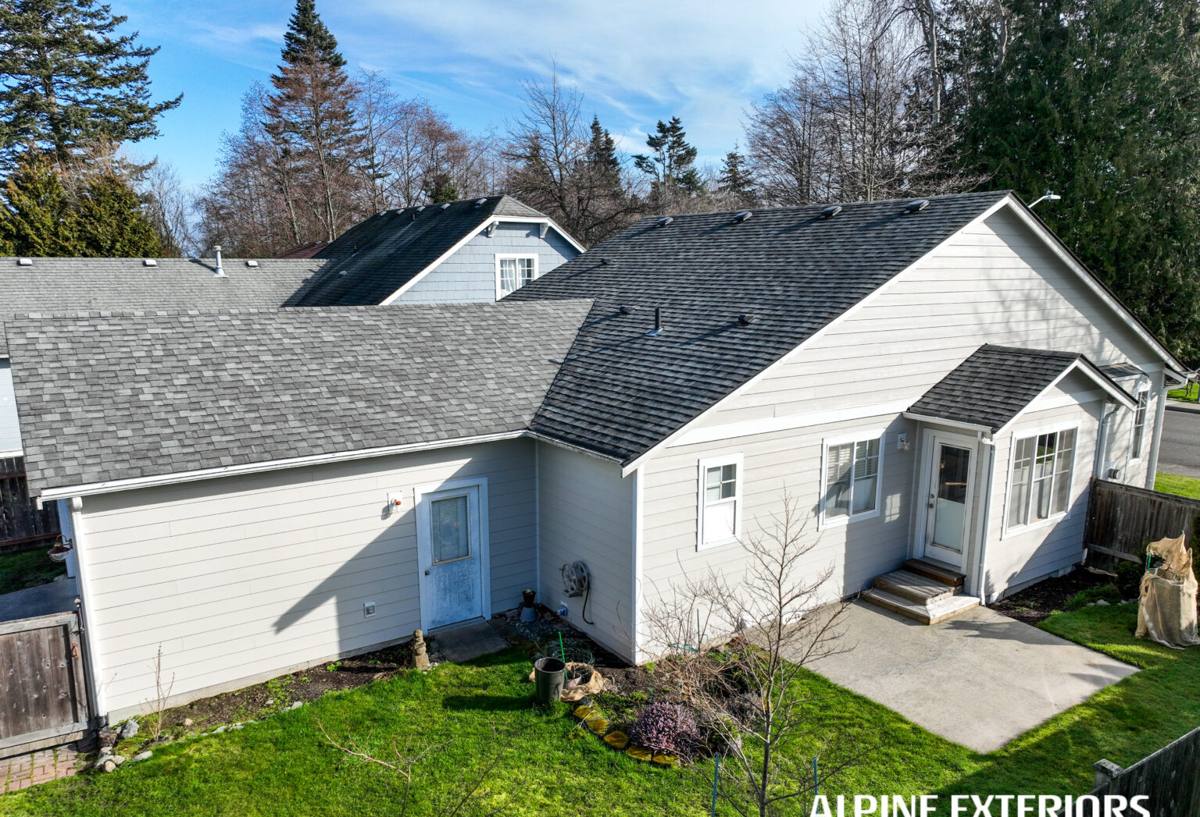
What the Climate Actually Does to a House Here
Driving Rain and Wind-Driven Moisture
Storms coming off the Pacific and funneling through the county don't just fall straight down — wind pushes rain sideways into wall assemblies, especially on the west and south-facing sides of a house. Over years, that drives moisture into seams, laps, and fastener points that weren't detailed correctly the first time. Siding material matters here, but installation detail — flashing, house wrap, proper overlaps — matters just as much.
Moss, Algae, and Constant Shade
Between the tree cover and the cloud cover, a lot of Nooksack-area homes sit in shade for a good chunk of the day, especially in fall and winter. Shade plus moisture is exactly what moss and algae need. On wood-based siding products, that green film isn't just cosmetic — it holds moisture against the surface and accelerates rot underneath. On a properly finished fiber cement surface it's mostly a cleaning issue, not a structural one.
Salt Air From the West
Nooksack isn't beachfront, but Whatcom County's proximity to Boundary Bay and the Strait of Georgia means salt-tinged air does travel inland on stronger weather systems, particularly affecting metal fasteners, flashing, and any finish coating that isn't built for coastal exposure. It's a slower, quieter form of wear than direct spray, but it adds up over a couple of decades.
Why We Only Install James Hardie Fiber Cement
We get asked fairly often why we don't offer vinyl, LP SmartSide, cedar, or primed spruce alongside Hardie. The honest answer is that we used to install a broader mix of products, and the callbacks and maintenance issues we saw over the years — concentrated heavily in wet, shaded, moss-prone jobs like the ones common around Nooksack and greater Whatcom County — pointed almost entirely at the same root causes: wood-based products absorbing moisture at cut edges and fastener points, vinyl deforming or fading under UV and temperature swings, and factory finishes that couldn't stand up to years of damp shade. We standardized on James Hardie fiber cement because it's engineered specifically to resist moisture, doesn't feed mold or rot the way wood-based siding can, and comes with a factory-applied finish designed to hold color and integrity for decades rather than years.
That's not a knock on every home that has vinyl or wood siding on it today — plenty of those installations are doing fine. It's a decision about what we're willing to put our name behind as a company, specifically for this climate.
Where Other Products Fall Short in This Climate
| Material | Real-World Trade-Off Here |
|---|---|
| Vinyl siding | Can warp or buckle with temperature swings; seams and J-channels give moisture a path in during driving rain; color is baked into thin plastic, not repaintable without a full re-clad |
| LP SmartSide / engineered wood | Wood-strand core is vulnerable at cut edges and butt joints if caulking and paint maintenance lapse — a real risk in a shaded, high-moisture area like this |
| Cedar / primed spruce | Beautiful when new, but needs disciplined repainting and moss/algae treatment on a strict schedule; skipped maintenance shows up fast in this climate |
| Cemplank / Allura (other fiber cement) | Similar base material to Hardie, but we standardize on one manufacturer so our crews master one install spec and one warranty process, rather than splitting expertise across brands |
| James Hardie fiber cement | Non-combustible, engineered moisture resistance, factory ColorPlus finish holds up to UV and damp shade, strong transferable warranty when installed to spec |
How the James Hardie System Works
Hardie isn't one product — it's a system, and the line matters for a river-valley, moss-prone area like Nooksack:
- HardiePlank lap siding — the standard horizontal siding most homes use, available in smooth or cedar-textured finishes
- HZ5 climate-engineered formulation — the version built for cold, wet, freeze-thaw regions like ours, versus the HZ10 formulation meant for hot, humid Southern climates
- ColorPlus Technology — a baked-on factory finish that resists fading and chipping far better than field-applied paint, which matters when a house sits in shade most of the year and dries slowly
- HardieTrim and HardieSoffit — matched trim and soffit pieces so the whole exterior envelope, not just the flat wall area, gets the same moisture resistance
Correct installation is what makes the material perform the way it's engineered to: proper clearance off grade and roofing, correctly lapped and caulked joints, and fastener patterns that match Hardie's published specs. We install to that spec every time, which is also what keeps the manufacturer's warranty intact if it's ever needed.
Roofing, Windows, and Decks — The Same Standard
Siding doesn't work in isolation. A roof that's shedding granules or has failing flashing sends water down behind otherwise-good siding. Old windows leak air and moisture at the frame, which shows up as staining or rot on the siding right around them. Decks in this climate take the same rain and moss exposure as walls, just facing upward. We handle all four — siding, roofing, windows, and decks — because a full exterior needs to be looked at as one connected system, not four separate maintenance schedules.
Signs an Exterior Needs Attention
- Green or black staining that comes back within weeks of cleaning
- Soft or spongy siding when pressed, especially near the bottom courses
- Peeling or bubbling paint on wood trim or siding
- Gaps opening up at siding seams, window trim, or corner boards
- Missing or curling roof shingles near valleys or flashing
- Window frames that feel drafty or show wood rot at the sill
- Deck boards that stay damp long after rain has stopped
What a Nooksack Siding Project Involves
1. On-Site Assessment
We walk the exterior, check for moisture damage behind existing siding where accessible, and look at how the house is oriented relative to prevailing wind and shade — details that change the install approach house to house.
2. Tear-Off and Prep
Old siding comes off, the sheathing underneath gets inspected for rot or damage, and any needed repairs happen before anything new goes up. Installing over hidden damage just locks the problem in.
3. Weather Barrier and Flashing
A correctly lapped house wrap and properly flashed windows, doors, and penetrations are what actually stop wind-driven rain — the siding itself is the second line of defense, not the only one.
4. Hardie Installation to Spec
Panels and planks go up following Hardie's published fastening, clearance, and joint-treatment guidelines, which is also what keeps the manufacturer warranty valid.
5. Trim, Caulking, and Final Walkthrough
Trim gets set, joints get properly sealed, and we walk the finished job with the homeowner before calling it done.
Cost Factors for Siding Replacement
| Factor | How It Affects the Project |
|---|---|
| Home size and wall complexity | More corners, dormers, and trim details mean more labor and cut material |
| Extent of hidden damage | Rotted sheathing found during tear-off adds repair scope before new siding can go on |
| Siding profile chosen | Smooth lap, textured lap, and panel/shake styles carry different material and labor costs |
| Trim and accessory scope | Full HardieTrim and soffit replacement costs more than reusing sound existing trim |
| Access and site conditions | Tree cover, tight lot lines, or multi-story walls affect staging and labor time |
Why a Local Crew Matters
A crew that works Whatcom County regularly knows how this specific climate behaves — how much shade a north wall gets in December, how fast moss comes back on a poorly ventilated wall, how wind off the water pushes rain sideways during a fall storm. That knowledge shapes real decisions on site: where extra flashing attention is worth it, which sides of a house need the most careful joint work, and what maintenance schedule actually makes sense here versus a generic recommendation written for a different part of the country.
If you're weighing a siding, roofing, window, or deck project on a Nooksack-area home, we're happy to take a look and walk you through what we're seeing and why. There's no pressure and no obligation — just a straightforward assessment and a free estimate using the form below.