 Blaine Siding
 Siding in Grandview: Built for What This Corner of Whatcom County Throws at a House
Grandview sits close enough to the water that homes here live with a different set of conditions than a house twenty miles inland. Salt-laden air off the Strait, driving rain that comes in sideways during winter storms, and a moss season that can stretch from October through May all put steady pressure on exterior siding. We've worked on enough homes in and around Blaine to know that what holds up in a drier, calmer climate often doesn't hold up here — and that's the lens we bring to every siding job in this neighborhood.
This page walks through what Grandview homes actually face, how we approach siding replacement and repair for this specific area, and why we install one product line and one only: James Hardie fiber cement siding.
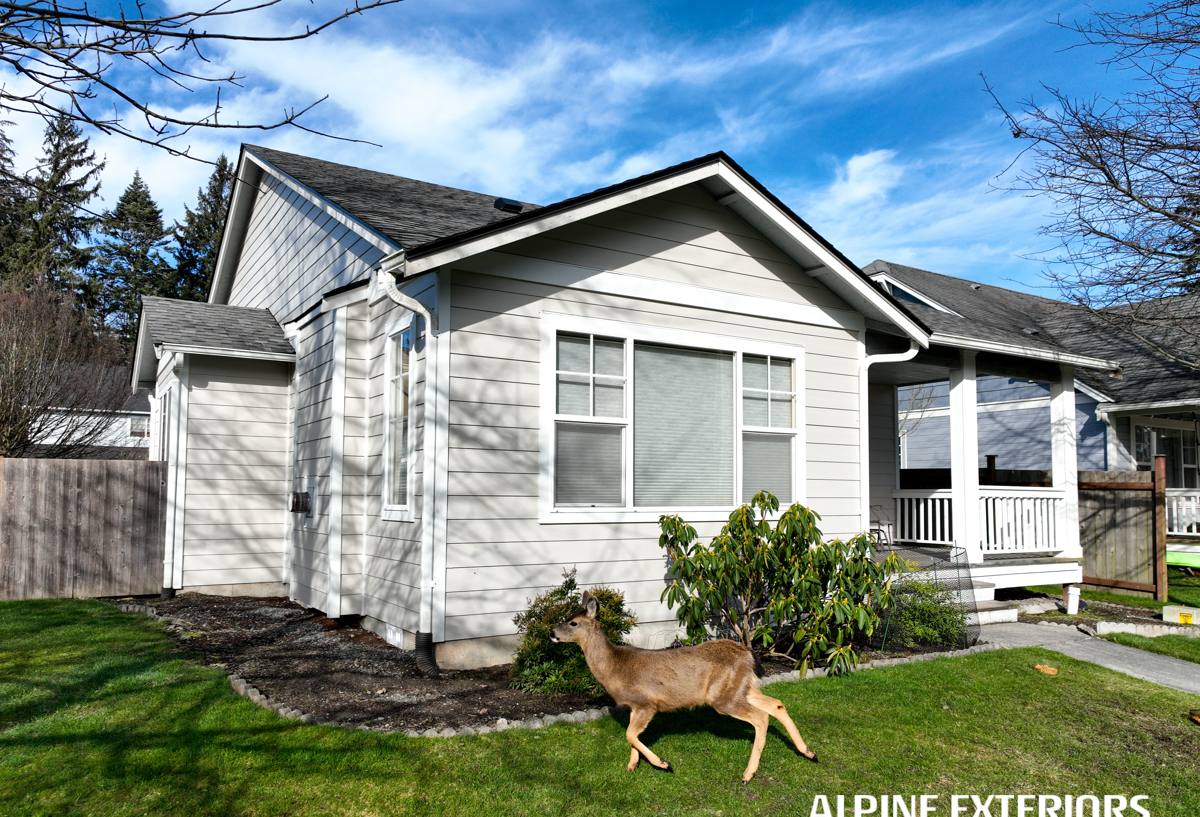
What Grandview's Climate Does to Siding Over Time
Salt Air
Proximity to Semiahmoo Bay and the Strait of Georgia means airborne salt is a constant, low-grade factor in Grandview. Salt accelerates corrosion of fasteners and trim hardware, and it can work into porous or poorly sealed siding materials over years of exposure. It's rarely dramatic — it's cumulative. A house that looks fine at year five can show real wear by year twelve if the siding and fastening system weren't chosen with that exposure in mind.
Driving Rain
Storms coming off the water don't just fall straight down — wind-driven rain gets pushed horizontally into wall assemblies, especially on west- and south-facing elevations. That means siding seams, butt joints, and penetrations around windows and trim take on more moisture load here than they would on a sheltered inland lot. Installation detail — flashing, gapping, caulking practice — matters as much as the siding product itself.
The Long Moss Season
Whatcom County's wet, mild winters and shoulder seasons create ideal conditions for moss and algae growth on north-facing walls, under eaves, and anywhere shade and moisture linger. Some siding materials tolerate this better than others. Surfaces that stay damp longer, or that have a texture and finish that holds organic growth, need more scrubbing, more re-coating, and more maintenance attention year after year.
Why We Only Install James Hardie Fiber Cement Siding
We get asked regularly why we don't offer vinyl, LP SmartSide, or other engineered wood and composite products. The honest answer is that after years of installing and repairing siding across Blaine and Whatcom County, James Hardie fiber cement is the product we trust to perform in exactly the conditions Grandview homes face.
- Non-combustible material — fiber cement doesn't feed a fire the way wood-based products can.
- Engineered for wet climates — Hardie's HZ10 product line is specifically formulated for regions with high moisture exposure, which describes this stretch of coastline well.
- Factory-applied ColorPlus finish — baked-on color resists fading and holds up against salt air and UV exposure better than field-applied paint.
- Dimensionally stable — fiber cement doesn't swell, warp, or rot the way wood and some composite products can when they take on moisture repeatedly.
- Strong transferable warranty — backed by a manufacturer with decades of track record in coastal and marine climates.
That's not a knock on every alternative product in the market. It's a statement about what we're willing to put our name behind and warranty as a contractor. Once we standardized on Hardie, we stopped seeing the callback patterns — moisture intrusion, premature fading, moss staining that won't scrub out — that used to come with other materials.
Comparing Common Siding Options for a Grandview Home
| Material | Salt Air Resistance | Moisture/Moss Behavior | Long-Term Maintenance |
|---|---|---|---|
| James Hardie Fiber Cement | Strong — non-corrosive material, factory finish holds color | Doesn't rot or swell; surface can be cleaned without damaging the substrate | Occasional washing; repainting not typically needed for many years |
| Vinyl Siding | Moderate — can become brittle over time with UV and temperature swings | Won't rot, but seams and J-channels can trap moisture behind panels | Low, but color fades and panels can warp or crack |
| Engineered Wood (e.g. LP SmartSide) | Moderate — treated to resist moisture, but wood-based core is still vulnerable at cut edges and seams | More prone to swelling and edge deterioration if moisture reaches the core | Higher — edge sealing and coating upkeep matters a lot here |
| Cedar/Primed Wood | Weak to moderate without diligent upkeep | Prone to moss growth, rot, and repainting needs in this climate | Highest — regular refinishing, sealing, and moss treatment |
This table reflects general material behavior, not a claim about every product on the market failing outright. The point is simple: some materials need more active homeowner maintenance to perform well in a salt-air, high-rainfall environment, and Grandview is exactly that kind of environment.
How We Approach a Siding Project in This Area
Assessment First
Every job starts with a look at the current siding condition, the house's exposure (which elevations take the brunt of wind-driven rain, which stay shaded and damp longer), and any moisture intrusion already present around windows, corners, and the foundation line. In an area like Grandview, we pay close attention to butt joints and any spots where old caulking has failed — that's usually where the salt air and rain have done the most damage.
Installation Detail Matters as Much as the Product
James Hardie siding performs the way it's designed to only when it's installed to the manufacturer's specifications — correct fastener spacing and type, proper clearance from grade and roofline, correct flashing at windows and penetrations, and appropriate gapping and caulking at joints. We install to those specs on every job, which is part of why manufacturer warranties stay intact.
Full Exterior Perspective
Siding doesn't exist in isolation. We also handle roofing, windows, and decks, and on a lot of Grandview homes those systems interact — a roofline that dumps water onto a wall, an old window that's been letting moisture behind the siding for years, a deck ledger board tied into a wall that needs the siding pulled back to repair correctly. Because we do all four trades, we can flag those issues during a siding estimate instead of treating siding as a standalone problem.
Signs a Grandview Home May Need Siding Attention
- Visible moss or dark streaking on north-facing or shaded walls that keeps coming back after cleaning
- Soft spots, bubbling, or peeling paint, especially near the bottom courses or around window trim
- Gaps or separation at butt joints and corners where caulking has dried out or pulled away
- Rust staining running down from fasteners or trim hardware
- Visible warping, cupping, or swelling in existing siding boards or panels
- Rising energy bills that may point to compromised insulation behind failing siding
None of these on their own mean a full replacement is necessary — sometimes it's a repair, sometimes it's better flashing and caulking. That's why an in-person look matters more than guessing from a list.
What a Siding Project Timeline Looks Like
Most single-family siding replacements in this area run from a few days to a couple of weeks depending on the size of the home, whether trim and flashing need replacement, and weather windows — which in Whatcom County means planning around the wetter months when possible. We'll walk through a realistic schedule as part of any estimate, including how we handle work if rain moves in mid-project, which is a real possibility here more months than not.
Why a Local Crew Matters in Grandview
A contractor working across drier, calmer regions doesn't necessarily think about salt exposure or moss-prone shade patterns as a daily reality. We're based in Blaine, we work throughout Whatcom County, and the coastal conditions that affect Grandview homes are the same conditions we plan around on every job — not an exception we have to remember to account for. That local familiarity shows up in the small decisions: where to add extra flashing, which elevations need more attention to sealing, how to sequence work around the weather patterns this area actually gets.
Get a Straightforward Estimate
If you're noticing moss buildup, fading, moisture staining, or just want an honest read on how your current siding is holding up against the salt air and rain here in Grandview, we're glad to take a look. The estimate is free, there's no pressure, and we'll tell you plainly whether you're looking at a repair, a partial replacement, or a full re-side — along with what that would look like in James Hardie fiber cement.