 Blaine Siding
 Two Fiber Cement Products, One Real Difference
When homeowners in Blaine start comparing siding quotes, they sometimes get bids that mix James Hardie with a competing fiber cement brand like Cemplank. This isn't a case of comparing a premium product against a cheap imitation — both are legitimate cellulose-reinforced fiber cement siding, built on the same basic chemistry: sand, cement, and cellulose fiber, cured into a rigid board that resists fire, rot, and insects far better than wood or engineered wood siding. If you've read our page on why we don't install LP SmartSide or vinyl, this comparison is different in kind. Cemplank isn't a lesser category of product. It's a real competitor in the fiber cement space, and it deserves a fair, specific explanation rather than a vague "we just don't like it."
We only install James Hardie products on homes in Blaine and the rest of Whatcom County. That's a business decision built around warranty backing, factory finish consistency, regional support, and product engineering suited to our exact climate — not a claim that Cemplank is defective or unsafe. Here's the reasoning, laid out honestly.
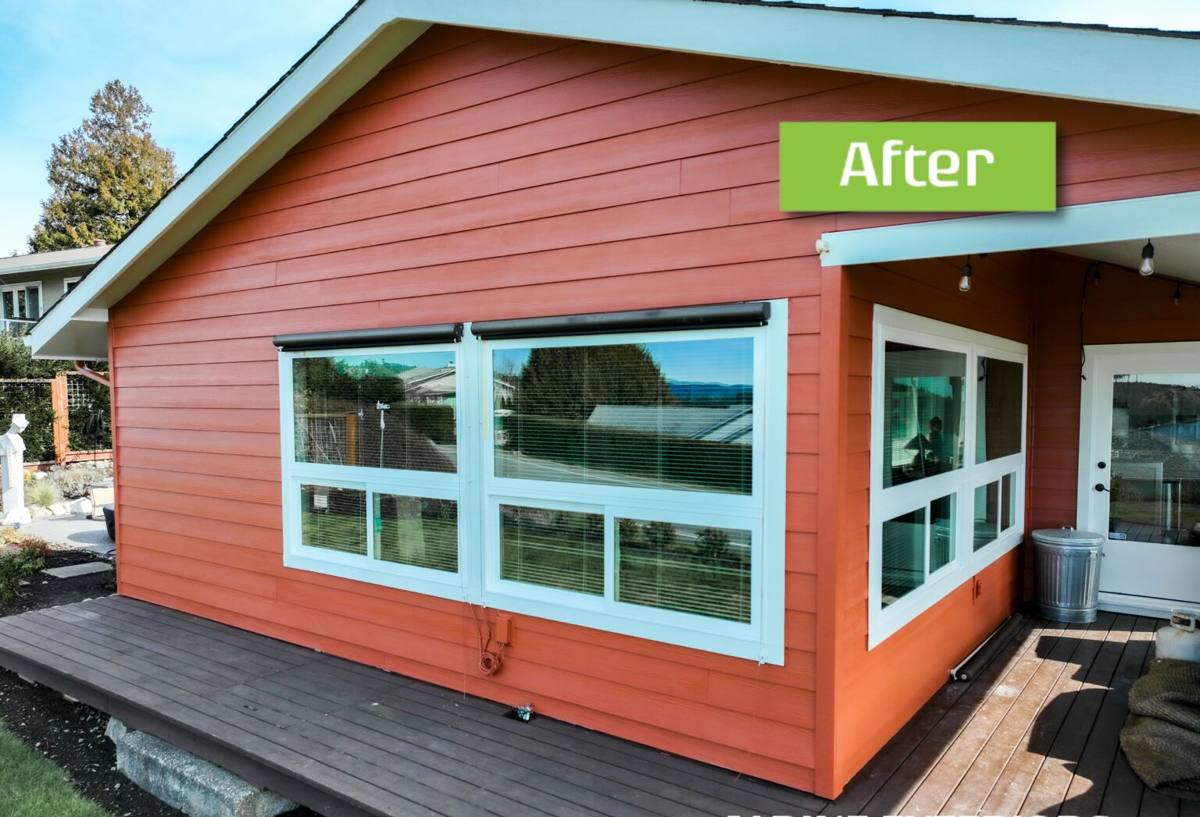
What Cemplank Gets Right
Fiber cement as a category earned its reputation for good reason, and Cemplank shares in that. It's non-combustible, which matters for insurance rates and fire-safety-conscious homeowners. It doesn't attract carpenter ants or woodpeckers the way cedar and engineered wood products can. It holds paint and factory finishes far longer than primed wood siding, and it doesn't swell, delaminate, or rot the way OSB-based products do when moisture gets past a seam. In a market where contractors sometimes pitch vinyl or engineered wood as a "budget-friendly" alternative, a fiber cement product like Cemplank is a genuinely durable choice compared to those lower tiers. We're not disputing that.
Where the real differences show up is not in the raw material, but in everything built around the material: the finish system, the warranty, and the support network standing behind the board once it's on your wall.
Where the Difference Actually Shows Up
Factory Finish and Color Consistency
James Hardie's ColorPlus finish is a multi-coat, baked-on factory finish applied and cured under controlled conditions before the boards ever leave the plant. That process is backed by a dedicated finish warranty separate from the substrate warranty, and it's specifically engineered to resist fading, chipping, and cracking in exterior exposure. It also means color-matched trim, fascia, and accessories are available as a coordinated system, not something a painter has to approximate on site.
Fiber cement finish systems vary by manufacturer, and not every brand runs the same multi-coat, factory-cured process with the same track record. When a finish is inconsistent between production runs, or when a homeowner needs to match an addition or repair a section five or ten years after the original install, small differences in the finish process become very visible on a house — especially under the flat, even light common on overcast Whatcom County days.
Warranty Structure and Transferability
Hardie's limited warranty on its siding substrate is non-prorated for the life of the coverage period, and its ColorPlus finish carries its own separate warranty. Both are transferable to a new owner if the home sells, which matters to buyers and appraisers alike. Warranty terms across the fiber cement category aren't standardized — some competing brands prorate coverage after the first several years, meaning the manufacturer's contribution toward a repair shrinks over time even though the siding is still expected to perform. Read any siding warranty closely, not just the headline number of years.
Regional Distribution and Installer Support
This is the practical issue that matters most day to day. James Hardie has built a deep distribution and dealer network across the Pacific Northwest, along with a large, established base of certified installers who train specifically on Hardie's fastening patterns, clearances, and joint treatment. That means product is reliably in stock regionally, technical support is a phone call away, and if a board gets damaged by a falling branch or a landscaping accident, a matching replacement is realistically available.
Smaller-footprint brands in this category, including Cemplank, don't always carry the same regional stocking depth in the Pacific Northwest that they might have in other parts of the country. That can translate into longer lead times for repairs, thinner local technical support, and a smaller pool of installers who've been specifically trained on that brand's install specifications — which matters more than it sounds like, because fiber cement is installation-sensitive. Improper clearances, nailing patterns, or joint flashing can void a warranty regardless of which brand is on the wall.
Product Engineering for Our Climate Zone
James Hardie engineers its HardieZone system around regional climate categories, with specific formulations for high-moisture, high-humidity regions like ours — the kind of siding that has to shed wind-driven rain off Semiahmoo Bay, resist salt air corrosion on fasteners and trim, and survive a moss season that keeps north-facing walls damp for months at a stretch. Choosing a siding line engineered for that specific climate zone, backed by installation guidance written for it, is a meaningfully different proposition than a general-purpose fiber cement board.
Side-by-Side: What to Actually Compare
| Factor | James Hardie | Cemplank / comparable fiber cement |
|---|---|---|
| Core material | Fiber cement | Fiber cement |
| Factory finish system | ColorPlus, multi-coat baked-on, separate finish warranty | Varies by brand and product run |
| Substrate warranty | Non-prorated limited warranty, transferable | Terms vary; check for proration schedule |
| Climate engineering | HardieZone system, PNW-specific formulation | Not zone-specific in the same way |
| Regional stock & support in Whatcom County | Established dealer network | Thinner regional distribution historically |
| Certified installer base locally | Large, well-established | Smaller pool |
Why Local Support Isn't a Small Detail in Blaine
Coastal siding takes a specific kind of beating. Salt air off the water accelerates corrosion on fasteners, trim screws, and any exposed metal flashing at butt joints and window heads. Driving rain, common in winter storms here, tests every lap joint and caulk line on a house. And Whatcom County's long, damp moss season means algae and moss growth on shaded or north-facing siding is a near-guarantee if the finish and installation aren't built to handle sustained moisture. None of that is exotic — it's just what siding here has to live through every year, for decades.
That's exactly the scenario where a thin regional support network becomes a real problem instead of a hypothetical one. If a board needs replacing after storm damage, or a section needs to be color-matched for an addition, the question isn't just "is the material good" — it's "can we actually get a matching board here, fast, from someone trained to install it correctly." That's the gap we weren't willing to build our business around.
Why We Standardized on James Hardie
We made a deliberate decision to install one fiber cement brand, not several, and it comes down to consistency we can stand behind. Our crews are trained specifically on Hardie's install specifications — clearances, fastening schedules, joint treatment — rather than switching methods board to board. We can quote a warranty in plain language because we know exactly what it covers. We can source matching product for repairs and additions years down the road because Hardie's regional distribution in the Pacific Northwest is deep and reliable. And the HardieZone-engineered lines are specifically built for the moisture and salt exposure this stretch of Whatcom County deals with every winter.
That's the whole case. Not that Cemplank is unsafe or poorly made — it's a legitimate fiber cement product — but that the finish system, warranty structure, and regional support behind James Hardie gave us a standard we could commit to on every job, and stand behind years after the crew leaves.
What to Ask Before You Sign With Any Contractor
- Which specific product line and finish system are they quoting — not just "fiber cement"?
- Is the warranty non-prorated, and for how long? Get it in writing, not verbally summarized.
- Is the installer certified or specifically trained on that brand's fastening and clearance specs?
- Can matching product realistically be sourced locally for a future repair or addition?
- Does the quoted product line account for coastal moisture and salt air, or is it a general-purpose formulation?
If you're planning a siding project in Blaine and want a straight answer about what product makes sense for your home and budget, we're happy to walk the exterior with you and put together a free, no-pressure estimate.