 Blaine Siding
 Exterior Work for a Waterfront Neighborhood
Blaine Harbor sits right where Whatcom County meets the water, with Drayton Harbor and Semiahmoo Bay shaping the daily weather for every home nearby. That waterfront location is part of what makes the neighborhood desirable, and it's also exactly why homes here take a different kind of beating than houses ten miles inland. Wind off the water carries salt. Rain comes in sideways more often than it falls straight down. Shade from mature trees and marine cloud cover keeps siding and roofing damp for days after a storm passes. We've worked on enough homes along this stretch of the county to know that "standard" exterior products built for a dry climate simply don't hold up the same way here.
This page walks through what we actually see on Blaine Harbor homes, how salt air and coastal moisture affect siding, roofing, windows, and decks, and how we approach exterior projects in this specific environment.
What Salt Air Does to a House Over Time
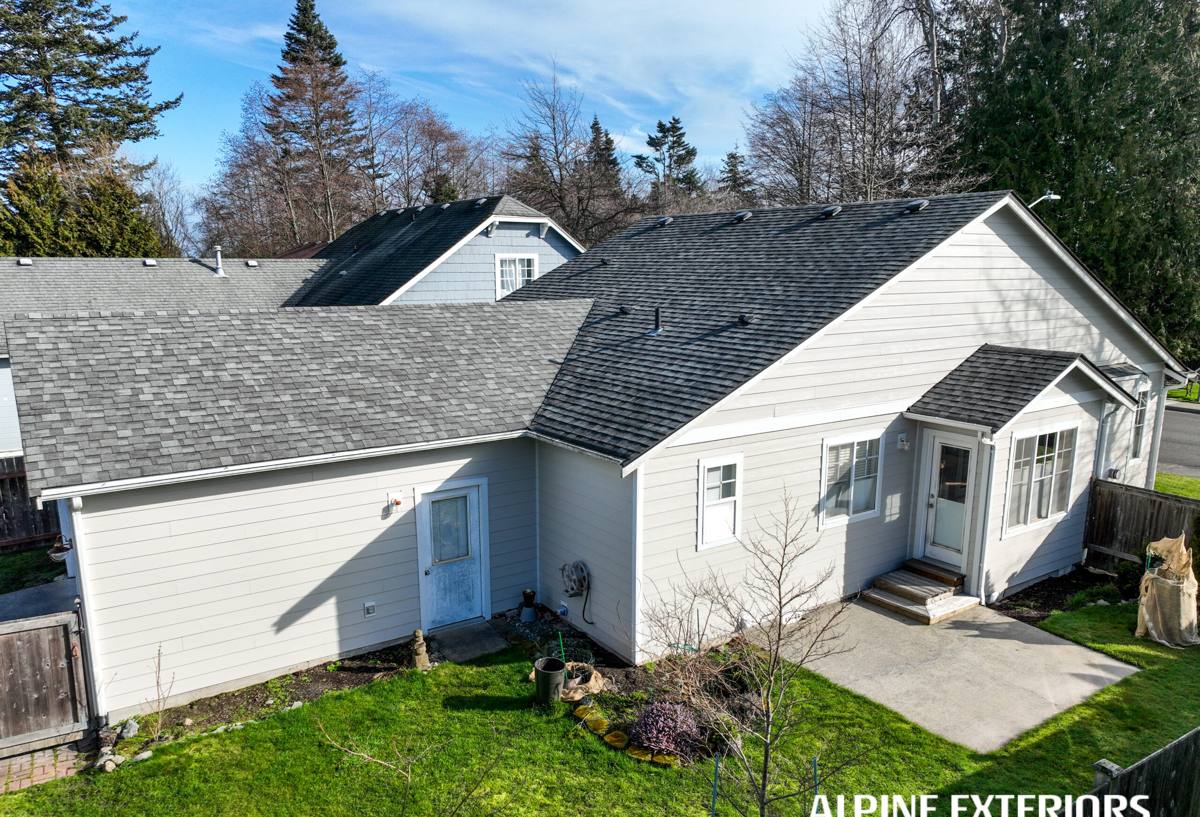
Salt in the air isn't dramatic — it doesn't show up as a single event the way a windstorm or a hard freeze does. It's a slow, cumulative process. Airborne salt settles on exterior surfaces, holds moisture against them longer, and accelerates corrosion on anything metal: fasteners, flashing, hinges, and trim. On siding specifically, salt exposure tends to show up as:
- Faster fading and chalking on painted wood and lower-grade composite products
- Corrosion around nail heads and metal trim pieces that weren't rated for coastal exposure
- Softening or swelling at butt joints and seams where salt-laden moisture sits longest
- Premature failure of caulking and sealants around windows and penetrations
None of this means a house near the water is doomed to constant repairs. It means the materials and installation details matter more here than they do in a drier, inland part of Whatcom County. A product and installation approach that's "good enough" elsewhere can fall short a few blocks from the water.
Moss, Shade, and the Long Wet Season
Blaine Harbor's tree cover and marine layer keep a lot of surfaces shaded and damp well into what would be considered dry season elsewhere. That combination is close to ideal for moss and algae growth. On roofing, moss holds moisture against shingles and can lift them at the edges over time. On siding, it shows up as green or black streaking, especially on north-facing walls and anywhere water runs off a roofline without a clean path away from the wall.
Why This Matters for Material Choice
Wood and wood-composite siding products absorb moisture more readily than fiber cement, which means moss and mildew get a foothold faster and repainting or resealing becomes a recurring chore. Vinyl doesn't rot, but it flexes with temperature swings and can trap moisture behind it at seams if installation isn't precise — and it doesn't offer much resistance to the kind of impact damage that comes with wind-driven debris off the water. Fiber cement handles the wet-shade cycle differently: it doesn't feed mold and mildew the way wood does, and it holds its factory finish through repeated wet-dry cycles far longer than field-applied paint.
Why We Install Only James Hardie Fiber Cement
We made a decision as a company to install James Hardie fiber cement siding exclusively — not LP SmartSide, not vinyl, not Cemplank or Allura, not primed spruce or cedar. That's a deliberate standard, not a lack of options.
Fiber cement is non-combustible, which matters on its own merits, but in a marine environment its real advantage is dimensional stability. It doesn't swell and shrink with moisture the way wood-based products do, which means fewer opened joints, less caulk failure, and a finish that keeps its seal longer. James Hardie's ColorPlus finish is baked on at the factory under controlled conditions, rather than brushed or sprayed on site, which gives it better adhesion and color retention against UV and salt exposure than field-applied paint typically achieves. Hardie also engineers specific product lines (their HZ5 designation, for example) for harsher climate zones, which is directly relevant to a wind- and moisture-exposed location like this one.
We're not going to tell a homeowner that every other product is unusable — plenty of houses around the country wear vinyl or wood siding without major issues. But for the specific conditions Blaine Harbor deals with — salt, wind-driven rain, and a long wet season — we've concluded that fiber cement is the material that holds up with the least maintenance and the fewest surprises, and it's the only siding we put our name behind.
Siding Material Comparison for a Coastal Climate
| Material | Moisture Behavior | Salt Air Resistance | Maintenance |
|---|---|---|---|
| James Hardie Fiber Cement | Dimensionally stable, doesn't swell/rot | Strong; factory finish holds up well | Low — occasional wash, no repainting cycle |
| Vinyl | Doesn't rot but can trap moisture at seams | Fair; can chalk and fade near saltwater | Low, but prone to cracking under impact |
| Wood / Cedar | Absorbs moisture, prone to swelling | Weak without diligent upkeep | High — regular repainting/sealing |
| LP SmartSide / Engineered Wood | Better than solid wood, still moisture-sensitive at cut edges | Moderate; edge sealing is critical | Moderate — edge and seam inspection needed |
Roofing, Windows, and Decks Face the Same Conditions
Siding isn't the only exterior surface fighting salt air and moss in this neighborhood, and we handle roofing, windows, and decks alongside siding for that reason — it's easier to get the whole exterior envelope working together than to treat each surface separately.
Roofing
Moss and algae growth on roofing follows the same pattern as siding: shaded, damp areas accumulate growth fastest, and prolonged moss coverage can lift shingle edges and shorten roof life. Proper ventilation and clean water paths off the roof reduce how much moisture sits against both the roof and the siding below it.
Windows
Window seals and flashing take on outsized importance near the water. A failed seal lets moisture behind the siding at exactly the kind of penetration point that's hardest to catch early. When we replace siding, we treat window flashing as part of the job, not an afterthought — it's often the actual source of moisture problems that get blamed on the siding itself.
Decks
Decks facing the water get direct salt spray and constant UV exposure with no roof overhang to protect them. Fastener corrosion and finish breakdown tend to show up here faster than anywhere else on the house, which is worth factoring in if a deck rebuild is on the horizon alongside siding work.
What Our Process Looks Like in Blaine Harbor
Every house on the water side of Blaine handles wind and moisture a little differently depending on tree cover, orientation, and how exposed it is to the water. Our process accounts for that rather than applying one generic approach:
- Walk the exterior and identify moisture entry points, moss patterns, and areas of existing damage before quoting anything
- Check flashing, trim, and window seals — the details that determine whether new siding lasts
- Recommend the right James Hardie product line and profile for the home's specific exposure
- Install to manufacturer spec, including proper fastening, clearances, and joint treatment for a marine environment
- Walk the finished job with the homeowner and explain what maintenance, if any, to expect
Signs a Blaine Harbor Home May Need Exterior Attention
- Green or black streaking on shaded or north-facing walls
- Soft spots or visible swelling at siding seams and butt joints
- Rust staining below nail heads or metal trim
- Peeling or chalking paint that's returned within a year or two of repainting
- Moss buildup on the roof, especially near valleys or under overhanging branches
- Caulking that's cracked, shrunk, or pulled away around windows and trim
Cost Factors for a Blaine Harbor Siding Project
| Factor | Why It Affects Cost |
|---|---|
| Existing siding removal | Wood or damaged siding often needs full tear-off before new fiber cement goes on |
| Moisture damage to sheathing | Rot found during removal may require sheathing repair before installation continues |
| Home size and wall complexity | More corners, dormers, and trim details mean more labor and cutting |
| Product line and profile | HZ5 climate-specific panels and premium ColorPlus colors cost more than base lines |
| Site access | Waterfront lots with limited access or steep grades can affect staging and labor time |
Choosing a Contractor for a Coastal Property
Not every exterior contractor works this close to saltwater regularly, and it shows in the details — flashing choices, fastener selection, and how joints are treated all matter more here than they would on an inland job. A few things worth asking any contractor bidding coastal work:
- Do they have direct experience with homes exposed to salt air and marine moisture, not just general siding work?
- What fastener and flashing materials do they use, and are those materials rated for coastal exposure?
- Will they inspect for existing moisture damage before quoting, or only after removal begins?
- Do they carry manufacturer certification for the products they install?
- Are they a local, licensed, and insured Whatcom County business — not a crew passing through from out of the area?
A local crew that works this coastline regularly has already seen how a given wall orientation, tree line, or lot handles wind and rain — that familiarity shows up in fewer surprises during the job and a better outcome once it's done.
Get a Free, No-Pressure Estimate
If you're weighing a siding, roofing, window, or deck project on a Blaine Harbor property, we're happy to walk the exterior with you, point out anything worth knowing about its current condition, and put together a straightforward estimate — no pressure, no hard sell. The form below is the fastest way to get that conversation started.