 Blaine Siding
 Siding in Sumas: A Border Town With Its Own Weather Pattern
Sumas sits at the far edge of Whatcom County, right up against the Canadian border, in the low, flat farmland of the Nooksack River valley. It's a different setting than the open coastline a few miles west, but it comes with its own version of the same problem: this part of the Pacific Northwest stays wet, humid, and shaded for long stretches of the year, and exterior materials either handle that or they don't. Homes in and around Sumas deal with driving rain moving through the valley, damp air that lingers close to the ground on cool mornings, and a moss season that can run nearly year-round on shaded walls and rooflines. None of that is unique to Sumas, but the valley setting tends to hold moisture in place a little longer than it would on higher, more exposed ground.
We work siding, roofing, windows, and decks across Whatcom County, including the smaller communities out toward the border that don't always get the same attention from contractors based closer to Bellingham or the coast. On the siding side, we install James Hardie fiber cement exclusively — no LP SmartSide, no vinyl, no Cemplank, no Allura, no primed spruce or cedar. That's a standard we hold ourselves to, and this page explains both the reasoning behind it and what a siding project looks like for a home out this way.
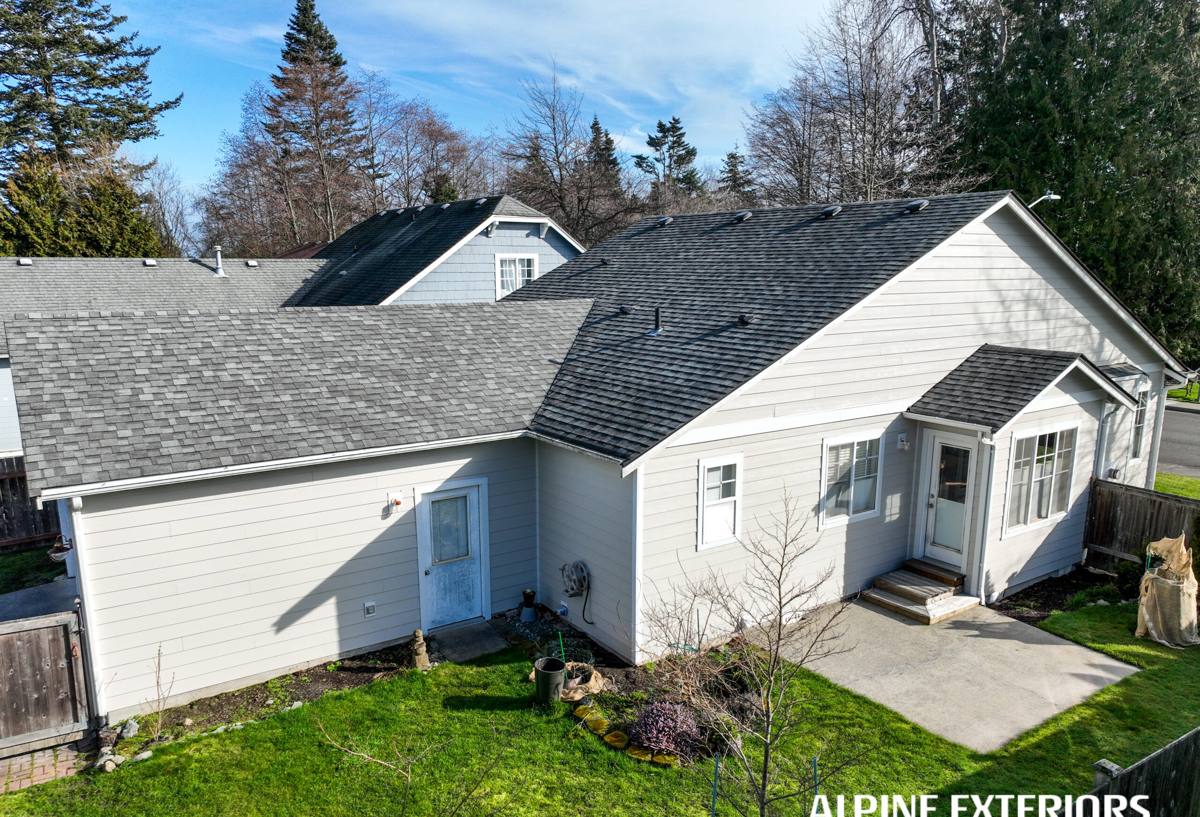
What the Local Climate Does to Siding Over Time
Persistent Moisture and Valley Dampness
Low-lying valley terrain like the ground around Sumas tends to hold humidity and morning fog longer than open, breezy sites do. That extra dwell time matters for siding: materials that need to dry out between rain events don't get the same drying window here that they would somewhere with more consistent wind and sun exposure. Over years, that shows up as swelling, soft spots, or paint failure on materials that aren't built to shrug off sustained moisture.
Driving Rain and Wind-Pushed Weather
Storm systems moving through this part of Washington rarely drop rain straight down. Wind pushes it sideways into siding laps, trim joints, and window flashing, and that wind-driven component is what actually determines whether a wall system stays dry behind the cladding or lets water find its way in. It's a detail that matters more than the material's rating on paper — installation quality is what keeps wind-driven rain out, regardless of what's nailed to the wall.
A Long, Shaded Moss Season
Tree cover and shaded lot lines are common in and around Sumas, and combined with the region's damp climate, that adds up to a moss and mildew season that can run most of the year on north-facing or tree-shaded walls. Porous or moisture-retentive siding materials become a growth surface over time in conditions like this, and a wall that stays damp and shaded will always be more moss-prone than one that gets regular sun and airflow — a real factor when we're looking at how a house sits on its lot.
Why We Install Only James Hardie Fiber Cement
We settled on one siding system after seeing, on jobs across Whatcom County, the gap between what a spec sheet promises and what actually holds up on a real wall through several wet PNW winters.
- Non-combustible core: Fiber cement doesn't burn the way wood-based siding products can, which matters for homeowner safety and often for insurance pricing.
- Factory-applied ColorPlus finish: Baked on under controlled factory conditions instead of field-applied, so it holds color and adhesion far longer under sustained moisture and UV exposure than a site-painted finish.
- Climate-engineered HZ product lines: Hardie's HZ5 formulation is built for regions with heavy moisture exposure and freeze-thaw cycling, which fits Whatcom County's damp, variable climate well.
- Dimensional stability: Fiber cement doesn't swell, cup, or warp the way engineered wood siding can after repeated wet-dry cycles in a humid valley climate.
- A strong transferable warranty: Hardie backs its products with a solid, transferable warranty structure, as long as installation follows their published specifications.
We don't install LP SmartSide, vinyl siding, Cemplank, Allura, primed spruce, or cedar. Each of those has a place in the wider market, and plenty of homeowners are happy with them elsewhere. Our decision is a professional one specific to what we see holding up in this climate: we'd rather commit fully to one system we trust than offer something cheaper that quietly pushes maintenance costs onto the homeowner a few years down the line.
Common Trade-Offs With Other Siding Materials in a Damp Valley Climate
| Product | Common trade-off in sustained moisture and shade |
|---|---|
| Vinyl siding | Can warp under temperature swings and moisture cycling; panel seams give wind-driven rain a path behind the cladding |
| LP SmartSide / engineered wood | Wood-strand core is more sensitive at cut edges and fasteners than fiber cement, a concern under prolonged valley humidity |
| Primed spruce or cedar | Needs ongoing paint and moisture upkeep to avoid rot; shaded, damp lots accelerate the wear cycle on painted wood |
| Other fiber cement brands | May not offer a climate-specific HZ-style formulation or the same factory-finish warranty depth as James Hardie |
How a Siding Project Runs for a Sumas-Area Home
Inspection and Estimate
Every project starts with a straightforward look at the house — current siding condition, any signs of trapped moisture or sheathing issues, and how shade and airflow vary across different sides of the home. On a shaded, tree-lined property that assessment often looks different wall to wall, and it's what drives the estimate rather than a flat per-square-foot number.
Prep and Moisture Check
Before new siding goes up, we check what's underneath it. Old siding, especially anything that's been holding moisture against the sheathing for years, can hide rot or soft spots that need to be addressed before a new product goes on. Skipping this step is one of the most common ways a siding job fails early, regardless of the material chosen.
Installation to Manufacturer Spec
James Hardie's warranty and long-term performance both depend on installation following the manufacturer's published details — proper clearances, correct fastener patterns, flashing at every penetration and transition. We install to that spec as standard practice, not as an upsell, because it's the difference between siding that performs for decades and siding that looks fine for a few years before problems start showing up behind the wall.
Finish and Walkthrough
Once installation is complete, we walk the property with the homeowner, review the work at each elevation, and go over care and maintenance expectations specific to the site — including where moss and moisture pressure are likely to concentrate given the home's shade and exposure.
Roofing, Windows, and Decks Around Sumas
Siding rarely fails in isolation. A roof that's shedding water improperly, a window with a failed seal, or a deck ledger board holding moisture against the house all tend to show up eventually as a siding problem, even though the root cause is somewhere else on the building envelope. Because we handle all four trades, we can look at a Sumas-area home as one connected system rather than treating siding as a standalone project — catching a flashing issue at the roofline or a window that needs re-sealing before it turns into a bigger repair.
Why a Local Crew Matters for This Kind of Work
A contractor who mainly works subdivisions closer to Bellingham or the coast doesn't necessarily have a feel for how valley dampness and shaded lots near the border behave differently than more exposed, breezy sites. We work across Whatcom County regularly, including the smaller communities out toward Sumas that don't always get the same attention from crews based elsewhere in the county. That means showing up for the walkthrough, being reachable during the project, and standing behind the work afterward — not disappearing once the invoice is paid.
What to Ask Before Hiring a Siding Contractor
- Is the crew installing to the manufacturer's published spec, including flashing and fastener details, or just "putting up siding"?
- Who is doing the actual installation — the company's own crew, or subcontracted labor with no direct accountability?
- Does the estimate account for prep work like moisture checks and sheathing repair, or is it a flat per-square-foot number regardless of what's found underneath?
- Is the warranty transferable, and does it depend on installation meeting the manufacturer's requirements?
- Does the contractor work in this area regularly, or is this a one-off trip out from somewhere else?
Cost Factors for a Siding Project in This Area
| Factor | Why it affects the project |
|---|---|
| Home size and wall complexity | More corners, trim details, and elevation changes mean more labor and material |
| Condition of existing sheathing | Hidden moisture damage found during tear-off adds repair scope before new siding goes on |
| Shade and moisture exposure | Heavily shaded or tree-lined lots may need extra attention to ventilation and moisture management details |
| Trim and accessory choices | Corner treatments, trim boards, and color selections affect both material cost and install time |
| Access and site conditions | Rural or larger lots can affect staging, scaffolding, and overall project timeline |
If you're weighing a siding project for a home in or around Sumas, we're glad to come take a look and put together a straightforward, no-pressure estimate — just fill out the form below to get started.