 Blaine Siding
 Roofing Built for Blaine Harbor's Specific Conditions
Blaine Harbor sits right where the weather off the Strait of Georgia meets the everyday reality of Whatcom County winters: salt-laden air, long stretches of driving rain, and short, dim days that keep roofs damp for weeks at a time. A roof here isn't just shedding water occasionally during a storm — it's managing near-constant moisture exposure for a good chunk of the year, plus the corrosive effect of salt air on metal components. Asphalt shingle roofing can absolutely handle this environment, but only when the materials and installation details are chosen with these specific conditions in mind, not just installed the way they'd be installed inland.
This page covers what we actually do differently for homes in and around Blaine Harbor, why those differences matter, and what you should expect from a properly installed asphalt shingle roof in this part of the county.
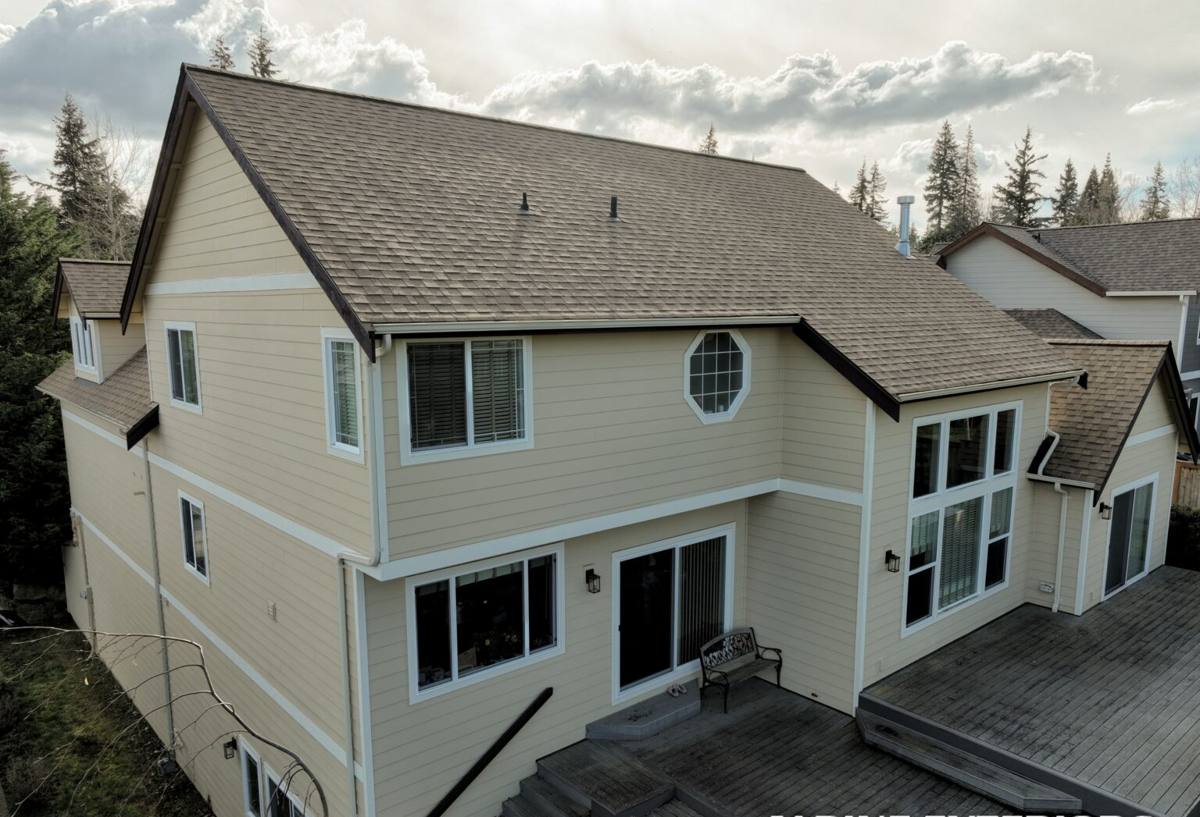
What Blaine Harbor's Climate Actually Does to a Roof
Salt Air
Proximity to the water means airborne salt settles on every exterior surface, roofs included. Over time, salt exposure accelerates corrosion on unprotected or lower-grade metal — nail heads, flashing, and vent components in particular. It doesn't damage the shingles themselves in a dramatic way, but it shortens the useful life of the metal details that keep water out around chimneys, valleys, and penetrations. That's why the fastener and flashing choices on a harbor-area roof matter more than they would twenty miles inland.
Driving Rain
Storms coming off the water tend to arrive with wind behind them, which means rain doesn't just fall straight down — it gets pushed sideways and up under shingle edges, around vents, and into any gap in the underlayment. A roofing system that's fine in a calm, straight-down rain can still leak in wind-driven rain if the underlayment, flashing laps, and shingle nailing pattern weren't installed with that in mind.
Moss Season
Whatcom County's long, cool, wet stretch from fall through spring is close to ideal growing conditions for moss and algae. North-facing slopes and roof sections shaded by trees are especially prone to it. Left unmanaged, moss holds moisture against the shingle surface, works its way under shingle edges as it grows, and can lift tabs over time — turning a cosmetic issue into a moisture-entry problem.
Getting the Shingle Selection Right
Not every asphalt shingle is a good fit for a harbor-adjacent roof. We steer homeowners toward products with the following characteristics, and explain the trade-offs honestly rather than upselling the most expensive option by default.
| Shingle Type | Best Fit For | Trade-Offs to Know |
|---|---|---|
| Standard 3-tab | Budget-conscious re-roofs on simple roof lines | Shorter lifespan, less wind resistance, thinner algae-resistant coating options |
| Architectural (laminated) shingle | Most Blaine Harbor homes — better wind rating and moisture shedding | Higher upfront cost than 3-tab, but longer service life offsets it |
| Algae-resistant (AR) shingle | Roof sections that are shaded, north-facing, or tree-covered | Slightly higher cost; the copper- or zinc-infused granules lose effectiveness gradually over decades, not instantly |
| High-wind rated shingle | Exposed roof planes facing open water or prevailing storm direction | Requires matching high-wind nailing pattern to actually deliver the rating |
For most Blaine Harbor homes, we recommend a laminated architectural shingle with algae-resistant granules as the baseline, then adjust based on how exposed the roof is and how much shade the property gets. A shingle rated for wind resistance is only as good as the nailing pattern behind it — a correctly fastened standard shingle often outperforms a premium shingle installed with a shortcut nailing job.
The Installation Details That Actually Matter Here
Ice-and-Water Shield at Vulnerable Points
Even though Blaine doesn't see heavy snow loads most winters, ice-and-water membrane isn't just an ice-dam product — it's a self-sealing barrier that's valuable anywhere wind-driven rain can push water under shingles. We apply it at eaves, valleys, and around all roof penetrations (vents, chimneys, skylights) as standard practice on harbor-area homes, not as an upsell.
Underlayment Coverage
A synthetic underlayment with properly lapped and sealed seams goes down across the full deck. In a climate where the roof spends a lot of time wet, the underlayment is doing real work as a secondary water barrier, not just serving as a construction-phase weather shield.
Flashing and Fasteners
Given the salt-air corrosion risk, we use corrosion-resistant flashing and fasteners rather than the minimum-spec hardware that's fine in drier, inland conditions. Step flashing at wall intersections, properly formed valley flashing, and sealed pipe boots are checked individually — these are the spots where the large majority of roof leaks actually originate, not the open field of shingles.
Nailing Pattern and Wind Exposure
Roof planes exposed to prevailing wind off the water get nailed to the manufacturer's high-wind specification — extra fasteners per shingle, placed in the correct nailing zone. This is a detail that's invisible once the roof is finished but makes a real difference during a windstorm.
Ventilation
Balanced intake and exhaust ventilation keeps the attic dry and temperature-regulated. In a persistently damp climate, poor ventilation traps moisture against the underside of the roof deck, which can lead to sheathing rot and shortens shingle life from underneath — a problem that has nothing to do with the shingle brand and everything to do with the assembly around it.
Our Process for a Blaine Harbor Re-Roof
- Inspection and assessment — we check the existing deck condition, ventilation setup, flashing points, and any moss or moisture damage before quoting anything.
- Honest scope discussion — full tear-off versus repair, what's driven by age versus what's driven by damage, and what shingle class fits the home's exposure and budget.
- Tear-off and deck inspection — we don't roof over rotten or compromised decking; any soft or damaged sheathing gets identified and replaced before new material goes down.
- Underlayment and ice-and-water membrane installation — full coverage, with extra protection at eaves, valleys, and penetrations.
- Flashing installation — new, corrosion-resistant flashing at all walls, valleys, and penetrations rather than reusing old flashing.
- Shingle installation — installed to the wind-rated nailing pattern appropriate for the roof's exposure.
- Ventilation check and adjustment — intake and exhaust balanced for the attic's actual size and layout.
- Final walkthrough — we go over the finished roof and the manufacturer warranty paperwork with the homeowner directly.
Moss Management: Prevention Beats Removal
Moss is manageable if it's addressed as part of the roofing system rather than an afterthought. A few practices make a real difference for Blaine Harbor homes:
- Zinc or copper control strips installed near the ridge let rain carry trace metal ions down the roof slope, which suppresses new moss growth over time.
- Algae-resistant shingle granules address the black streaking and biological growth on the shingle surface itself.
- Keeping gutters and valleys clear of debris prevents standing organic matter that gives moss a place to start.
- Trimming back overhanging branches on shaded roof sections reduces the damp, low-light conditions moss favors.
- Gentle moss removal (never pressure washing, which strips granules and shortens shingle life) on an as-needed basis rather than aggressive annual treatments.
Cost Factors for Blaine Harbor Homes
Every roof is priced on its own specifics, but the main variables that move the number are consistent. Broad, honest ranges depend heavily on roof size, pitch, and access — we'll give an exact number after inspecting the actual roof.
| Factor | Why It Matters Here |
|---|---|
| Roof size and number of planes | More square footage and more valleys/hips mean more material and more flashing detail work |
| Existing deck condition | Rot or soft sheathing found during tear-off requires replacement before shingles go down |
| Shingle class chosen | 3-tab, standard architectural, and premium algae-resistant/high-wind lines carry different material costs |
| Ventilation upgrades needed | Older homes often need added intake or exhaust vents to meet current standards |
| Access and roof pitch | Steep or hard-to-access roofs take longer and require additional safety setup |
| Tear-off layers | Removing multiple existing layers of roofing takes more labor than a single-layer tear-off |
Signs a Blaine Harbor Roof Needs Attention
- Granules collecting in gutters or at downspout outlets in noticeably increasing amounts
- Shingle edges curling, cupping, or lifting, especially on wind-exposed slopes
- Visible moss growth on north-facing or shaded sections
- Dark streaking across the shingle surface (algae growth, not necessarily structural)
- Rust staining around flashing, vents, or fasteners
- Any interior ceiling staining after a wind-driven rain event
- Daylight visible through the attic roof deck
None of these individually mean an immediate full replacement is needed — but they're worth a professional look before the next wet season, since small flashing or ventilation issues are far cheaper to fix than the water damage they eventually cause if ignored.
Why a Crew That Already Works Blaine Harbor Makes a Difference
A roofing crew that regularly works this specific stretch of coastline already knows which roof orientations take the worst wind-driven rain, which neighborhoods see the heaviest moss growth, and which flashing and fastener specs actually hold up against the salt air rather than just meeting a generic code minimum. That's not a marketing point — it shows up in fewer callbacks, fewer surprise leaks two winters after installation, and a roof that's genuinely built for the site rather than installed to a one-size-fits-all standard. We're familiar with Whatcom County permitting requirements and the practical realities of working near the water, and we bring that experience to every Blaine Harbor roof we install.
Get a Straightforward Estimate
If your roof is showing wear, coming due for replacement, or you just want an honest read on its current condition, we're happy to take a look. The estimate is free, there's no pressure attached to it, and you'll get a clear explanation of what we see and what we'd recommend. Use the form below to get started.