 Blaine Siding
 Roofing in Cherry Point: A Different Set of Demands
Cherry Point sits right up against the water in northern Whatcom County, close enough to the Strait of Georgia that salt air is part of daily life, not an occasional weather event. Add in driving rain that comes sideways off the water during winter storms, a tree canopy that keeps roofs shaded and damp for much of the year, and a moss season that can run eight months or longer, and you end up with a roofing environment that's genuinely tougher on materials than what homeowners a few miles inland deal with. A new roof installation out here needs to be planned around those conditions from the start, not treated as a generic reroof.
We install roofs in and around Cherry Point regularly, which means we're not guessing at how a given shingle line, underlayment, or flashing detail holds up to this specific mix of salt exposure and moisture. That local track record shapes almost every recommendation on this page.
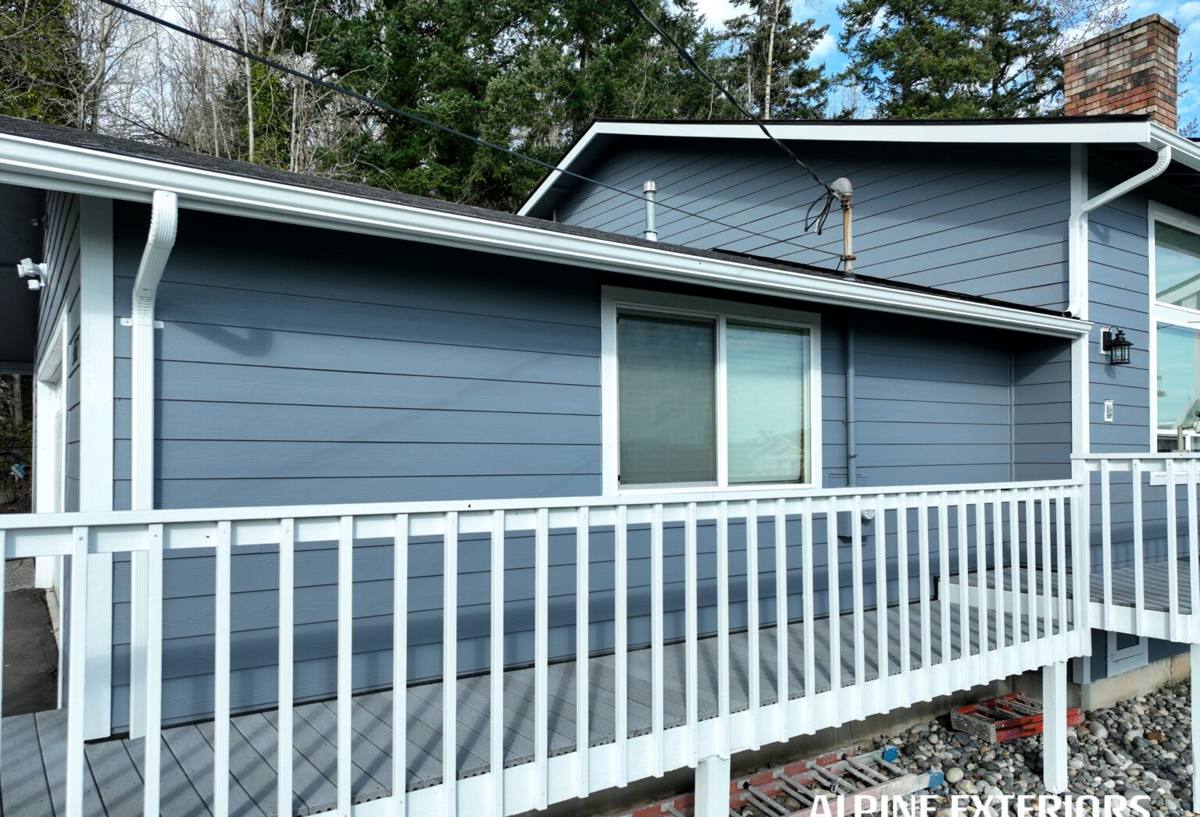
Why Salt Air and Driving Rain Change the Job
Salt Air and Metal Components
Salt-laden air accelerates corrosion on any exposed metal — flashing, fasteners, vents, drip edge, and gutter hardware. Standard electro-galvanized fasteners and thin-gauge flashing that might last two decades inland can show rust streaking and early failure much sooner this close to the water. On a correct installation, that means specifying corrosion-resistant fastener coatings and heavier-gauge, properly finished flashing metal, and paying attention to any dissimilar-metal contact points where galvanic corrosion can start.
Driving Rain and Wind-Driven Water
Rain that comes in at an angle off the water doesn't just run down a roof — it gets pushed up and under shingle edges, into vents, and along ridge lines if those details aren't built correctly. Roofs in Cherry Point need extra attention at the vulnerable points: valleys, eaves, ridge vents, pipe boots, and anywhere two roof planes meet. A roof that would perform fine on a calm inland lot can leak here if wind-driven rain wasn't accounted for in the underlayment and flashing plan.
Moss, Shade, and Long-Term Roof Health
Cherry Point's tree cover and marine humidity combine to create long moss seasons. Moss isn't just a cosmetic issue — as it establishes on a roof, it holds moisture against the surface, lifts shingle edges as it grows, and can shorten the useful life of a roof by years if it's left unmanaged. A new installation is the right time to build in moss resistance rather than fight it after the fact.
That means selecting shingles or roofing materials with built-in algae and moss resistance where it fits the home and budget, making sure zinc or copper strips are installed correctly at the ridge if that approach is used, and confirming that tree limbs and debris paths are addressed so the roof isn't sitting in constant shade and standing organic matter. None of this eliminates moss entirely in a climate like this, but it slows it down significantly and buys years of extra roof life.
What a Correct New Roof Installation Actually Involves
A new roof is more than laying shingles over the old deck. Done right, it's a system of layered components that each do a specific job, and skipping or under-building any one of them is usually where leaks and premature failures trace back to.
- Full tear-off and inspection of the roof deck for rot, soft spots, or delamination — especially common near eaves and valleys on older Cherry Point homes exposed to years of moisture
- Deck repair or replacement of any compromised sheathing before new material goes down
- Ice-and-water shield or equivalent self-adhering membrane at eaves, valleys, and penetrations where wind-driven rain is most likely to intrude
- Synthetic underlayment across the full roof for a secondary water barrier beneath the primary roofing material
- Corrosion-resistant flashing at all walls, chimneys, skylights, and roof-to-roof transitions
- Balanced intake and exhaust ventilation so the attic isn't trapping moisture that feeds rot and mold from the inside
- Properly sealed and fastened ridge and hip caps, matched to the wind exposure of the specific lot
- Ridge caps and vents fastened and sealed with the driving-rain angle in mind, not just standard installation defaults
Every one of these steps matters more in a marine, high-rain environment than it would in a drier inland setting, because the margin for a weak detail is smaller.
Material Options for Cherry Point Homes
There's no single "best" roofing material for every home — the right choice depends on the house's exposure, roof pitch, budget, and how much long-term maintenance the homeowner wants to take on. Here's how the common options compare specifically against Cherry Point's salt air, rain, and moss conditions.
| Material | Salt Air / Corrosion Resistance | Moss Resistance | Maintenance Level |
|---|---|---|---|
| Architectural asphalt shingles (algae-resistant) | Good, with corrosion-resistant fasteners and flashing | Good with algae-resistant granules; still benefits from periodic cleaning | Low to moderate |
| Standing-seam metal | Very good with proper coating and fastener spec; needs correct metal selection near salt exposure | Very good — smooth surface sheds moss more easily | Low |
| Cedar shake | Moderate — natural material but vulnerable to sustained moisture | Poor without diligent upkeep; moss and rot risk is higher in constant damp shade | High |
| Composite/synthetic shingle | Good, engineered for moisture resistance | Good, depending on product line | Low |
For most Cherry Point homes under heavy tree cover, we lean toward algae-resistant architectural shingles or standing-seam metal, both of which hold up well against the combination of salt exposure and prolonged dampness without demanding constant homeowner upkeep. Cedar remains an option for homeowners who want the look and are committed to regular maintenance, but we're upfront that it carries a higher moisture and moss burden in this specific environment.
Our Installation Process
1. On-Site Assessment
We start with a walk of the roof and attic, looking at deck condition, existing ventilation, flashing details, and any moss or moisture patterns already visible. This is also when we talk through material options based on the home's specific exposure to wind and rain off the water.
2. Clear Scope and Written Estimate
You get a written scope covering materials, underlayment, flashing, ventilation, and cleanup — no vague line items. If deck repair turns out to be needed once tear-off starts, we stop and confirm with you before proceeding rather than surprising you on the invoice.
3. Tear-Off and Deck Prep
Full removal of the old roofing, inspection and repair of the deck, and disposal handled on our end.
4. Installation
Underlayment, flashing, ventilation components, and the roofing material go in following the sequence and detailing built for this climate — not a generic install checklist.
5. Final Walkthrough
We walk the finished roof with you, cover care and moss-prevention basics specific to the material installed, and make sure you know what a normal maintenance schedule looks like for your new roof in this environment.
Signs Your Roof Needs Replacement, Not Another Repair
Not every roofing problem calls for a full replacement, but there's a point where repeated patching stops making financial sense. Watch for:
- Granule loss heavy enough that you're finding grit in gutters regularly
- Shingles that are curling, cracking, or lifting at the edges, especially on rain-exposed slopes
- Moss growth that returns quickly even after cleaning, or that's visibly lifting shingle tabs
- Daylight visible through the roof deck from inside the attic
- Recurring leaks in different spots each season rather than one isolated failure point
- Soft or spongy decking underfoot when walked, or sagging visible from the ground
- A roof approaching or past the manufacturer's expected service life for this climate
If you're seeing two or more of these, it's usually time for a real conversation about replacement rather than another round of spot repairs.
What Drives the Cost of a New Roof
Every roof is priced based on its own specifics, but the factors that actually move the number are consistent. Understanding them helps you evaluate any estimate you get, from us or anyone else.
| Cost Factor | Why It Matters | Typical Impact |
|---|---|---|
| Material choice | Asphalt, metal, and composite products carry different material and labor costs | Moderate to high |
| Roof pitch and complexity | Steeper or more cut-up roofs take longer and require more safety setup | Moderate |
| Layers to remove | Multiple existing layers add tear-off time and disposal costs | Low to moderate |
| Deck condition | Rotted or soft sheathing found during tear-off requires repair before install | Variable — can be significant |
| Ventilation upgrades | Bringing intake/exhaust balance up to standard protects the new roof long-term | Low to moderate |
| Access and site conditions | Tree cover, steep lots, or limited staging area near the water can add labor time | Low to moderate |
We don't quote a number until we've actually seen the roof and deck, because guessing on any of these factors leads to the kind of surprise change orders that erode trust.
Why Hiring a Crew That Already Works Cherry Point Matters
A roofing crew that mostly works drier, inland jobs will often default to standard details that are adequate there but undersized for wind-driven rain and sustained salt exposure. Working Cherry Point regularly means we've already made the adjustments — fastener specs, flashing metal, membrane placement, ventilation balance — that this specific stretch of coastline demands, and we're not learning those lessons on your roof. It also means we understand realistic timelines around this area's weather windows, so your roof gets installed during conditions that let the materials perform the way they're supposed to.
If your Cherry Point home needs a new roof, we're glad to walk it with you and give you a straight, no-pressure estimate. Use the form below to get started.