 Blaine Siding
 Metal Roofing in Grandview: Built for This Coastline
Grandview sits close enough to the water that salt air is a daily fact of life, not an occasional nuisance. Add in Whatcom County's driving winter rain and a moss season that can run from late fall through spring, and you've got a roofing environment that punishes shortcuts. Asphalt shingles wear out here faster than manufacturer literature suggests, and even a well-installed metal roof can underperform if the details were rushed. We've spent enough time working on homes in and around Grandview to know which parts of a metal roofing job actually matter in this specific climate, and which parts are just upsells.
This page is about one thing: what a correctly installed metal roof looks like on a Grandview home, and how we get there.
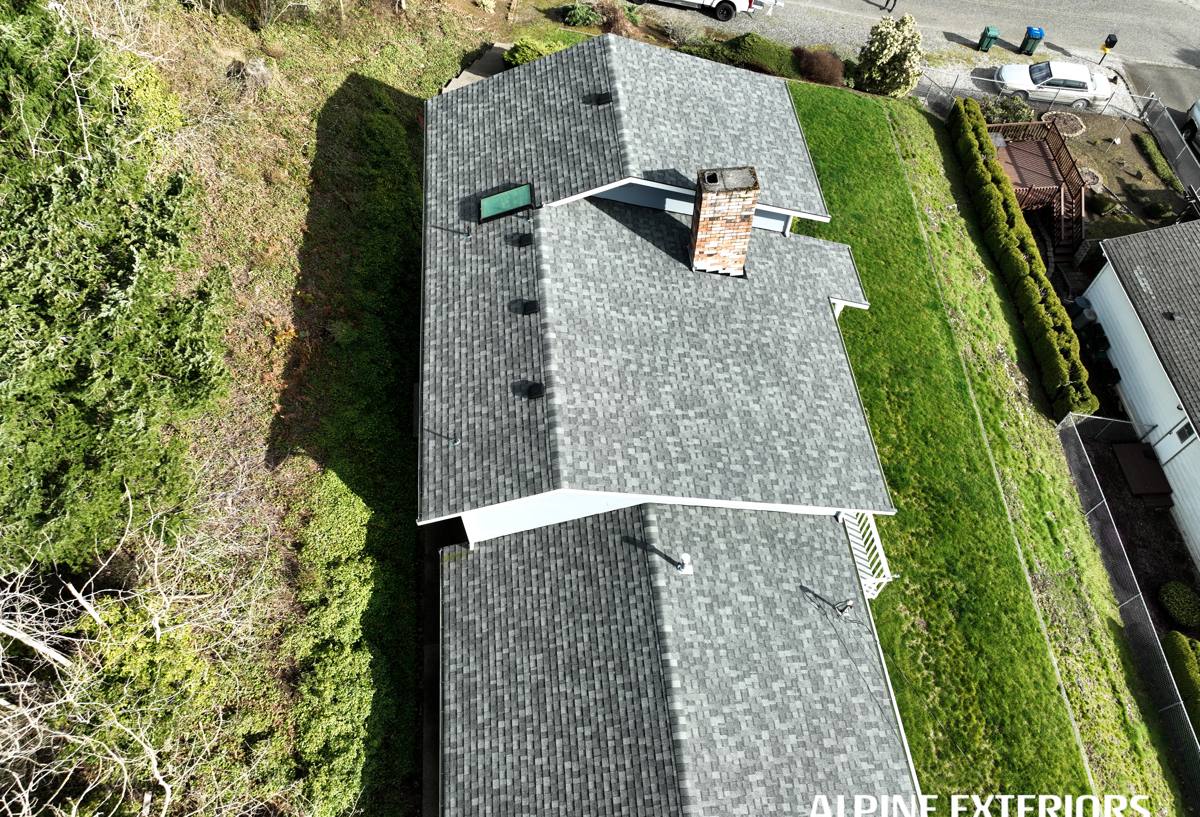
What Salt Air, Rain, and Moss Actually Do to a Roof
Salt Air
Airborne salt accelerates corrosion on any exposed metal — fasteners, flashing, roof-mounted hardware — especially where two dissimilar metals touch and set up galvanic corrosion. This is less about the roof panels themselves (quality coated steel and aluminum handle coastal exposure well) and much more about fastener choice, flashing metal compatibility, and how exposed edges are finished. A roof spec'd for an inland climate and installed here without adjustment will show rust streaks and fastener failure years before it should.
Driving Rain
Wind-driven rain doesn't fall straight down — it gets pushed sideways and upward under laps, around penetrations, and into any gap that a calmer climate could get away with. Underlayment quality, lap direction, and penetration flashing become the difference between a roof that sheds water and one that slowly feeds it into the deck.
Moss and Organic Growth
Shaded, north-facing, or tree-covered sections of a roof stay damp for extended stretches during Whatcom County's wet months, which is exactly what moss needs to take hold. Moss holds moisture against roofing material, works into laps and seams, and on some roof types can lift material enough to create a leak path. Metal roofing resists moss far better than shingles or wood shake because there's no porous surface for spores to grip, but panel design, slope, and how debris sheds off the roof still matter.
Why Metal Roofing Fits This Environment
Metal roofing isn't the right fit for every home or every budget, and we'll say so plainly if that's the case. But for Grandview's climate specifically, it has real advantages:
- Non-porous surface sheds moss and organic growth far more effectively than shingles or shake
- Interlocking panel systems resist wind-driven rain intrusion better than lapped shingle systems when installed correctly
- Coated steel and aluminum panels handle coastal salt exposure well when paired with compatible fasteners and flashing
- Steep or complex rooflines shed rain and snow load efficiently, reducing standing moisture time
- Long service life reduces the number of times a roof is opened up and re-flashed over its lifetime — each re-roof is a chance for something to be done wrong
The trade-off is upfront cost and installation sensitivity. Metal roofing rewards a crew that knows what they're doing and punishes one that doesn't — more on that below.
Panel Types and What They Mean for a Grandview Roof
| Panel Type | Best Suited For | Coastal Considerations |
|---|---|---|
| Standing seam (concealed fastener) | Most Grandview homes, especially anything with sightlines toward the water | No exposed fastener heads to corrode or back out over time; best resistance to wind-driven rain |
| Exposed-fastener panel (screw-down) | Budget-conscious projects, outbuildings, secondary roof sections | Fasteners and washers are the weak point in salt air and need periodic inspection; lower upfront cost |
| Stone-coated steel | Homes wanting a shingle or shake appearance with metal's durability | Good moss resistance; check fastener and edge detailing as closely as any other metal system |
| Aluminum panel systems | Homes very close to the water or with heavy salt exposure | Naturally corrosion-resistant, doesn't rust; typically a higher material cost than steel |
We'll walk through which of these makes sense for your specific roof, budget, and how close you sit to the water — there's no single right answer for every Grandview address.
What a Correct Metal Roofing Installation Involves
Deck Inspection and Prep
Before any panel goes down, the existing deck gets inspected for rot, soft spots, and prior water damage — common on older Grandview homes that have been through a few wet seasons with aging roofing. Metal panels are unforgiving of an uneven or compromised deck; problems get fixed before installation starts, not covered up.
Underlayment
We use a high-temperature synthetic or self-adhered underlayment suited to metal roofing, not a generic felt product. In a climate with this much sustained wet weather, the underlayment is your backup line of defense if wind ever drives water past the panel laps.
Fastener and Flashing Compatibility
This is where a lot of coastal metal roofs go wrong. Fasteners, flashing, and panel material need to be compatible metals to avoid galvanic corrosion — mixing the wrong metals together is a slow-motion failure that can take years to show up as staining or fastener loosening. We match fastener and flashing metal to the panel system on every job, not just when it's convenient.
Panel Layout and Seaming
Lap direction, seam type, and panel run length all affect how well a roof sheds driving rain. On standing seam systems, seam integrity is what keeps wind-driven water out — this is a detail that separates an experienced metal roofing crew from a general contractor doing their first metal job.
Penetration and Edge Detail
Vents, chimneys, skylights, and roof edges are where the vast majority of roof leaks originate, on any roof type. Metal roofing requires purpose-built flashing details at every penetration — off-the-shelf shingle flashing doesn't do the job.
Our Process on a Grandview Metal Roofing Project
- On-site assessment — we walk the roof, check the deck condition where accessible, note tree cover, shading, and any existing moss or moisture issues
- Panel and fastener spec — we recommend a panel system and metal combination suited to your home's exposure and budget, and explain the trade-offs plainly
- Written estimate — clear scope, materials, and cost factors, no vague allowances
- Tear-off and deck repair (if needed) — any rot or damage found is addressed before new roofing goes down
- Underlayment and flashing installation — the unglamorous work that determines whether the roof actually performs in driving rain
- Panel installation — laid out and seamed to manufacturer spec, with attention to lap direction relative to prevailing wind and rain
- Final walkthrough — we go over the completed roof with you before calling the job done
Cost Factors for Metal Roofing in Grandview
We're not going to quote a number here because every roof is different, but these are the factors that actually move the price:
| Factor | Why It Matters |
|---|---|
| Panel type and metal | Standing seam and aluminum run higher than exposed-fastener steel |
| Roof complexity | Multiple planes, dormers, and valleys mean more flashing work and labor time |
| Deck condition | Rot or damage found during tear-off adds repair cost before new roofing goes on |
| Roof access | Steep slope, tree cover, or difficult staging adds time and safety equipment needs |
| Existing roofing removal | Tear-off of old shingle or shake layers adds disposal and labor cost versus a bare deck |
Maintenance: What Actually Keeps a Metal Roof Performing Here
- Clear debris (needles, leaves, branches) from valleys and low-slope sections at least once a year
- Check and clear gutters so water isn't backing up against roof edges during heavy rain
- Watch shaded and north-facing sections for early moss growth and address it before it spreads
- Have penetration flashing (vents, chimneys, skylights) visually checked periodically, especially after major storms
- Don't pressure wash a metal roof — it can damage coatings and force water under laps
A correctly installed metal roof in this climate needs relatively little maintenance compared to shingles, but "little" isn't "none."
Why a Crew That Already Works Grandview Matters
Metal roofing installation quality varies enormously between crews, and the mistakes aren't always visible right away — a mismatched fastener or a slightly wrong lap won't leak on day one. It shows up two or three wet seasons later, as staining, corrosion, or a slow leak that's hard to trace back to its cause. A crew that regularly works this specific stretch of Whatcom County coastline has already seen how salt air, wind direction, and moss patterns behave on roofs like yours, and specs the job accordingly from the start rather than learning on your house.
We also know what local permitting and inspection expects for roofing work in this area, which keeps the project moving instead of stalling on paperwork.
Get an Estimate
If you're weighing a metal roof for a Grandview home, we're happy to take a look, walk you through what your specific roof needs, and give you a straight answer — including if metal isn't the right fit for your situation. Use the form below to request a free, no-pressure estimate.