 Blaine Siding
 Building Decks for Lynden's Climate
Lynden sits inland from Blaine but still lives under the same Whatcom County weather pattern that defines siding, roofing, and outdoor construction across this corner of Washington: long wet seasons, driving rain that comes in sideways more often than straight down, and a moss season that can stretch from October well into April. A deck built here isn't judged by how it looks on a dry August afternoon — it's judged by how it holds up in February, when the ground is saturated, the air is damp for weeks at a stretch, and every horizontal surface is an invitation for moss, algae, and slow rot if it wasn't built right the first time.
We've built and repaired decks throughout the Lynden area long enough to know which construction shortcuts show up as problems in year two, and which details actually matter for a structure that has to survive decades of this specific climate. This page covers what a correctly built deck looks like for a Lynden home, what our process involves, and why local experience changes the outcome.
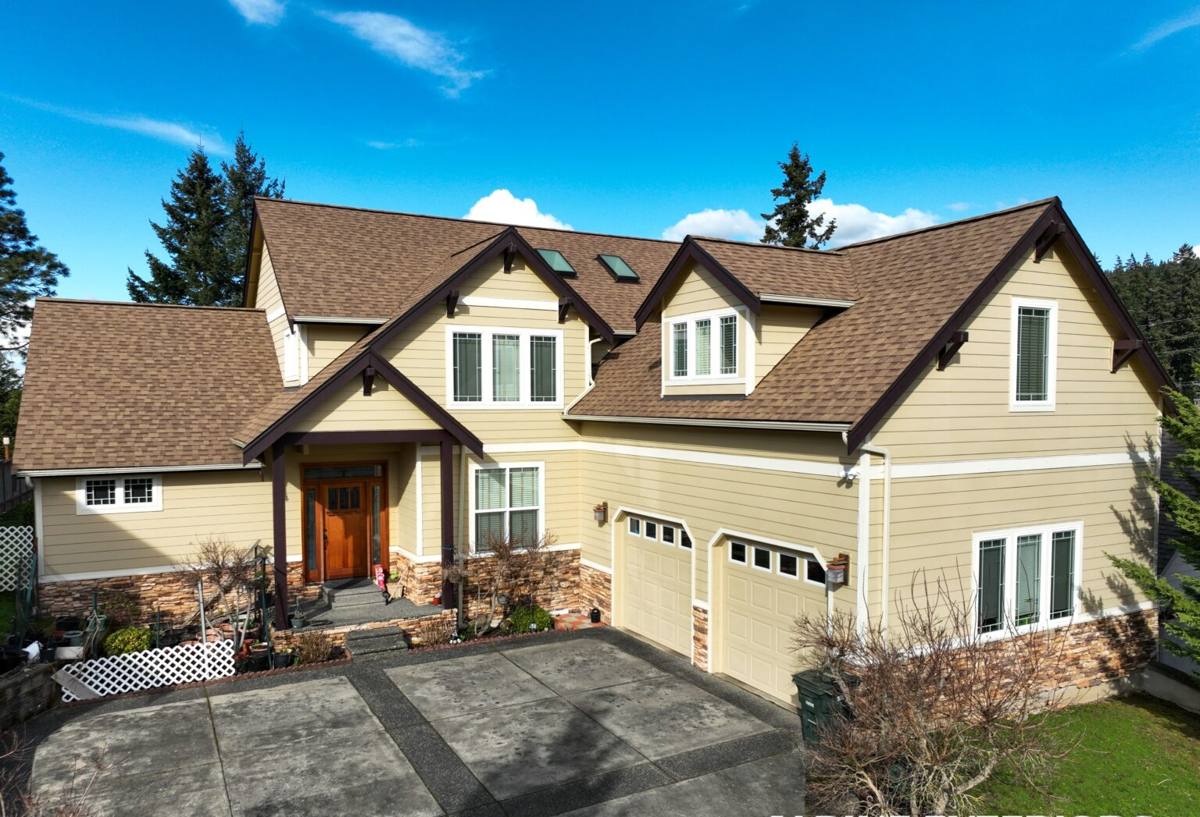
What Lynden Homes Need From a Deck
Whatcom County's climate isn't extreme, but it's relentless. Decks here don't usually fail from one big event — they fail from years of low-grade moisture exposure that a drier climate would never expose. Three things drive almost every deck problem we see in this area:
- Standing moisture — flat or poorly sloped decking traps water long enough for it to work into fastener holes, board ends, and ledger connections.
- Moss and organic buildup — moss doesn't just look bad; it holds moisture against the wood or composite surface and keeps boards damp long after the rain stops.
- Slow-drying framing — Lynden's humidity means framing lumber and ledger boards that aren't properly flashed and vented stay wet longer than they would in a drier climate, which is exactly the condition rot needs.
None of these are dramatic on their own. They're cumulative. A deck that's built without accounting for them can look fine for three or four years and then start showing soft spots, rust streaks, or a spongy feel underfoot right around the time most warranties have expired.
What a Properly Built Deck Involves
Ledger Attachment and Flashing
The ledger board — where the deck attaches to the house — is the single most common source of hidden rot on any deck in this region, wet or dry. It needs proper flashing that directs water away from the house band joist, not just caulk or sealant, which degrades over time and hides a leak instead of preventing it. We flash every ledger connection so water is shed outward, never trapped between the deck and the wall.
Footings and Framing
Whatcom County soil holds moisture longer than sandier regions, which matters for post footings. Footings need to be set below frost depth and sized for the actual load of the structure, not guessed at. Framing lumber should be rated for ground contact where it's close to grade, and joist hangers and structural hardware should be corrosion-resistant — this matters more near Blaine's salt air influence, but even inland in Lynden, the sustained humidity accelerates corrosion on lower-grade fasteners faster than most homeowners expect.
Decking Material and Slope
Every deck surface should be built with a slight slope away from the house — typically a small fraction of an inch per foot — so water runs off instead of pooling. Board spacing matters too: gaps that are too tight trap debris and moisture between boards, which is exactly where moss gets a foothold. Whatever decking material is chosen, it needs consistent airflow underneath, which means proper joist spacing and, on lower decks, adequate ground clearance.
Stairs, Railings, and Hardware
Stair stringers and railing posts take repeated stress and are often the first thing to show wear because they're harder to keep dry than a flat deck surface. All structural hardware — post bases, hangers, screws — should be stainless steel or hot-dip galvanized rated for exterior and ground-contact use. Standard zinc-coated hardware corrodes faster than most people realize once it's exposed to years of Whatcom County dampness.
Material Choices: Honest Trade-Offs
There's no universally "best" decking material — there are trade-offs, and the right choice depends on budget, maintenance tolerance, and how much moss and moisture exposure the site actually gets (a deck under mature trees needs different consideration than one in open sun).
| Material | Upfront Cost | Maintenance | How It Handles This Climate |
|---|---|---|---|
| Pressure-treated wood | Lowest | Annual cleaning, periodic sealing | Performs well if sealed regularly; neglected sealing shortens lifespan noticeably in wet years |
| Cedar | Mid-range | Regular sealing/staining | Naturally rot-resistant but still needs upkeep to resist moss and graying in constant moisture |
| Composite decking | Higher | Occasional washing, no sealing | Resists rot and moisture absorption well; still needs cleaning to prevent surface moss and algae film |
| PVC decking | Highest | Minimal | Best moisture resistance of the group; higher upfront cost is the main trade-off |
We'll walk through these options honestly during an estimate — including what each one actually costs to maintain over ten years, not just what it costs to install.
Moss and Long-Term Maintenance
Whatcom County's moss season is long enough that it deserves its own planning, not an afterthought. A well-built deck reduces moss problems through design — proper slope, airflow, and gapping — but no deck in this climate is entirely maintenance-free. We recommend homeowners plan for:
- Seasonal sweeping and clearing of leaves and debris before they compost into a moss-friendly layer
- An annual or biannual wash with a deck-safe cleaner, not a high-pressure setting that can strip wood fibers or scar composite surfaces
- Re-sealing wood decking on the manufacturer's recommended schedule, typically every one to three years depending on sun exposure
- Checking under-deck airflow paths (skirting vents, lattice gaps) to make sure they haven't been blocked by landscaping or storage
A deck built with drainage and airflow in mind needs far less of this than one that wasn't — but "low maintenance" material still means "some maintenance" in this climate.
Our Process for Lynden Deck Projects
1. On-Site Assessment
We look at grade, drainage, sun and shade exposure, and how the deck ties into the house structure before recommending anything. A deck on a shaded, low-airflow lot needs different decisions than one in open sun.
2. Honest Scope and Material Discussion
We'll lay out material options and their real maintenance costs so the decision is based on what fits the homeowner's budget and upkeep tolerance, not just what looks good in a sample.
3. Proper Structural Build
Footings, framing, flashing, and hardware are built to hold up under sustained Whatcom County moisture — not just to pass a basic inspection.
4. Walkthrough and Care Guidance
Before we consider the job finished, we walk the homeowner through what maintenance the specific materials and design will need going forward, so there are no surprises in year three.
Why Local Experience Matters for This Work
Deck construction that works fine in a drier climate can underperform here in ways that aren't obvious until a few wet seasons in. A crew that hasn't built through multiple Whatcom County winters may not think twice about ledger flashing details, hardware grade, or board gapping — decisions that look minor on install day but determine whether a deck is solid or soft a decade later. We've seen what holds up in Lynden and what doesn't, and we build accordingly rather than defaulting to whatever's fastest.
Local presence also means we're not disappearing after the invoice clears. If a question comes up about maintenance, a board needs attention, or something about the build needs a second look, we're a short drive away, not a call center.
A Practical Pre-Project Checklist
- Confirm the deck's purpose (entertaining, grilling, quiet sitting area) — it affects size and layout decisions
- Ask about footing depth and hardware grade, not just decking material
- Get a clear maintenance expectation in writing for whatever material is chosen
- Ask how ledger flashing will be handled — this is the detail most likely to be skipped by an inexperienced crew
- Confirm permit requirements are being handled, not skipped
- Ask about drainage and slope specifics for the site's actual sun/shade conditions
Ready to Talk Through Your Deck Project
If you're planning a new deck or need an honest look at whether an existing one is holding up the way it should, we're happy to come take a look. There's no pressure and no obligation — just a straightforward assessment and an estimate you can use to make a good decision, using the form below.