 Blaine Siding
 Why Nooksack Roofs Wear Differently Than Roofs Inland
Homes in the Nooksack area sit inside a stretch of Whatcom County where the climate doesn't do a roof any favors. The Salish Sea's marine air carries a fine layer of salt that settles on exposed metal, fasteners, and flashing, quietly accelerating corrosion in ways that aren't always visible until a leak shows up. Add in driving rain that comes sideways off winter storms, not just straight down, and you get water finding its way into laps, seams, and fastener penetrations that would stay dry in a calmer climate.
Then there's moss. Whatcom County's long, wet, mild winters give moss and algae months to establish themselves on north-facing slopes and shaded roof sections. Left alone, moss doesn't just look bad — it holds moisture against the roofing material, lifts shingle edges, and works its way under laps where it has no business being. A roof that would need repair once every several years in a drier climate often needs more frequent attention here, simply because the conditions never let the roof fully dry out between rain events.
This is the backdrop for every roof repair we do in this area: not a single big failure, but slow, cumulative damage from salt, rain, and moss working on the roof year-round.
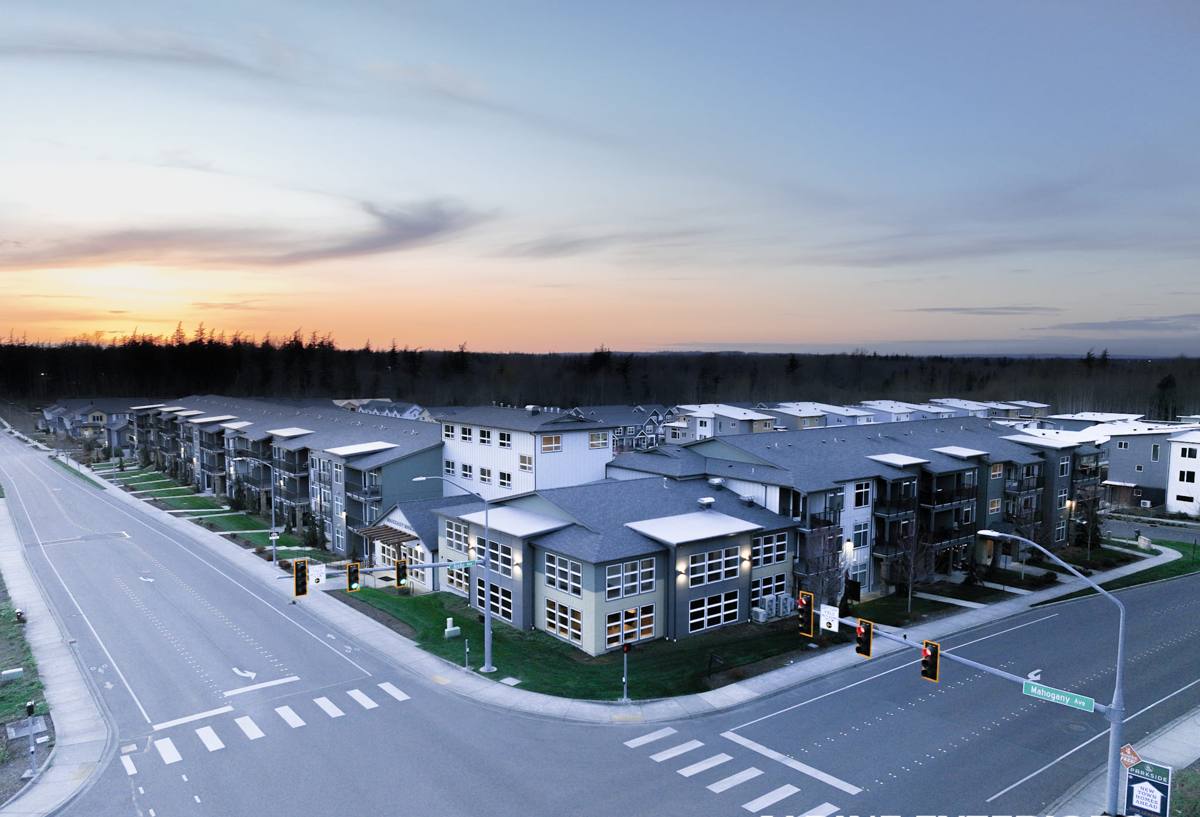
Signs a Nooksack-Area Roof Needs Repair (Not Full Replacement)
Most roofs don't fail all at once. They show warning signs first, and catching those signs early is usually the difference between a repair bill and a replacement bill. Watch for:
- Granule buildup in gutters or at downspout outlets, a sign asphalt shingles are wearing thin
- Dark streaking or green-black patches, especially on shaded or north-facing slopes
- Curling, cracking, or lifted shingle edges, particularly where moss has taken hold
- Rust staining or visible corrosion around metal flashing, vents, or valleys
- Water stains on interior ceilings or in the attic near chimneys, skylights, or roof valleys
- Sagging or soft spots underfoot on a roof walk (a sign of decking damage, not just surface wear)
- Gutters or downspouts overflowing during heavy rain, which points to a clogged or damaged roof edge
None of these on their own mean the whole roof is done for. In most cases, catching them early keeps the job a repair rather than a tear-off.
The Roof Problems We See Most Often in This Area
Moss Intrusion at Laps and Valleys
Moss doesn't just sit on the surface — its rhizoids work into shingle laps and valley seams, holding water against the roofing material long after a storm has passed. By the time moss is visible from the ground, it's often already lifted the shingles beneath it enough to let water in.
Flashing and Fastener Corrosion
Salt-influenced air is hard on exposed metal. Nail heads, step flashing, and valley metal that aren't properly coated or protected corrode faster here than they would inland, and corroded flashing is one of the most common sources of a leak that seems to come from "nowhere."
Wind-Driven Rain at Penetrations
Chimneys, plumbing vents, and skylights are the weak points on almost any roof, and driving rain off winter storms pushes water sideways into these penetrations in a way that vertical rain never would. A repair here isn't just re-sealing the surface — it's making sure the flashing underneath is actually doing its job.
Gutter and Roof-Edge Buildup
Overhanging trees and a wet climate mean debris and moss collect at roof edges and in gutters faster than homeowners expect. When water backs up at the edge instead of draining, it finds the smallest gap in the roofing system.
What a Correct Roof Repair Actually Involves
A lot of "quick fixes" in this climate don't hold up because they only address what's visible from the ground. A repair done right starts with figuring out how water is actually getting in, not just patching where it's coming out.
| Quick Patch Approach | Proper Repair Approach |
|---|---|
| Caulk or sealant over the visible gap | Trace the leak path back to the actual entry point, which is often several feet away |
| Leave moss in place and treat only the leak | Remove moss and treat the cause so the same spot doesn't fail again next season |
| Reuse old, corroded flashing | Replace flashing that's compromised, not just the shingles around it |
| Patch the roof surface only | Check decking underneath for soft spots or rot before closing the repair back up |
| Match materials loosely | Match shingle type, color, and fastening pattern so the repair doesn't stand out or fail early |
The difference matters most in a climate like this one. A surface patch might hold through a dry summer, but it's the next wet, windy winter that tells you whether the repair was done right.
Our Roof Repair Process
1. Inspection, Inside and Out
We start on the roof itself, checking shingles, flashing, valleys, and penetrations, and we also check the attic where possible. Interior staining or damp insulation often tells us more about a leak's true path than what's visible from outside.
2. Diagnosis Before Any Work Starts
Before we touch anything, we explain what's actually failing and why, including whether moss, flashing, or worn material is the root cause. We'd rather walk you through the reasoning than just hand you an invoice.
3. Repair, Not Just Patch
We remove and replace what's actually compromised, whether that's shingles, flashing, decking, or all three, matching existing materials as closely as possible so the repair blends in and performs the same as the surrounding roof.
4. Moss and Debris Treatment
Where moss is part of the problem, we address it as part of the repair, not as a separate afterthought, so you're not calling us back about the same section next year.
5. Final Check and Cleanup
We walk the repair with you, confirm the area is watertight, and clear debris and old material from the site before we leave.
Roofing Materials: Repair Considerations by Type
Not every roofing material fails the same way, and repair strategy changes depending on what's on the house.
| Material | Common Failure Point Here | Repair Consideration |
|---|---|---|
| Asphalt Composition Shingle | Granule loss, curling, moss lift at laps | Individual shingle replacement is straightforward if the decking underneath is sound |
| Metal Roofing | Fastener and seam corrosion from salt air | Repairs often focus on fasteners and sealant at seams rather than panel replacement |
| Cedar Shake | Moss and moisture retention, splitting | Requires careful moss management since shake is more moisture-sensitive than composition roofing |
| Flat or Low-Slope Membrane | Ponding water, seam separation | Repair depends on properly resealing seams and addressing drainage, not just patching the surface |
We'll tell you honestly if a material or installation detail on your roof is more maintenance-prone than we'd recommend for this climate — that's a call about long-term upkeep and moisture behavior, not a knock on any manufacturer.
What Affects the Cost of a Roof Repair
Every roof and every leak is different, but a few factors consistently drive repair scope and cost:
| Factor | Why It Matters |
|---|---|
| Extent of decking damage | A surface-only repair costs far less than one that requires replacing rotted decking underneath |
| Roof pitch and access | Steeper or harder-to-access roofs take longer and require more safety setup |
| Material match availability | Matching older or discontinued shingle colors can add time and cost |
| Number of penetrations involved | Repairs near chimneys, skylights, or multiple vents involve more flashing work |
| Moss and debris removal needed | Heavier moss growth adds cleanup time before the actual repair can start |
We won't quote a number without seeing the roof, but we'll always explain what's driving the estimate so there are no surprises.
A Homeowner's Roof Maintenance Checklist
Between professional inspections, a few habits go a long way toward avoiding emergency repairs in this climate:
- Clear gutters and downspouts at least twice a year, more often under overhanging trees
- Look for moss or dark streaking on north-facing or shaded slopes each fall and spring
- Check the attic for damp insulation or daylight around penetrations after major storms
- Trim back branches that keep roof sections shaded and slow to dry
- Have flashing around chimneys and skylights checked every few years, since it's the first thing salt air and driving rain attack
- Address small leaks promptly rather than waiting for a wet season to pass
Why It Matters to Hire a Crew That Already Works This Area
Roof repair isn't generic work. A crew that regularly works roofs in the Nooksack area and across Whatcom County already knows what moss does to a north-facing valley here, how far driving rain pushes water at a flashing seam, and which repair shortcuts don't survive a full wet season. That local pattern recognition means less time spent diagnosing and more time spent fixing the actual problem the first time.
It also means accountability. A local crew that plans to be doing roof work in this area next year and the year after has every reason to do the repair right the first time, not just get through the job.
If you're seeing moss buildup, a slow leak, or storm damage on a roof in the Nooksack area, we're happy to take a look and give you a straightforward, no-pressure estimate on what it will take to fix it right. Use the form below to get started.