 Blaine Siding
 Windows Built for the Peace Arch Area's Weather
Homes near the Peace Arch border crossing sit close enough to the water that salt air is part of daily life, not an occasional nuisance. Add driving rain off the Strait of Georgia and a moss season that can stretch from October through May, and you've got a climate that is genuinely hard on window systems. Frames swell and stick. Seals fail years before they should. Sills stay damp long enough for rot to start in places you can't see until the drywall or trim starts to tell on it.
Window replacement in this part of Blaine isn't just a cosmetic upgrade. Done right, it's a moisture-management project as much as anything else. Done wrong, it traps water behind new trim and creates a bigger problem than the old, tired windows ever were.
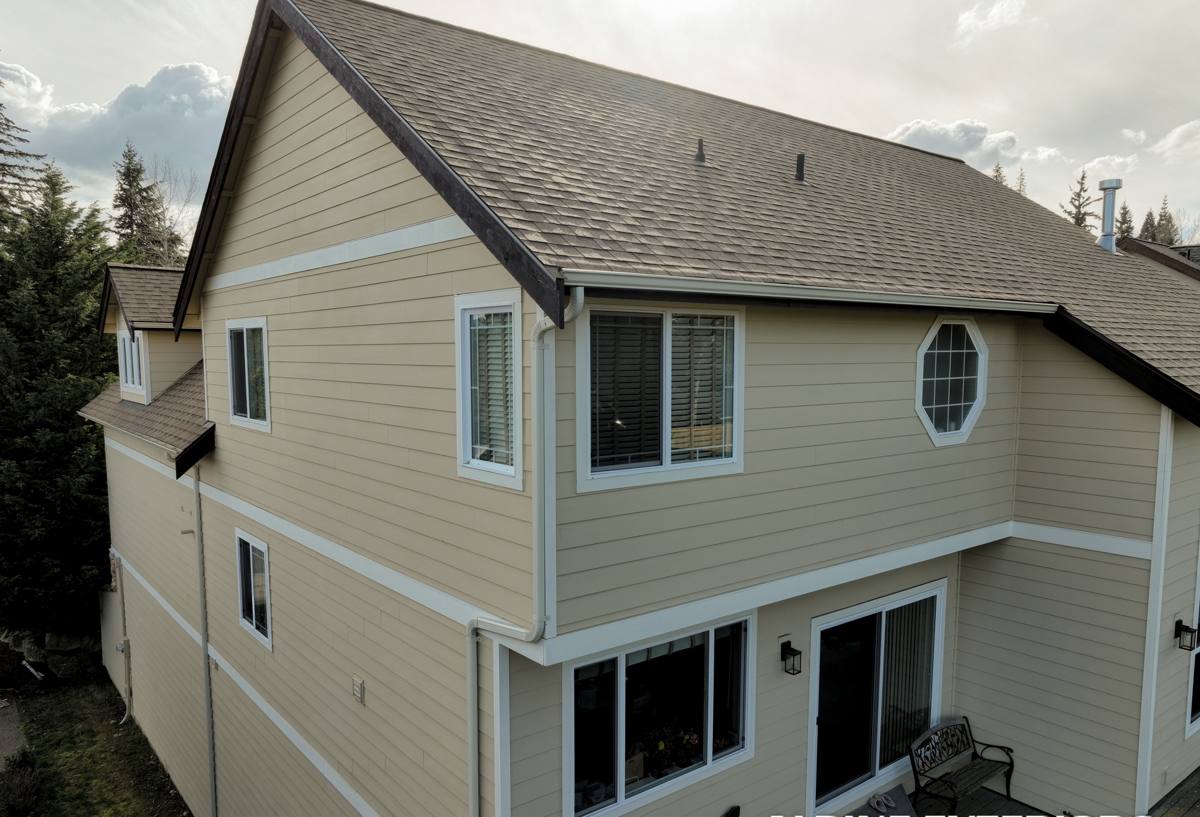
What Peace Arch Homes Are Up Against
Salt Air and Metal Fatigue
Proximity to Semiahmoo Bay and the Strait means airborne salt settles on everything, including window hardware. Cheaper aluminum cranks, locks, and balance systems corrode faster here than they would twenty miles inland. We pay attention to hardware finish and material, not just glass and frame, because a window that looks fine but won't lock properly isn't doing its job.
Driving Rain and Wind-Driven Moisture
Storms coming off the water don't fall straight down — they push rain sideways into siding and window openings. That means flashing and sealant details around a window matter as much as the window unit itself. A great window installed with a mediocre weatherproofing detail will still leak.
Moss, Shade, and Standing Moisture
Many Peace Arch-area lots carry mature tree cover, which keeps homes shaded and cool in summer but also keeps north- and west-facing walls damp for long stretches. Moss doesn't just grow on roofs — it colonizes window sills, trim, and the gaps where old caulking has failed. That constant moisture is what turns a simple window replacement into a "we also found rot in the framing" job if it's ignored.
Signs Your Windows Are Past Their Service Life
- Fogging or a visible haze between panes — the seal has failed and the insulating gas is gone
- Windows that are hard to open, or won't stay open without a prop
- Soft or discolored wood at the sill or lower corners of the frame
- Visible daylight or a draft you can feel with your hand along the frame edge
- Condensation on the inside of the glass during cold, damp mornings
- Paint or caulking that's cracked, peeling, or missing around the frame
- A noticeable rise in heating costs with no other explanation
What a Correct Window Replacement Involves
Swapping glass is the easy part. The work that actually determines whether a window lasts is what happens at the opening before the new unit ever goes in.
1. Removal and Opening Inspection
We pull the old window and check the rough opening — sill, jack studs, header — for water damage before anything new goes in. In this climate, especially on older Blaine homes, it's common to find some degree of moisture staining or soft wood at the sill. We flag it and address it rather than sealing it up behind a new window.
2. Flashing and Weatherproofing
This is the step that matters most for driving rain. Proper sill pan flashing, correctly lapped house wrap, and sealant in the right places (not everywhere — over-sealing traps moisture just as badly as under-sealing) are what keep water out for the next 20+ years, not the window brand printed on the glass.
3. Setting, Shimming, and Insulating
A window that isn't shimmed level and square will bind, leak, and wear its hardware out early. Gaps around the frame get filled with low-expansion foam or backer rod and sealant, never packed solid with can foam, which can bow the frame.
4. Trim, Caulk, and Final Weather Seal
Exterior trim and caulk lines are the last line of defense against wind-driven rain. We use sealants rated for our climate and reapply exterior paint or stain lines cleanly so the finished look matches the rest of the house.
Choosing the Right Window for a Coastal Whatcom County Home
There's no single "best" window — the right choice depends on exposure, budget, and how much upkeep you want to take on. Here's how the common options stack up for a Peace Arch-area home:
| Frame Material | Salt Air / Moisture Behavior | Maintenance | Typical Fit |
|---|---|---|---|
| Vinyl | Won't corrode or rot; handles humidity well | Low — occasional cleaning | Most homes, best value |
| Fiberglass | Very stable in temperature swings and moisture, resists warping | Low | Larger openings, higher-exposure walls |
| Aluminum | Prone to corrosion near salt air unless marine-grade; conducts cold | Moderate to high | We generally steer clients away from it this close to the water |
| Wood-clad | Attractive but exterior wood needs consistent upkeep in wet climates | High | Homeowners committed to the maintenance for the look |
We're upfront that vinyl and fiberglass are our default recommendations for this part of Blaine — not because other materials can't work, but because they hold up with the least intervention from you over the next couple decades. If you want a wood-clad look, we'll talk through what the upkeep actually requires so there's no surprise five years in.
Glass Packages Worth Considering
Double-pane, low-E, argon-filled glass is standard for this region and handles our temperature range well. Triple-pane adds cost and weight but can be worth it on walls that take the brunt of winter storms or face a lot of road or ferry-related noise. We'll walk through the trade-off in person rather than push the upgrade by default — it's not the right call for every wall or every budget.
Our Process for Peace Arch Jobs
- On-site assessment — we look at every window being replaced, plus the general condition of siding and trim around each opening
- Honest scope — if we find rot or moisture damage, we tell you before work starts, not after we've already opened up the wall
- Written estimate — clear pricing by window, with any repair work itemized separately so you know what you're paying for and why
- Install — removal, opening prep, flashing, setting, insulating, and finish trim done in sequence, not rushed
- Walkthrough — we check operation, seals, and finish work with you before we call the job done
Why a Crew That Already Works Peace Arch Matters
A contractor who works this stretch of Blaine regularly already knows which wall orientations take the worst weather, what kind of rot patterns show up in homes of a given age, and how far salt air travels inland before it stops being a real factor in hardware selection. That's not something you get from a general contractor who does one job in the area and moves on. It shows up in small decisions — the flashing detail on a west-facing wall, the hardware finish we spec, the caulk we choose for a shaded sill that never fully dries — that add years to how long the work actually lasts.
It also means faster, more accurate estimates. We're not guessing at what Whatcom County weather does to a window system over time — we're working from what we've already seen up and down this coastline.
What Affects Your Project Timeline and Cost
Every window job is different, but a few factors consistently move the price and schedule:
| Factor | Why It Matters |
|---|---|
| Number of openings | More windows means more labor and material, but per-window cost often drops with volume |
| Rot or moisture repair | Framing repairs at the sill or jack studs add time and cost, but skipping them just relocates the problem |
| Window size and type | Custom shapes, larger picture windows, and multi-panel units cost more than standard sliders or double-hungs |
| Wall exposure | West- and north-facing walls exposed to driving rain often need more careful flashing work |
| Trim and finish | Matching existing exterior trim profiles or repainting adds labor beyond the window swap itself |
As a rough starting point, homeowners in this area typically budget anywhere from a few hundred to well over a thousand dollars per window installed, depending on size, material, and whether repair work is needed — we'll give you real numbers once we've seen the openings in person.
Ready to Talk About Your Windows?
If your windows near the Peace Arch area are fogging, sticking, drafty, or showing soft spots at the sill, it's worth having a local crew take a look before another wet season adds to the damage. Fill out the form below for a free, no-pressure estimate — we'll assess your windows honestly and tell you exactly what we find.