 Blaine Siding
 Roof Repair Built for Sumas, Not a Generic Climate
Homes in and around Sumas sit inside the same weather system that shapes every roof in Whatcom County: damp Pacific air, long stretches of steady rain, and enough marine influence to keep organic growth active on shaded roof slopes most of the year. A roof repair here has to account for that reality, not just patch whatever is leaking today. We work on roofs throughout the Blaine and Whatcom County area, and the repairs that hold up are the ones that treat moss, moisture, and wind-driven rain as ongoing conditions to manage, not one-time problems to fix.
This page is specifically about roof repair for Sumas-area homes — what tends to fail here, what a correct repair looks like, and how our process works when you call us out for a leak, a soft spot, or a roof that's just starting to show its age.
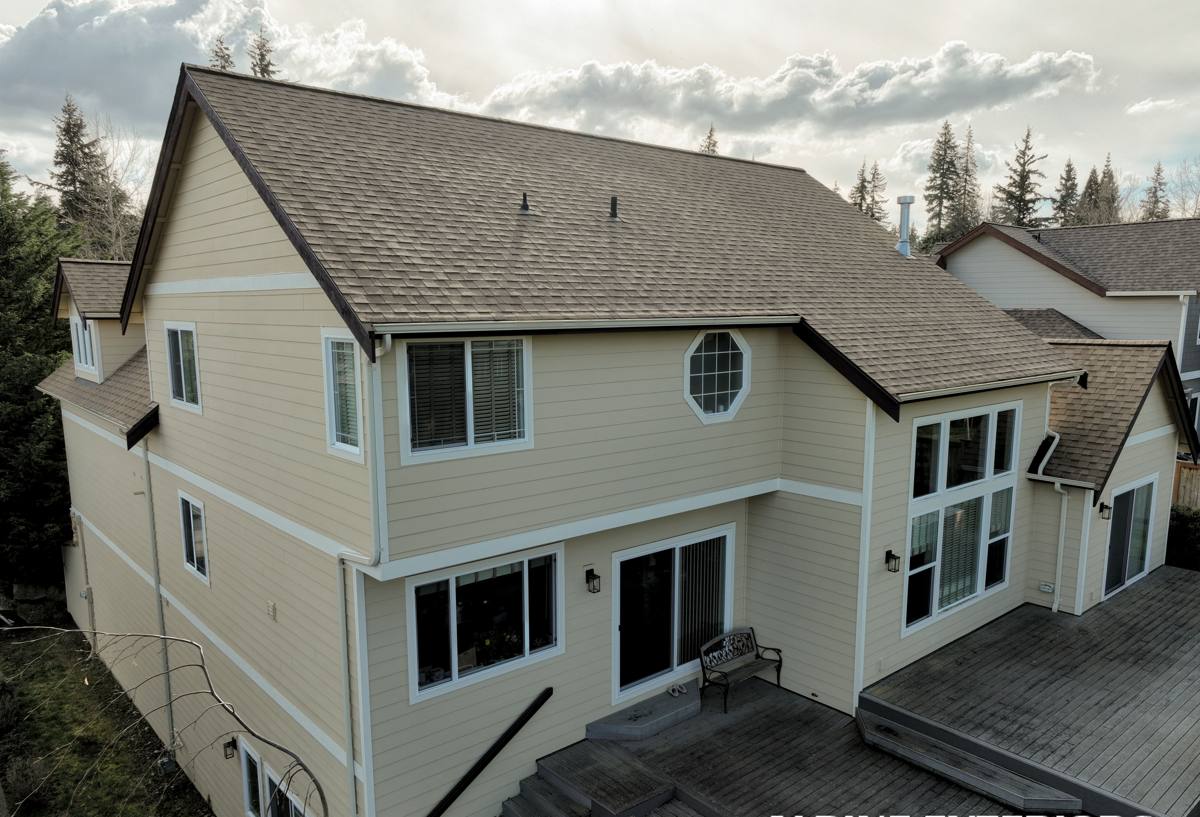
What Local Conditions Do to a Roof Over Time
Salt Air and Metal Fatigue
Whatcom County's proximity to the coast means airborne salt makes its way further inland than most homeowners expect. It doesn't destroy a roof overnight, but it accelerates corrosion on exposed metal — flashing, fasteners, gutter hardware, and vent caps. A repair that reuses corroded metal or fastens new material with the wrong hardware is a repair that fails again in a few years. We factor salt exposure into every metal component we touch, not just the shingles or panels people notice first.
Driving Rain and Wind-Driven Intrusion
Straight-down rain is easy for almost any roof to shed. The rain that causes real damage here comes in sideways during winter storms, working its way under shingle edges, around poorly lapped flashing, and into any gap that's even slightly open to the wind. Leaks in this region are often less about a single obvious hole and more about a cumulative weak point — a nail pop, a cracked pipe boot, a flashing lap that's a half-inch short — that only shows its effect when wind direction lines up with a storm.
A Long Moss Season
North-facing slopes, shaded valleys, and roofs under overhanging trees stay damp long enough in this climate for moss and algae to establish and keep growing for most of the year, not just a short window. Moss holds moisture directly against roofing material, lifts shingle edges as it grows, and keeps the deck underneath damper for longer than a clean roof ever would. Left alone, it turns a roof that should have years of service life left into one that's rotting from the surface down.
Common Repair Issues We See on Sumas-Area Roofs
- Lifted or cracked shingles along the edges where moss has taken hold, allowing wind-driven rain underneath
- Corroded or improperly lapped flashing around chimneys, skylights, and roof-to-wall transitions
- Deteriorated pipe boots and vent seals — often the single most common source of an interior leak
- Soft or spongy decking discovered only once a leak has been active for a while, usually near valleys or low-slope sections
- Clogged or undersized gutters pushing water back under the roof edge instead of off the roof
- Nail pops and fastener backout from age and seasonal movement, especially on older roofs
None of these are unusual for the region. What matters is catching them with an honest inspection before they turn into deck damage or interior repairs that cost far more than the roof work itself.
What a Correct Roof Repair Actually Involves
A roof repair done right starts with figuring out where the water is actually getting in — which is not always where it shows up inside the house. Water can travel along rafters or decking for several feet before it drips somewhere visible, so a repair that just patches the ceiling stain location often misses the real entry point entirely.
Diagnosis Before Material
We start by tracing the leak path from the interior sign of damage back up to its actual source, checking flashing, penetrations, and shingle condition in that area rather than assuming the nearest visible damage is the cause.
Full Extent, Not Just the Visible Symptom
Once we find the source, we check how far the damage has actually spread — underlayment, decking, and any framing that's been exposed to sustained moisture. A repair that stops at the surface and leaves damp or compromised decking underneath is a repair that will need to be redone.
Matching Materials and Proper Flashing Detail
Repairs should tie into the existing roofing system correctly — proper shingle lap, correct flashing overlap, and fasteners suited to the exposure this area gets. Mismatched materials or shortcuts on flashing details are one of the most common reasons a "repaired" roof leaks again within a season or two.
Ventilation Check
Because this region holds moisture in roof assemblies longer than drier climates, we also check attic ventilation while we're up there. Poor ventilation traps humidity against the underside of the deck, which speeds up rot and can undo the benefit of an otherwise good repair.
Our Process, Start to Finish
- Inspection. We get on the roof (weather permitting) and inspect the affected area plus the roof generally, since one visible leak often isn't the only weak point.
- Honest assessment. We tell you what's actually wrong, what caused it, and whether a targeted repair makes sense or the roof is closer to end-of-life. We're not incentivized to oversell a full replacement when a repair will genuinely hold.
- Written estimate. Clear scope, clear price, no surprise add-ons once work is underway.
- Repair work. Proper tear-back to sound material, matched components, correct flashing and sealing details for this climate.
- Cleanup and walkthrough. We clear debris and old material, then walk you through what was done and what to watch for going forward.
Repair vs. Replacement: What Actually Drives the Decision
Not every leak means a new roof, and not every old roof is a good candidate for another repair. These are the factors that actually determine which way the decision should go.
| Factor | Favors Repair | Favors Replacement |
|---|---|---|
| Age of roof | Roof is well within its expected service life | Roof is near or past the manufacturer's expected lifespan |
| Extent of damage | Isolated to one area — flashing, a vent boot, a section of shingles | Multiple areas failing, or widespread moss and granule loss |
| Decking condition | Deck is sound once damaged shingles are removed | Deck is soft, delaminated, or rotted in multiple spots |
| Repair history | First or second repair on this roof | Repeated repairs to the same or nearby areas |
| Material availability | Matching shingle or panel still available | Discontinued material forcing a visible patch |
We'll walk you through where your roof falls on this list honestly — including telling you when a repair is the right, cheaper call, which is often the case for roofs that are otherwise in decent shape.
Why a Crew That Already Works This Area Matters
Roofing crews who mainly work drier inland climates sometimes underestimate how much this region's rain and moss cycle matters to a repair's longevity. A crew that regularly works Whatcom County roofs already knows which flashing details tend to fail first, how far moss damage typically extends before it's visible, and what a properly ventilated attic should look like in a house built for this climate. That local familiarity shows up in fewer callbacks and repairs that are sized correctly the first time — not undersized to save cost, and not oversold to a full tear-off when it isn't necessary.
It also matters for scheduling. Roof repairs in this region are weather-dependent, and a crew based locally can respond during the dry windows that actually allow for good work, rather than trying to coordinate a repair crew traveling in from further away.
What Homeowners Can Watch For Between Inspections
- Visible moss or dark streaking on north-facing or shaded roof slopes
- Granules collecting in gutters or at downspout outlets, a sign of shingle wear
- Ceiling stains, especially ones that appear or worsen after a windy rainstorm rather than steady rain
- Daylight visible around chimney or vent flashing from inside the attic
- Gutters overflowing or pulling away from the fascia
- Curling, cracked, or missing shingles visible from the ground
Catching any of these early is almost always cheaper than waiting until they turn into an interior repair.
Get an Honest Look at Your Roof
If you're dealing with a leak, a suspicious ceiling stain, or a roof you just want checked before the next round of winter storms, we're glad to take a look. The estimate is free, there's no pressure attached to it, and you'll get a straight answer about whether a repair makes sense — just fill out the form below.