 Blaine Siding
 Roofing Built for the Dakota Creek Climate
Homes near Dakota Creek sit close enough to the water that the air itself works against a roof. Salt carried in off Drayton Harbor and the Strait, driving rain that comes in sideways off winter storms, and long stretches of shade and dampness that feed moss growth — all of it adds up to a roofing environment that's tougher on asphalt shingles than most manufacturers' warranty testing accounts for. An asphalt shingle roof can absolutely hold up well here, but only if it's installed with this specific climate in mind, not installed the same way it would be in a dry inland town.
We work on homes throughout the Dakota Creek area regularly, and the patterns repeat: roofs that were installed correctly for a drier climate start failing early here — not because the shingles were bad, but because the underlayment, ventilation, or flashing details weren't matched to Whatcom County's moisture load. This page covers what a Dakota Creek asphalt shingle roof actually needs, what our process looks like, and what to watch for as a homeowner.
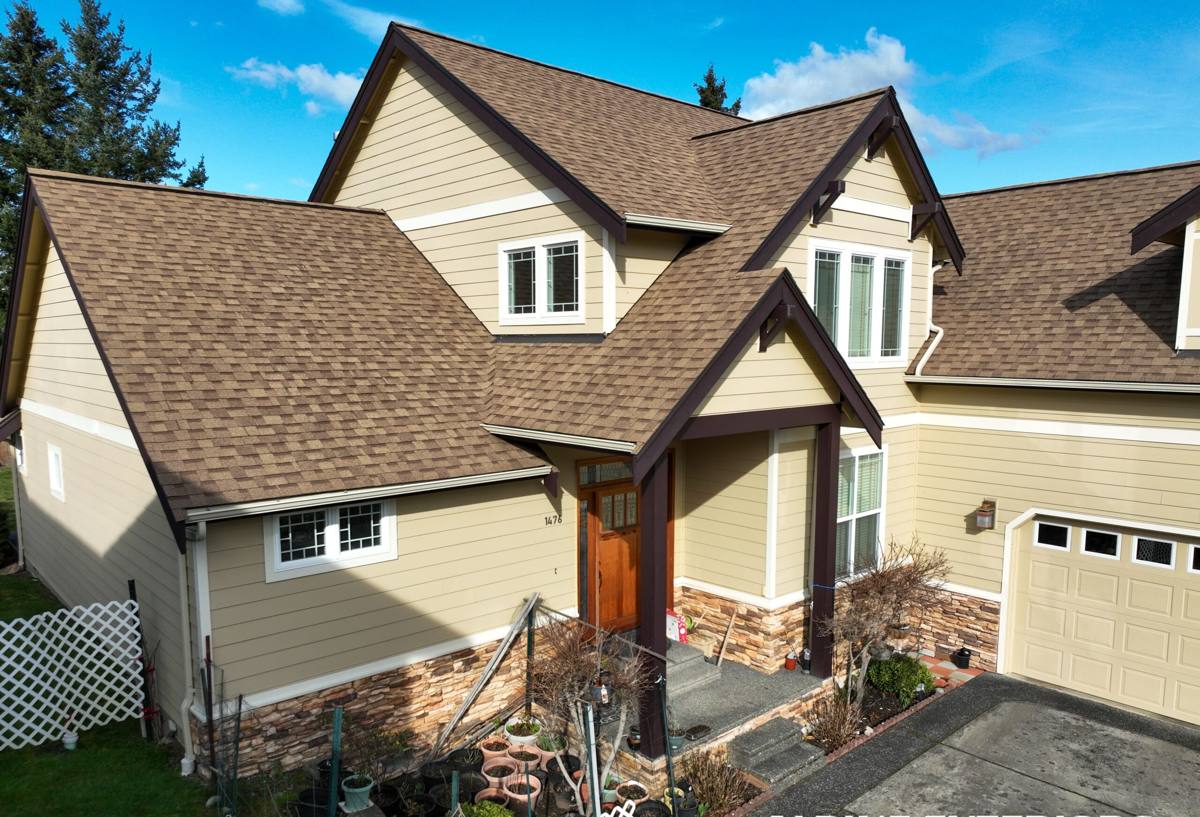
What Blaine's Weather Does to an Asphalt Shingle Roof
Salt Air and Metal Components
Asphalt shingles themselves aren't especially vulnerable to salt, but the metal that goes with them is. Nails, flashing, drip edge, and roof vents can corrode faster near the water than a few miles inland. Standard galvanized fasteners can start showing rust streaks and weakening well before a shingle's rated lifespan is up. That corrosion is usually what causes a leak — not the shingle itself failing, but a fastener or flashing seam giving out underneath it.
Driving Rain and Wind-Driven Water
Storms off the Strait of Georgia and the harbor don't just drop rain straight down — they push it sideways, up under shingle tabs and into any gap in the flashing. A roof that would shed water fine in a calm rain can still take on water during a wind-driven storm if the underlayment, seal strips, and flashing laps weren't installed to handle that angle of attack. This is one of the most common reasons we get called out to older Dakota Creek roofs that "shouldn't" be leaking yet by shingle age alone.
Moss, Shade, and a Long Wet Season
Whatcom County's wet season runs long, and many lots near Dakota Creek have mature tree cover that keeps roof surfaces shaded and slow to dry. That combination is exactly what moss needs. Moss doesn't just look bad — it holds moisture against the shingle surface, works its way under tabs, and can lift granules and shorten the roof's usable life if it's left unmanaged for years.
What a Correct Installation Actually Involves Here
A roof that's going to hold up in this environment needs several details done right, not just shingles nailed down in rows. These are the pieces we treat as non-negotiable on Dakota Creek homes:
- Full synthetic underlayment across the whole roof deck, not just felt paper, for a stronger secondary water barrier
- Ice-and-water shield at eaves, valleys, and around every penetration — the spots where wind-driven rain and ice damming cause the most damage
- Corrosion-resistant fasteners and flashing sized for coastal exposure, not standard galvanized hardware
- Balanced attic ventilation — intake at the eaves and exhaust at the ridge — so moisture doesn't get trapped under the deck and rot it from below
- Properly lapped step flashing and counter-flashing at every wall intersection, chimney, and dormer, not just caulk covering a gap
- Sealed, correctly nailed valleys, since valleys carry the heaviest water volume during a storm
None of this is exotic. It's standard best practice — but it's also the first thing that gets skipped when a crew is moving fast or unfamiliar with how much water this area actually sees.
Choosing the Right Shingle for This Area
Not every asphalt shingle product is a good fit for a shaded, damp, salt-air lot near the water. The table below is a general comparison of shingle classes we discuss with Dakota Creek homeowners — actual product lines and warranty terms vary by manufacturer, so we walk through current options during the estimate.
| Shingle Type | Best For | Trade-Offs Near Dakota Creek |
|---|---|---|
| Standard 3-tab | Budget-conscious projects, simple roof lines | Lower wind rating and shorter service life; less margin against driving rain and moss compared to heavier shingles |
| Architectural (laminated) | Most homes in this area | Thicker profile sheds wind-driven rain better and holds up longer under moss pressure; the standard choice we recommend for most Dakota Creek roofs |
| Algae-resistant (AR) granules | Shaded, tree-covered, or north-facing roof sections | Slows discoloration and moss/algae growth but doesn't eliminate the need for cleaning and maintenance |
| Premium/designer shingles | Higher wind ratings, longer warranties, steep or highly visible roofs | Higher upfront cost; worth it on exposed lots closer to open water where wind load is greatest |
For most homes in the Dakota Creek area, we lean toward architectural shingles with algae-resistant granules as the baseline, then adjust up or down based on how exposed the roof is to wind and how much shade it gets.
Our Process for Dakota Creek Roofing Projects
- On-site inspection. We get on the roof, check the deck condition, existing flashing, ventilation, and any moss or moisture damage before quoting anything.
- Written estimate. A clear breakdown of materials, labor, and any deck repair or ventilation work needed — no vague allowances.
- Material selection. We walk through shingle options based on your roof's sun exposure, wind exposure, and budget.
- Tear-off and deck check. Old roofing comes off completely so we can inspect the deck for rot or soft spots before anything new goes down — covering up a bad deck is how roofs fail early.
- Underlayment, flashing, and ventilation installed to spec. This is where the climate-specific details from the section above get built in, not skipped.
- Shingle installation following manufacturer nailing patterns and wind-rated fastening.
- Site cleanup and magnetic sweep for stray nails and debris.
- Final walkthrough so you can see the finished work and ask questions before we consider the job done.
Moss Prevention and Long-Term Roof Care
A new roof installed correctly still needs some ongoing attention in this climate. Moss and debris buildup are the two things that shorten an otherwise sound shingle roof's life fastest around Dakota Creek. A simple annual maintenance routine goes a long way:
- Have gutters and valleys cleared of needles and leaf debris at least once a year, more often under heavy tree cover
- Have moss physically removed rather than pressure-washed off, which can strip granules and damage the shingle surface
- Trim back overhanging branches where possible to reduce shade and speed up drying after rain
- Watch for dark streaking or thickening moss patches, especially on north-facing slopes, as an early signal it's time for a cleaning
- Have flashing and seals checked periodically, since these fail before the shingles usually do
- Address any interior ceiling stains or attic moisture immediately rather than waiting for a visible leak
Why a Local Crew Matters for This Kind of Roof
A roofing crew that only occasionally works this far north in Whatcom County doesn't build the same instinct for how a Dakota Creek roof actually behaves through a full wet season. We work in this area regularly enough to know how much moss pressure a shaded roof takes on, how wind-driven rain moves across a typical roof line here, and which flashing and ventilation details actually hold up versus which ones look fine on installation day and fail two winters later. That local pattern recognition is what separates a roof that needs attention every year from one that quietly does its job.
It also means someone answers the phone if something comes up after the job is done — not a call center for a company that installed the roof once and moved on to the next region.
Cost Factors for an Asphalt Shingle Roof in This Area
Every roof is different, so we don't publish flat prices — but these are the main factors that move the number for Dakota Creek homes, in roughly the order they matter:
| Factor | Why It Matters Here |
|---|---|
| Roof size and pitch | More surface area and steeper pitches mean more material and labor time |
| Deck condition | Rot or soft spots found during tear-off add repair work most homeowners don't budget for upfront |
| Shingle class chosen | Standard 3-tab, architectural, and algae-resistant or premium lines all carry different material costs |
| Ventilation upgrades | Homes with poor existing attic airflow may need added intake or exhaust vents to prevent trapped moisture |
| Flashing and valley complexity | Roofs with more valleys, dormers, and wall intersections require more detail work and time |
| Access and site conditions | Tree cover, steep lots, and limited access near the water can affect setup and labor time |
We give a firm, written number after the inspection — not a phone estimate — because the deck condition and flashing details drive so much of the real cost.
Repair or Replace? Signs to Watch For
Not every roofing issue near Dakota Creek means a full replacement. Some signs point to a targeted repair, while others mean it's time to talk replacement:
- Isolated leak near a chimney, vent, or wall — often a flashing repair, not a full roof issue
- Curling or cracking shingles limited to one section — may be repairable if the rest of the roof is sound
- Heavy moss coverage across most of the roof — worth an inspection to check for granule loss underneath before deciding
- Widespread granule loss or bald patches — usually a sign the shingles are past their effective life
- Soft or spongy decking felt underfoot — a structural issue that needs full tear-off, not a patch
- Roof age near or past its rated lifespan combined with recurring repairs — replacement typically costs less over time than repeated patch jobs
If you're not sure which category your roof falls into, an honest inspection is the fastest way to find out — we'll tell you straight if a repair will hold or if you're better off planning for a replacement.
If your roof near Dakota Creek is showing moss, wear, or you just want a straight opinion on its condition, we're glad to take a look. Fill out the form below for a free, no-pressure estimate.