 Blaine Siding
 Lynden sits inland from Blaine and the coast, but it still lives under the same wet, gray Whatcom County sky. The roof over a Lynden home deals with long stretches of driving rain off the Strait, wind that carries a trace of salt air even this far from the water, and a moss season that can run eight months out of the year in a shaded yard. Asphalt shingle roofing holds up well here when it's specified and installed correctly for this climate. It struggles fast when it isn't. This page covers what that actually looks like for a Lynden roof, not a generic checklist written for a drier part of the country.
Why Lynden Roofs Wear Differently Than You'd Expect
Lynden's location in the Nooksack River valley, away from the immediate coastline, gives homeowners a false sense that their roof is somehow sheltered from marine weather. It isn't, not really. Whatcom County's maritime climate pushes moisture-laden air inland on a regular basis, and driving rain from Pacific storm systems arrives sideways as often as it arrives straight down. That matters for a shingle roof because water doesn't just land on the surface here — it gets pushed under laps, into valleys, and around penetrations by wind pressure.
The bigger issue for most Lynden roofs is shade and moisture retention rather than wind alone. Mature trees, farm windbreaks, and the valley's tendency to hold morning fog all keep roof surfaces damp longer than they would stay in a sunnier, more exposed location. That extended dampness is exactly what moss and algae need to take hold, and once they do, they hold even more moisture against the shingle mat.
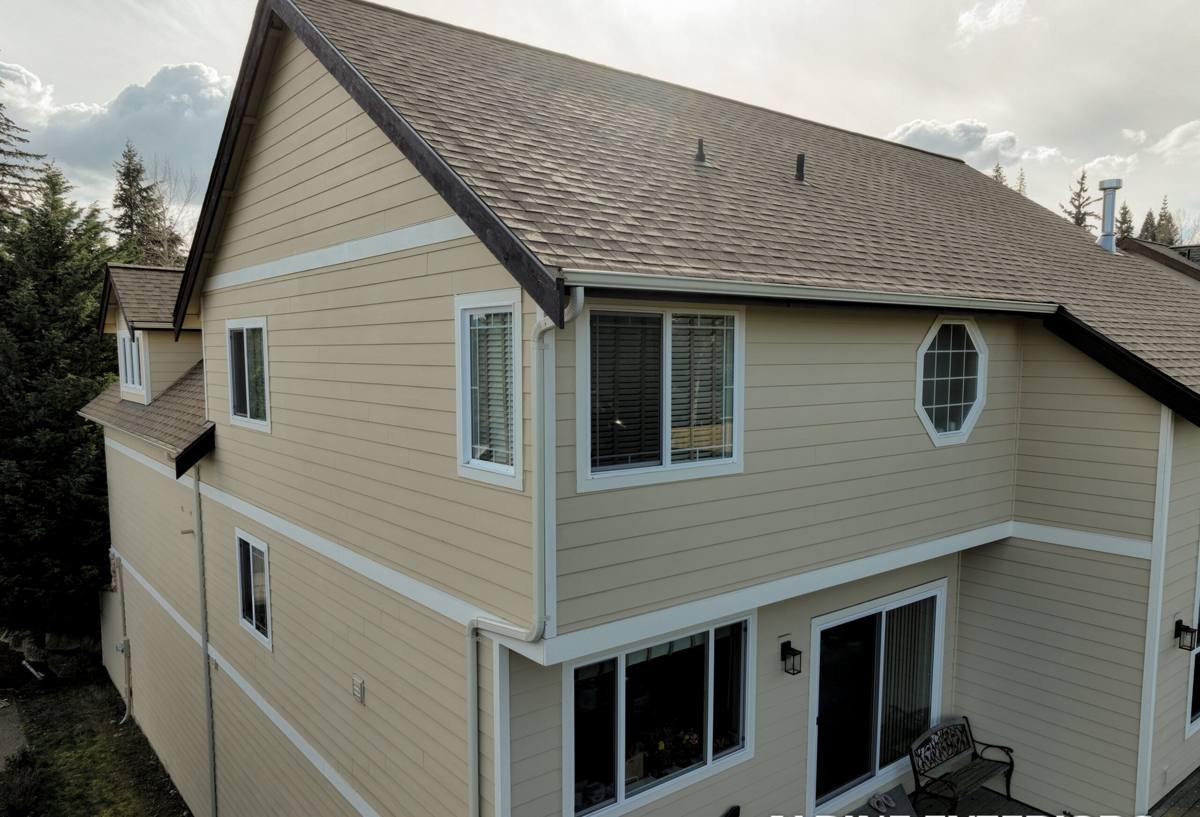
What Asphalt Shingles Have to Handle Here
Three things do most of the damage to an asphalt shingle roof in this area over time:
- Moisture cycling — shingles that stay wet for days at a time, dry briefly, then get wet again, which accelerates granule loss and mat degradation.
- Moss and algae growth — root-like rhizoids from moss work under shingle edges and tabs, lifting them and creating channels for water to get underneath.
- Wind-driven rain and gusts — pushes water uphill under improperly sealed laps and, over years, can work at nail heads and shingle tabs that weren't fastened to spec.
None of this means asphalt shingles are the wrong choice for Lynden. It means the roofing system — underlayment, ventilation, flashing, and shingle grade — has to be chosen and installed with this specific combination of moisture and shade in mind, not treated as an afterthought.
Choosing the Right Shingle for a Lynden Home
Not every asphalt shingle on the shelf is a good match for this climate. We steer most Lynden homeowners toward algae-resistant, laminated architectural shingles with a solid wind rating, and we're honest about why cheaper options tend to disappoint here.
| Shingle Type | How It Performs in Lynden's Climate | Our Take |
|---|---|---|
| 3-tab (economy) shingles | Thinner mat, lower wind rating, shows algae staining faster in shaded, damp yards | Lowest upfront cost, but shortest realistic service life here |
| Standard laminated architectural | Thicker, better wind resistance, more resistant to moisture-driven curling | Solid middle-ground choice for most Lynden homes |
| Algae-resistant (AR) architectural | Copper- or zinc-infused granules resist the streaking and moss-friendly buildup common under trees | Our default recommendation for shaded or tree-lined lots |
| Premium/designer laminated | Heaviest mat, strongest wind and impact ratings, longest manufacturer warranty | Worth it on exposed roof faces or when the roof will carry the home's curb appeal |
We don't push every homeowner toward the most expensive option. A well-ventilated, correctly flashed roof with a mid-grade AR shingle will often outperform a premium shingle installed without attention to ventilation and underlayment. The shingle itself is one piece of a larger system.
Color and Heat Considerations
Darker shingles show less algae streaking visually even as it builds up underneath, which can mask a moss problem until it's advanced. Lighter and mid-tone shingles show staining sooner — which sounds like a downside, but it actually means problems get caught and treated earlier. We'll talk through this trade-off honestly rather than just selling on looks.
What a Correct Installation Actually Involves
A shingle roof that's going to hold up through a decade of Whatcom County winters needs more than shingles nailed to a deck. Here's what we consider non-negotiable on every tear-off and re-roof:
- Full tear-off and deck inspection. Layering new shingles over old ones traps moisture and hides deck rot — we don't do it. Every deck gets inspected for soft spots, delamination, and prior water damage before anything new goes down.
- Ice-and-water membrane at vulnerable points. Eaves, valleys, and roof-to-wall transitions get a self-adhering waterproof membrane underneath, not just felt paper. This is the single biggest defense against wind-driven rain finding its way under the shingle field.
- Synthetic underlayment across the field. It resists tearing during install, sheds incidental moisture better than old-style felt, and gives the deck a second line of defense if a shingle is ever damaged.
- New metal flashing, not reused flashing. Valleys, chimneys, and wall step-flashing get new metal. Corroded or bent flashing is one of the most common causes of the "mystery leak" we get called out to diagnose on older Lynden roofs.
- Correct nailing pattern. Manufacturer-specified nail count and placement, by hand where it matters, not just a nail gun run on autopilot. Under-nailed shingles are a leading cause of wind-related shingle loss.
- Balanced ventilation. Covered in more detail below — this is where a lot of roofs in this area quietly fail years down the road.
Ventilation and Moisture: The Part Most Roofs Get Wrong
An asphalt shingle roof isn't just a surface — it's the top half of a ventilation system that includes your attic. If intake air at the eaves and exhaust at the ridge aren't balanced, warm moist air from the house gets trapped in the attic, condenses against the underside of the roof deck, and works its way back out through the shingles from below. That moisture cycle accelerates the same granule loss and moss-friendly dampness that outdoor rain causes from above.
On a lot of older Lynden homes we inspect, the attic has intake vents that were painted over, blocked by insulation, or were never properly sized in the first place. Fixing ventilation at the same time as a re-roof — rather than treating it as a separate project — is one of the most cost-effective things a homeowner can do for shingle longevity in this climate.
Signs Your Current Roof Is Already Behind
If your roof shows any of these, it's worth having someone look before the next wet season rather than after:
- Dark green or black streaking that keeps returning after cleaning
- Visible moss cushions, especially on north-facing or shaded slopes
- Granules collecting in gutters or at downspout outlets
- Shingle tabs that look lifted, curled, or cupped at the edges
- Daylight or staining visible in the attic near the ridge or eaves
- Soft or spongy spots when walked on by a roofer during inspection
Our Process From Estimate to Cleanup
We keep this straightforward because most Lynden homeowners have sat through a confusing roofing sales pitch before and don't want another one.
1. On-site inspection. We get on the roof and in the attic, not just a ground-level look with binoculars. We check deck condition, ventilation, flashing, and the actual cause of any current leak or staining.
2. Straightforward written estimate. Shingle grade, underlayment type, flashing scope, and ventilation work are all itemized so you know what you're paying for and why, not a single lump-sum number.
3. Scheduling around weather. Whatcom County's wet season isn't a surprise to us. We plan tear-offs for windows of dry weather and have the roof dried in the same day whenever possible so your home is never left exposed overnight.
4. Installation to manufacturer spec. Full tear-off, deck repair as needed, membrane, underlayment, flashing, shingles, and ventilation — installed to the standard that keeps the shingle manufacturer's warranty valid.
5. Cleanup and magnetic sweep. Old material and debris hauled off, yard and driveway swept for nails before we leave.
6. Walkthrough. We show you what was done and what to watch for, so you're not guessing at your own roof's condition down the road.
Maintenance and Moss Control After Installation
A new roof still needs occasional attention in this climate — that's just the reality of a region with this much shade and rain. A short annual routine keeps a well-installed shingle roof performing for its full service life:
- Clear gutters and downspouts before and after the heavy fall rains
- Have moss physically removed rather than power-washed off, which can strip granules
- Trim back overhanging branches to cut down on shade and debris buildup
- Check zinc or copper strips near the ridge, if installed, and replace as they wear thin
- Walk the attic once a year to confirm vents are clear and there's no staining on the underside of the deck
- Address any lifted or missing shingle promptly rather than waiting for the next scheduled inspection
Cost Factors for Lynden Asphalt Shingle Roofs
Every roof is different, and we won't quote a number without seeing the job, but these are the factors that most often move the price up or down on a Lynden re-roof:
| Factor | Why It Matters |
|---|---|
| Roof size and number of planes | More cuts, valleys, and hips mean more labor and material waste |
| Current layers and tear-off scope | Multiple existing layers add disposal cost and deck-inspection time |
| Deck condition | Rot or soft sheathing found during tear-off requires repair before shingles go down |
| Shingle grade selected | Standard, algae-resistant, and premium laminated lines carry different material costs |
| Ventilation upgrades | Adding or correcting intake and exhaust venting is a smart add-on, not a mandatory one, depending on current attic condition |
| Roof access and pitch | Steep pitches, tall walls, or tight access add labor time and safety setup |
Why Hire a Crew That Already Works in Lynden
A roofing crew that mainly works drier inland climates will sometimes underbuild for this area out of habit — skipping the ice-and-water membrane in spots that don't strictly require it by code but do need it given how weather actually behaves here, or not thinking twice about attic ventilation because it's less critical where they usually work. A crew based in and around Blaine and Whatcom County isn't guessing about how driving rain, coastal wind, and a long moss season interact with a shingle roof over months and years — we see the results of that combination on a regular basis, on roofs of every age and condition.
That local familiarity also shows up in smaller, practical ways: knowing which shaded lots and windbreak-lined properties need extra moss prevention from day one, scheduling tear-offs around this area's actual weather patterns instead of a generic forecast, and being available for warranty or maintenance questions without a long drive involved.
Get a Straightforward Estimate
If your Lynden home is due for a new roof, or you're not sure whether what you're seeing — streaking, moss, a soft spot, a slow leak — is something to worry about, we're glad to take a look. The estimate is free, there's no pressure attached to it, and you'll get a plain answer about what your roof actually needs. Use the form below to get started.