 Blaine Siding
 Grandview's Coastal Climate Puts Real Stress on Siding
Grandview sits in the Blaine area of Whatcom County, close enough to the water that homes here deal with a different set of exterior conditions than houses twenty miles inland. Three things stand out when we look at a home's siding in this part of the county: salt-laden air, wind-driven rain, and a moss season that runs longer than most homeowners expect. None of these are dramatic on their own, but together they add up to steady, cumulative wear that shows up first in the siding.
Salt Air and Corrosion
Proximity to Puget Sound and the Strait of Georgia means the air here carries salt, even on homes that aren't directly waterfront. Salt is hard on exposed fasteners, metal trim, and any siding material that relies on a painted or laminate surface to keep moisture out. Over years, salt exposure accelerates fastener corrosion and can cause coatings to fail faster than the manufacturer's published timelines assume, especially on the sides of a house that face prevailing wind off the water.
Driving Rain and Wind-Driven Moisture
Whatcom County gets a lot of rain, but the bigger issue for siding isn't total rainfall — it's the way storms off the water push rain sideways into wall assemblies. Driving rain finds gaps that vertical rain never would: unsealed laps, poorly flashed windows, siding installed too tight to trim. A siding system that performs fine in a dry climate can fail here simply because it wasn't built to shed water that's coming in at an angle.
The Long Moss Season
Between the rainfall and the cooler marine temperatures, shaded and north-facing walls in this area stay damp for a large part of the year. That's exactly the environment moss and algae need to take hold. On siding materials that absorb even small amounts of moisture, or that have seams and textures where organic growth can get a foothold, moss isn't just a cosmetic issue — it holds moisture against the wall and slows drying between rain events.
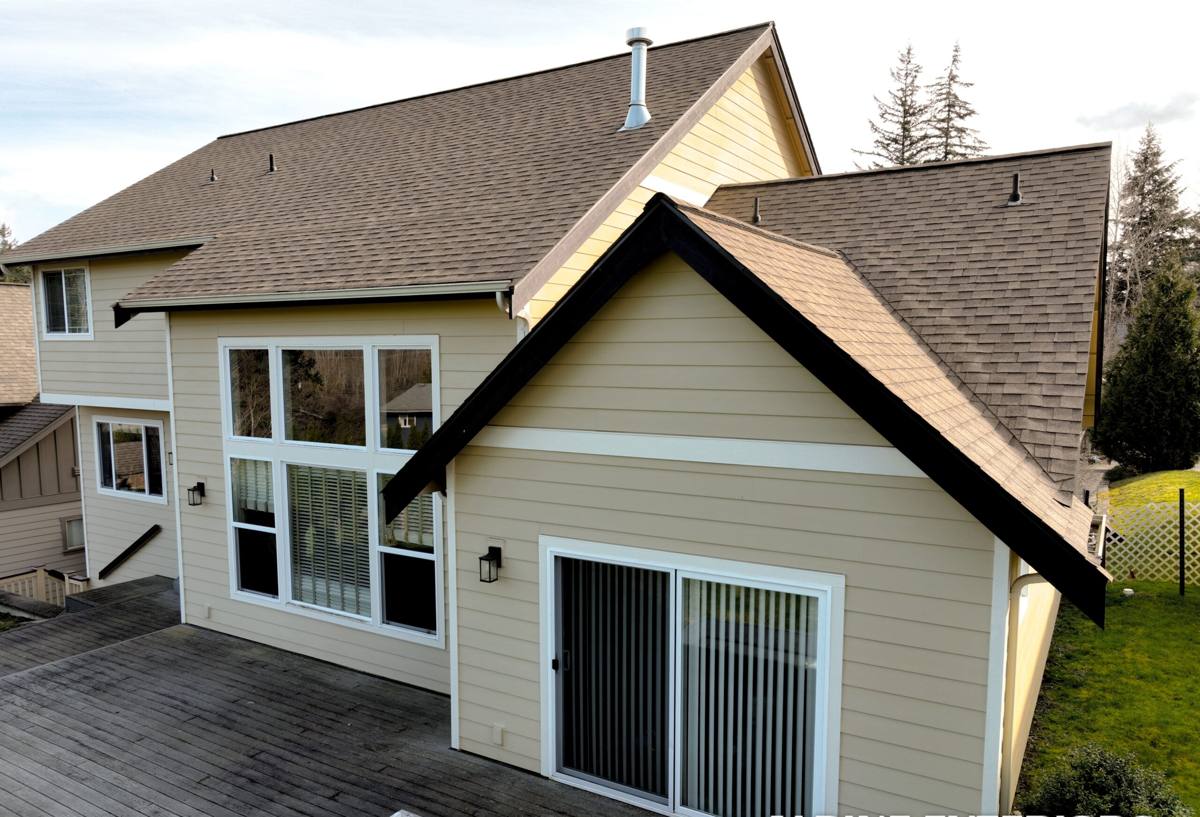
What a Correct Siding Installation Actually Involves
Siding installation looks simple from the driveway — panels going up in rows — but the work that determines whether a job lasts happens underneath and between those panels. In a climate like Blaine's, skipping or rushing these details is where problems start.
Weather-Resistive Barrier and Flashing
Every wall needs a continuous weather-resistive barrier behind the siding, with flashing integrated at every window, door, and penetration so water is directed out and down rather than into the wall cavity. On a driving-rain coast, the flashing details around openings matter more than almost anything else in the installation — it's the single most common point of failure we find on homes with water damage.
Fastening and Clearances
Fiber cement siding has specific fastening requirements — nail placement, spacing, and depth all affect both the warranty and long-term performance. Just as important are clearances: siding needs a gap above roof lines, decks, and grade so water and debris don't sit against the bottom edge. We also keep proper clearance from concrete and soil, since constant ground moisture wicking into the bottom course is a slow but steady cause of rot.
Joint and Seam Detailing
Where panels meet — at butt joints, inside and outside corners, and around trim — is where wind-driven rain tests an installation the hardest. Joints need to be sealed and detailed according to manufacturer specification, not just caulked and left. Loose or improperly lapped joints are a common shortcut that doesn't show up as a problem until a few wet seasons in.
Why We Install Only James Hardie Fiber Cement
We made the decision to install exclusively James Hardie fiber cement siding, and we don't install vinyl, LP SmartSide, Cemplank, Allura, or unfinished wood siding like primed spruce or cedar. That's not a marketing position — it's based on how these materials actually perform over time in a wet, coastal, moss-prone climate like ours.
| Material | Where it holds up | Trade-off in this climate |
|---|---|---|
| James Hardie fiber cement | Non-combustible, factory-baked ColorPlus finish, engineered HZ product lines for moisture-heavy regions | Higher upfront material and labor cost than vinyl |
| Vinyl | Low cost, low maintenance in dry climates | Can warp or become brittle with temperature swings; seams and J-channels are common water entry points |
| LP SmartSide | Engineered wood, lighter to install than fiber cement | Wood-based core is more sensitive to sustained moisture exposure if any coating or sealant point fails |
| Cedar / primed spruce | Natural appearance, long history of use in the Northwest | Needs ongoing refinishing and is more vulnerable to moss, rot, and insect damage without regular upkeep |
Fiber cement doesn't absorb moisture the way wood-based products can, which matters directly for moss resistance and long-term wall integrity. James Hardie's ColorPlus finish is baked on in a controlled factory process rather than field-applied, which gives it more consistent resistance to fading and cracking than site-painted materials — an advantage in an area where salt air already puts extra stress on any painted surface. Hardie also builds region-specific HZ formulations engineered for moisture and climate conditions like the ones we have here, and backs the product with a strong transferable warranty. We'd rather stand behind one material we trust completely than offer several and have to caveat which ones will actually hold up.
Our Grandview Installation Process, Step by Step
- Assessment and measurement: We walk the home, check the condition of existing siding and sheathing, and identify any moisture damage that needs to be addressed before new siding goes on.
- Tear-off and substrate check: Old siding comes off and we inspect the sheathing underneath for rot or soft spots — this is often where hidden problems from a previous installation surface.
- Weather barrier installation: A new weather-resistive barrier goes on with proper overlap and taping at seams before a single piece of siding is hung.
- Flashing at all openings: Windows, doors, and any wall penetrations get flashed to manufacturer specification, directing water outward.
- Hardie panel or plank installation: Siding is installed to James Hardie's fastening and clearance specifications, maintaining proper gaps at rooflines, decks, and grade.
- Trim, joints, and sealing: Corners, butt joints, and trim are detailed and sealed to shed wind-driven rain rather than trap it.
- Final walkthrough: We inspect the completed installation with the homeowner and confirm everything meets spec before calling the job done.
Signs Your Current Siding Is Already Losing the Fight
Homes in the Grandview area often show wear patterns tied directly to the local climate. Here's what we look for during an inspection:
- Persistent moss or algae staining on north- or shade-facing walls that comes back shortly after cleaning
- Soft or spongy spots when pressing on siding, especially near the bottom courses or around window trim
- Peeling, bubbling, or chalky paint on wood-based or vinyl siding
- Visible gaps or separation at joints, corners, or where siding meets trim
- Rust streaking from fasteners, more common on walls facing prevailing wind off the water
- Warping or waviness in panels, particularly on vinyl siding that's seen temperature swings
Any one of these on its own might just need a repair. Several at once, especially combined with interior signs like musty smells or discoloration on inside walls, usually points to a siding system that's no longer doing its job.
What Affects the Cost of a Siding Installation in Grandview
Every home is different, so we don't quote a job without seeing it, but these are the main factors that move the price up or down:
| Factor | Why it matters |
|---|---|
| Home size and wall complexity | More corners, dormers, and roof lines mean more cutting, flashing, and labor time |
| Condition of existing sheathing | Rot or moisture damage found during tear-off adds repair work before new siding can go on |
| Siding profile chosen | Lap, shingle-style, and panel Hardie products vary in material and labor cost |
| Trim and detail work | Custom corner and window trim adds time compared to standard trim packages |
| Access and site conditions | Slopes, tight lot lines, or limited equipment access affect labor efficiency |
Because fiber cement is heavier and requires more precise fastening and joint work than vinyl, labor makes up a larger share of the total cost than it does with lighter materials. That labor is exactly what determines whether the installation holds up through Blaine's wet seasons, so it's not a place to look for shortcuts.
Why Hiring a Crew That Already Works Grandview Matters
A siding installer who works regularly in this part of Whatcom County already knows which walls take the worst of the wind-driven rain, how long the moss season really runs, and where salt air does the most damage to fasteners and trim. That local knowledge shows up in small decisions — where extra flashing attention goes, which wall orientations get watched most closely during the walkthrough — that a crew unfamiliar with the area might not think to make. It also means the installer understands regional building code expectations and how James Hardie's HZ product lines are meant to be applied for this specific climate, rather than applying generic installation practices that work fine somewhere drier.
Caring for Your New Siding After Installation
Correctly installed James Hardie siding is low-maintenance, but "low-maintenance" doesn't mean "no maintenance," especially in a moss-prone coastal climate. A yearly rinse-down to keep organic growth from establishing on shaded walls, prompt attention to any caulking that starts to crack at joints, and keeping gutters clear so water doesn't overflow directly onto siding all go a long way toward getting the full lifespan out of the material. Because the ColorPlus finish is factory-applied, you're not signing up for repainting on the schedule that wood or field-painted siding demands — but periodic inspection, particularly after major storms off the water, is still worth doing.
If your Grandview home's siding is showing signs of wear, or you're planning ahead for a replacement, we're happy to take a look and give you a straightforward, no-pressure estimate — just fill out the form below.