 Blaine Siding
 Storm Damage Roof Repair for Semiahmoo Homes
Semiahmoo sits out on a narrow spit between Semiahmoo Bay and Drayton Harbor, right at the edge of Blaine and the Canadian border. There's open water on more than one side and almost nothing to break the wind before it reaches a roof out here. When a storm rolls through Whatcom County, homes on the spit typically take a harder hit than properties set back even a mile or two inland — stronger gusts, rain driven sideways instead of falling straight down, and more airborne debris off the water and the trees along the shoreline.
Storm damage roof repair is its own kind of job, different from a routine repair or a planned replacement. The damage is often sudden rather than gradual, it needs to get addressed quickly to stop water from getting further into the house, and in a lot of cases it needs to be documented clearly enough to support an insurance claim. This page covers what storm damage on a Semiahmoo roof actually looks like, what a correct repair involves, and how our process works for homes in this specific part of the county.
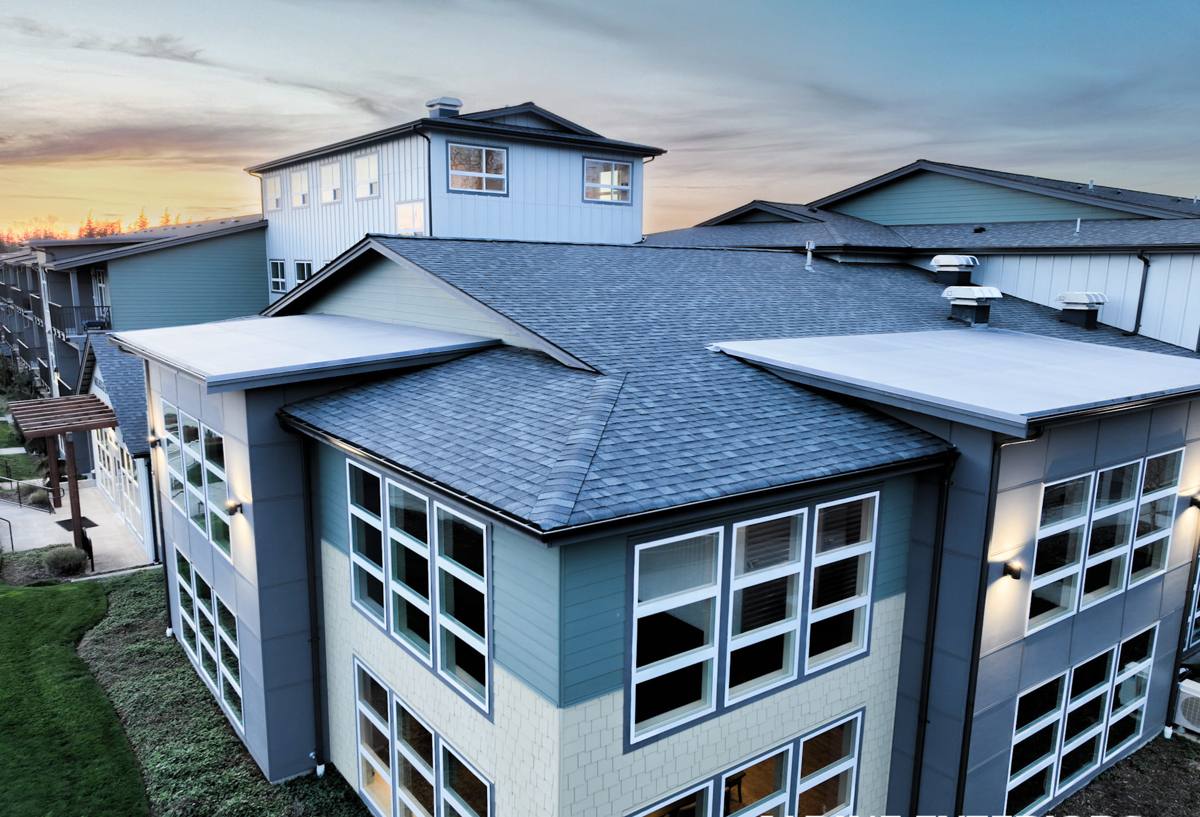
Why Storms Hit Semiahmoo Roofs Harder
A storm that causes minor, cosmetic wear on an inland Blaine roof can cause real, structural damage on a Semiahmoo roof, and it comes down to exposure.
Open Wind Off the Bay and Harbor
With water on more than one side and no real windbreak, gusts on the spit hit roofs with more direct force than they do on a sheltered inland lot. Wind uplift is what tears shingles loose, peels back ridge caps, and works flashing free at edges and penetrations. A roof built to a minimum standard for a calmer setting is more likely to lose material outright in a strong blow than one specified for open, waterfront exposure.
Wind-Driven Rain That Finds Every Weak Point
Once shingles lift, seams open, or flashing shifts even slightly, wind-driven rain on the spit doesn't need much of a gap to get in. It gets pushed sideways and upward into valleys, laps, and roof-to-wall transitions with more pressure than a still-air rain event ever would. That's often how a small piece of storm damage — one lifted shingle, one displaced flashing corner — turns into interior water damage within the same storm cycle rather than months later.
Falling Debris and a Long Moss Season
Shoreline trees and mature landscaping around Semiahmoo properties shed limbs and debris in high wind, and that debris causes its own category of storm damage — cracked or punctured shingles, dented flashing, damaged gutters. On top of that, Whatcom County's long moss season means many roofs already carry moss and organic buildup going into storm season, and moss-clogged valleys or gutters make it harder for a roof to shed the extra water a storm brings, which compounds the damage.
Common Storm Damage We Find on Semiahmoo Roofs
Some storm damage is obvious from the ground. A lot of it isn't, which is part of why a proper inspection after a serious wind event matters even if nothing looks wrong from the driveway.
- Shingles that are lifted, creased, torn, or missing entirely, usually concentrated on the side of the roof that faced the wind
- Flashing at chimneys, vents, skylights, and roof-to-wall transitions that's been bent, lifted, or pulled loose
- Punctures, dents, or cracked material from wind-driven debris or falling limbs
- Gutters and downspouts pulled away from the fascia or clogged with storm debris, causing water to back up under roof edges
- Soft or saturated spots on the roof deck where water has already gotten past the surface layer
- Granule loss concentrated in one area rather than spread evenly, which often points to impact damage rather than normal aging
- Interior water staining on ceilings or upper walls that shows up during or right after a storm
What to Do in the First 24 Hours After a Storm
What happens right after a storm affects both how much additional damage occurs and how smoothly any insurance claim goes. A few things are worth doing before a contractor even arrives:
- Check for interior signs of a leak — water stains, drips, or damp spots on ceilings and upper walls — and place a container underneath if water is actively coming through
- Photograph visible exterior damage from the ground if it's safe to do so; don't get on the roof yourself after a storm
- Note the date and approximate time of the storm, since that detail matters for insurance documentation
- Call for a professional inspection and, if needed, emergency tarping to stop further water intrusion before the next rain
- Hold off on signing a contract with anyone who shows up unsolicited door-to-door in the days right after a storm — verify licensing and get a written scope before agreeing to anything
- Contact your homeowner's insurance to start the claim process if the damage looks like it may exceed a minor repair
Storm Damage vs. Normal Wear — Why the Difference Matters
Not everything that looks like storm damage actually is, and the distinction matters more than it might seem. A roof nearing the end of its service life can develop curling shingles, granule loss, and minor leaks on its own timeline, with or without a storm. Insurance coverage generally applies to sudden, storm-caused damage — not to gradual wear that happens to get noticed after a bad weather event.
Telling the two apart comes down to patterns. Storm damage tends to be directional, concentrated on the side of the roof that faced the wind, and often paired with debris impact or a clear timeline tied to a specific date. Wear-related damage tends to be spread more evenly across the roof and develops slowly, with granule loss, cupping, or brittleness showing up over multiple seasons rather than overnight. We document what we find with that distinction in mind, because it directly affects whether a repair is a straightforward fix or something that needs to go through a claim.
Repair or Replace: What Actually Determines the Call
Most storm damage on a Semiahmoo roof is repairable. Full replacement usually only makes sense when the damage is extensive, the roof was already near the end of its service life, or the underlying deck has been compromised. The table below covers the main factors that push the decision one way or the other.
| Factor | Leans Toward Repair | Leans Toward Replacement |
|---|---|---|
| Extent of damage | Isolated to one section or slope | Spread across most or all of the roof |
| Roof age | Well within its rated service life | Already near or past expected service life |
| Deck condition | Sheathing underneath is sound | Rot or soft sheathing found during inspection |
| Material availability | Matching shingle line still in production | Original product discontinued, forcing a visible patch |
| Storm frequency going forward | Isolated event on an otherwise stable roof | Repeated storm damage suggesting the roof isn't built for this exposure |
We walk through these factors on-site rather than defaulting to a full replacement recommendation, since a well-timed repair on a roof with plenty of service life left is often the honest answer, even though it's the smaller job.
How Our Storm Damage Repair Process Works
- Emergency response. If active water intrusion is the immediate concern, we prioritize tarping or temporary stabilization to stop further damage before anything else.
- Full roof inspection. We check the entire roof, not just the area that looks obviously damaged, since wind can lift and loosen material in spots that aren't visible from the ground.
- Damage documentation. We photograph and document what we find, including patterns that support whether the damage is storm-related, for your own records or an insurance claim.
- Written scope and estimate. We lay out what repair actually involves — material, flashing work, deck repair if needed — before any work begins.
- Repair work. Damaged material is replaced, flashing is reset or replaced with corrosion-resistant hardware suited to this climate, and any exposed deck areas are checked and repaired as needed.
- Final walk-through. We review the completed repair with you and cover anything worth watching going forward, including what the next storm season might mean for the rest of the roof.
Documentation That Actually Holds Up
Insurance claims for storm damage move a lot smoother when the documentation is thorough and specific rather than a vague description after the fact. We take dated photos of the damage as we find it, note the likely cause and location on the roof, and provide a clear written scope of the repair work involved. That paperwork is yours to use with your insurer — we're not a substitute for your adjuster or your policy, but we make sure the roof-side documentation doesn't leave gaps that slow a claim down or leave money on the table.
We're straightforward about what we find either way. If damage looks more like age-related wear than storm impact, we'll say so rather than characterizing it as storm-caused to make a claim easier — that kind of shortcut tends to cause more problems than it solves once an adjuster looks closely.
Why a Local Crew Matters for Semiahmoo Storm Response
A roofer who mostly works sheltered inland jobs isn't wrong about roofing in general, but a Semiahmoo storm repair has variables that don't come up as often elsewhere in Whatcom County — open wind exposure from two directions, flashing and fastener choices that need to hold up against sustained salt air, and moss buildup that's often already working against the roof before a storm ever hits. Working this area regularly means we already know which parts of a Semiahmoo roof take the first hit in a windstorm and which repair details actually hold up here, rather than figuring it out on your job.
There's also the timing side of storm response. A roof with active water intrusion doesn't wait well, and a crew already familiar with this stretch of coastline can get eyes on the damage and a tarp up faster than one coming from further out. That speed is often the difference between a contained repair and a much larger interior repair bill.
Talk to a Local Crew About Your Storm Damage
If your roof took a hit in a recent windstorm, or you want an honest inspection just to check for damage you can't see from the ground, we're glad to take a look. Reach out below for a free, no-pressure estimate.