 Blaine Siding
 Asphalt Shingle Roofing Built for Bellingham's Climate
Bellingham sits in a stretch of Whatcom County where the weather doesn't do a roof any favors. You've got salt-laden air drifting in off the water, long stretches of driving rain that can last for days, and a wet, shaded moss season that seems to start earlier and run later every year. An asphalt shingle roof that would coast through a drier climate can start showing problems here in half the time if it wasn't installed with this specific environment in mind.
We install and repair asphalt shingle roofs on homes throughout the Bellingham area, and the approach we take is shaped by what actually happens to shingles here over ten, fifteen, twenty years — not just what a manufacturer's spec sheet says under ideal lab conditions. This page covers what local homes actually need, what a correct install looks like, and why the climate changes the decisions we make on your roof.
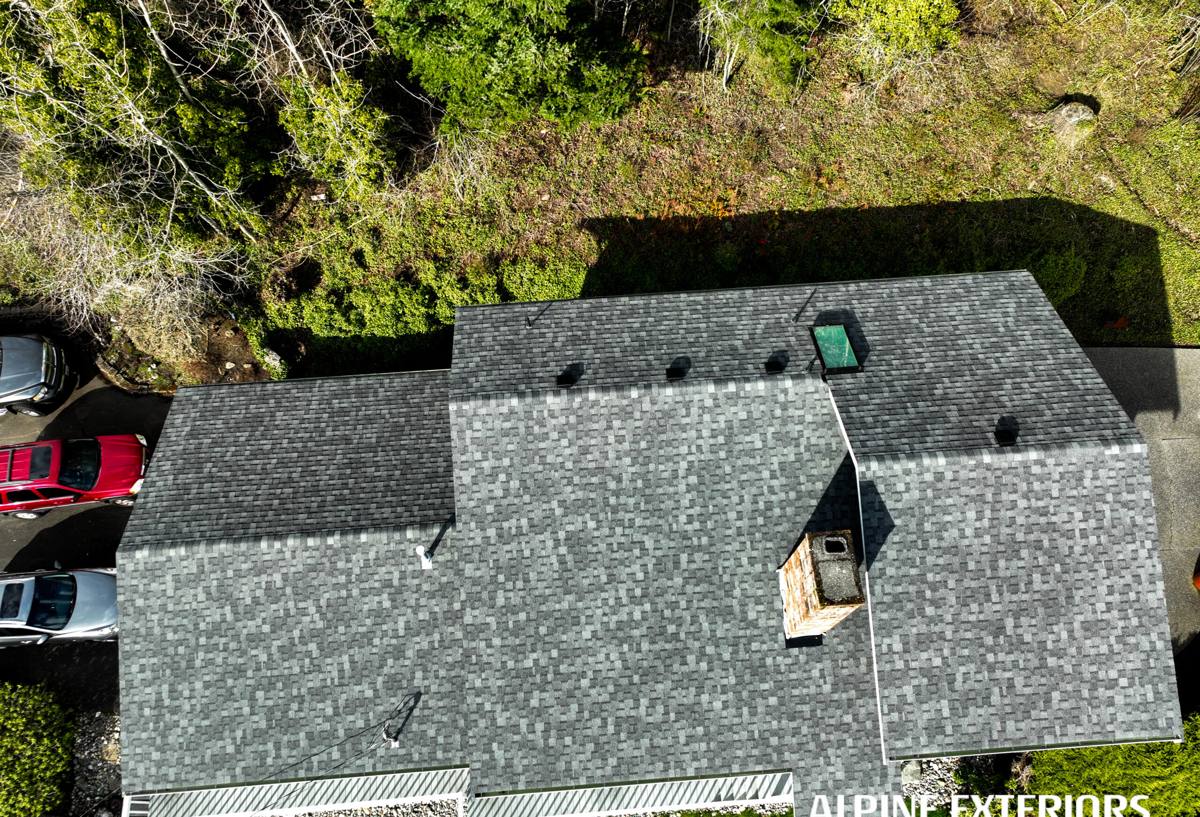
What Bellingham's Weather Actually Does to a Roof
Salt Air and Metal Fatigue
Homes closer to Bellingham Bay and the surrounding coastline deal with airborne salt that accelerates corrosion on exposed metal — flashing, nail heads, vent stacks, and gutter hardware. Standard fasteners and thin-gauge flashing that hold up fine inland can start corroding noticeably sooner in a coastal marine climate. It's not dramatic, it's gradual — but a roof is only as good as its weakest metal component, and a corroded flashing seam is one of the most common places we find active leaks.
Driving Rain and Wind-Driven Moisture
Pacific Northwest storms don't just fall straight down — wind pushes rain sideways and up under shingle edges, especially at eaves, valleys, and anywhere the roof plane changes. A roof that's watertight in a light straight-down rain can still leak in a sideways gale if the underlayment, flashing laps, and shingle overlap weren't detailed correctly. This is one of the biggest differences between a fast install and a correct one.
Moss, Shade, and a Long Wet Season
Whatcom County's mix of tree cover, humidity, and mild temperatures is close to ideal growing conditions for moss and algae. Moss doesn't just look bad — it lifts shingle edges as it grows, holds moisture against the roof deck, and accelerates granule loss. North-facing slopes and roofs shaded by trees see this first and worst. A roof with no moss-management plan in this climate is a roof that ages faster than it should.
What a Correct Asphalt Shingle Install Involves
A lot of what determines how long a shingle roof lasts happens before a single shingle goes down. The visible layer gets the attention, but the system underneath is what actually keeps water out.
Underlayment and Water-Resistive Barrier
We use synthetic underlayment across the full roof deck as a secondary water barrier, with self-adhering ice-and-water shield membrane at the eaves, valleys, and any roof-to-wall transitions — the spots most exposed to wind-driven rain and ice damming during cold snaps. This isn't optional in our approach; it's the layer that saves a roof when wind pushes moisture past the shingle line.
Ventilation and Moisture Control
An asphalt shingle roof that isn't ventilated correctly traps heat and moisture in the attic, which shortens shingle life from underneath — you don't just lose years to weather on top, you lose them to condensation below. We balance intake at the eaves with exhaust at the ridge so air actually moves through the attic space instead of stagnating.
Flashing Details That Matter
Chimneys, skylights, sidewalls, and any roof penetration are where most leaks originate — not the open field of shingles. We use corrosion-resistant flashing material and proper step-and-counter-flashing techniques at wall intersections, since this is exactly where coastal salt air does the most damage over time.
Nailing Pattern and Wind Rating
Correct nail placement and count directly affects wind resistance. Under-nailed shingles are one of the most common causes of premature blow-off, and it's invisible until a storm finds it. We follow manufacturer nailing specs to keep the shingle's wind rating intact rather than the industry-standard shortcuts that void it.
Choosing the Right Shingle for a Bellingham Home
Not every asphalt shingle is built the same way, and in this climate the differences matter more than they would somewhere drier. Here's how the common options compare for a coastal Whatcom County home:
| Shingle Type | Typical Lifespan | Best For | Climate Trade-Offs |
|---|---|---|---|
| 3-tab (standard) | 15–20 years | Budget-conscious re-roofs | Lower wind rating; shows granule loss and moss faster |
| Architectural / laminate | 25–30 years | Most Bellingham homes | Better wind resistance, thicker profile sheds water better in driving rain |
| Algae-resistant (AR) | 25–30 years | Shaded or north-facing roofs | Copper-infused granules slow algae/moss growth; worth it under tree cover |
| Impact-rated (Class 4) | 25–30+ years | Homes wanting max durability | Higher upfront cost; sometimes qualifies for insurance discounts |
For most homes in the Bellingham area, we recommend a mid- to upper-tier architectural shingle with algae-resistant granules if there's any meaningful tree shade on the roof. The upfront cost difference over a basic 3-tab is modest compared to the years of added service life in this climate.
Living With Moss and Algae: What Actually Helps
No shingle is fully moss-proof in a climate this wet and shaded — but the right combination of product choice, roof design, and maintenance keeps it from becoming a real problem.
- Choose algae-resistant shingles on any slope with partial shade or nearby tree cover
- Trim back overhanging branches so the roof gets more sun and airflow
- Keep gutters and valleys clear so water doesn't sit against shingle edges
- Have moss physically removed (not pressure-washed, which damages granules) rather than left to grow
- Consider zinc or copper strips near the ridge on heavily shaded roofs as a passive moss deterrent
- Schedule a roof check after major storms to catch lifted shingles before they leak
Signs Your Roof Needs Attention
Asphalt shingle roofs usually give warning signs before they actually leak. In this climate, we tell homeowners to watch for:
- Granules collecting in gutters or at downspout outlets
- Shingle edges curling, cupping, or lifting at the corners
- Visible moss or dark algae streaking, especially on north-facing slopes
- Rust staining or visibly corroded flashing around chimneys and vents
- Soft spots or sagging when walked on the roof deck
- Daylight visible through the roof deck from inside the attic
Catching these early is almost always cheaper than waiting for an interior leak, since water damage to decking, insulation, and drywall adds cost fast once it starts.
What to Expect From Our Process
- On-site inspection of the current roof, decking condition, ventilation, and any active problem areas
- A written estimate that breaks out material, labor, and any deck repair contingencies before work starts
- Tear-off and deck inspection, with any soft or damaged sheathing replaced before new material goes down
- Installation of underlayment, ice-and-water membrane, flashing, and shingles to manufacturer spec
- Full site cleanup, including magnetic sweep for stray nails
- Final walkthrough so you know exactly what was done and what the warranty covers
We don't push a full replacement when a repair will genuinely hold — if your roof has years of life left and just needs flashing work or a section reshingled, that's what we'll recommend.
What Affects the Cost of a Bellingham Roof
| Factor | Why It Matters |
|---|---|
| Roof size and pitch | Steeper roofs take longer to work safely and use more material overlap |
| Number of layers to remove | Tear-off of existing layers adds labor and disposal cost |
| Deck condition | Rotted or soft sheathing found during tear-off requires replacement |
| Shingle grade chosen | Architectural, algae-resistant, and impact-rated products cost more upfront but last longer |
| Roof complexity | Valleys, dormers, skylights, and chimneys add flashing labor and material |
| Access and site conditions | Trees, tight lot lines, or steep terrain can affect staging and equipment |
We give a firm written number after seeing the roof in person — we don't estimate off a phone call or a satellite photo, since the details that actually drive cost aren't visible from either.
Why Hire a Crew That Already Works in Bellingham
A roofing crew that works Whatcom County regularly knows which details actually matter here — how much ice-and-water shield to use given the rain patterns, which slopes need algae-resistant shingles because of shade, and how to schedule around a stretch of driving rain instead of getting caught mid-tear-off with an open deck. That local pattern recognition is the difference between a roof that's technically up to code and one that's actually built for what this area throws at it year after year.
We're not traveling in from out of the area to do one job and move on — we're working this climate on a regular basis, which means we see how our own installs hold up over time and adjust accordingly.
Get a Free, No-Pressure Estimate
If your roof is showing its age, dealing with moss, or you just want an honest read on how many years it has left, we're happy to take a look. Fill out the form below and we'll set up a time to inspect your roof and give you a straightforward estimate — no pressure, no hard sell.