 Blaine Siding
 Siding Installation in Bellingham: A Job Judged by How It Ages, Not How It Looks on Day One
A new siding installation looks good the day the crew packs up. The real test comes over the next several winters, when wind-driven rain off the Salish Sea, salt-tinged marine air, and a moss season that barely takes a break get to work on every seam, fastener, and flashing detail the crew left behind. We're based up the road in Blaine, and Bellingham is territory we already work regularly, which means we've seen how differently an installation ages here depending on whether it was built for this specific climate or just built to a generic national spec.
This page is about the installation itself: what Bellingham's weather demands from a new siding job, what a correct install actually involves step by step, and why we install James Hardie fiber cement exclusively rather than offering a menu of products at different price points.
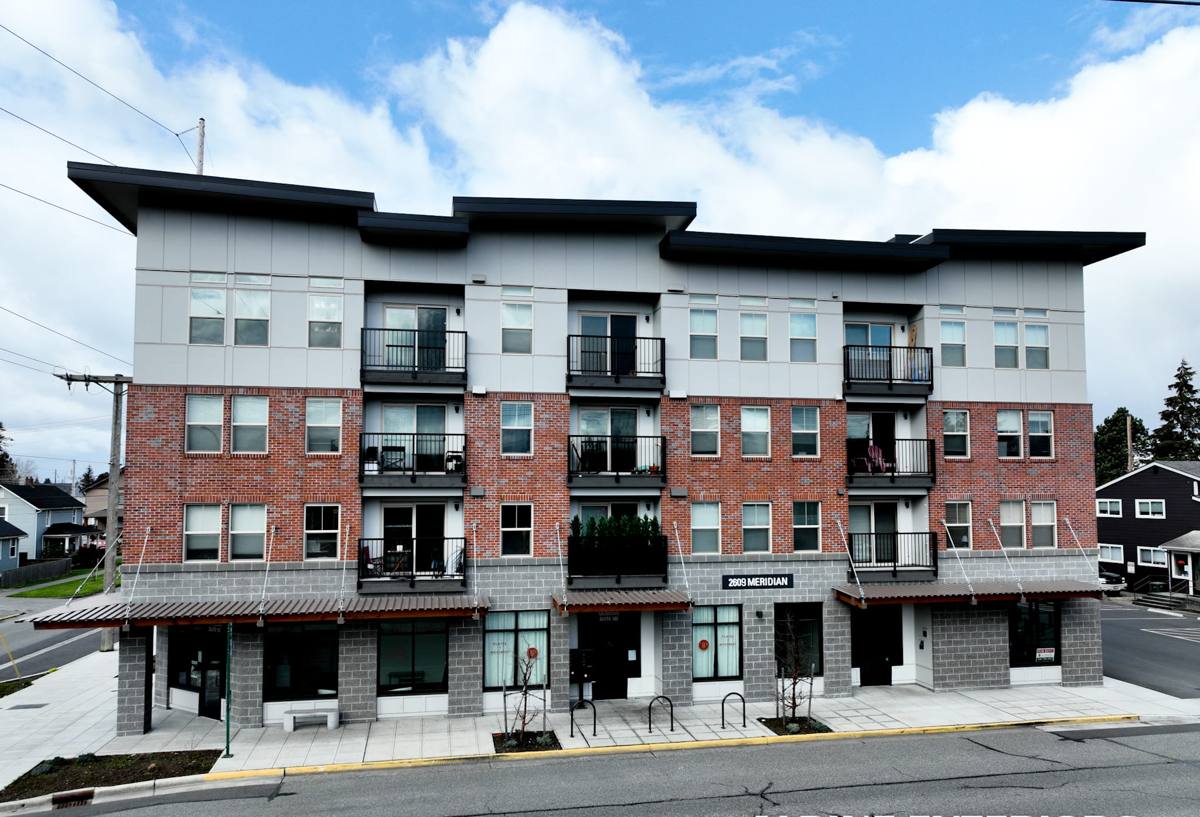
What Bellingham's Climate Asks of a New Siding Installation
Salt Air Off the Bay
Bellingham's proximity to the bay and the Salish Sea means a steady flow of salt-tinged, moisture-laden air moving across the city, not just on days with an obvious storm rolling in. That kind of sustained exposure corrodes exposed metal fasteners and trim faster than an inland climate would, and it wears down lower-grade finishes in a way that isn't obvious on install day but shows up clearly five or ten years later. An installation crew that treats fastener spec and corrosion resistance as a checkbox rather than a real decision is setting a homeowner up for problems that take years to surface and are expensive to trace back to their source.
Wind-Driven Rain During and After Install
Rain in this part of Whatcom County rarely falls straight down. Wind off the water pushes it sideways into wall assemblies, lap joints, and trim seams, which means a siding system installed to a purely vertical-rainfall standard can still let water in here specifically because of the angle it's coming from. This matters during construction too — house wrap that's lapped correctly and siding that's fastened and sealed to spec accounts for that sideways load from the start, rather than relying on caulk to patch over a shortcut later.
A Moss Season That Never Fully Ends
Mild year-round temperatures, tree cover, and near-constant dampness give moss and mildew a long growing season across Bellingham, especially on shaded and north-facing walls. Any siding surface with even slight porosity, or an installation that traps moisture against the substrate instead of letting it drain and dry, becomes a growth surface over time. It typically shows up first in the places homeowners check least often: behind landscaping, under eaves, on the side of the house that gets the least sun.
What a Correct Installation Actually Involves
The finished look of new siding is simple — clean lines, consistent reveal, a fresh color. What's underneath that surface, if it's done right, is a lot more involved than most homeowners realize until they've watched a crew work through it:
- House wrap or weather-resistive barrier installed and correctly lapped, shingle-style, before any siding goes up
- A drainage gap or rainscreen behind the siding so moisture that gets past the surface can drain and dry instead of sitting against the sheathing
- Corrosion-resistant fasteners placed at the manufacturer's specified spacing, not just enough to hold the board in place
- Properly flashed and lapped transitions at every window, door, corner, and roofline intersection
- Correct clearance from grade, decks, patios, and roof surfaces so the bottom edge of the siding never sits in standing water or debris
- Field-cut edges primed before installation, since factory finish only covers the parts of the board that weren't cut on site
Skip any one of these and the wall can still look correct for a year or two. The problems that follow — staining at seams, soft spots near the base, paint or finish failure around trim — take a few wet seasons to show up, which is exactly why a rushed or corner-cut installation is easy to get away with right up until the homeowner is the one dealing with the consequences.
Why We Install Only James Hardie
We don't offer a range of siding brands at different price points and let the installation quality vary with the material. We install James Hardie fiber cement, and that's a professional standard built around what we've consistently seen on tear-offs and repair calls throughout this climate, not a sales preference.
| Material | Behavior During Install | Long-Term Performance Here |
|---|---|---|
| James Hardie fiber cement | Dimensionally stable; holds fastener spacing and joint gaps as installed | Resists moisture, salt, and moss with minimal upkeep when installed to spec |
| LP SmartSide (engineered wood) | More sensitive to moisture at fresh cut edges during install | Requires diligent edge sealing to hold up against sustained coastal moisture |
| Vinyl | Expands and contracts with temperature; installers must leave room for movement | Can warp, crack, or gap over time; hidden moisture behind panels is hard to catch |
| Cedar or primed spruce | Requires careful sealing of every cut face before it goes up | Needs a recurring paint or sealing schedule to keep moisture out long-term |
None of these alternatives are bad products, and other contractors install them competently. We made a professional decision that in a climate this consistently wet and salt-exposed, standing behind one system we trust completely serves our customers better than offering a lower-cost option that quietly shifts maintenance risk onto them a few years down the road. Hardie's non-combustible core, factory-cured ColorPlus finish, climate-engineered HZ formulation, and transferable warranty are the specific reasons that decision holds up, provided the installation is done to spec.
Our Installation Process, Step by Step
Walkthrough and Assessment
We start by looking at the actual walls involved: which ones take direct weather off the water, which stay shaded and slow to dry, and whether the existing wall assembly already has moisture damage that needs addressing before new siding goes up. Installing over a hidden problem just buries it under new material for someone to find later.
Tear-Off vs. Overlay
Overlaying new siding directly over old siding is sometimes an option, but in a climate where moisture tends to work its way behind aging siding over the years, a full tear-off is usually the more honest recommendation. It's the only way to actually see the condition of the sheathing and framing underneath before closing the wall back up, and we'll tell you plainly which approach fits your specific house.
Prep and Weather Barrier
Once old material is off, we address any substrate repair, then install house wrap and a drainage gap built for Bellingham's wind-driven rain pattern specifically, not a generic national standard. This stage is where most of the long-term performance of the installation actually gets decided, well before the first board of visible siding goes up.
Installation to Manufacturer Spec
Every fastener, joint, and flashing detail follows James Hardie's published installation requirements for this climate zone. That's what keeps the manufacturer's warranty intact, and it's also simply what makes the wall perform the way it's supposed to for decades instead of years.
Final Walkthrough
We walk the finished job with you, cover what little maintenance Hardie siding actually needs, and make sure you know what you're looking at if you ever want to check the wall yourself down the road.
Timing an Installation Around Bellingham's Weather
Whatcom County's wettest, windiest stretch generally runs from late fall through winter, and siding installation goes more smoothly, with better material performance, when it happens in drier conditions. Spring and summer tend to offer the most stable stretch for tear-off and install work in Bellingham, since fiber cement, house wrap, and flashing sealants all perform better when they're not fighting active rain during the process. That said, a home with active moisture intrusion is worth addressing on its own timeline rather than waiting for the ideal season just because the calendar says so.
Installation Cost Factors in Bellingham
| Factor | Why It Matters |
|---|---|
| Tear-off vs. overlay | Tear-off adds labor but exposes hidden moisture damage before it's sealed behind new siding |
| Substrate condition | Rot or moisture damage found during tear-off needs repair before installation continues |
| Home size and wall complexity | More corners, dormers, and window openings mean more flashing and cutting detail |
| Site access and terrain | Sloped lots and mature tree cover, common on Bellingham properties, can add staging time |
| Trim and color selection | Some ColorPlus colors and trim profiles carry different material costs |
These are general drivers, not a quote. Two Bellingham homes with similar square footage can end up with very different installation costs once tear-off reveals what's actually behind the old siding, which is why we walk the property and give you real numbers rather than pricing off square footage alone.
Why Hire a Crew That Already Works Bellingham
Siding installation rewards familiarity with a specific climate in a way that's easy to underestimate until you see the difference on a real job. A crew that installs siding across Bellingham through multiple wet seasons has already learned which wall orientations need extra flashing attention because of shade and wind exposure, how much drainage gap actually earns its keep in a climate this damp versus what a generic install guide suggests, and where a rushed installation tends to fail first in this specific area. We're based in Blaine, close enough that Bellingham is regular territory for our crew rather than an occasional trip, and that ongoing, hands-on experience with this exact climate is the difference between an installation that still performs the same in fifteen years and one that's showing problems by year five.
If you're planning a siding installation for a home in Bellingham, we're glad to walk the property, talk through what your specific walls need given their exposure and orientation, and give you a straightforward, no-pressure estimate. There's a form below — reach out and we'll set up a time to take a look.