 Blaine Siding
 Storm Damage Roof Repair Services in Everson
Everson sits inland from Blaine in the Nooksack Valley, but "inland" doesn't mean sheltered. Whatcom County weather systems move through fast, and a roof out here takes a different kind of beating than a roof in town: wind funneling down the valley, long stretches of driving rain, and enough shade and dampness in places to grow moss on a roof that's only a few years old. When a storm passes through and something on your roof lets go — a row of shingles, a strip of flashing, a section of ridge cap — the repair needs to hold up to the next storm, not just look fixed until then. That's the job we do: storm damage roof repair for Everson homes, done by a crew that already knows what this valley's weather does to a roof over time.
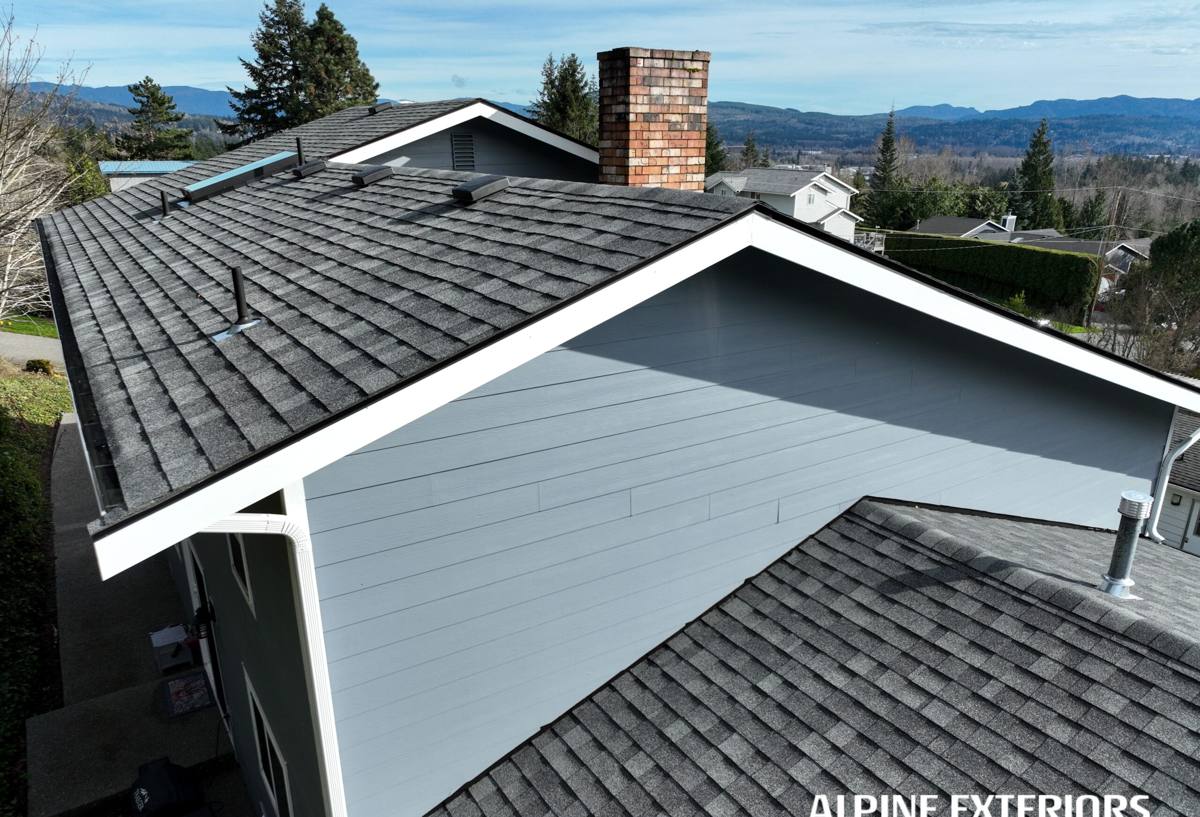
What Whatcom County Storms Do to a Roof
Wind-Driven Rain and Wind-Lifted Shingles
Most storm damage around here isn't a single dramatic event — it's wind getting up under a shingle edge that was already a little loose, prying it further with each gust, until water starts finding a path underneath. Once wind has lifted a shingle's seal, that shingle usually won't reseal on its own even after the storm passes. It stays vulnerable until it's repaired or replaced, and the next windstorm makes the problem worse.
Moss, Moisture, and a Roof That Never Fully Dries
Whatcom County's moss season runs long — shaded, north-facing slopes and roof valleys can stay damp for weeks at a stretch, especially heading into fall and through winter. Moss holds water against the roofing material, works its way under shingle edges, and lifts them slightly over time. A roof with moss growth is more susceptible to storm damage in the first place, because the wind and rain have more to grab onto and more places to get underneath.
Salt Air's Reach Inland
Coastal salt air is a bigger factor for roofs closer to Blaine and the water, but marine weather systems still move through the Nooksack Valley and bring moisture-laden air with them. Combined with the region's rainfall totals, metal components — flashing, fasteners, gutter hardware — corrode faster here than they would in a drier inland climate. It's one more reason storm repairs in this area need to use materials rated for a wet, marine-influenced climate, not just whatever's cheapest at the yard.
Common Signs of Storm Damage on Everson Roofs
Some storm damage is obvious. A lot of it isn't — it shows up as a slow leak weeks later, after water has already found its way past the roofing material. Here's what we tell Everson homeowners to check after a windstorm or heavy rain event:
- Shingles that look curled, cracked, or creased, or shingles missing outright
- Granules collecting in gutters or at the base of downspouts
- Flashing around chimneys, skylights, or roof-to-wall junctions that looks bent, lifted, or separated
- Soft or sagging spots when walking the attic (never the roof itself) after a storm
- Water stains on interior ceilings or in the attic, even faint ones
- Debris — branches, needles, moss clumps — built up in valleys where water is supposed to flow freely
- Gutters pulling away from the fascia or overflowing during rain
If you notice any of these, the roof needs a look before the next storm, not after.
What a Correct Storm Damage Repair Actually Involves
Inspection Before Repair
A repair is only as good as the inspection behind it. We walk the roof (weather permitting) and check the attic from the inside, because storm damage often shows up as water intrusion before it shows up as a visible hole. Wind damage in particular can be patchy — a few shingles here, a section of ridge there — and it's easy to fix the obvious spot while missing the one that will leak next month.
Matching Materials and Techniques
Storm repair isn't just patching. If the roof is a few years old, we try to match the existing shingle profile and color as closely as the manufacturer's current lineup allows, and we use fasteners and sealants rated for this climate rather than whatever seals fastest. A repair that doesn't match the surrounding roof, or that uses the wrong nail pattern for our wind exposure, is a repair that fails again in the next storm.
Flashing, Underlayment, and the Details That Get Skipped
Most roof leaks after a storm trace back to flashing, not shingles — the metal at chimneys, valleys, skylights, and wall intersections. It's also the part that's easiest to rush. A correct storm repair re-checks the underlayment underneath the damaged area, replaces any flashing that's bent or corroded rather than just re-sealing it, and confirms water has a clear path off the roof before the shingles go back down. Skipping this step is how a "repaired" roof leaks again during the next heavy rain.
Repair or Replace? How We Help You Decide
Not every storm-damaged roof needs a full replacement, and not every damaged roof should just be patched. The right call depends on the roof's age, how widespread the damage is, and what condition the roofing material was in before the storm hit.
| Factor | Points Toward Repair | Points Toward Replacement |
|---|---|---|
| Roof age | Under 12-15 years, shingles still flexible | Near or past expected lifespan for the material |
| Extent of damage | Localized — one slope, one flashing detail, a handful of shingles | Scattered across multiple slopes or repeated storm events |
| Moss and moisture history | Minor, surface-level, cleaned periodically | Long-term moss growth with visible shingle lifting or granule loss |
| Underlying deck condition | Solid, dry, no soft spots found | Soft decking, rot, or repeated past leaks in the same area |
| Remaining warranty | Material and labor warranties still active and transferable | Warranty already expired or voided by prior repairs |
We'll give you a straight answer on which side of that table your roof falls on — we don't upsell a replacement when a repair will genuinely hold, and we won't recommend a patch on a roof that's already at the end of its service life.
Our Storm Damage Repair Process, Start to Finish
- Contact and scheduling. We ask what you're seeing — active leak, missing shingles, visible flashing damage — so we can prioritize urgent repairs, especially if more rain is in the forecast.
- On-site inspection. We check the roof surface, flashing, and attic, and document what we find with photos.
- Written scope and estimate. You get a clear explanation of what's damaged, what needs to happen to fix it correctly, and what it will cost — before any work starts.
- Temporary protection if needed. If there's an active leak and full repair has to wait on materials or weather, we can install temporary protection to keep water out in the meantime.
- The repair itself. Damaged shingles, flashing, and underlayment are replaced with matched or manufacturer-appropriate materials, following proper fastening and sealing methods for our wind and rain exposure.
- Final walkthrough. We show you what was done and check the attic one more time to confirm there's no remaining sign of moisture.
Insurance Claims and Storm Damage Documentation
Many storm damage repairs in Whatcom County are covered, in whole or in part, by homeowners insurance — but coverage depends on your specific policy, the cause of damage, and your insurer's own inspection. We're not your insurance company and we don't promise a claim will be approved, but we can help make the process easier on your end: we document the damage with photos and a written scope at the time of inspection, and we can walk an adjuster through what we found if that's useful. Keeping your own dated photos of the damage as soon as you notice it, before any cleanup, is one of the most useful things a homeowner can do for a claim.
After the Storm: A Homeowner's Checklist
If a storm has just come through Everson and you're not sure whether your roof needs attention, work through this list:
- Check the attic for damp insulation, water stains, or daylight showing through the decking
- Look at gutters and downspouts for granules, shingle pieces, or debris blockage
- Walk the yard and look up at the roofline for missing or displaced shingles, rather than climbing up yourself
- Note any new or worsening interior stains on ceilings, especially near chimneys or skylights
- Photograph anything unusual, with a date, for your own records
- Call for an inspection promptly if you see any of the above — delayed leaks get more expensive the longer water sits against wood decking
Why Hire a Crew That Already Works in Everson
A roofer who works this part of Whatcom County regularly knows things a roofer from outside the area doesn't: which slope orientations hold moss the longest, how far wind-driven rain typically travels under a lifted shingle before you see a stain inside, and which flashing details tend to fail first in this climate. That local knowledge shortens the inspection and sharpens the repair — we're not guessing at what "normal" looks like for a roof out here, because we've seen it. It also means faster response when weather is bad and more roofs than usual need attention at once, since we're not driving in from across the county.
Get a Free, No-Pressure Estimate
If your Everson home has visible storm damage, a suspicious leak, or you just want a roof checked out after a rough stretch of weather, we're happy to take a look. The estimate is free, there's no pressure to book anything on the spot, and you'll get a straight answer about what — if anything — needs to be done. Use the form below to get started.