 Blaine Siding
 Why Decks Near Bellingham Wear Out Faster Than the Warranty Card Suggests
A deck built to a national spec sheet doesn't always survive contact with Whatcom County weather. Homes around Bellingham and Blaine sit close enough to the water that salt-laden air is a constant, not an occasional event, and it works on fasteners, flashing, and connectors year-round. Add in a wet season that can stretch from October well into spring, and you get long stretches where a deck's structural wood and hardware simply never fully dry out between rains.
Moss and algae are the visible symptom, but they're not the real problem. Moss holds moisture against decking boards and framing long after a dry-climate deck would have shed water and dried out. That extended dampness is what actually breaks decks down — softening wood fiber, corroding fasteners, and rotting ledger connections from the inside where you can't see it happening.
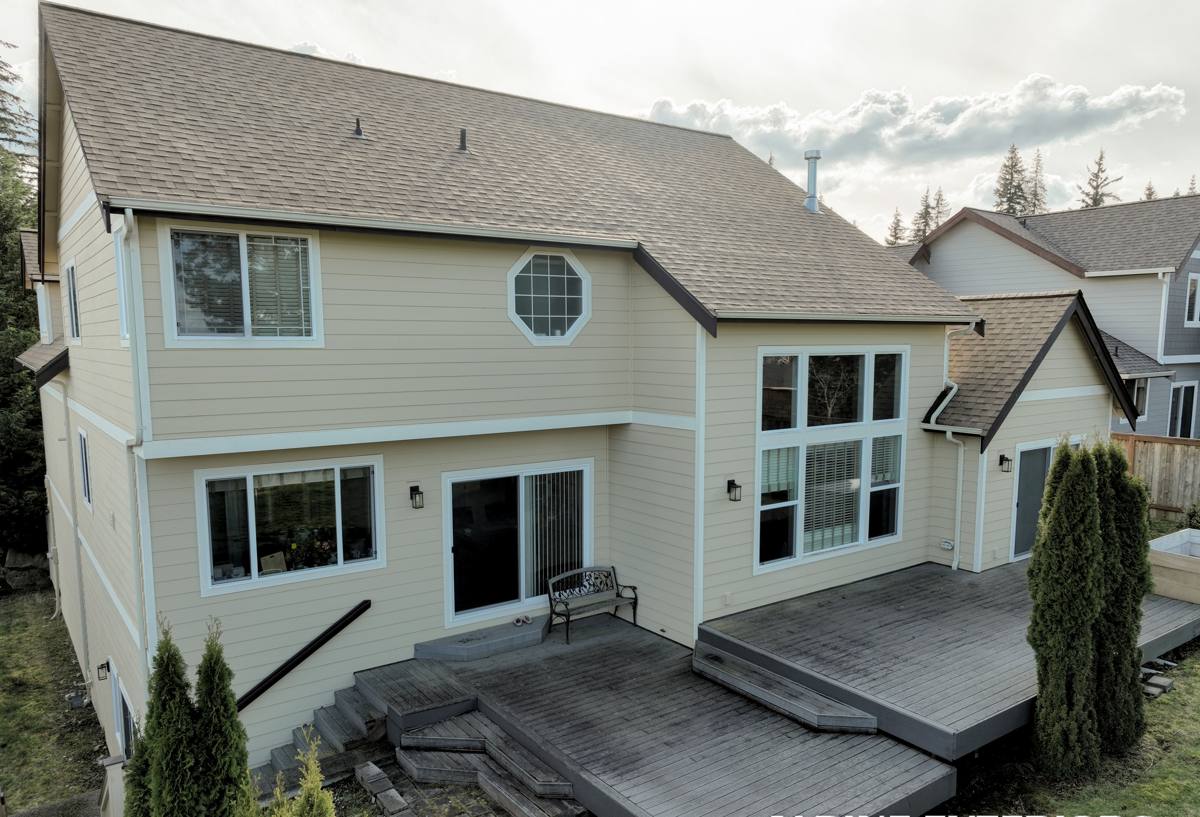
Signs a Bellingham Deck Needs Replacement, Not Another Repair
Every deck eventually crosses a line from "fixable" to "rebuild it right." In this climate, that line usually shows up earlier than homeowners expect, especially on decks over 15-20 years old or ones that were never properly flashed at the house connection.
- Soft or spongy spots in decking boards, especially near the house or in shaded, north-facing areas that stay damp longest
- Rust streaking or crumbling at fastener heads, joist hangers, or railing posts
- Gaps or dark staining where the deck ledger meets the house siding or sheathing — a common sign water has been getting behind the ledger board for years
- Persistent moss or black algae that returns within weeks of cleaning, even after pressure washing
- Visible sag between joists, or noticeable bounce underfoot that wasn't there a few years ago
- Posts or footings that have shifted, cracked, or show rot at the base where they meet grade
One or two of these on their own might mean a repair. Several together, or any sign of rot at the ledger connection, usually means the deck's structure has been compromised long enough that patching individual boards won't solve the underlying moisture problem.
What a Correct Deck Replacement Involves Here
The Ledger Connection
The single most common failure point on decks in this region isn't the decking surface — it's where the deck ties into the house. A correct replacement means removing the old ledger entirely, inspecting and repairing any rotted rim joist or sheathing behind it, and reinstalling with proper flashing that sheds water away from the house rather than trapping it against the wall. This is the step that gets skipped most often on cheap deck jobs, and it's the one that causes the most expensive damage down the line.
Framing and Fasteners
Given the salt air common to homes near Blaine and Semiahmoo, we treat fastener corrosion as a real design consideration, not an afterthought. That means stainless steel or heavy hot-dip galvanized hardware rated for coastal exposure at every joist hanger, structural screw, and post connection — standard zinc-coated fasteners corrode noticeably faster this close to salt water and driving rain.
Drainage and Airflow Underneath
A deck that can't dry out underneath will rot from the bottom up regardless of what decking material sits on top. Correct replacement includes grading or drainage consideration below the deck, proper joist spacing for airflow, and joist tape over the top of framing lumber to keep standing water from soaking directly into end grain and fastener holes — a detail that matters far more here than in a dry climate.
Footings
Older decks in this area were sometimes built on undersized or shallow footings that have since shifted with seasonal ground saturation. A full replacement is the opportunity to bring footings up to current code depth and sizing, which matters both for structural safety and for passing inspection.
Choosing a Decking Material for This Climate
There's no single "best" decking material — there's a best material for how much upkeep you want to do and how the deck sits relative to sun, shade, and moisture. We walk every homeowner through the honest trade-offs rather than pushing one product.
| Material | How It Handles Local Moisture & Moss | Maintenance | Typical Lifespan |
|---|---|---|---|
| Pressure-treated wood | Prone to moss/mildew in shaded, damp spots without regular cleaning and sealing | Annual cleaning, re-sealing every 1-2 years | 10-15 years |
| Cedar | Naturally rot-resistant but still needs upkeep in constant damp; grays without maintenance | Cleaning and oil/stain every 1-2 years | 15-20 years |
| Capped composite | Sheds moisture well, resists moss staining better than wood, but low spots still need airflow to dry | Occasional washing, no sealing | 25-30+ years |
| PVC decking | Fully moisture-resistant surface, best resistance to staining in shaded/damp areas | Occasional washing | 25-30+ years |
We don't install every product on the market. Some budget composite lines have had documented moisture-absorption and warranty issues in wet climates, so we stick to composite and PVC lines with a track record of holding up under sustained rain exposure rather than the cheapest option on the shelf. If a homeowner wants real wood, we're glad to build it — it just comes with a maintenance conversation up front, not a surprise a few years in.
Railings and Hardware
Railing systems near the water take the same corrosion exposure as the frame underneath. Aluminum, powder-coated steel, or composite railing components generally outlast raw steel or lower-grade hardware in this environment, and we spec connectors accordingly.
Permits and Code Considerations in Whatcom County
Most full deck replacements — particularly anything involving new footings, a rebuilt ledger connection, or a change in size or height — require a building permit locally. Guardrail height, baluster spacing, and stair requirements are all governed by current building code, and older decks are frequently out of compliance with today's standards even if they were legal when built. Replacing a deck is the natural point to bring all of that current. We handle the permit and inspection process as part of the job rather than leaving it to the homeowner to sort out.
Our Deck Replacement Process
- On-site assessment — we inspect the existing deck, ledger connection, framing, and footings to confirm replacement is the right call versus repair
- Design and material walkthrough — honest options for your budget, sun/shade exposure, and how much upkeep you want long-term
- Permit and code review — pulling permits and confirming railing, stair, and footing requirements before demolition starts
- Demolition and structural inspection — full removal of old decking and framing, with a look behind the ledger and siding for hidden rot before we close anything back up
- Rebuild — new footings as needed, properly flashed ledger, corrosion-resistant fasteners, joist tape, and correctly spaced framing for drainage and airflow
- Decking, railing, and finish work — installed to manufacturer spec so warranties stay valid
- Final walkthrough and inspection sign-off
After Installation: Keeping a New Deck Ahead of Moss Season
A correctly built deck still benefits from a little seasonal attention, especially heading into the wet months.
- Sweep leaves and debris off the deck surface regularly in fall — trapped organic matter is what moss and algae feed on
- Keep gutters and downspouts near the deck clear so runoff isn't dumping directly onto or under the deck
- Trim back overhanging branches to let sun and air reach shaded sections of the deck
- Rinse composite or PVC decking a couple of times a year to prevent surface staining before it sets in
- For wood decking, plan on cleaning and resealing on the schedule your material actually needs — skipping a cycle in this climate compounds fast
- Check railing posts and stair connections annually for movement, especially after a hard winter
Why Hire a Crew That Already Works in Bellingham and Blaine
A deck built from a generic spec sheet, without accounting for this specific stretch of coastline, tends to show problems within a few years — moss coming back fast, fasteners rusting early, or a ledger connection that was never properly flashed for this much rain. We work in Whatcom County regularly, which means we're not guessing at how salt air, moss, and driving rain actually affect a deck here — we're building around it from the first footing.
That local familiarity also means we know what Whatcom County permitting expects, what railing and guardrail code actually requires on an inspection, and which materials and hardware hold up versus which ones look fine on day one and disappoint by year three.
Get a Free, No-Pressure Estimate
If your deck near Bellingham or Blaine is showing soft spots, persistent moss, or rust at the hardware, it's worth having someone take an honest look before you spend money patching a structure that's already past that point. Fill out the form below for a free estimate — no pressure, just a straight assessment of what your deck actually needs.