 Blaine Siding
 Windows Built for Blaine Harbor's Marine Climate
Blaine Harbor sits right where the wind comes off the water with nothing to slow it down. Homes here take a different kind of beating than houses even a few miles inland in Whatcom County. Salt-laden air works on metal hardware and finishes year-round, driving rain gets pushed sideways into every gap a window has, and the long stretch of gray, damp months keeps wood trim and sills wet longer than they were ever designed to stay. Window replacement in this neighborhood isn't just about swapping out an old unit for a new one — it's about choosing materials and installation details that actually hold up to what this specific stretch of coastline throws at a house.
We've replaced windows in homes throughout Blaine and along the harbor, and the pattern is consistent: failures rarely start with the glass. They start at the frame, the sill, and the flashing — the parts of the job that are invisible once the trim goes back on but decide whether the window lasts 10 years or 30.
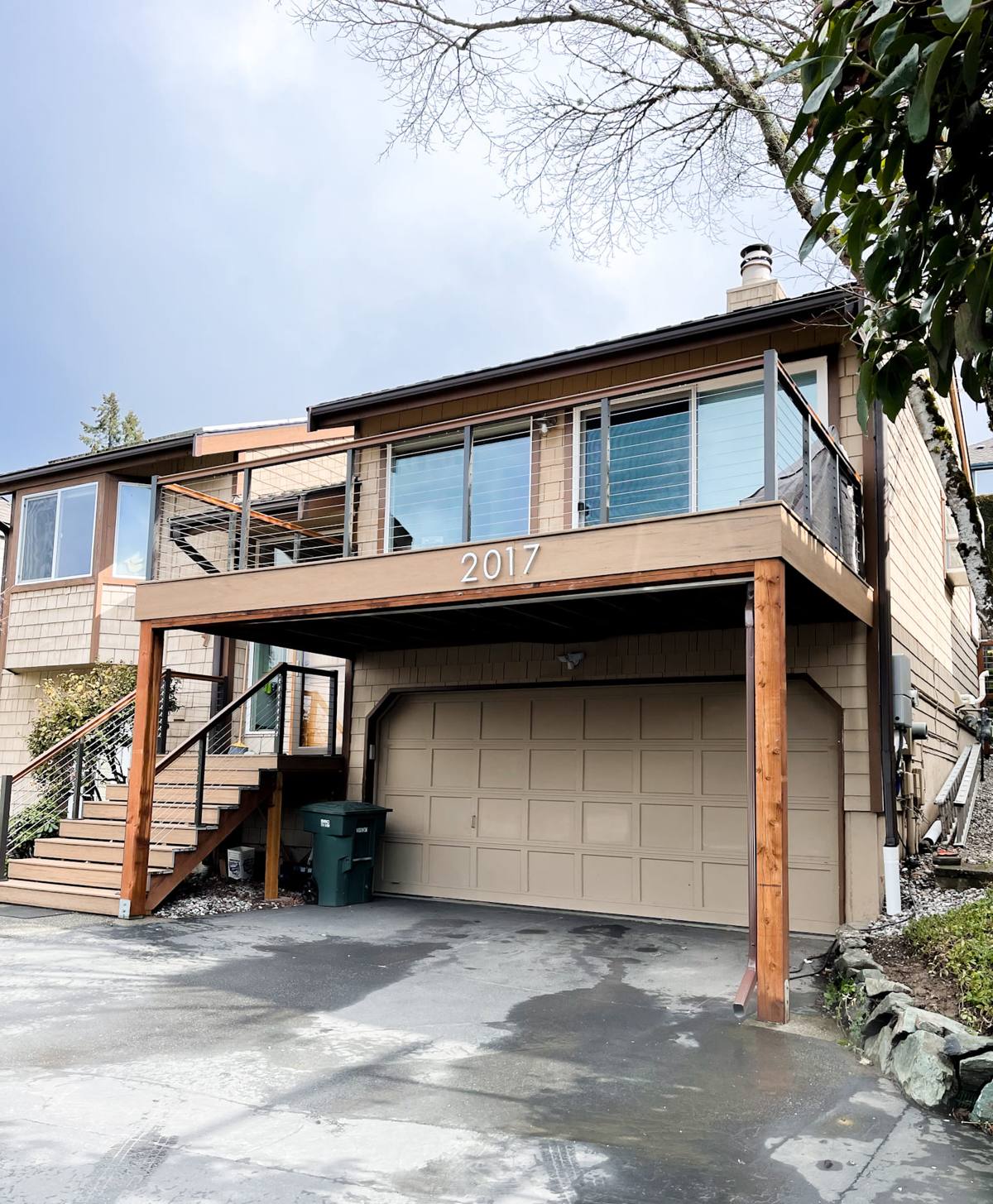
What the Coastal Climate Actually Does to a Window
Salt Air and Hardware Corrosion
Airborne salt is corrosive to unprotected metal — hinges, balance systems, screws, and cheaper aluminum cladding all show pitting and white oxidation faster near the harbor than they would even ten minutes inland. Once hardware starts binding or corroding, a window stops sealing evenly, and that's when air and water start finding their way in around the sash rather than through it.
Driving Rain and Wind-Driven Moisture
Blaine Harbor gets rain that doesn't fall straight down — it comes in at an angle, pushed by wind off the water. That matters because a window that would be fine in a calm rain event can still leak under wind-driven rain if the flashing details weren't built for lateral water pressure. This is one of the most common causes of "mystery" leaks that show up around window openings in coastal homes.
The Long Moss Season
Moss and algae growth on siding, trim, and sills is a fact of life here for a good chunk of the year. Where moss holds moisture against wood trim or an old wood sill, rot accelerates. Even vinyl and fiber-cement trim collects grime that traps dampness in corners and joints if it isn't detailed to shed water cleanly.
Signs a Blaine Harbor Home Needs Window Replacement
Not every old window needs replacing, and not every drafty window is actually failing — sometimes it's just old weatherstripping. But there are specific signs that point to a window nearing the end of its useful life in this climate:
- Visible corrosion, pitting, or chalky white residue on hardware, hinges, or aluminum frames
- Soft, spongy, or discolored wood at the sill or lower frame corners
- Fogging or a persistent haze between panes on double- or triple-glazed units (a sign the seal has failed)
- Drafts you can feel with a hand near the frame on a windy day, even with the window latched
- Difficulty opening, closing, or locking — often a sign the frame has racked or swollen
- Paint or finish that bubbles or peels specifically around the window opening, suggesting trapped moisture
- Visible moss or persistent green staining building up on the sill or bottom trim
- Noticeably higher heating bills compared to similar homes, especially on the windward side of the house
If you're seeing two or more of these on the same window, replacement is usually the more cost-effective path over patching.
What a Correct Installation Involves
The window unit itself is only part of the job. In a marine climate, the installation details are what separate a window that lasts decades from one that fails again in five years.
Removal Without Hidden Damage
Old windows come out carefully so we can actually see the condition of the framing, sheathing, and sill underneath. This is often the first real look anyone's had at that structure in years, and it's the point where hidden rot or old water damage gets caught before it's sealed back up behind a new window.
Flashing Built for Wind-Driven Rain
Flashing tape and sill pans are layered so that any water that does get past the exterior cladding is directed back out, not into the wall cavity. Given how much of Blaine Harbor's rain arrives at an angle rather than straight down, this detail matters more here than it would in a sheltered inland location.
Sill Pan and Sloped Sill Detail
A sloped sill pan under the window ensures any incidental moisture drains outward instead of pooling against the frame. This single detail is one of the most common things missing from older or poorly done installations we see replaced.
Insulation and Air Sealing Around the Frame
The gap between the window frame and the rough opening gets sealed with a proper low-expansion foam or backer rod and sealant — not just stuffed with fiberglass insulation, which does nothing to stop air infiltration and can hold moisture against the frame.
Exterior Sealant and Trim
Exterior caulking and trim are finished with a sealant rated for exterior, marine-exposure use, and gaps are checked closely at corners and joints where moss and grime tend to collect moisture over time.
Choosing the Right Frame Material for a Harbor Home
Frame material has a bigger impact on long-term performance here than most homeowners expect, because salt air and constant moisture exposure age materials differently than they would inland.
| Frame Material | Coastal Performance | Maintenance | Typical Trade-Off |
|---|---|---|---|
| Vinyl | Good — won't corrode or rot, handles moisture well | Low — occasional cleaning | Fewer color/finish options, can look less premium on high-end homes |
| Fiberglass | Very good — stable in temperature swings, resists moisture | Low | Higher upfront cost than vinyl |
| Wood (unclad) | Poor without diligent upkeep — vulnerable to rot near salt air and moss | High — regular repainting/sealing | Classic look, but a real maintenance commitment this close to the water |
| Wood with aluminum or fiberglass cladding | Good — cladding protects the wood core from direct weather exposure | Low to moderate | Cladding seams need to be detailed correctly or moisture can get trapped behind them |
| Aluminum (uncoated or lower-grade) | Poor near salt air — prone to pitting and corrosion over time | Moderate to high | Slim sightlines, but corrosion risk is real without marine-grade coatings |
For most Blaine Harbor homes, we steer clients toward vinyl or fiberglass frames, or clad-wood units with a well-detailed cladding system, specifically because they hold up to salt exposure and constant moisture without the upkeep that unprotected wood or bare aluminum demands.
Glass Packages Worth Considering
Glass selection matters for comfort and energy performance, but in this location it's also worth thinking about wind exposure and condensation control.
- Low-E coatings reduce heat loss through the glass and help even out interior surface temperatures near the window — useful given how much of the year Blaine stays cool and damp.
- Argon or krypton gas fills between panes improve insulating performance without changing the look of the glass.
- Dual-pane vs. triple-pane — triple-pane adds cost but can meaningfully reduce condensation on the interior glass surface during cold, damp stretches, and adds a bit more resistance to wind noise off the water.
- Warm-edge spacers (as opposed to older aluminum spacers) reduce the cold spot at the edge of the glass, which is where condensation and eventual seal failure tend to start first.
We size these recommendations to the specific exposure of the window — a window facing directly into prevailing weather off the harbor gets a different conversation than one on a sheltered side of the house.
Cost Factors for Blaine Harbor Window Replacement
Every home is different, and we won't quote a number without seeing the actual openings, but these are the factors that most affect price on jobs in this area:
| Factor | Why It Matters Here |
|---|---|
| Number and size of openings | Larger or more numerous windows mean more material and labor |
| Frame material chosen | Vinyl is typically the most budget-friendly; fiberglass and clad-wood cost more upfront but often less over the life of the window |
| Condition of existing framing | Hidden rot or water damage found during removal adds repair work before the new window goes in |
| Exposure to wind and weather | Openings facing directly into prevailing weather off the water may warrant upgraded flashing details or impact-rated glass |
| Glass package | Triple-pane and upgraded coatings cost more but can pay back in comfort and reduced condensation |
| Full-frame vs. insert replacement | Full-frame replacement (removing down to the rough opening) costs more but is often the right call when there's existing moisture damage |
Our Process, Start to Finish
We keep the process straightforward and try to minimize disruption to your home, especially given how quickly weather can turn here.
- On-site assessment — we look at each window individually, including the condition of the framing and sill, not just the glass and sash.
- Honest recommendation — we'll tell you plainly if a window needs full replacement, or if a repair is a reasonable option instead.
- Precise measurement and ordering — accurate measurements matter more on a windy, wet site where a poorly fitted window has less margin for error.
- Careful removal — old units come out cleanly so we can inspect what's underneath before it's covered up again.
- Installation with proper flashing and sealing — every unit gets a sloped sill pan, layered flashing, and sealed rough opening as standard practice, not an upsell.
- Exterior finish work — trim, caulking, and paint or finish matching so the new window looks like it belongs.
- Final walkthrough — we test operation, check the seal, and walk the job with you before we call it done.
Why a Crew That Already Works Blaine Harbor Matters
A window replacement crew that regularly works in Blaine Harbor already knows which details can't be skipped here — the flashing has to account for wind-driven rain, the hardware choices have to account for salt exposure, and the trim details have to account for moss and standing moisture rather than just looking good on install day. That familiarity shows up in fewer callbacks and windows that are still performing correctly well past year one.
It also means scheduling around this area's weather patterns realistically, rather than treating every job like it's happening somewhere sheltered and dry. Whatcom County's coastal edge doesn't forgive shortcuts the way a more sheltered inland job site might.
Get a Free, No-Pressure Estimate
If you're noticing drafts, corrosion, fogged glass, or sill damage on a home in Blaine Harbor, it's worth having someone take an honest look before winter weather makes small problems worse. Fill out the form below for a free estimate — we'll walk your windows with you, explain what we find, and give you straight options with no pressure to act before you're ready.