 Blaine Siding
 Building a Deck That Holds Up in Birch Point
Birch Point sits close enough to the water that every deck built there is fighting a slightly different battle than a deck built ten miles inland. Salt-laden air, wind-driven rain off the Strait, and a wet season that runs long by Whatcom County standards all work on wood, fasteners, and finishes faster than most homeowners expect. A deck that would coast through twenty years in a drier part of the county can start showing corrosion, soft spots, or moss buildup in half that time out here if it wasn't built with the local conditions in mind.
This page covers what actually matters when building a deck in Birch Point specifically — not generic deck advice, but the material choices, fastener decisions, and drainage details that hold up against salt air and a long moss season.
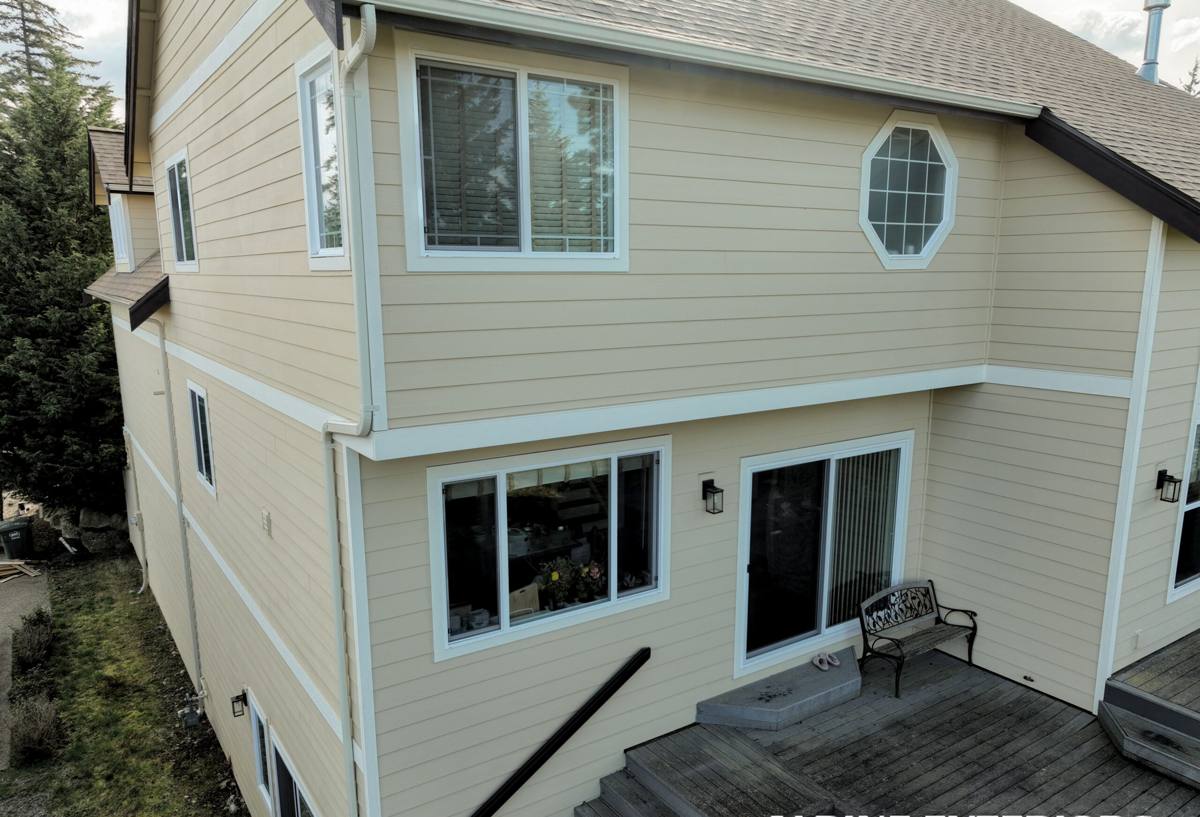
What Birch Point's Climate Actually Does to a Deck
Salt Air and Metal Hardware
Salt in the air accelerates corrosion on anything metal — screws, joist hangers, post bases, railing brackets. Standard coated exterior fasteners that are fine in most parts of the country can start rusting at the head within a few seasons this close to the water. Once a fastener head is compromised, water tracks down the shaft and into the wood around it, and that's usually where rot starts, not from the top surface of the decking.
Driving Rain
Rain that comes in sideways off the water gets into places vertical rain never reaches — under rail caps, behind fascia boards, into ledger board connections at the house. A deck built without attention to flashing and water-shedding details in these spots will hold moisture long after a normal rain event has passed.
Moss and Mildew Season
Blaine's stretch of gray, damp months gives moss and algae a long window to establish on any deck surface that doesn't drain and dry quickly. Moss holds moisture against the decking surface, and on wood decks it creates a slick, degrading layer that both shortens the board's life and turns the deck into a fall hazard. Composite and PVC decking resist this better than wood, but even those need decent airflow underneath to avoid staining.
Decking Material Comparison for This Climate
There's no single "best" decking material — it depends on budget, maintenance appetite, and how close to the water the deck actually sits. Here's how the common options stack up against Birch Point's specific conditions.
| Material | Salt Air Resistance | Moss/Algae Resistance | Maintenance | Typical Lifespan |
|---|---|---|---|---|
| Pressure-treated wood | Fair — hardware is the weak point | Low — needs regular cleaning | Annual cleaning, periodic sealing | 10-15 years |
| Cedar | Good — naturally rot-resistant | Fair — still needs cleaning | Sealing every 1-2 years | 15-20 years |
| Composite | Very good | Good — but surface staining possible | Occasional washing | 25-30 years |
| PVC/Capped polymer | Excellent | Very good | Low — soap and water | 25-30+ years |
For homes right in Birch Point, we generally steer people toward composite or capped PVC decking for the walking surface, simply because it removes the wood-rot variable entirely and holds up better against salt exposure over time. That's not a knock on wood — cedar in particular is a legitimate choice for homeowners who want the look and don't mind the upkeep — it's a matter of matching the material to how much maintenance a homeowner actually wants to do.
Structural Framing Is a Different Question
Regardless of what decking surface goes on top, the framing underneath is almost always pressure-treated lumber — that part of the deck isn't up for stylistic debate. What matters there is the hardware and fasteners, covered next.
What's Under the Decking Matters More Than What's On Top
A homeowner walking a finished deck sees the surface material. What actually determines how long that deck lasts is the framing, fasteners, and hardware nobody sees once the project is done. In a salt-air environment like Birch Point, this is where corners get cut most often — and where it costs the most to fix later, because fixing it means tearing the deck apart.
- Stainless steel or heavy hot-dip galvanized fasteners — not standard coated deck screws — anywhere hardware is exposed or near ground contact
- Stainless or coated joist hangers and post bases rated for coastal/corrosive exposure
- Proper flashing at the ledger board where the deck meets the house, so water can't track behind the siding
- Post bases set above grade and off concrete, so water doesn't wick up into the post end grain
- Joist tape or a similar barrier on top of framing lumber to keep moisture out of screw penetrations
None of this is visible once the deck is built, which is exactly why it's worth asking a contractor directly what fastener and hardware grade they're using before work starts, rather than finding out years later when a post base has corroded through.
Footings, Drainage, and Grading
Blaine's rain volume means a deck's footings and the grading around them need to actually move water away from the structure, not just sit there and hope. Footings need to be set to the frost depth required under Whatcom County's building code, and the soil around them graded so water isn't pooling against posts after a heavy rain. On sloped Birch Point lots this sometimes means more grading and drainage work than a flat-lot deck would need — worth accounting for early rather than discovering mid-build.
Underneath low decks especially, poor drainage combines with the area's long damp season to create the exact conditions moss and mildew need to take hold on the underside of the structure, even if the top surface is holding up fine.
Permits and Code in Blaine
Most deck builds in Blaine that involve a structure attached to the house, or that sit above a certain height off grade, require a building permit through the city or Whatcom County depending on the property's location. Permitted work means an inspector checks footing depth, ledger attachment, and railing before it's covered up — which is a good thing, since those are exactly the details that matter most for a deck that has to survive this climate long-term. Any legitimate contractor working in the area should be handling permitting as a standard part of the job, not treating it as optional paperwork.
Our Deck Building Process
Here's how a Birch Point deck project typically moves from first call to finished build:
- On-site assessment — we look at the specific spot the deck will sit, its exposure to wind and rain off the water, drainage on the lot, and how the deck ties into the existing house.
- Material and design conversation — we walk through decking material options, railing style, and layout based on the homeowner's budget and maintenance preferences, with honest tradeoffs explained rather than a upsell.
- Permitting — we handle the permit application and coordinate required inspections through the city or county.
- Framing and structural work — footings, posts, ledger flashing, and joist framing built with corrosion-resistant hardware appropriate for this location.
- Decking, railing, and finish work — surface installation, railing, stairs, and any trim or fascia detailing.
- Final walkthrough — we go over the finished deck with the homeowner, including what maintenance to expect given the material chosen.
Keeping a Birch Point Deck in Good Shape
Even a well-built deck needs some seasonal attention in this climate. This isn't a heavy maintenance list, but skipping it is how moss and hardware corrosion get a head start.
- Sweep debris off the deck surface regularly — trapped leaves and needles hold moisture against the boards
- Rinse or wash the surface a couple of times a year to interrupt moss and algae before it establishes
- Check railing hardware and fastener heads periodically for early rust staining
- Keep gutters and downspouts near the deck clear so runoff isn't dumping directly onto or under the structure
- For wood decking, reseal on the schedule appropriate to the wood species rather than waiting until it looks worn
- Make sure under-deck airflow isn't blocked by stored items or dense landscaping
Why a Local Crew Matters for This Job
A deck built to a generic spec sheet can still fail early in a spot like Birch Point if the person building it hasn't accounted for the actual exposure — how much wind-driven rain a particular orientation gets, how fast moss establishes on that side of the property, what hardware grade actually holds up this close to salt water. A crew that already works this area has seen which fastener grades and material choices hold up here and which ones don't, and builds accordingly from the start rather than learning it on the homeowner's deck.
If you're planning a new deck or replacing one that didn't hold up as long as it should have, we're happy to come take a look and give you a straightforward, no-pressure estimate — just fill out the form below.