 Blaine Siding
 Why Windows Take a Beating in Cherry Point
Cherry Point sits right up against the Strait of Georgia north of Blaine, and that location shapes everything about how windows perform here. Homes closest to the water take a steady dose of salt-laden air, which finds its way into hardware, hinges, and any exposed metal fastener over time. Add in driving rain that comes in sideways during winter storms off the water, plus a moss and mildew season that can stretch for months in Whatcom County's damp climate, and you've got a combination that ages windows faster here than it does twenty miles inland.
None of this means windows in Cherry Point are doomed to fail early. It means the installation has to account for these conditions from the start — the flashing details, the sealant choices, and the window itself all need to match the exposure the house actually gets, not a generic spec sheet.
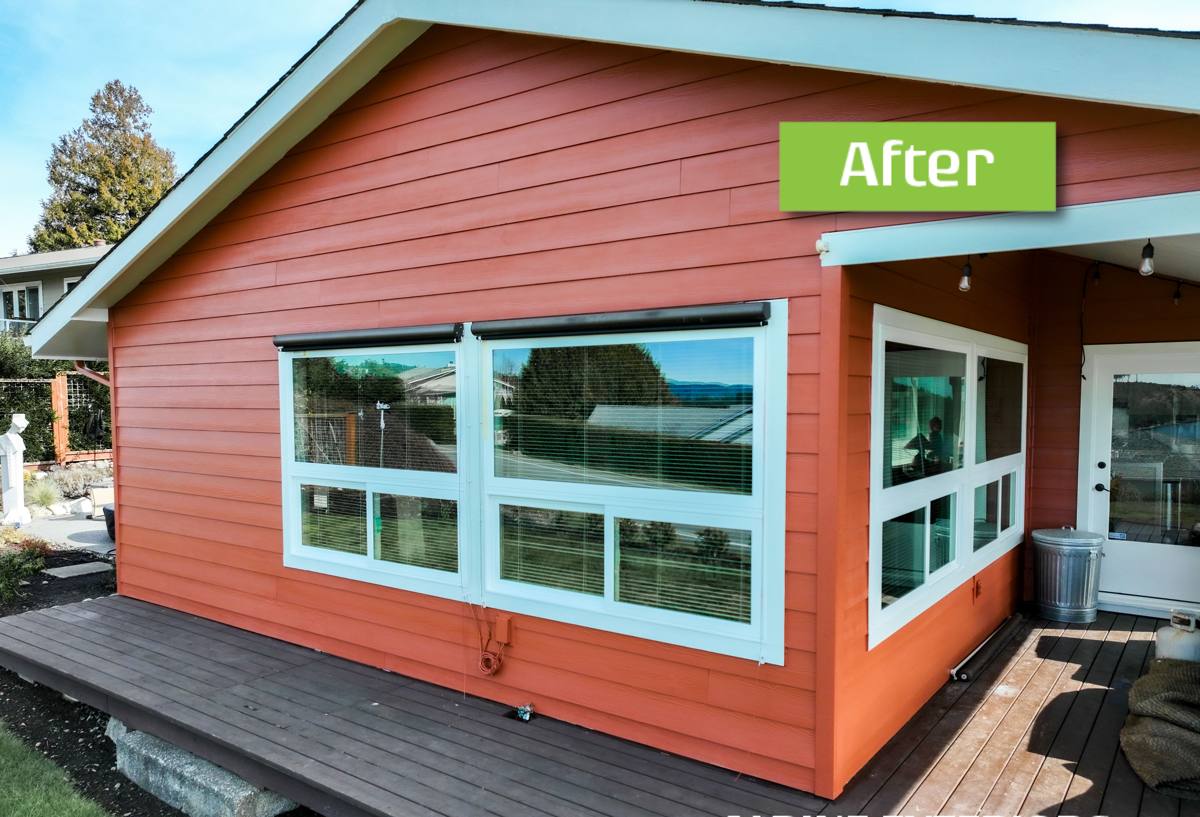
Signs Your Windows Are Losing the Fight
Most homeowners don't think about their windows until something goes wrong. In this climate, the early warning signs are usually subtle before they become expensive. Watch for:
- Fogging or a hazy film between the panes of a double-pane window — the seal has failed
- Drafts you can feel near the frame, especially during a windy front off the water
- Hardware that's stiff, corroded, or won't latch cleanly anymore
- Soft or discolored wood trim around the window, a sign moisture has gotten behind it
- Moss, algae, or black streaking building up on the sill or bottom corners
- Condensation collecting on the inside of the glass even when the house is heated normally
- A noticeable jump in heating costs without any other explanation
Any one of these on its own might just need a repair. Several at once, especially on the side of the house that faces the water or prevailing wind, usually means the windows are past the point where patching makes sense.
What a Correct Installation Actually Involves
Swapping in a new window is the easy part to picture. Doing it correctly for a driving-rain climate is where the real work happens, and it's also where a lot of installations quietly go wrong.
The details that matter most here
A proper installation starts with a sloped sill pan under the window opening, so any water that does get past the exterior seal has somewhere to drain instead of sitting against the framing. The window then has to tie into the house's weather-resistive barrier in the correct shingle-lap order — house wrap over the top flange, never under it — so water sheds down and out rather than behind the siding. Sealant goes in specific places, not everywhere; over-sealing a window can trap moisture inside the wall instead of letting it escape, which is a common mistake that shows up as rot years later.
Shimming has to be even and load-bearing at the right points so the frame doesn't rack out of square, which is what eventually causes a window to bind or stop sealing tightly. None of this is visible once the trim goes back on, which is exactly why it's worth knowing your installer is doing it right the first time.
Choosing the Right Window for a Cherry Point Home
Frame material and glass package both matter more on an exposed, salt-air site than they do further inland. Here's how the common options stack up for this specific climate:
| Frame Material | Salt Air / Coastal Performance | Maintenance |
|---|---|---|
| Vinyl | Good — won't corrode or rust; UV-stable finishes hold up well | Low; occasional cleaning |
| Fiberglass | Very good — dimensionally stable in temperature swings, resists moisture | Low |
| Aluminum | Weaker — bare or lower-grade aluminum hardware and frames are more prone to corrosion near the water | Moderate; needs attention to hardware over time |
| Wood / Wood-clad | Fair — beautiful, but exposed wood needs consistent upkeep in a long wet season | Higher; regular finish maintenance |
For most Cherry Point homes, we lean toward vinyl or fiberglass for the frame, paired with dual-pane, low-E glass and argon gas fill for insulation. On the sides of a house that take the brunt of wind off the water, it's also worth discussing a higher design-pressure (DP) rated window — that rating reflects how much wind and water load a window is built to resist, and it's a meaningfully different consideration on an exposed lot than on a sheltered inland one.
Our Installation Process
- On-site assessment — we look at each window opening, check for existing rot or moisture damage, and note which elevations take the most wind and rain exposure
- Measuring and ordering — exact sizing and product selection based on that assessment, not a one-size answer for the whole house
- Removal — old windows come out carefully so we can inspect the framing underneath, which is often the first time hidden moisture damage becomes visible
- Framing repair if needed — any soft or rotted framing gets addressed before a new window ever goes in; installing into bad framing just hides the problem
- Installation — sill pan flashing, correct weather-barrier integration, proper shimming, and insulation around the frame
- Sealing and finish work — exterior sealant in the right locations, interior and exterior trim reset or replaced
- Walk-through — we test operation, check the seal, and clean up the site before we call it done
What Affects the Cost
Every house is different, but the same handful of factors tend to drive the price on most Cherry Point projects:
| Factor | Why It Matters |
|---|---|
| Number and size of windows | More or larger openings mean more material and labor |
| Frame material | Fiberglass typically costs more upfront than vinyl but needs less upkeep |
| Glass upgrades | Higher-performance low-E coatings or laminated glass add cost but improve comfort and durability |
| Hidden rot or framing repair | Discovered once old windows come out; can't always be quoted sight unseen |
| Access and height | Second-story or hard-to-reach windows take more time and equipment |
| Full-frame vs. insert replacement | Full-frame work involves more labor but is often the right call when the existing frame is compromised |
We won't quote a project without seeing it — anyone offering an exact number over the phone for a house they haven't walked is guessing. What we can say honestly is that costs vary widely based on the factors above, and we'll break down where your money is going before any work starts.
Permits and Code Considerations
Whatcom County generally requires a permit for window replacement work that involves structural changes to the opening, and Washington's state energy code sets minimum performance standards for the glass and frame you install. Bedroom windows also have to meet egress requirements — minimum opening size and sill height — which matters if you're replacing an older window that predates current code. We handle the permit process as part of the job so you're not left figuring out county requirements on your own.
Why Local Experience in Cherry Point Matters
A crew that's worked this stretch of Whatcom County knows which elevations of a house take the worst of the wind and rain before they even walk the site. That's not something you can read off a spec sheet — it comes from having done the work here, seen which details hold up over a few winters, and adjusted accordingly. It also means we're not learning on your house how salt air affects hardware or how a long moss season punishes an exposed sill. When something needs a follow-up look after a hard winter storm, we're a short drive away, not a company that was passing through.
Keeping Your New Windows Performing
A correct installation buys you years of trouble-free performance, but a little seasonal attention keeps it that way in this climate. Wipe down tracks and weep holes periodically so they don't clog with debris and hold water. Check exterior caulking once a year, since UV and constant moisture cycles break down sealant faster here than in drier climates. Keep an eye on moss or algae building up on sills and clean it off before it holds moisture against the frame. And make sure gutters upstream of any window are clear — a lot of window water damage actually starts as overflow from a clogged gutter running down the wall above.
If your windows in Cherry Point are drafty, fogged, or just past their prime, we're happy to take a look and walk you through what's actually going on — no pressure, no obligation. Fill out the form below for a free estimate.