 Blaine Siding
 Windows Built for the Dakota Creek Climate
Dakota Creek sits close enough to the water that homes here deal with a different set of stresses than houses even a few miles inland. Salt-laden air off the bay, wind-driven rain that comes at windows sideways instead of straight down, and a long, damp moss season that never really ends between fall and spring — all of it works on window frames, glass seals, and trim year after year. In Whatcom County, a window isn't just about looks or energy bills. It's a barrier that has to hold up against a genuinely tough marine climate, month after month, for decades.
When we talk about "energy-efficient windows" for a Dakota Creek home, we mean something specific: a window system matched to this exact environment, installed in a way that keeps water and air where they belong, and built from materials that won't quietly degrade from salt exposure or trapped moisture. That's a different conversation than what you'd have with a contractor working in a dry inland climate, and it's worth understanding before you sign off on any project.
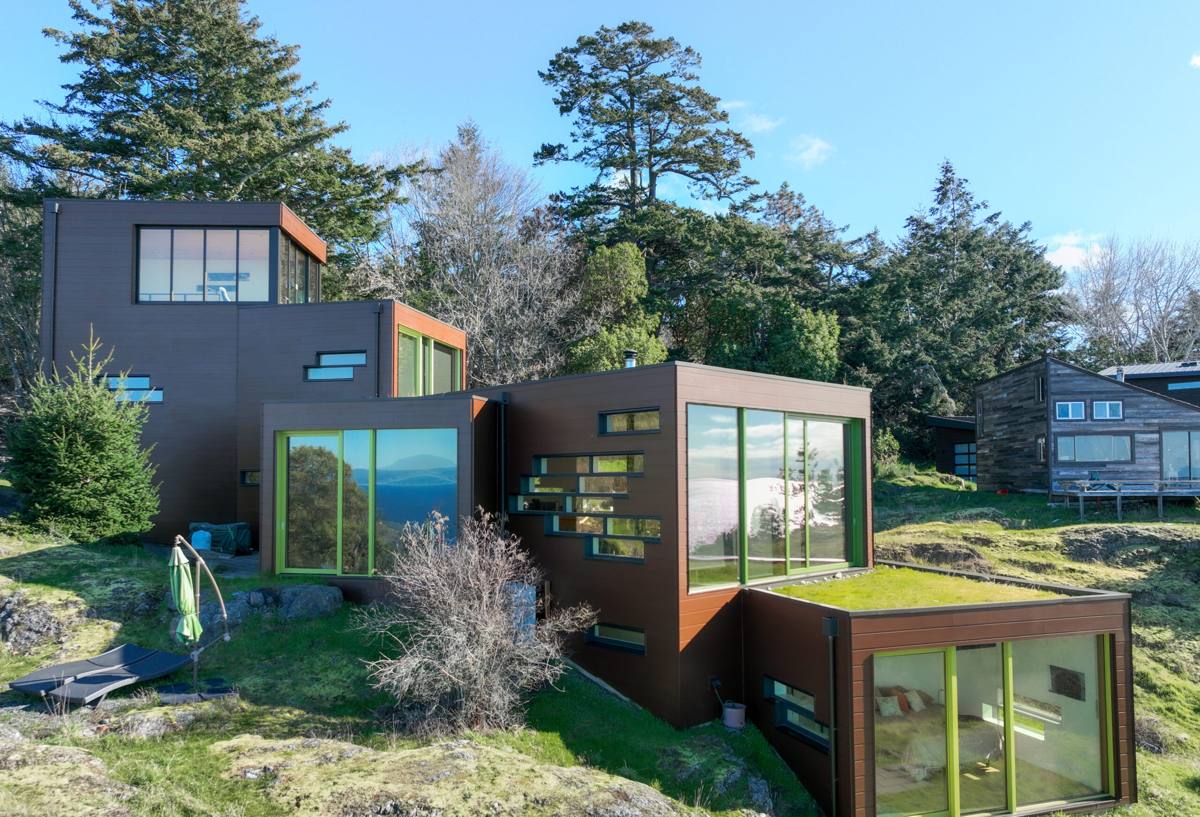
What Salt Air, Rain, and Moss Actually Do to Windows
Salt air and slow corrosion
Airborne salt from the bay settles on everything outdoors, including window hardware, screen frames, and any exposed metal fasteners. Over years, this accelerates corrosion on lower-grade hardware and can pit or discolor certain metal finishes. It's rarely dramatic — it's a slow process that shows up as stiff locks, pitted hinges, or streaking on frames that never fully wipes clean.
Driving rain and water intrusion
Storms coming off the water don't just fall on a house, they get pushed into it. Wind-driven rain finds any weakness in flashing, sealant, or the window-to-wall transition and works its way in over time. Most water damage we find in older Dakota Creek homes isn't from a single bad storm — it's from years of moisture sneaking past a marginal seal, slowly rotting sheathing or framing behind the wall before anyone notices a soft spot or a stain.
Moss, shade, and trapped moisture
Wooded lots and tree cover common around Dakota Creek keep window sills and lower frames shaded and damp for long stretches of the year. That's exactly the environment moss and mildew need to take hold. On wood-based frames or sills without a durable finish, sustained dampness plus organic growth is a slow path to soft, failing wood — usually starting at corners and bottom rails where water sits longest.
What "Energy-Efficient" Really Means Here
Energy efficiency in a window isn't one feature — it's a combination of glazing, gas fill, spacer design, and frame performance working together. For a Dakota Creek home, we weigh these against the moisture and salt exposure just as heavily as against heating and cooling costs.
Glazing and gas fill
Double-pane windows with a low-E coating and argon gas fill are the baseline for real efficiency gains in this region. Low-E coatings reduce heat transfer without noticeably darkening the glass, and argon fill (versus plain air) slows heat movement through the unit. Triple-pane adds another layer of insulation and can help with sound and comfort near a busy road, but it adds cost and weight, and for most Dakota Creek homes a well-installed double-pane unit delivers most of the practical benefit.
U-factor and SHGC, in plain terms
U-factor measures how much heat escapes through the window — lower is better for our climate, since we're heating more months than we're cooling. Solar Heat Gain Coefficient (SHGC) measures how much solar heat comes through the glass — for a marine, mostly-overcast climate like Blaine's, a moderate SHGC is usually the right call rather than the very low numbers you'd want in a sunnier, hotter region.
The installation matters as much as the window
A high-efficiency window installed with a poor seal or bad flashing detail will underperform a mid-grade window installed correctly. Every efficiency rating on a window's label assumes a proper installation. That's the part a manufacturer's warranty often doesn't cover, and it's the part that decides whether the window actually performs for 20+ years on a house exposed to this much wind and rain.
Choosing a Frame Material for This Environment
Frame material is one of the biggest decisions in a window project, and it should be driven by how the material handles moisture and salt exposure over time, not just upfront cost.
| Material | Moisture & salt behavior | Maintenance | Typical cost position |
|---|---|---|---|
| Vinyl | Won't rot or corrode; performs well in salt air | Low — occasional cleaning | Lower to mid |
| Fiberglass | Very stable in wet, salty conditions; minimal expansion/contraction | Low | Mid to higher |
| Wood (unclad) | Attractive but vulnerable to moisture and moss without diligent upkeep | High — regular refinishing needed | Mid to higher |
| Wood-clad (aluminum or vinyl exterior) | Good protection outside, but cladding seams need proper detailing to stay watertight | Moderate | Higher |
Our default recommendation for most Dakota Creek homes is vinyl or fiberglass, simply because neither one gives salt air or trapped moisture anything to work on. We're not against wood or wood-clad windows on principle — some homeowners want the interior wood look and are willing to keep up with the maintenance it requires. We just make sure that trade-off is understood upfront rather than discovered five years later as a maintenance surprise.
How Our Installation Process Works
- On-site assessment. We look at existing window condition, framing, sill health, and any signs of past water intrusion before recommending anything.
- Product selection. We walk through frame material, glazing package, and grille/style options based on your home's exposure and budget — not a one-size-fits-all recommendation.
- Removal and inspection. Old windows come out carefully so we can check the rough opening, sheathing, and framing underneath for hidden rot or moisture damage before it's covered back up.
- Flashing and weatherproofing. This is the step that determines long-term performance. Proper flashing tape, sill pans, and sealant sequencing keep wind-driven rain from ever reaching the framing, regardless of how good the window itself is.
- Installation and shimming. Windows are set square and plumb, shimmed correctly, and fastened per manufacturer specification so seals aren't stressed and the window operates smoothly for years.
- Insulation and interior finish. Gaps around the frame are insulated (not overpacked, which can bow frames) and interior trim is finished cleanly.
- Final check. We test operation, confirm seals, and walk the exterior detailing with you before calling the job done.
Signs Your Current Windows Are Costing You Money
Before recommending replacement, we look for practical warning signs rather than just age. Here's what typically tells us a window has reached the end of its useful life in this climate:
- Condensation forming between the panes (a sign the seal has failed and the gas fill is gone)
- Drafts you can feel near the frame even with the window fully closed and locked
- Soft or discolored wood at the sill, corners, or bottom rail
- Windows that are difficult to open, close, or lock — often a sign of frame warping or corroded hardware
- Visible moss, mildew, or persistent staining on the frame exterior
- A noticeable difference in room temperature near the window compared to the rest of the house
- Rising heating bills without any other explanation, especially in older single-pane or early double-pane units
Any one of these on its own might just need a repair. Several together, especially on a home more than 20-25 years old, usually points to replacement being the more cost-effective path.
Why Local Experience in Dakota Creek Matters
A window crew that regularly works this specific stretch of Blaine knows what to expect before they even start the job. They know that homes closer to the water need more attention to hardware finish and flashing detail than a house further inland. They know which older housing stock in the area is more likely to have moisture issues hiding behind the trim, and they don't need to relearn wind-driven rain behavior on your job as a first attempt. That familiarity shows up in fewer surprises, more accurate estimates, and installation details that are built for this environment rather than a generic checklist.
It also means faster, more realistic scheduling — accounting for the wetter stretches of the year when exterior work needs tighter weather windows to keep an opening properly protected during the install.
Caring for Your New Windows After Installation
Energy-efficient windows are low-maintenance, not no-maintenance, especially in a salt-air, high-moisture climate. A few habits go a long way:
- Rinse frames and hardware periodically to clear off salt residue, especially on homes closer to the water
- Keep weep holes (the small drainage openings along the bottom of the frame) clear of debris so water can escape properly
- Trim back vegetation that keeps sills shaded and damp, which encourages moss and mildew growth
- Inspect exterior caulking annually and have any cracked or separated sealant addressed before the wet season sets in
- Operate locks and hardware periodically, even on windows you don't open often, to keep mechanisms from seizing
If you're dealing with drafts, foggy glass, stubborn hardware, or you're simply planning ahead for a home in Dakota Creek that's due for an upgrade, we're happy to take a look and talk through honest options. Reach out for a free, no-pressure estimate using the form below.