 Blaine Siding
 Why Birch Bay Decks Age Faster Than You'd Expect
Birch Bay sits right up against the water, and that proximity is exactly what makes deck replacement here a different job than it is a few miles inland. Salt-laden air corrodes fasteners, hinges, and any exposed metal hardware faster than typical Pacific Northwest moisture would on its own. Add in Whatcom County's long stretch of driving rain each fall and winter, plus a moss season that can run from October well into spring, and you've got a combination that finds every weak point in a deck's construction — the ledger board, the framing connections, the gaps between boards where debris and moisture collect.
A deck that would hold up fine in a drier climate can show real deterioration in Birch Bay within a decade if it wasn't built with this environment in mind. That's not a knock on the original builder — it's just what happens when a structure sits exposed to salt spray and near-constant dampness for years. When we replace a deck out here, we're not just swapping old boards for new ones. We're addressing the specific ways this coastal environment attacks a structure and building something that's meant to handle it long-term.
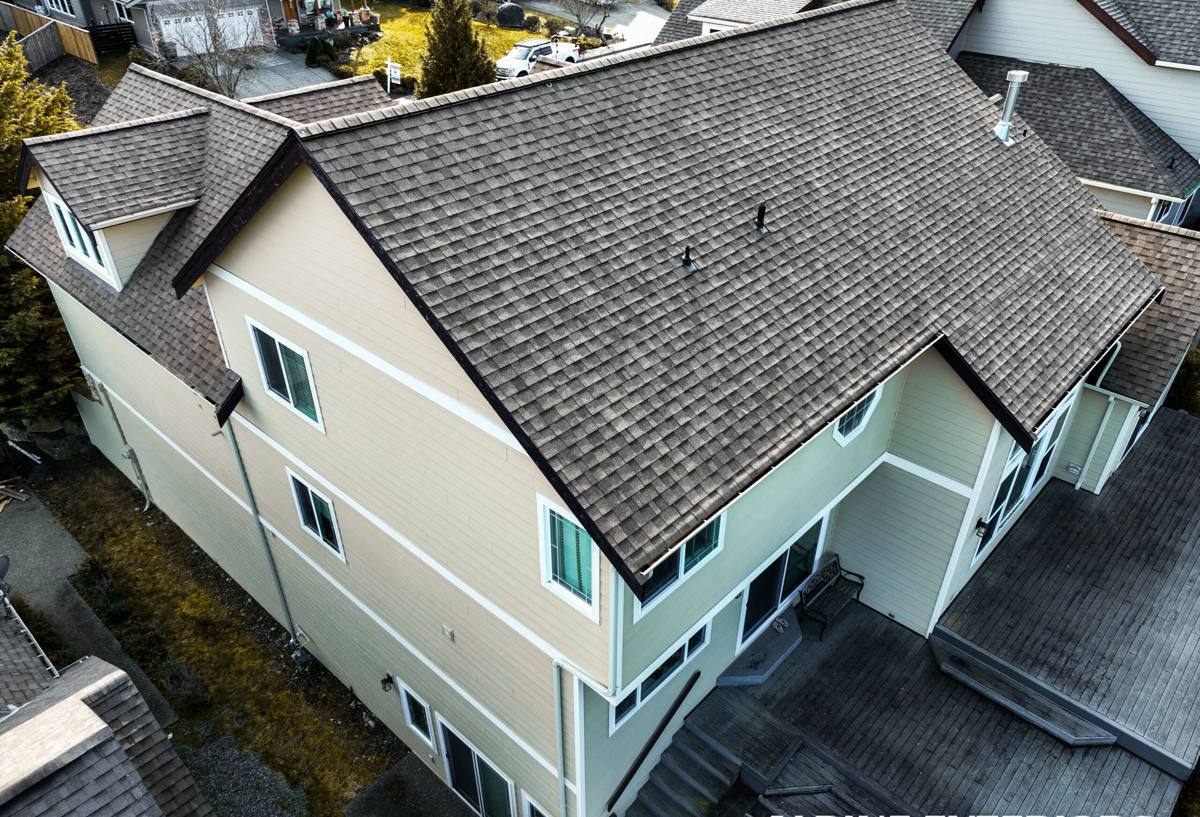
Signs Your Deck Needs Replacement, Not Just Repair
Not every tired-looking deck needs a full teardown. But there's a point where patching boards or re-staining stops being a real fix and starts being a way to delay an inevitable rebuild. Knowing the difference saves you money either way.
Structural red flags
- Soft, spongy, or springy spots in the decking or framing when you walk across it
- Visible rot or dark staining at the ledger board where the deck meets the house
- Wobbly or leaning railing posts, especially near stairs
- Rusted, corroded, or missing joist hangers and structural fasteners
- Footings that have shifted, cracked, or heaved
Cosmetic issues that don't necessarily mean replacement
Surface graying, minor mildew, a little board cupping, or worn-out finish are usually maintenance items, not structural ones — cleaning, sanding, and refinishing can often bring an otherwise sound deck back. The distinction matters because a full replacement is a bigger investment, and we'd rather tell you honestly when repair or a partial rebuild (say, replacing just the decking boards while keeping sound framing) is the smarter call.
What a Correct Deck Replacement Actually Involves
A deck replacement done right in this climate isn't just about the boards you can see. Most of what determines how long a deck lasts happens below the surface.
Ledger board and house connection
This is the single most important structural connection on an attached deck, and it's the point most exposed to water intrusion if it isn't flashed correctly. Proper flashing keeps water from tracking behind the siding and into the wall framing — a problem that's easy to hide and expensive to fix once it's been going on for years.
Footings and framing
Footings need to sit below the frost line and bear on solid, undisturbed soil. Framing lumber, joist hangers, and every mechanical fastener should be rated for exterior and, ideally, coastal use — standard interior-grade hardware corrodes noticeably faster this close to the water.
Decking surface and drainage
Board spacing, ventilation underneath the deck, and consistent drainage away from the house all matter more here than in a drier climate. Standing moisture and trapped debris between boards is where moss gets its foothold, and moss holds moisture against the wood even longer.
Railings, stairs, and code compliance
Railing height, baluster spacing, and stair geometry all need to meet current building code — not whatever code was in effect when the original deck went in. A replacement is the natural time to bring an older deck up to current standards.
Choosing Decking Material for a Salt-Air, High-Moss Climate
Material choice matters more here than in most parts of the state. Every option has real trade-offs — there's no single "best" answer for every homeowner, but there is a best answer for your budget and how much upkeep you want to take on.
| Material | How it handles this climate | Maintenance | Typical lifespan |
|---|---|---|---|
| Pressure-treated wood | Affordable, but needs consistent sealing to resist moss and moisture in salt air | Annual cleaning, re-sealing every 1-2 years | 10-15 years with upkeep |
| Cedar | Naturally rot-resistant and handles moisture well, but graying and moss growth happen quickly without treatment | Regular cleaning, periodic oil or sealant | 15-20 years with upkeep |
| Capped composite (e.g. Trex, TimberTech) | Best resistance to moss, moisture, and salt-air staining; won't rot or splinter | Occasional washing, no sealing or staining | 25-30+ years, manufacturer-warrantied |
| Uncapped composite | More moisture-resistant than wood but more prone to surface staining and moss buildup than capped composite | Periodic cleaning to prevent staining | 15-25 years |
We generally steer clients toward capped composite for decks that get heavy moss exposure or sit close to the water, simply because it holds up with the least ongoing effort. That said, plenty of homeowners prefer the look and feel of real wood and are willing to keep up with sealing — that's a legitimate choice too, as long as you go in knowing the maintenance commitment.
Our Deck Replacement Process
1. On-site assessment
We look at the existing deck's framing, footings, ledger connection, and overall condition to determine what's actually failing and why — this is also when we talk through material options based on your budget and how much maintenance you want to deal with going forward.
2. Design and scope
We finalize layout, railing style, stair placement, and material, and put together a clear, itemized estimate so you know what you're paying for before any work starts.
3. Permitting
Deck replacements in Whatcom County typically require a permit, especially for attached decks or any structural rebuild. We handle the permit application and inspection scheduling as part of the job.
4. Demolition and disposal
We remove the old deck down to (and including) any compromised framing, and haul away debris — you're not left with a pile of old lumber in the yard.
5. Framing and structural work
New footings, framing, and ledger flashing go in to current code, built with hardware rated for this environment.
6. Decking, railing, and finishing
Decking boards, railings, and stairs go in last, followed by a final walkthrough with you to confirm everything meets expectations before we call the job done.
Permits and Local Considerations
Most attached deck replacements — and many freestanding ones over a certain height or size — require a building permit in Whatcom County. Requirements can vary depending on your deck's size, height off grade, and proximity to property lines, so it's worth confirming specifics with the local building department rather than assuming your replacement is exempt. Setback rules also come into play for decks near property boundaries, particularly on some of the smaller lots common around Birch Bay. Part of what we handle for you is making sure the replacement is designed to meet these requirements from the start, rather than running into problems at inspection.
Maintaining Your New Deck in This Climate
Even the most weather-resistant materials do better with a little seasonal attention out here. A short list of habits goes a long way toward protecting your investment.
- Sweep debris off the deck regularly, especially in fall when leaves and needles trap moisture
- Rinse off salt residue after storms, particularly on hardware and railings
- Check and clear gaps between boards so water and debris don't sit and promote moss growth
- Inspect the ledger flashing and any visible fasteners once a year for corrosion or gaps
- For wood decks, plan on cleaning and re-sealing on the schedule your material calls for — don't wait until it's visibly graying
- Trim back overhanging vegetation that keeps the deck surface shaded and damp longer than necessary
Why It Matters to Hire a Crew That Already Works in Birch Bay
Deck-building fundamentals are the same everywhere, but the details that determine whether a deck lasts 10 years or 30 in Birch Bay are specific to this location — the salt exposure, the moss pressure, the amount of driving rain a structure has to shed, and the local permitting process. A crew that's replaced decks throughout this area already knows which hardware holds up, which materials are worth the extra cost here, and what the local building department expects to see. That local familiarity translates into fewer surprises during the project and a deck that's actually built for the conditions it has to survive, not just built to a generic spec sheet.
If your deck is showing its age, or you're just not sure whether it needs repair or full replacement, we're happy to take a look and give you a straight answer — no pressure, no upsell. Reach out for a free estimate using the form below, and we'll walk the property with you and talk through what makes sense for your home and your budget.