 Blaine Siding
 Why Window Performance Is a Bigger Deal in Lynden Than It Looks
Lynden sits in a part of Whatcom County that gets a lot of moisture moving through it — long stretches of drizzle, driving rain off the marine air pushing in from the Strait, and a moss season that seems to run nine or ten months out of the year on north-facing walls. None of that is dramatic weather compared to other parts of the country, but it's relentless, and relentless is what actually wears out a window. A window doesn't fail in one storm. It fails after a few thousand cycles of getting soaked, drying out, getting soaked again, and freezing overnight in January while the inside stays warm and humid.
Older single-pane and early dual-pane windows in this area weren't built with that cycle in mind. Aluminum frames conduct cold straight through and sweat on the inside. Wood frames that aren't properly flashed take on moisture at the sill and start to soften from the inside out, long before it's visible from the yard. By the time a homeowner notices drafts or fogging between the panes, the window has usually been underperforming for years.
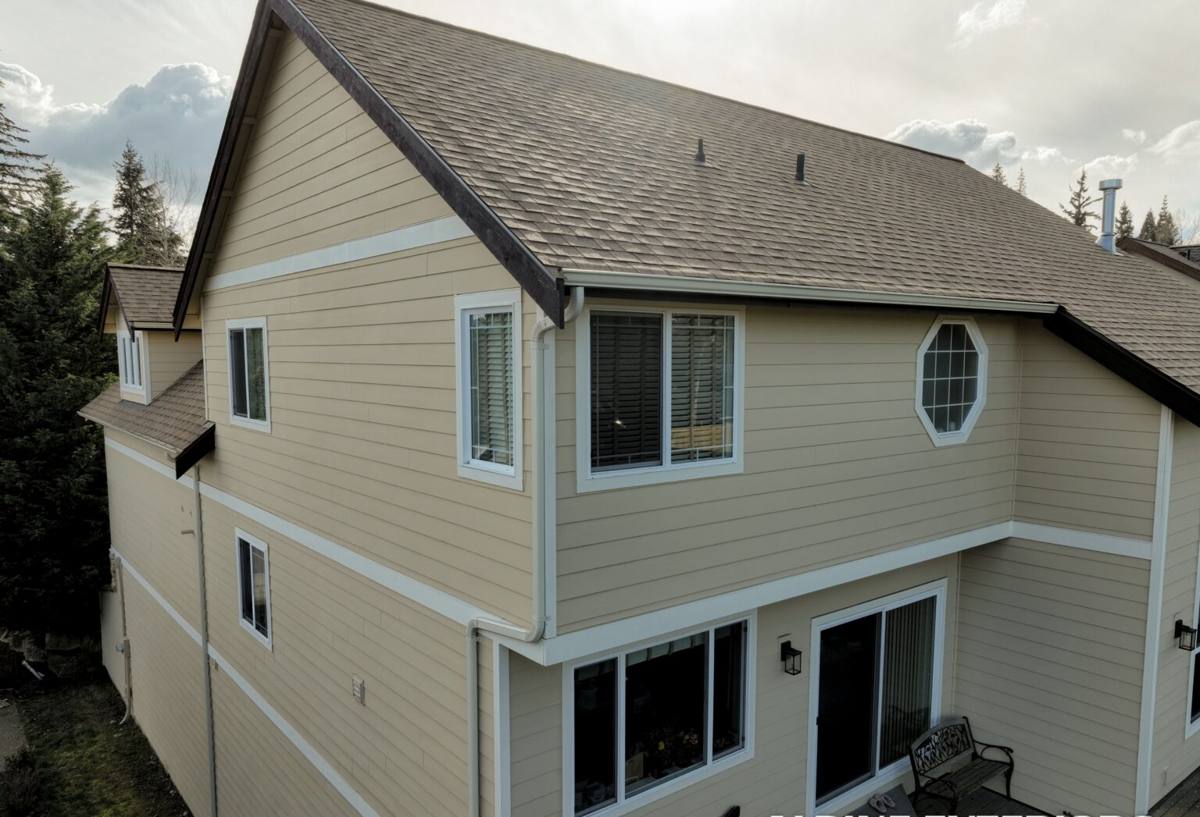
Signs Your Current Windows Are Costing You Money
Most homeowners don't call about windows because they read their energy bill closely — they call because something feels wrong in a specific room. Here's what that usually means:
- Cold drafts near the frame even with the window latched — usually failed weatherstripping or a warped sash, not just "old glass."
- Fogging or a cloudy haze between the panes — the seal on the insulated glass unit has failed and the gas fill (or plain air) is gone. This isn't cleanable; the glass unit needs replacing.
- Condensation on the inside of the glass in winter — a sign the glass surface is too cold relative to indoor humidity, which points to poor U-factor performance.
- Soft or discolored wood at the sill or lower corners — moisture has been getting behind the frame, not just on it.
- Rooms that are noticeably harder to heat than the rest of the house, especially ones with west or north exposure that take the brunt of the weather.
Any one of these is worth a look. Two or three together usually means the window has moved past "annoying" and into "actively costing you money and inviting rot."
What "Energy-Efficient" Actually Means
The phrase gets used loosely, but three numbers actually tell you how a window performs, and they matter more here than in a dry climate because our issue is as much about condensation and moisture control as it is about heating cost.
| Spec | What It Measures | Why It Matters in Lynden |
|---|---|---|
| U-Factor | How much heat escapes through the window (lower is better) | Lower U-factor keeps interior glass warmer, which cuts down on the condensation that leads to mold and sill rot |
| Low-E Coating | A microscopically thin coating that reflects heat while letting light through | Keeps heat in during our cool, wet months without darkening the room on our already gray days |
| Argon or Krypton Fill | Inert gas between panes that slows heat transfer versus plain air | Adds real insulating value with no visible difference — worth it on any dual-pane upgrade |
A window can have great glass and still perform poorly if the frame material is a weak point. Vinyl frames with welded (not just glued) corners hold up well to our wet-dry cycling. Fiberglass frames cost more but move less with temperature swings, which keeps the seals intact longer. Wood-clad windows look great and can perform well, but they raise the maintenance bar — any gap in the cladding is an entry point for the exact kind of moisture this region throws at a house.
Installation Details That Actually Determine Performance
The window unit itself is maybe half the story. We see plenty of good windows failing early because of how they went in, not what they're made of. In a climate that pushes rain sideways during a real blow, flashing and sealing details aren't optional extras — they're the difference between a window that lasts and one that quietly rots the wall around it.
What a correct install includes
- Removing the old window and inspecting the rough opening for hidden water damage or soft framing before anything new goes in — this is the step that gets skipped when a job is rushed, and it's the one that matters most.
- Flashing the sill and jambs so any water that does get behind the siding is directed out, not trapped against the wood.
- A continuous bead of the correct sealant at the exterior, sized and placed so it doesn't trap moisture inside the wall cavity.
- Shimming the unit square and plumb — an out-of-square window stresses the seals and hardware from day one, shortening its life regardless of how good the glass is.
- Interior air-sealing at the gap between frame and rough opening, which affects both energy performance and condensation risk.
Skip any of these and you can end up with a window that looks fine and still lets moisture into the wall assembly — which, given how much rain this area sees over a winter, tends to show up as a problem within a few years rather than decades.
How Our Process Works
We keep this straightforward because window replacement doesn't need to be complicated to be done right.
- On-site assessment. We look at the existing windows, the framing around them, and how the house is oriented to wind and rain — a window on an exposed wall gets treated differently than one under a deep eave.
- Honest recommendation. We'll tell you which windows genuinely need replacing now versus which can wait, and why — we're not interested in selling a full-house job when three windows are the actual problem.
- Written estimate. Clear pricing, clear scope, clear timeline. No surprise add-ons once work has started.
- Installation. Old units out, opening inspected and repaired if needed, new units flashed and sealed to hold up to our weather, not just to pass a quick glance.
- Cleanup and walkthrough. We check operation on every window with you before we consider the job done.
Cost Factors Worth Understanding Before You Get Quotes
Window pricing varies a lot based on real factors, not just brand markup. Knowing what drives the number helps you compare quotes honestly.
| Factor | Impact on Cost |
|---|---|
| Frame material (vinyl vs. fiberglass vs. wood-clad) | Vinyl is typically the most budget-friendly; fiberglass and wood-clad cost more upfront but bring different maintenance and longevity tradeoffs |
| Number of window openings | Per-window cost usually drops somewhat as the total job size grows, due to shared setup and labor efficiency |
| Condition of the rough opening | Hidden rot or framing repair adds cost, but skipping it just moves the cost to a bigger repair later |
| Replacement vs. full-frame install | Full-frame replacement costs more but is often the right call when the existing frame or flashing is compromised |
| Glass package | Upgraded Low-E coatings and gas fills add a modest amount per window relative to the energy and comfort gain |
We'd rather walk you through these factors on your specific house than quote a number that doesn't reflect what your windows actually need.
Why Hiring a Crew That Already Works in Lynden Matters
Window installation isn't identical everywhere. A crew that mostly works drier climates can put in a technically fine window and still get the flashing and sealing details wrong for a place where wind-driven rain is a normal Tuesday. We work on homes across Whatcom County, and Lynden's mix of older farmhouses, mid-century homes, and newer builds each bring their own quirks — different framing depths, different siding types, different existing flashing conditions. Knowing what to check for on a 1970s single-pane aluminum slider versus a newer builder-grade vinyl window that's failing early saves time and avoids surprises once the wall is opened up.
There's also a simple accountability piece to hiring local: if a seal needs adjusting or a question comes up two winters from now, you're not chasing down a company that was only ever passing through for a batch of jobs.
Simple Maintenance That Extends Window Life Here
- Clear debris and moss from window tracks and weep holes each fall, before the wet season sets in.
- Check exterior caulking annually for cracks or gaps, especially after a hard freeze.
- Wipe down interior sills if you notice condensation buildup, and address the cause rather than just the moisture.
- Keep gutters and downspouts clear so water isn't sheeting down the wall directly above a window.
- Operate every window at least occasionally through the year — hardware that never moves is more likely to bind or seize.
If you're noticing drafts, fogged glass, or soft trim around your windows, it's worth getting a straight answer on what's actually going on before it turns into a bigger repair. We're happy to come take a look and give you a free, no-pressure estimate — no obligation, just an honest read on your windows and what makes sense for your home.