 Blaine Siding
 Birch Bay's Waterfront Climate Puts Real Demands on Siding
Birch Bay sits right on the water in Whatcom County, and that location is exactly what makes it a beautiful place to live and a tough place to keep a house looking good. Homes here take on a combination of stresses that inland Whatcom County properties simply don't deal with in the same way: salt-laden air blowing in off the bay, driving rain that comes in sideways during winter storms, and a moss season that can stretch for months given how much shade and moisture sits along this stretch of coastline.
Salt air is corrosive to metal fasteners and trim, and it accelerates the breakdown of finishes that aren't engineered to resist it. Wind-driven rain doesn't just wet a wall — it forces water sideways and upward, testing every seam, joint, and piece of flashing on the exterior. And moss doesn't just look bad; it holds moisture against a wall surface for weeks at a time, which is a problem for any siding material that isn't dimensionally stable or that swells when it stays damp.
None of this means a home in Birch Bay is doomed to constant repairs. It means the siding choice and the installation quality matter more here than they would somewhere with a milder, drier exterior climate. That's the lens we bring to every fiber cement project in this community.
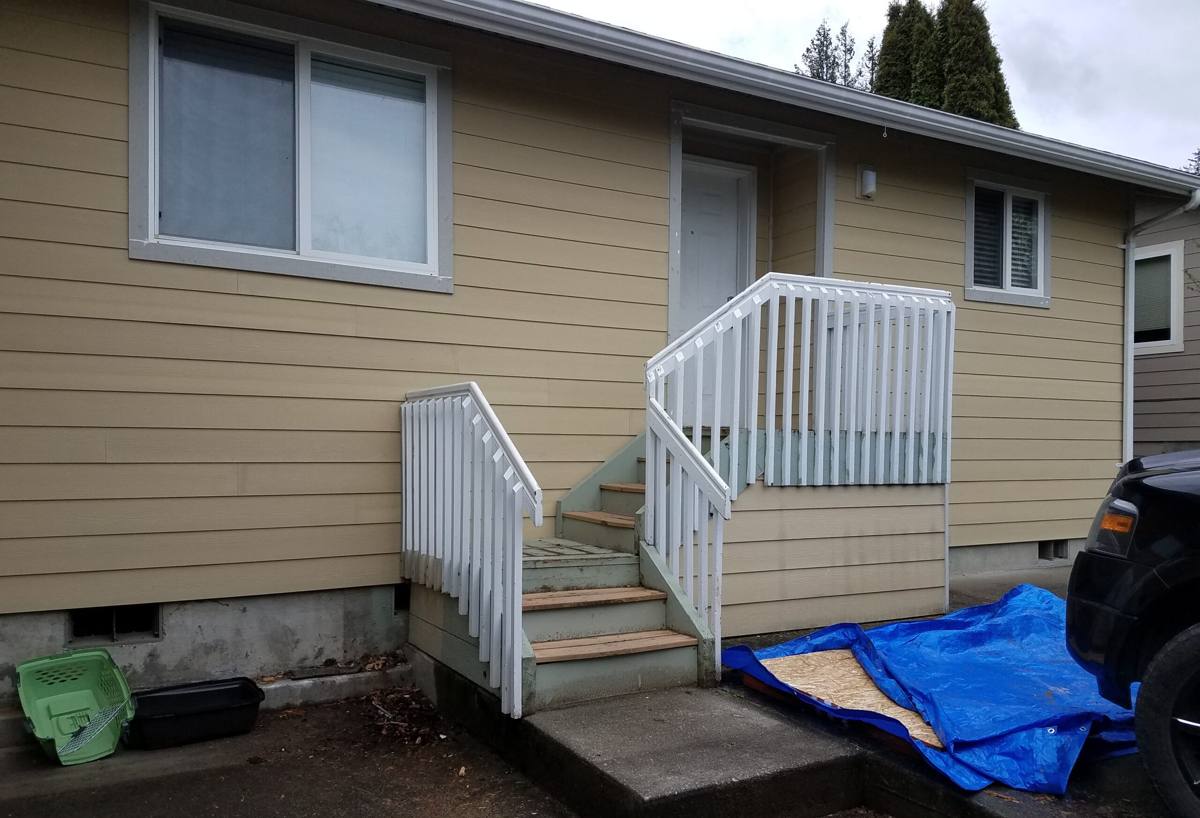
What Fiber Cement Actually Brings to a Bay-Front Home
Fiber cement siding is a mix of cement, sand, and cellulose fibers, pressed and cured into planks or panels. The reason it holds up in a place like Birch Bay comes down to a few core properties:
- It doesn't rot, and it isn't a food source for moss or mildew the way wood-based products can be.
- It's dimensionally stable — it doesn't swell, cup, or warp with repeated wetting and drying cycles the way solid wood or some composite products can.
- It's non-combustible, which matters for insurance considerations and general peace of mind.
- A factory-applied finish (when specified correctly) resists the fading and chalking that field-applied paint struggles with in a salt-air environment.
Fiber cement isn't magic, though. It's a system — plank, fasteners, flashing, trim, and finish all have to work together, and the installation details matter as much as the material itself. That's especially true within a mile or two of saltwater.
Why We Only Install James Hardie
We install James Hardie fiber cement siding exclusively. We don't install vinyl, LP SmartSide, Cemplank, Allura, primed spruce, or cedar, and that's a deliberate standard, not a lack of options.
Other fiber cement brands exist, and some are reasonable products. Our decision to standardize on Hardie comes down to a few practical things we've come to rely on: the ColorPlus factory finish process, which bakes color on under controlled conditions rather than relying on field-applied paint that has to cure properly in our damp coastal weather; the HZ5 product engineering, which is built specifically for climates with high moisture exposure like ours; and a transferable warranty structure that holds up over a long ownership timeline, including through a sale of the home.
We're not going to tell you competing products are junk — that's not fair or accurate. What we will say is that after years of installing and standing behind siding in Whatcom County's coastal microclimates, Hardie's combination of factory finish, climate-specific product lines, and warranty support is what we're willing to put our name on. Vinyl in particular struggles with the impact and thermal cycling this coastline sees, and wood-based products carry a maintenance burden that most Birch Bay homeowners don't want to take on indefinitely.
What a Correct Fiber Cement Installation Involves
Fiber cement is only as good as the installation behind it. A rushed or under-detailed job on any siding product will fail early in a marine climate, and Birch Bay is unforgiving of shortcuts. Here's what we consider non-negotiable on every project in this area:
Water Management Comes First
Before a single piece of siding goes up, the wall needs a properly lapped weather-resistant barrier, correctly integrated window and door flashing, and starter strips set to the right reveal. Water management is the part of the job nobody sees once it's finished, and it's the part that determines whether the wall stays dry for the next thirty years.
Fastening and Clearances
James Hardie specifies fastener type, spacing, and placement for a reason — corrosion-resistant fasteners driven correctly prevent the streaking and loosening that shows up fast in salt air. Ground clearance and gaps at grade, decks, and roof lines also matter more here, since standing moisture at the base of a wall in a shaded, damp yard is a common way trouble starts.
Caulking and Joint Treatment
Butt joints, trim intersections, and penetrations need to be sealed to spec, using products compatible with the ColorPlus finish. Skipping or under-doing this step is one of the most common causes of early failure we see on poorly installed fiber cement, regardless of brand.
Ventilation Behind the Cladding
A rainscreen or properly vented assembly lets any moisture that does get behind the siding dry out instead of sitting against the wall sheathing. In a climate with Birch Bay's humidity and rainfall, this is one of the details that separates a siding job that lasts from one that doesn't.
Fiber Cement Compared to Other Options in a Coastal Climate
| Factor | James Hardie Fiber Cement | Vinyl | Wood / Primed Spruce / Cedar |
|---|---|---|---|
| Moisture & rot resistance | High — not a food source for moss/mildew, dimensionally stable | Won't rot, but seams and panels can warp under thermal stress | Vulnerable to rot and moss growth without ongoing maintenance |
| Finish durability in salt air | Factory-cured ColorPlus finish, resists fading and chalking | Color molded in, but can fade and become brittle over time | Field-applied paint/stain, needs recoating on a shorter cycle |
| Fire resistance | Non-combustible | Combustible | Combustible |
| Impact resistance (wind-driven debris) | Strong | Can crack in cold, dent easily | Dents and splits over time |
| Long-term maintenance | Low, mainly periodic washing | Low, but repairs can be visually mismatched | Ongoing painting/staining and moisture monitoring |
How Our Process Works on a Birch Bay Project
Every project starts with an on-site look at the specific exposure your home faces — waterfront lots, elevated lots with more wind exposure, and shaded lots with heavier moss pressure each call for slightly different attention to detail, even though the core system stays the same.
- Walk the exterior and assess existing siding, trim, moisture damage, and drainage patterns around the foundation.
- Identify problem areas — flashing gaps, grade clearance issues, or ventilation deficiencies — that need correcting before new siding goes on, not after.
- Provide a written estimate specifying the Hardie product line, profile, and ColorPlus color, along with the trim and flashing details for your home.
- Remove old siding and inspect sheathing for hidden moisture damage, repairing anything found before proceeding.
- Install weather barrier, flashing, and starter components to spec.
- Install Hardie siding and trim following manufacturer fastening, clearance, and joint-sealing requirements.
- Final walkthrough with the homeowner covering care and what to expect long-term.
Living With Fiber Cement Siding in a Moss-Prone, Salt-Air Environment
Correctly installed Hardie siding is low-maintenance, but "low-maintenance" doesn't mean "no maintenance," especially this close to the water. A little seasonal attention goes a long way toward keeping the finish and the wall assembly performing the way it's designed to.
- Rinse the siding periodically to remove salt residue and airborne grime, especially on walls facing the water.
- Keep gutters clear so roof runoff isn't dumping extra water onto the siding below.
- Trim back vegetation and tree cover where practical to reduce shade and airflow restriction that feeds moss growth.
- Check caulked joints and trim intersections every year or two, and have any cracked or missing sealant redone promptly.
- Watch for soft spots, staining, or discoloration near grade, decks, or roof intersections, and have them looked at early rather than waiting.
What Drives Cost on a Birch Bay Fiber Cement Project
| Factor | Why It Matters Here |
|---|---|
| Existing wall condition | Waterfront and shaded lots more often have hidden moisture damage that needs repair before new siding goes on |
| Wind and salt exposure | More exposed elevations may call for additional flashing or fastening detail |
| Product line and profile | HZ5 boards, plank width, and trim style all affect material cost |
| Access and site conditions | Waterfront lots, slopes, and limited staging area can affect labor time |
| Scope of trim and detail work | Corner boards, window trim, and fascia detail add labor beyond flat wall footage |
We give a written, itemized estimate before any work starts, so you know exactly what you're paying for and why — not a vague per-square-foot number that hides what's actually involved.
Why Local Experience in Birch Bay Matters
A siding crew that only occasionally works this stretch of coastline will treat Birch Bay like any other job — same details, same assumptions, regardless of exposure. A crew that works this area regularly knows which lots face the worst wind-driven rain, which yards hold onto moss longest, and where salt air does the most damage to fasteners and trim over time. That local pattern recognition shows up in the small decisions — flashing details, fastener choice, where extra sealant attention goes — that determine whether siding still looks and performs well fifteen years from now.
We work throughout Blaine and Whatcom County's coastal communities, and Birch Bay's particular mix of salt exposure, wind, and moss pressure is something we plan for specifically, not something we treat as an afterthought.
If you're weighing a siding replacement or repair in Birch Bay, we're happy to take a look at your home and walk you through what we'd recommend and why. Use the form below to request a free, no-pressure estimate.