 Blaine Siding
 Why Decks in Birch Point Wear Faster Than You'd Expect
Birch Point sits close enough to the water that salt-laden air is part of daily life, not an occasional event. That air carries moisture and fine salt particles that settle on wood, fasteners, and metal connectors, and it does this year-round, not just during storms. Combine that with Whatcom County's long stretch of driving rain and the extended moss season that runs from fall through spring, and you get a deck environment that's genuinely harder on materials than a deck built twenty miles inland.
Most decking products sold at any lumber yard are rated for general Pacific Northwest exposure, not specifically for near-shore salt exposure. That's not a defect in the product — it's just a mismatch between a generic spec sheet and the specific conditions a Birch Point deck actually faces. When we replace a deck out here, we're not just swapping old boards for new ones. We're building for the actual microclimate of this stretch of Blaine, which behaves differently than a deck a few miles inland.
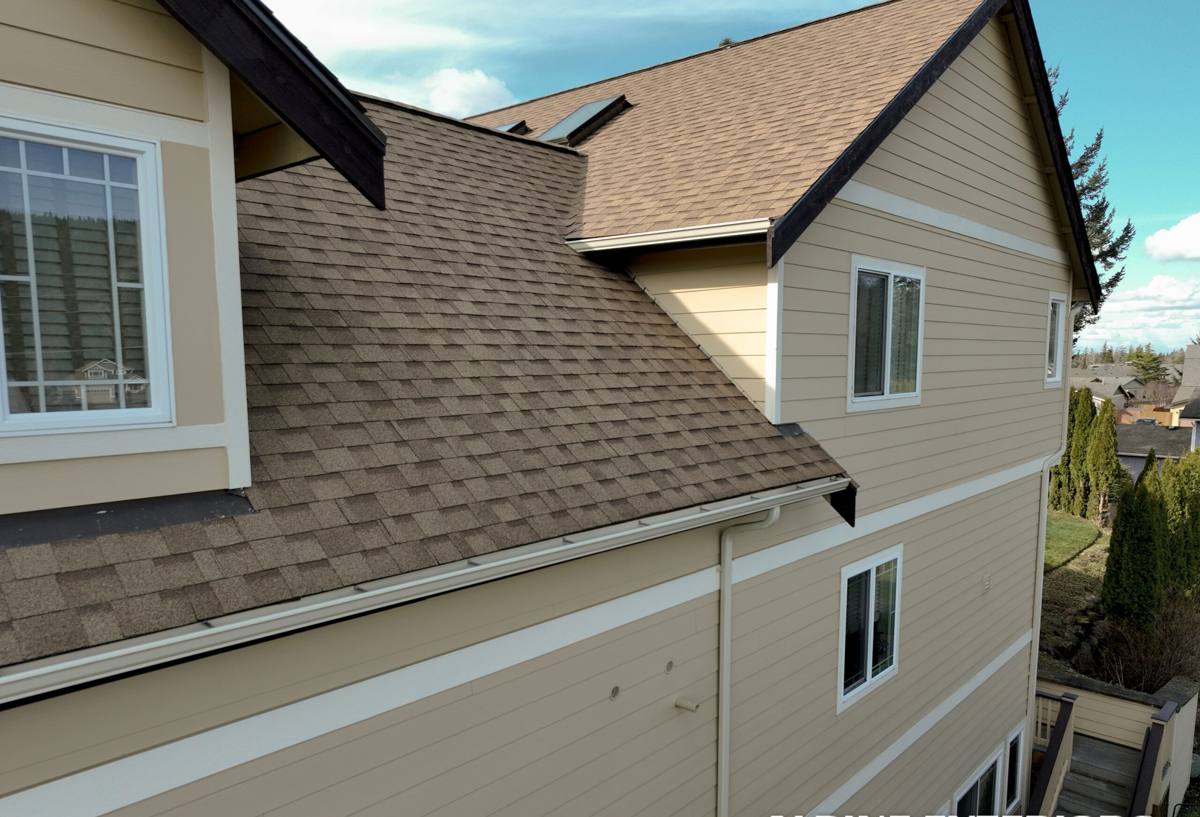
How to Tell a Birch Point Deck Needs Replacement, Not Repair
A lot of homeowners call us thinking they need a few boards swapped, and sometimes that's true. But there's a point where patching a deck costs more over time than replacing it correctly, and it's worth knowing where that line is.
Signs pointing toward repair
- A handful of isolated boards showing cupping or splintering while the rest of the deck surface is sound
- Railings that have loosened at their connection points but the posts themselves are solid
- Surface graying or mild moss growth on an otherwise structurally sound deck
Signs pointing toward full replacement
- Soft or spongy spots when you walk the deck, especially near the ledger board where it meets the house
- Visible rot or dark staining at joist ends, post bases, or anywhere wood sits close to grade
- Rusted, corroded, or failing fasteners and hardware — a common issue in salt-exposed areas even when the wood itself looks okay
- A structure that predates current attachment and flashing standards, particularly around the ledger connection
- Persistent moss and algae buildup that keeps returning within weeks of cleaning, which usually points to a moisture problem in the structure below, not just the surface
That last point matters more in Birch Point than in drier parts of Whatcom County. If moss keeps coming back fast, it's often a sign that water isn't draining or drying the way it should, and that's a structural conversation, not a cleaning one.
What a Correct Deck Replacement Actually Involves
A deck replacement done right is mostly invisible once it's finished — the parts that matter most are the ones under the decking boards. Skipping or rushing these steps is exactly how a deck ends up needing another replacement in eight or ten years instead of twenty-five or more.
Ledger board and house connection
The ledger board — where the deck attaches to the house — is the single most common failure point on any deck, and it's especially critical here because it's a spot where water, wood, and metal fasteners all meet in a salt-humid environment. Correct flashing at this connection keeps water from tracking behind the siding and into the house framing, which is a much bigger and more expensive problem than a deck issue alone.
Framing and joist protection
Joists and beams should be protected with a proper barrier where decking boards sit on top of them, since that's where standing moisture does the most damage over time. In a long-moss-season climate, this detail is what separates a deck that dries out between rains from one that stays damp and starts breaking down from the inside.
Fasteners and hardware
This is where near-shore exposure changes the job the most. Standard exterior-rated fasteners can corrode faster in salt air than their rating would suggest for an inland property. We spec hardware and fasteners suited to coastal exposure, because a deck is only as strong as the connectors holding it together, and corroded fasteners are one of the leading causes of premature deck failure in areas like Birch Point.
Footings and post bases
Post bases should sit above grade and off standing water, with hardware that isolates wood from direct ground contact. Footings need to meet current depth and bearing requirements for our soil and frost conditions, not just match whatever was there before.
Choosing Decking Material for a Salt-Air, High-Moisture Site
There's no single "best" decking material for every home — it depends on your budget, how the deck is used, and how much upkeep you actually want to do. What we can tell you honestly is how each common option tends to perform under Birch Point's specific conditions.
| Material | Performance Near Salt Air | Moss/Algae Resistance | Maintenance Load |
|---|---|---|---|
| Pressure-treated wood | Good if fasteners and flashing are matched to it; wood itself needs regular sealing | Needs periodic cleaning and treatment to resist moss buildup | Higher — annual inspection, cleaning, and resealing recommended |
| Cedar | Naturally decay-resistant but still benefits from sealing in coastal air | Moderate; still collects moss in shaded, damp spots | Moderate to high — periodic staining or sealing to hold its color and protection |
| Composite decking | Generally handles salt and moisture well; check manufacturer warranty terms for coastal use | Better resistance than wood, though surface cleaning is still needed in shaded areas | Lower — occasional washing, no sealing or staining |
| PVC decking | Strong moisture resistance since it contains no wood fiber to absorb water | Good, though any decking material can host moss/algae in low-light, damp corners | Lowest — periodic cleaning only |
We install all of these material types, and we'll walk you through the honest trade-offs for your specific deck — orientation, shade, sun exposure, and how much time you want to spend maintaining it — rather than pushing whatever happens to be easiest for us to install.
Permits, Codes, and What Whatcom County Expects
Deck replacement in Blaine and unincorporated Whatcom County generally requires a permit once you're rebuilding structural elements like framing, footings, or the ledger connection — not just replacing surface boards on an otherwise sound structure. Current code also reflects updated standards for ledger attachment and guardrail construction that older decks, especially anything built more than fifteen or twenty years ago, often don't meet.
Part of what we handle as your contractor is making sure the replacement meets current code, not just matches what was there before. That protects you at resale and, more importantly, it protects your family from a structural failure that undersized older hardware can eventually cause.
Our Process for a Birch Point Deck Replacement
Every property is different, but the sequence we follow stays consistent because it's what produces a deck that holds up to this specific climate.
- On-site assessment of the existing deck, including a check of framing, ledger connection, post bases, and any moisture or rot we can identify
- Honest conversation about repair versus full replacement, with the reasoning explained plainly
- Material selection based on your budget, how the deck is used, and its sun/shade exposure
- Permit handling with Whatcom County where the scope of work requires it
- Removal of the old structure and inspection of the ledger area and any framing it's attached to
- Rebuild with coastal-appropriate flashing, joist protection, and fasteners
- Final walkthrough covering how to maintain the new deck through the moss season
What to have ready before we come out
- Any known history of leaks, soft spots, or repairs made to the current deck
- A general sense of how you use the space — dining, grilling, entertaining, hot tub, etc.
- Your rough budget range, so we can recommend materials that actually fit it
- Any HOA or neighborhood guidelines that might affect materials or railing style
Living With a New Deck Through the Moss Season
Even a well-built deck benefits from a little seasonal attention here. A soft-bristle brush and deck-safe cleaner a couple of times a year — more often on shaded sections that don't get direct sun — keeps moss from getting a foothold in the first place, which is far easier than removing established growth later. Keeping gutters and downspouts clear so runoff doesn't dump directly onto or under the deck also makes a real difference, since standing water is what moss and rot both need to get started.
If you chose wood, plan on periodic sealing or staining as part of that routine. If you went with composite or PVC, the maintenance is lighter, but an annual rinse and a quick check of railings and fasteners is still worth doing, especially given how salt air can work on hardware even when the decking surface itself looks fine.
Why Local Experience in Birch Point Matters
A deck built to a generic spec sheet can look fine for the first few years anywhere. The difference shows up later, when fasteners rated for average exposure start corroding faster than expected, or when a ledger flashing detail that would hold up fine twenty miles inland lets moisture in near the water. Working regularly in Birch Point and the surrounding Blaine area means we've seen which details actually matter here and which ones are just extra cost with no real benefit for this environment.
That local pattern recognition — knowing which fastener grade holds up, which flashing details are worth the extra step, and which materials handle this specific mix of salt air and long wet seasons — is the difference between a deck replacement that's a one-time project and one you're revisiting again in less than a decade.
If your deck is showing its age or you're just not sure whether it needs repair or full replacement, we're happy to take a look and give you a straight answer. Use the form below to request a free, no-pressure estimate for your Birch Point property.