 Blaine Siding
 Why Windows Wear Differently in Birch Point
Birch Point sits close enough to the water that homes here take a different kind of weathering than houses a few miles inland in Blaine. The air carries salt off the Strait of Georgia and Semiahmoo Bay, the wind drives rain sideways into window walls facing the water, and the tree cover common in this part of Whatcom County keeps north- and west-facing walls shaded and damp for long stretches of the year. None of that is dramatic on its own, but added up over a decade or two, it's exactly the combination that finds every weak point in a window installation.
We've worked on enough homes in this neighborhood to know the failure patterns are predictable. It's rarely the glass that fails first — it's the frame corners, the sill flashing, and the sealant joints that were installed without accounting for what this specific location throws at a building. A window installation done for a typical inland home isn't automatically wrong for Birch Point, but it usually needs a few things done more carefully, and a few products avoided or upgraded.
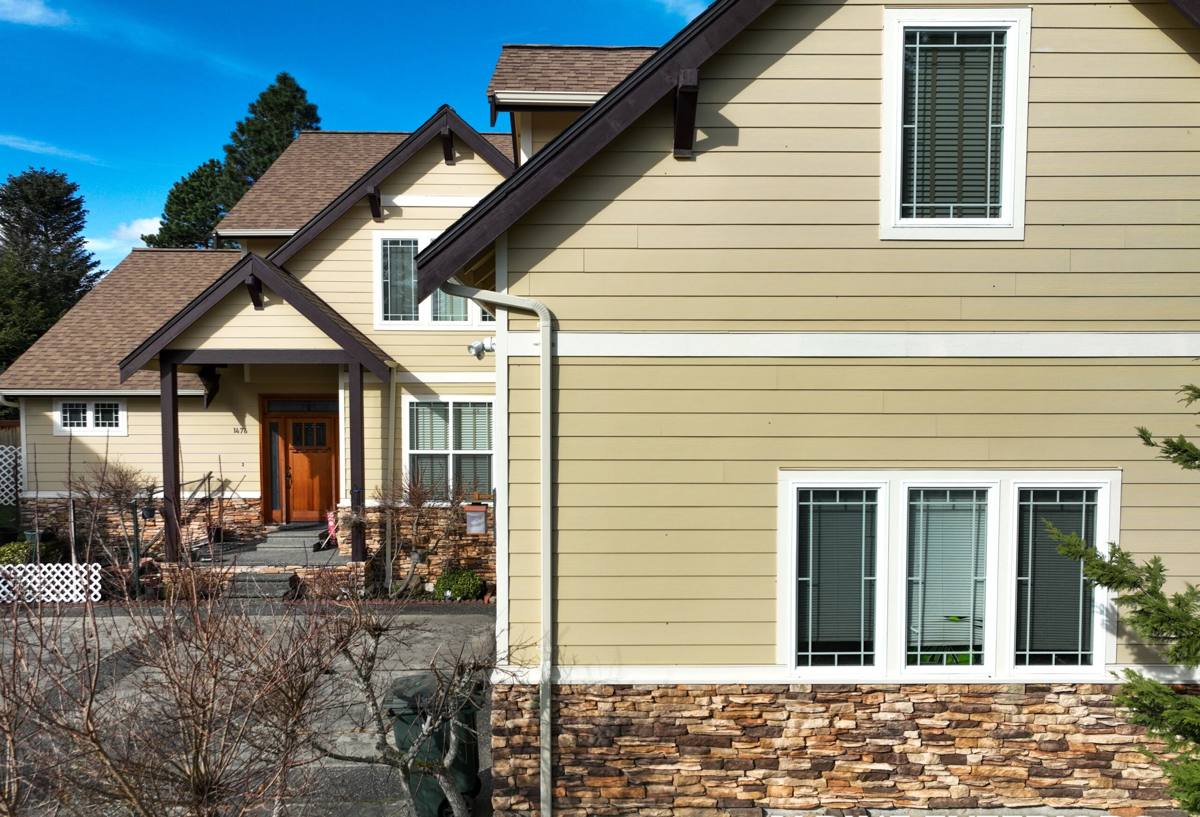
What Salt Air, Driving Rain, and Moss Actually Do
Salt Air and Metal Components
Salt-laden air accelerates corrosion on anything metal — screws, hinges, balance systems, and especially lower-quality aluminum or unclad wood cladding. Once corrosion starts inside a window's hardware, operation gets stiff, seals stop compressing evenly, and water starts finding its way past parts that used to keep it out.
Driving, Wind-Blown Rain
Standard rain falls mostly straight down and sheds off a properly flashed window without much drama. Wind-driven rain off the water pushes horizontally and even upward under sills, which means flashing details that would be "good enough" elsewhere aren't good enough on a wall that faces the wind here. This is the single biggest reason we see water staining below windows on homes that otherwise look well maintained.
Shade, Moisture, and Moss
Whatcom County's long wet season, combined with tree cover common around Birch Point, keeps some exterior walls damp for months at a time. That moisture supports moss and algae growth on siding and trim, and it keeps wood window components wet longer than they'd stay wet on a sun-exposed wall. Wet wood that never fully dries is wood that rots, and rotted trim around a window frame is one of the most common repairs we get called out for in this area.
Signs a Birch Point Home Needs Window Attention
- Soft or discolored trim/siding directly below a window, especially on water-facing or shaded walls
- Windows that have gotten hard to open, close, or lock — often a sign hardware has started corroding
- Visible moss or dark streaking building up on the sill or the wall just under the window
- Fogging or moisture between the panes of a double-pane unit (a sign the seal has failed)
- Drafts or a noticeable temperature difference near the window in winter
- Peeling or bubbling paint on wood-framed windows, especially on the north or west side
- Visible daylight or gaps around the frame when the window is closed
Any one of these can be a minor fix. Several of them together, especially on an older home, usually mean the original installation is past the point where caulk and touch-up paint solve the problem.
What a Correct Installation Actually Involves
A window is only as good as the details around it that nobody sees once the trim goes back on. For a home in a location like Birch Point, we treat these as non-negotiable:
- Full removal and inspection of the opening — checking the sheathing and framing behind the old window for rot or hidden water damage before anything new goes in.
- Proper flashing sequence — sill pan flashing that directs any water that gets past the window back out, not into the wall, plus correctly lapped side and head flashing so water sheds down and out rather than getting trapped.
- Weather-resistive barrier integration — tying the window's flashing into the house wrap or building paper correctly, so there's a continuous drainage path rather than a gap where the two meet.
- Sealant chosen for the exposure — using sealants and backer rod rated for continuous moisture and UV exposure on water-facing walls, not a general-purpose caulk that will shrink and crack within a few seasons.
- Correct shimming and fastening — a window that isn't shimmed level and square will stress its own seals over time, which shows up later as operational problems and leaks.
- Interior and exterior trim sealed and finished — including back-priming any wood trim before installation, which matters more here than in drier parts of the state.
Skipping or rushing any one of these steps is usually invisible on installation day. It shows up two, five, or ten winters later — which is exactly the timeline we see on a lot of the repair calls in this neighborhood.
Choosing the Right Frame Material for This Location
Every window material has a place. In a marine, high-moisture, salt-exposed setting like Birch Point, some tradeoffs matter more than they would a few miles inland.
| Material | How it handles this climate | Maintenance |
|---|---|---|
| Vinyl | Doesn't corrode or rot; performs well in salt air; can look dated on higher-end homes | Low — occasional cleaning |
| Fiberglass | Very stable in temperature swings and moisture, excellent long-term performer near water | Low |
| Aluminum-clad wood | Good if the cladding and seams are done right; failure point is usually at joints and corners if not properly sealed | Moderate |
| Solid wood | Best appearance for period/craftsman homes, but needs disciplined upkeep in a wet, shaded, salt-air setting | High — repainting/resealing on a schedule |
| Bare aluminum | Prone to corrosion and condensation in this climate; we generally steer clients away from it here | Moderate to high |
We're not against wood windows — plenty of homes in this area suit them and owners who keep up the maintenance schedule get decades of good service. What we push back on is installing a high-maintenance material in a high-moisture spot without being upfront that it will need real upkeep, not just the occasional coat of paint.
How We Approach a Birch Point Window Job
Our process doesn't change dramatically from house to house, but where we spend extra attention does, based on which direction a wall faces and how exposed it is.
- On-site assessment — we look at the existing windows, the condition of the wall assembly around them, and note which elevations take the most wind and rain.
- Honest scope and quote — including whether we expect any hidden sheathing or framing repair once the old windows come out, so there are no surprise change orders mid-job.
- Material and product selection — matched to the home's style and to how exposed each wall actually is, not a one-size-fits-all spec.
- Removal, inspection, and repair — any soft framing or sheathing gets replaced before a new window ever goes into the opening.
- Installation with full flashing and sealant detailing — done to the sequence above, not shortcut for speed.
- Final check and walkthrough — operation, sealing, and trim finish confirmed with the homeowner before we consider the job done.
Timing the Work
Window replacement can be done through most of the year in Whatcom County, but scheduling around the wettest stretches of the winter makes for a cleaner install — less risk of moisture getting into an open wall during the swap, and better curing conditions for sealants. If your Birch Point home has multiple windows to replace, we'll talk through timing as part of the quote.
What Drives the Cost
| Factor | Why it matters here |
|---|---|
| Number and size of windows | Larger openings and full-house jobs bring per-unit costs down but raise total project cost |
| Frame material | Vinyl is typically the most budget-friendly; fiberglass and clad-wood cost more upfront but hold up better on exposed walls |
| Condition behind the old window | Rotted sheathing or framing found during removal adds labor and material not visible in an initial quote |
| Wall exposure | Water-facing or wind-exposed walls may warrant upgraded flashing or sealant details, adding modest cost for real long-term protection |
| Trim and finish work | Matching existing trim profiles or repainting/staining wood trim adds time and materials |
We give a written, itemized quote before work starts, and we flag anything found during removal before we move forward with fixing it — not after.
Before You Hire — A Practical Checklist
- Ask whether the crew doing the physical install is the same crew that gave you the quote, or a subcontractor
- Ask what flashing and sealant products they use on water-exposed walls specifically
- Get the warranty terms in writing — both the manufacturer's product warranty and the installer's labor warranty
- Ask how they handle it if they find rotted sheathing or framing once the old window is out
- Confirm they're licensed and insured for exterior work in Washington
- Ask for a written, itemized quote rather than a single lump-sum number
Why Local Experience with This Kind of Exposure Matters
Window installation isn't a different trade in Birch Point than it is anywhere else in Blaine — it's the same trade, applied with more attention to a handful of details that matter more here. A crew that's only worked on windows in sheltered, inland settings can do a technically fine job that still underperforms on a wall that takes salt air and driving rain head-on, simply because they haven't had to think about those conditions. Experience with this specific stretch of Whatcom County means knowing which elevations need extra flashing attention before you even open the wall, and which materials are worth the added upfront cost given what the site will throw at them for the next twenty years.
If you're weighing whether your windows need attention, or you're planning a replacement and want it done to hold up against what this location actually experiences, we're glad to take a look. Fill out the form below for a free, no-pressure estimate — we'll walk the property, tell you honestly what we see, and give you a straight answer on what it would take to do the job right.