 Blaine Siding
 Blaine Harbor Sits Right at the Edge of a Tough Climate
Homes around Blaine Harbor take a different kind of weathering than houses even a few miles inland. The combination of salt-laden air off the water, wind-driven rain, and a moss season that runs long through the Whatcom County winter puts constant stress on exterior siding. Salt air accelerates corrosion on fasteners and trim, wind-driven rain finds every gap in a poorly flashed wall, and moss and algae take hold anywhere moisture lingers and sunlight is scarce. None of this is unusual for the area — it's simply what siding has to stand up to here, year after year.
That's the lens we use for every Blaine Harbor project. The question isn't just "what does this house need to look good," it's "what does this house need to hold up 100 yards from saltwater, in a marine climate that doesn't give siding much of a break."
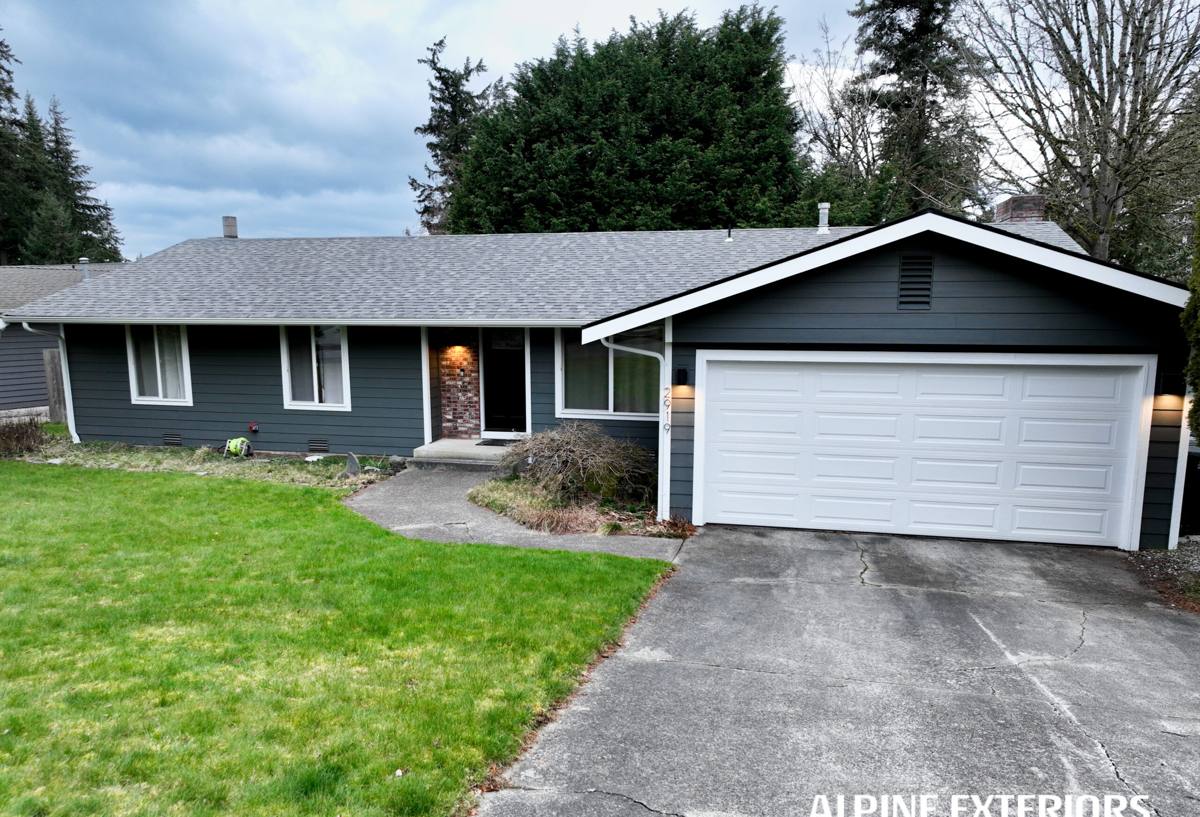
Why We Only Install James Hardie in This Kind of Environment
We install James Hardie fiber cement siding exclusively — not vinyl, not LP SmartSide, not Cemplank or Allura, not primed wood or cedar. That's a deliberate standard, and a marine-adjacent climate like Blaine Harbor's is exactly why we hold to it.
Built for the Pacific Northwest Zone
James Hardie engineers its siding by climate zone, and the Pacific Northwest falls into Hardie's HZ5 zone, formulated for regions with sustained moisture exposure. Fiber cement itself is a composite of cement, sand, and cellulose fibers — it doesn't absorb water the way wood-based products do, and it doesn't corrode or pit like some metal trims exposed to salt air. That matters directly for a harbor-adjacent property where the air itself carries moisture and salt almost year-round.
ColorPlus Finish Instead of Field-Applied Paint
Most Hardie siding on our jobs goes on with a factory-applied ColorPlus finish rather than being painted on site. That finish is baked on in a controlled environment and backed by its own finish warranty, which means it resists the fading and chalking that field-applied paint often shows first, especially on south- and west-facing walls that catch the most weather. In a climate where repainting siding every several years is a real, recurring cost, a factory finish is a meaningful advantage.
Non-Combustible by Composition
Fiber cement doesn't support flame spread the way wood-based sidings can. That's not the primary concern in a wet coastal climate, but it's part of why James Hardie has become the standard we build to everywhere we work, not just in fire-prone areas.
What a Correct Installation Actually Involves
James Hardie siding performs the way it's designed to only when it's installed to Hardie's published specifications. A rushed or generic install is where most premature siding failures start, and it's rarely obvious from the ground once the job is finished. For a Blaine Harbor home, a few details matter more than usual:
- Proper clearances — siding held the specified distance above roof lines, decks, and grade so wind-driven rain and splash-back don't wick moisture into the bottom edge of the boards
- Correct fastener spacing and type — corrosion-resistant fasteners driven at the manufacturer's spacing, which matters more near saltwater where lesser hardware corrodes faster
- Weather-resistant barrier and flashing done right — proper house wrap, window and door flashing, and z-flashing at horizontal trim so water is shed outward, not trapped behind the cladding
- Sealed and caulked joints where Hardie specifies them — and left open where Hardie specifies a gap, since over-caulking can trap moisture just as easily as under-caulking lets it in
- Painted or factory-finished cut edges — every field cut sealed before installation so raw fiber cement edges aren't left exposed to weather
None of this is exotic. It's simply the difference between an installation that meets Hardie's warranty requirements and one that technically "looks done" but starts showing problems — staining, board separation, moisture intrusion — within a few winters.
How Blaine Harbor's Conditions Change the Job
A few things about this specific area shape how we approach a project here versus a more sheltered inland lot:
Salt Air and Metal Components
Trim coil, flashing, and fasteners all need to hold up to salt exposure, not just moisture in general. We spec corrosion-resistant hardware on Blaine Harbor jobs rather than defaulting to whatever's standard for a drier, inland install.
Wind-Driven Rain
Storms coming off the water don't just fall straight down — wind pushes rain sideways into walls, which is exactly the condition Hardie's lap siding and flashing details are engineered to shed. Getting the laps, flashing, and clearances right is less optional here than it would be somewhere with calmer, more vertical rainfall.
A Long Moss and Algae Season
Shaded walls, north-facing elevations, and anywhere runoff collects are prone to moss and green staining for a large part of the year in this climate. Fiber cement doesn't feed mold and mildew growth the way wood-based siding can, but proper grading, gutter placement, and ventilation still matter for keeping walls dry enough to resist buildup in the first place.
James Hardie vs. Other Siding Options in a Marine Climate
| Factor | James Hardie Fiber Cement | Vinyl Siding | Wood or LP-Type Products |
|---|---|---|---|
| Moisture behavior in salt air | Doesn't absorb water; dimensionally stable | Doesn't absorb water, but can warp or become brittle with temperature swings | Wood-based cores are vulnerable to swelling and rot if moisture gets past the coating |
| Finish durability | Factory ColorPlus finish holds color longer than field paint | Color molded in, but fades and chalks over time with no repaint option | Relies on field-applied paint or factory coating; repainting is a recurring cost |
| Fastener/hardware exposure | Standard corrosion-resistant fasteners hold up well | Fasteners largely hidden but panel itself can crack in impact or cold | Depends heavily on coating quality and fastener choice |
| Fire resistance | Non-combustible | Combustible, can melt or deform near heat sources | Combustible |
| Typical warranty structure | Long-term, transferable manufacturer warranty | Varies widely by manufacturer and grade | Varies; often shorter on coating than on the substrate |
This isn't a knock on every alternative product across every use case — it's why, specifically for homes exposed to Blaine Harbor's combination of salt air, wind-driven rain, and moss, we've standardized on one material rather than offering several and letting climate performance be a coin flip.
Our Process for a Blaine Harbor Project
Every job starts with a walk-through of the specific house, not a generic quote. We look at which elevations take the most weather, where moisture has already left marks, how the roofline and gutters direct water around the exterior, and what the existing wall assembly looks like underneath the current siding.
From there, the sequence is straightforward: remove and dispose of the old siding, inspect and repair any sheathing or framing issues that turn up (a common finding on older coastal homes), install a proper weather-resistant barrier and flashing system, then install the Hardie boards or panels to manufacturer spec — clearances, fastening, caulking, and cut-edge sealing included. We walk the finished job with the homeowner before calling it done.
We don't upsell products we don't install. If a home needs additional moisture or ventilation work uncovered during tear-off, we'll explain what we found and why it matters before moving forward — not after the fact.
Maintaining Hardie Siding in This Climate
Fiber cement is low-maintenance compared to wood or repainted surfaces, but "low-maintenance" isn't "no-maintenance," especially this close to the water. A short seasonal checklist keeps a Blaine Harbor installation performing the way it's supposed to:
- Rinse siding periodically to clear salt residue and organic buildup before it stains or feeds moss growth
- Keep gutters and downspouts clear so runoff doesn't sheet down wall surfaces
- Trim back vegetation and tree cover that keeps walls shaded and slow to dry
- Check caulking at trim, windows, and penetrations every year or two and re-seal where it's cracked or pulled away
- Watch for moss or algae on north-facing and shaded walls and address it early with a gentle wash rather than pressure washing, which can force water behind boards
Why a Crew That Already Works Blaine Harbor Matters
Installation quality is the biggest variable in how long any siding job lasts, and that's doubly true in a demanding coastal microclimate. A crew that's already worked houses around Blaine Harbor knows which elevations tend to take the worst of the wind-driven rain, what fastener and flashing choices actually hold up against salt air over years rather than months, and how local moss and moisture patterns should shape gutter and grading decisions — not as theory, but from having seen how homes in this specific area actually weather. That local pattern recognition is what separates a siding job that still looks and performs well after a decade of Whatcom County winters from one that starts showing problems in three or four years.
If you're weighing a siding replacement or repair for a home around Blaine Harbor, we're happy to take a look and walk you through what your house specifically needs — no pressure, no obligation. Reach out for a free estimate using the form below.