 Blaine Siding
 Building New in Blaine Harbor? Windows Are the First Envelope Decision
If you're framing a new home or a major addition near Blaine Harbor, the windows you choose and how they're installed will do more to determine long-term performance than almost any other single decision on the job. Once siding, trim, and interior finish go on, the window opening is buried — any mistake in flashing, fastening, or frame selection is locked in for the life of the house. In a waterfront community exposed to salt air off the Strait of Georgia and Semiahmoo Bay, that margin for error is smaller than it is inland.
This page covers what new-construction windows specifically need to get right in the Blaine Harbor area, what a correct install looks like from the framing stage forward, and why working with a crew that already knows this stretch of Whatcom County coastline matters more here than it would in a drier, more sheltered part of the state.
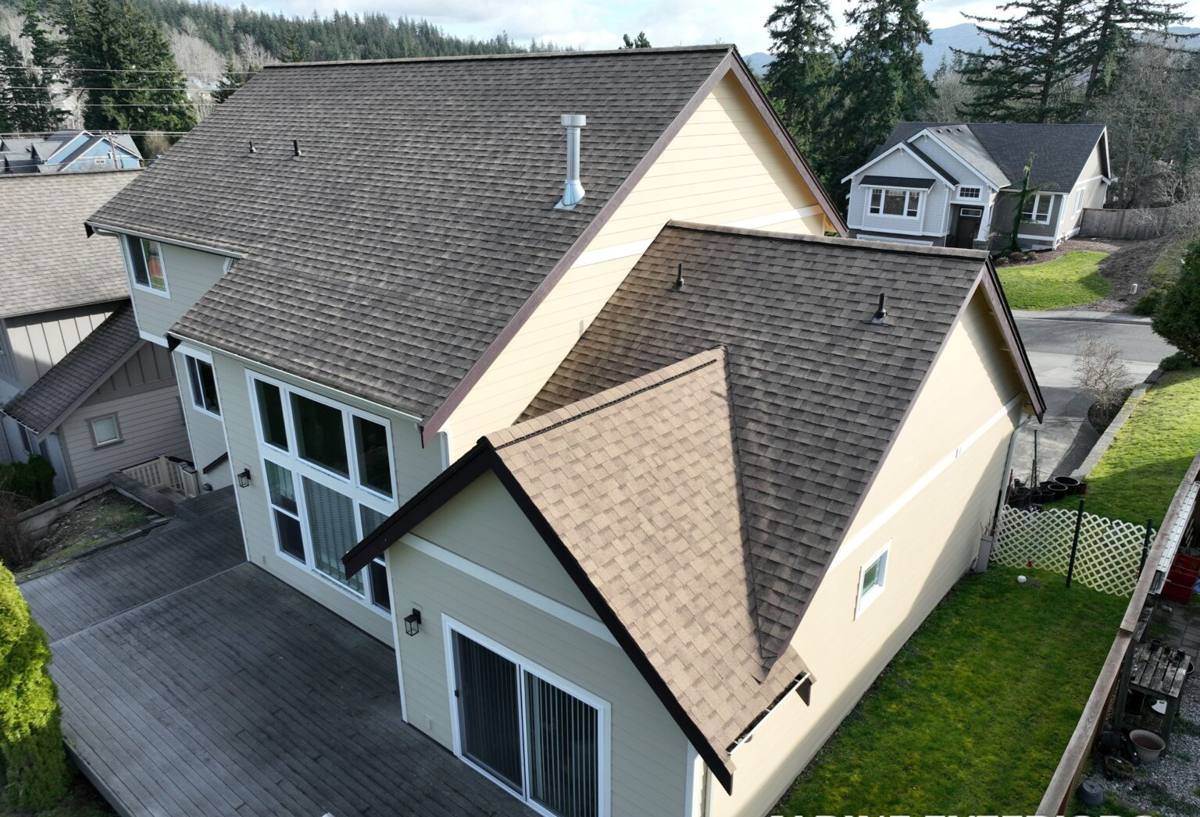
What Blaine Harbor's Climate Demands From New-Construction Windows
Blaine Harbor sits right on the water, at the northwest corner of Whatcom County. That location brings three specific stresses to bear on windows and the framing around them, and each one has to be designed for at the rough-opening stage, not patched later.
Salt Air and Corrosion
Airborne salt from the harbor and bay settles on everything nearby, including window hardware, fasteners, and metal flashing. Over years, untreated or poorly rated hardware corrodes faster here than it would even a few miles inland. This affects which frame materials and fastener types make sense and how exposed metal components should be detailed or covered.
Wind-Driven Rain Off the Strait
Storms coming off the water don't just drop rain straight down — they push it sideways into the wall assembly under wind pressure. That's a different load than a typical inland rain event, and it means water management around a new-construction window (sill pans, flashing laps, sealant placement) has to assume rain will be forced sideways and upward, not just gravity-fed downward.
A Long, Damp Moss Season
Whatcom County's extended wet season keeps north- and shade-facing wall sections damp for months at a time. Moss and algae growth on siding and trim near window openings isn't just cosmetic — sustained moisture at a poorly sealed window edge is exactly where rot gets started. New-construction detailing needs to assume the wall will stay wet longer than it would in a sunnier climate, not shorter.
New-Construction Windows vs. Retrofit: Why the Distinction Matters
"New-construction window" isn't a marketing term — it describes a specific type of window with a nailing flange built into the frame, designed to be installed into an open, unfinished rough opening before siding and exterior trim go on. That's different from a retrofit or pocket window, which is built to slide into an existing frame during a remodel without disturbing the exterior wall. Using the wrong type, or treating a new build like a retrofit job to save a step, is one of the more common ways water problems get built into a house from day one.
| Factor | New-Construction Window | Retrofit / Pocket Window |
|---|---|---|
| Best used for | Open rough openings, new builds, additions | Existing openings during a remodel, frame intact |
| Flashing access | Full access to sheathing, house wrap, and sill before closing in | Limited — relies on the existing frame's condition |
| Water management | Built from the studs out — sill pan, flashing, WRB integration all sequenced together | Depends heavily on the old frame's remaining integrity |
| Long-term risk in coastal wind-driven rain | Lower, when sequencing is followed correctly | Higher if used where a new-construction opening is appropriate |
For a new build or addition in Blaine Harbor, there's really only one correct choice, and it's the new-construction type installed while the wall is still open. The value of doing it right at this stage is that every water-management layer — sheathing, weather-resistive barrier, flashing, and window — gets integrated in the correct order, instead of being pieced together around an existing gap.
What a Correct New-Construction Install Actually Involves
A window that looks fine from the curb can still be set up to fail if the sequence behind it was rushed. On a coastal job like this, we treat the install as a water-management system, not just a frame going into a hole. That means:
- Rough opening checked for square, level, and correct size before the window ever arrives on site
- Sill pan flashing installed first, sloped to shed any water that gets past the window back to the exterior
- Weather-resistive barrier (house wrap) cut and integrated in the correct shingle-lap order — top layer over bottom, always — so water drains down and out, never in
- Flashing tape or metal flashing at head, jambs, and sill sequenced so each layer overlaps the one below it
- Window set plumb, level, and square, with shims at the correct load points so the frame isn't stressed once fasteners go in
- Fasteners rated for coastal/corrosive exposure, placed per the window manufacturer's schedule — not just "enough to hold it"
- Backer rod and exterior-grade sealant at the final trim line, sized and placed to allow the assembly to move without cracking the seal
- Interior air seal completed separately from the exterior weatherproofing, so the assembly manages both air and water correctly
Skip or shortcut any one of these steps and the window can still pass a casual look on install day. The failures — staining, soft trim, rot at the sill — usually don't show up for a year or two, by which point the siding is already on and the fix is far more expensive than getting it right the first time.
Frame Materials That Hold Up Near Blaine Harbor's Salt Air
Frame material matters more here than it would inland, mainly because of how each material handles constant moisture and salt exposure over decades, not just its upfront cost.
| Frame Material | Salt Air / Moisture Behavior | Maintenance | General Cost Tier |
|---|---|---|---|
| Vinyl | Won't corrode or rot; performs well in coastal air when properly installed | Low — occasional cleaning | Entry to mid |
| Fiberglass | Very stable dimensionally, strong resistance to moisture and salt exposure, holds paint well if colored | Low | Mid to upper |
| Wood-clad | Attractive interior wood look, but the exterior cladding and any exposed joints need real attention in a wet, salty climate | Higher — exterior finish and seals need periodic inspection | Upper |
| Bare aluminum | Prone to corrosion and condensation issues in this climate over time | Higher | Varies |
We don't push one material on every job — the right call depends on your budget, the home's design, and how much upkeep you want to take on down the road. What we won't do is set a frame material into a Blaine Harbor rough opening without being straight with you about how it'll hold up in salt air over ten or twenty years, not just how it looks on day one.
Our Process for New Builds in Blaine Harbor
- Plan review and coordination. We work from your builder's or architect's window schedule, checking rough opening sizes and egress requirements before anything is ordered.
- Site walk with your framer or GC. We confirm rough openings are square and correctly sized while the wall is still accessible, catching framing issues before they become window issues.
- Material selection. We go through frame material, glass package, and hardware options against your budget and this site's coastal exposure specifically.
- Sequenced install. Sill pan, WRB integration, flashing, window set, and sealant — done in order, not compressed to save a day.
- Documentation and walkthrough. We walk the completed openings with you or your builder before siding closes them in, since that's the last point anything can be adjusted without tear-out.
Why a Crew That Already Works Blaine Harbor Matters
New-construction window work isn't just about the window itself — it's about how well the install coordinates with everyone else on a build. A crew that already works in Blaine and the surrounding Whatcom County coastline knows what wind-driven rain off the water actually does to a wall assembly, because we've opened up wall sections and seen the results of both correct and rushed sequencing firsthand. That's different from working off a manual alone.
There's also a practical coordination benefit. New-construction window installation has to happen at exactly the right point in a build — after sheathing and WRB, before siding — and that window of time is often tight. A crew that's used to scheduling around framers, siding crews, and Whatcom County inspection timelines on other local jobs is easier to slot into your build schedule without creating delays for your general contractor.
Finally, salt-air and marine-exposure detailing isn't something every installer thinks about by default, because most of Washington isn't sitting directly on a harbor. Getting fastener selection, flashing metal choice, and sealant type right for this specific exposure comes from having done it here before, not from a generic install checklist.
Cost Factors to Plan For
Every new build is different, and we'll give you real numbers after seeing your plans — but these are the main factors that move the price on a new-construction window package in this area, so you can budget with a realistic range in mind rather than a guess.
| Factor | How It Affects Cost |
|---|---|
| Number and size of openings | More and larger windows mean more material and labor, straightforwardly |
| Frame material | Vinyl is typically the most budget-friendly; fiberglass and wood-clad run higher |
| Glass package | Low-E coatings and gas fills add cost but improve comfort and energy performance for this climate |
| Wind/water exposure of the specific elevation | Sides of the home facing the water or prevailing storm direction may warrant extra flashing detail |
| Site access and timing | Coordinating tightly with your framing schedule keeps labor efficient; delays or rework add cost |
| Custom shapes or sizes | Non-standard openings cost more than stock sizes across any material |
Ready to Talk About Your Blaine Harbor Build?
Whether you're at the framing stage now or still finalizing plans with your builder, it's worth getting a window contractor's eyes on the project early — the earlier we're involved, the fewer surprises show up once the wall is closed in. Reach out for a free, no-pressure estimate using the form below, and we'll walk through what a correct new-construction window package looks like for your specific home in Blaine Harbor.