 Blaine Siding
 Blaine Harbor Takes a Different Kind of Weather Than Most of Whatcom County
Homes along Blaine Harbor sit right where wind off the water meets a roof, and that combination wears differently than it does even a few miles inland. Salt-laden air corrodes exposed metal faster, driving rain off the Strait finds every gap in flashing and underlayment, and the long gray stretch of fall and winter keeps roofs wet for weeks at a time. Add in a moss season that runs longer here than in drier parts of the state, and you've got a roof that's under more or less constant low-grade stress even in years without a major storm.
When a real storm does come through — a windstorm off the water, a heavy atmospheric river event, or just weeks of sustained driving rain — that background stress is what turns a minor problem into a leak. A roof that was already holding moisture in its decking or losing granules off worn shingles doesn't have much margin left when wind gets under a tab or rain gets pushed sideways under a flashing lap. That's the pattern we see over and over on Blaine Harbor storm calls: the storm didn't cause the whole problem, it exposed one that was already building.
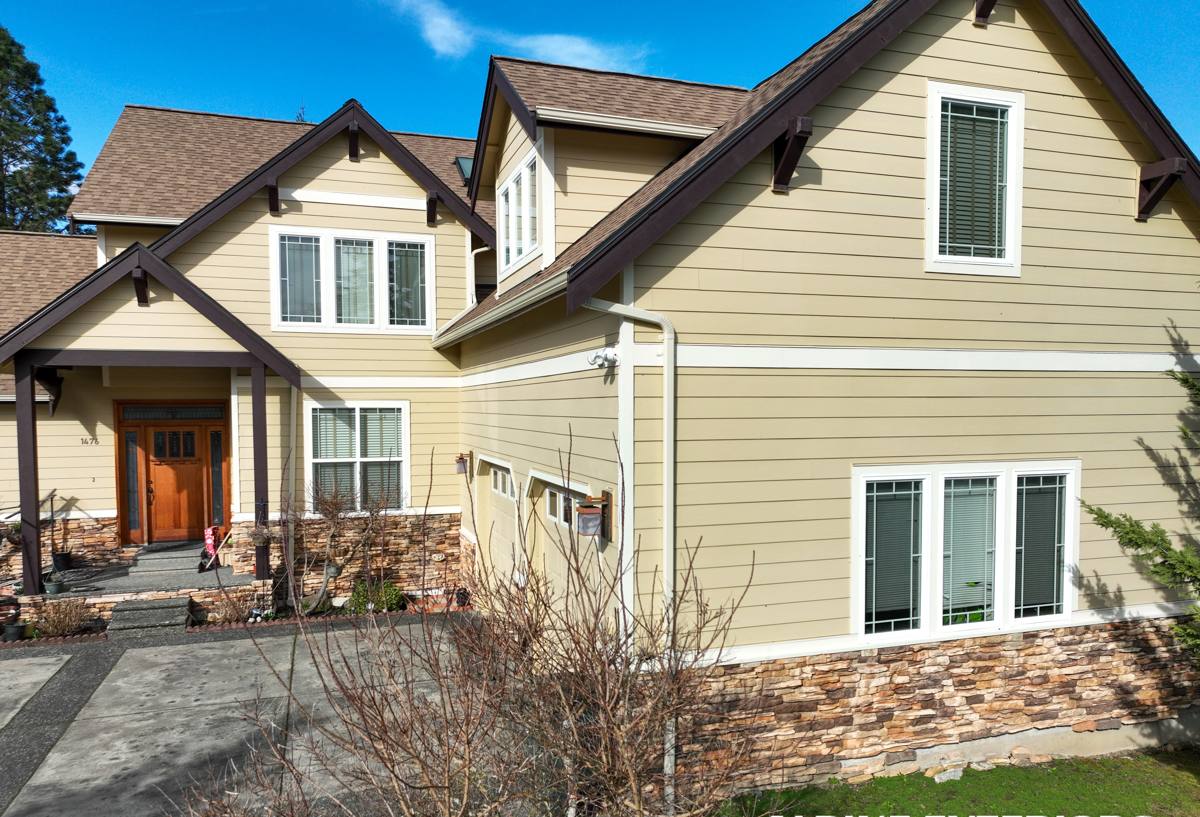
What Storm Damage Actually Looks Like on a Blaine Harbor Roof
Wind Damage
Sustained wind off the water lifts shingle tabs and works fasteners loose over time, even when nothing tears off outright. The telltale sign is a shingle that looks fine from the ground but flexes or lifts at the edge when you check it up close. Once a tab has been lifted and re-seated by wind a few times, its seal is compromised even if it looks intact.
Driving Rain Intrusion
Rain that comes in sideways, which is common with harbor-facing exposures, doesn't behave like rain falling straight down. It gets pushed up under shingle laps, around vent boots, and along flashing edges that would shed a normal rain just fine. This is why leaks after a storm often show up at flashing points — chimneys, skylights, wall-to-roof transitions — rather than in the open field of the roof.
Moss and Trapped Moisture
Long wet seasons let moss get a foothold on north-facing slopes and shaded areas. Moss holds water against the roofing material far longer than the material was designed to tolerate, and it works its way under shingle edges, lifting them slightly and creating a path for wind-driven rain. A storm hitting a moss-affected roof tends to cause more damage than the same storm hitting a clean one.
Salt Air Corrosion
Fasteners, flashing, and metal drip edge exposed to salt-laden air corrode faster than the same materials would inland. Corroded fasteners back out or lose their grip, and corroded flashing can develop pinholes that let water through long before it looks visibly bad from a distance.
What a Correct Storm Damage Repair Actually Involves
A proper storm repair isn't just replacing whatever's visibly torn or missing. It means checking the areas around the visible damage for the secondary effects listed above — lifted tabs nearby, saturated decking under a leak point, corroded fasteners at flashing lines — because storms rarely damage just one isolated spot.
- Confirm the decking underneath is dry and sound before any new roofing goes down over it
- Replace damaged shingles or roofing material in full sections, matching the existing coverage where possible
- Inspect and re-seal or replace flashing at every penetration and transition near the damage — chimneys, vents, skylights, wall intersections
- Check fasteners in the surrounding area for wind-loosening or salt corrosion, not just at the point of obvious damage
- Clear moss and debris from the repair area and treat as needed so the new work isn't undermined immediately
- Confirm attic or roof ventilation is functioning, since trapped moisture under a repair defeats the point of making it
Skipping any of these steps is how a repair holds for one season and fails the next. A patch over damp decking, or new shingles installed without checking the flashing two feet away, is a repair that looks finished but isn't.
Our Process for Blaine Harbor Storm Calls
1. Inspection and Documentation
We start with a full inspection of the affected area and the roof generally, not just the spot that's leaking. We document what we find with photos, which matters if you're filing an insurance claim — clear documentation of storm-caused damage versus pre-existing wear helps the claim move faster and more accurately.
2. A Straight Answer on Scope
We tell you plainly whether this is a targeted repair or whether the damage points to a bigger issue worth addressing now rather than patching around. We're not going to talk you into a full replacement you don't need, and we're not going to undersell a repair that's masking a decking problem.
3. The Repair Itself
We work the repair area and the surrounding zone together — flashing, fasteners, and decking get checked as part of the job, not treated as separate add-ons discovered later.
4. Cleanup and Follow-Through
Storm debris and any removed material get cleared from your property. If the repair was for an insurance claim, we provide documentation you can hand directly to your adjuster.
Repair or Replace: What Actually Drives the Decision
Not every storm-damaged roof needs to be replaced, and not every roof that looks fine after a storm is actually fine underneath. Here's what we weigh when giving you a straight recommendation.
| Factor | Leans Toward Repair | Leans Toward Replacement |
|---|---|---|
| Age of existing roof | Roof is under 10-12 years old | Roof is near or past its expected service life |
| Extent of damage | Damage is localized to one area | Damage is spread across multiple slopes |
| Decking condition | Decking is dry and sound | Decking shows rot or repeated saturation |
| Storm history | First significant damage in years | Repeated storm damage in the same spots |
| Underlying material condition | Shingles elsewhere are still granulated and flat | Shingles elsewhere are curling, brittle, or moss-covered |
The honest answer for most storm calls on Blaine Harbor homes is a repair — but we'll tell you directly if what we find points the other way, and why.
Materials That Hold Up to Harbor Exposure
Given the salt air and constant moisture cycling here, we lean toward corrosion-resistant fasteners and flashing rather than standard-grade hardware, even when it costs a little more up front. It's a maintenance trade-off worth making: standard fasteners and thin-gauge flashing can start showing corrosion within a few years in a harbor-exposed setting, which just means paying for the same repair twice. We apply the same standard to underlayment choice near the coast — a higher-quality synthetic or self-adhered underlayment at vulnerable points like valleys and flashing lines gives you a real moisture barrier if wind-driven rain does get past the surface layer, rather than relying on the surface layer alone to do all the work.
A Homeowner's Post-Storm Checklist
After any significant wind or rain event, a quick check from the ground can tell you whether it's worth calling someone out sooner rather than later.
- Look for shingle tabs that appear lifted, curled, or missing from the ground or a safe vantage point
- Check gutters and downspouts for an unusual amount of granules or shingle fragments
- Look inside the attic (if accessible) for damp spots, staining, or daylight coming through
- Check ceilings in upper rooms for new staining or soft spots after heavy rain
- Note any debris impact points — branches, blown debris — even if there's no visible hole
- Don't climb onto the roof yourself to inspect; storm-loosened material shifts underfoot in ways that aren't obvious from the ground
Why a Crew That Already Works Blaine Harbor Matters
A roofer who works this specific stretch of Whatcom County regularly already knows which slope orientations take the worst of the wind here, where moss tends to build fastest, and what flashing details tend to fail first under salt exposure and driving rain. That's not something a crew coming from farther inland necessarily accounts for on their first visit. It also means faster response when a storm hits and a lot of roofs need attention at once — we're not driving in from across the region to reach you.
We stand behind our repair work and use materials suited to this specific exposure, not just whatever's standard everywhere else in the state. That's the difference between a repair that's built for Blaine Harbor conditions and one that's built for average conditions and hoping for the best.
If you've had storm damage or just want a second set of eyes on your roof after a rough season, we're glad to come take a look. Use the form below to request a free, no-pressure estimate — there's no obligation, and we'll give you a straight read on what your roof actually needs.