 Blaine Siding
 Board & Batten Siding, Done Right for Nooksack
Nooksack sits inland from Blaine but shares the same Whatcom County weather pattern that wears down siding faster than most homeowners expect: salt-tinged marine air pushing in off the Strait, long stretches of driving rain through fall and winter, and a moss season that can run eight months or more on shaded north and east walls. Board and batten is one of the most requested siding profiles out here because it reads as a clean, modern-farmhouse look on new builds and remodels alike — but the profile only holds up if the material underneath it and the install behind it are built for this specific climate. We install board and batten exclusively in James Hardie fiber cement, and this page walks through what that actually means for a Nooksack home.
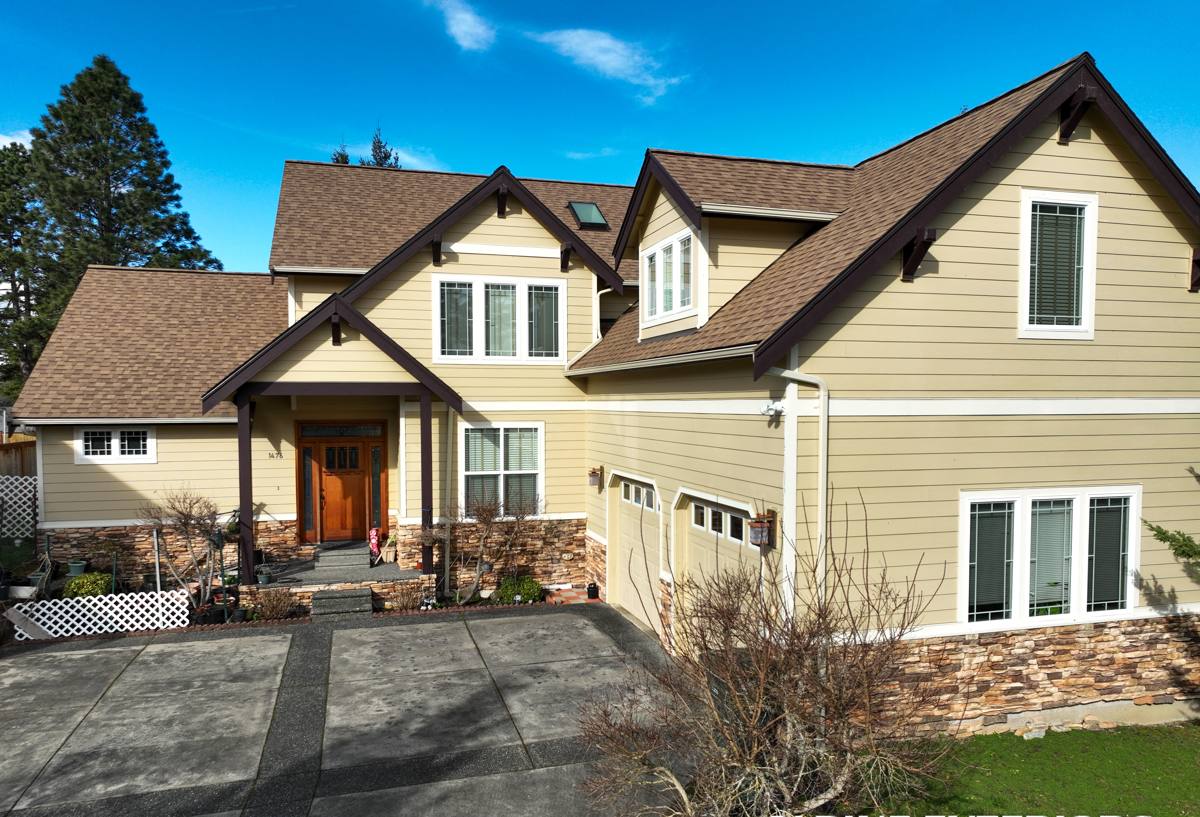
Why Board & Batten Struggles in This Climate When Done Wrong
The vertical board-and-batten look depends on narrow strips (the battens) covering the seams between wider panels or boards. That seam is the weak point. On lesser materials — primed wood, engineered wood panels, or thin vinyl battens — water finds its way behind the batten strip through capillary action or wind-driven rain, then has nowhere to dry out because the battens trap moisture against the wall. Add Whatcom County's near-constant humidity and shaded tree cover common around Nooksack, and you get the classic failure pattern: soft spots at the bottom of boards, black streaking under battens, and moss creeping up from grade before the siding is even ten years old.
None of that is unique to board and batten as a style — it's a material and installation problem. The style itself is sound. It just demands a product that doesn't absorb water, doesn't feed moss and mildew, and holds its fastener lines tight through decades of wet-dry cycling.
What Salt Air and Driving Rain Do Specifically
- Salt-laden marine air accelerates corrosion on exposed fasteners and metal trim — cheap or under-driven fasteners rust and streak the face of the siding.
- Driving rain off Georgia Strait weather systems hits vertical seams horizontally, not just falling straight down, which is exactly the condition board-and-batten seams have to resist.
- Prolonged dampness plus shade (common on tree-lined Nooksack lots) is the recipe moss and algae need — porous or wood-based sidings give them something to grip.
Why We Install James Hardie for This Profile
We install James Hardie fiber cement exclusively — no LP SmartSide, no vinyl, no Cemplank or Allura, no primed spruce or cedar. For board and batten specifically, that means HardiePanel vertical siding with Hardie's trim boards used as the battens, all finished in factory-applied ColorPlus. A few reasons this combination matters for a Nooksack home:
- Fiber cement doesn't feed rot. It's cement, sand, and cellulose fiber — there's no organic wood sugar for moisture and mildew to break down over time the way there is with wood-based or engineered wood panels.
- ColorPlus finish is baked on at the factory, not brushed on site, so the color coat resists the fading and chalking that Pacific Northwest UV and salt air cause on field-painted trim.
- Non-combustible. Fiber cement doesn't contribute fuel to a fire, which matters for insurance conversations as much as safety.
- Engineered for this climate. Hardie makes climate-specific HZ5 product for the Pacific Northwest's wet-freeze cycle, rather than a one-size-fits-all national spec.
We've said no to installing board and batten in cheaper materials on Nooksack-area homes, and it's not because those products are junk everywhere — it's that this specific look, on this specific coastline, punishes anything that can't shed water at every seam for 30+ years without maintenance.
What a Correct Board & Batten Install Actually Involves
The style looks simple from the curb — vertical panels, battens over the seams — but the details that keep it watertight for decades are mostly invisible once the job is done.
Behind the Siding
- A weather-resistant barrier (WRB) installed shingle-style so every layer drains down and out, never trapping water against the sheathing.
- Rainscreen furring strips or a drainable house wrap in high-exposure areas, giving any moisture that does get behind the panel a path to drain and air to dry.
- Properly flashed window and door openings — this is where most siding failures actually start, board and batten included.
The Panel and Batten Work Itself
- Correct fastener spacing and depth per Hardie's published fastening schedule — over-driven or under-driven nails are the single most common defect we find on other crews' work.
- Batten placement over panel seams with the manufacturer-specified gap and caulk joint, not just nailed flush.
- Proper clearance at grade, decks, and patios — fiber cement lasts, but only if it's not sitting in standing water or buried in soil/mulch contact.
- Rust-resistant, climate-appropriate fasteners and flashing metal, given the salt content in the air this close to the water.
Our Process for a Nooksack Job
1. On-Site Assessment
We walk the home, check existing siding and sheathing condition (especially on shaded and north-facing walls where moss and moisture linger longest), and look at drainage, grade, and roof overhang — all of which affect how the new siding will perform, not just how it will look.
2. Product and Layout Plan
We spec panel size, batten spacing, and trim details for the specific home, and walk the homeowner through ColorPlus color options and the difference between panel-and-batten versus other Hardie profiles, so there are no surprises once install starts.
3. Tear-Off and Prep
Old siding comes off, sheathing gets inspected and repaired where needed, and the WRB and rainscreen assembly go in before a single piece of Hardie touches the wall.
4. Installation to Spec
Panels, battens, and trim go up following James Hardie's fastening and clearance requirements — not a generalized "close enough" install. This is also where a crew's local experience shows: crews used to drier climates sometimes skip rainscreen details that matter far less inland than they do on the water in Whatcom County.
5. Final Walkthrough
We review the finished work with the homeowner, including caulking, flashing, and clearance points, before calling the job complete.
Why a Crew That Already Works Nooksack Matters
Siding installers who mostly work drier inland regions or who rotate through a wide service area without a strong Whatcom County track record often underbuild the moisture-management details — because in a drier climate, those shortcuts don't show up as fast. A crew that's actually worked Nooksack and the greater Blaine area knows which walls take the worst of the driving rain, where moss pressure is highest, and how much clearance local grade and landscaping realistically demand. That local pattern recognition is the difference between a board-and-batten job that still looks sharp in year 15 and one that's already streaking and softening by year 8.
Cost Factors for Board & Batten in This Area
Board and batten typically costs somewhat more than a straight lap siding install because of the extra batten material and labor to fit and fasten them correctly. Exact pricing depends on the home's size, wall condition, and complexity, but the factors below are what actually move the number.
| Factor | Why It Affects Cost |
|---|---|
| Existing siding removal | Tear-off, disposal, and any sheathing repair found underneath |
| Wall complexity | Dormers, gables, and multiple wall planes add cutting and batten fitting time |
| Rainscreen assembly | Furring strips and drainable wrap add material and install time but pay off in longevity here |
| Trim and batten density | Tighter batten spacing and wider trim boards use more material |
| Color | Standard ColorPlus palette vs. premium or custom-match colors |
| Access | Multi-story walls, steep grade, or tight lot lines affect labor and equipment needs |
What to Check Before You Hire Anyone for This Job
- Ask specifically whether they install a rainscreen or drainable WRB behind board and batten — not just "house wrap."
- Confirm they're a James Hardie-focused installer, not a general contractor treating fiber cement like any other siding.
- Ask how they handle batten seams and caulking, and get it in writing what fastener schedule they follow.
- Get references or examples of board-and-batten work specifically, not just lap siding — the details differ.
- Confirm who handles the manufacturer warranty registration and what it covers versus the labor warranty.
If you're weighing board and batten for a Nooksack-area home, we're glad to walk the property, look at what's there now, and give you a straight read on what the job actually needs — no pressure, no upsell. The form below gets you a free estimate from a crew that already knows this stretch of Whatcom County weather.