 Blaine Siding
 Why Roofs in California Creek Take a Different Kind of Beating
California Creek sits close enough to the water and far enough into Whatcom County's tree cover that roofs here deal with two problems at once instead of one. Homes nearer the shoreline pick up salt-laden air that speeds up corrosion on fasteners, flashing, and metal components. Homes tucked under fir and cedar canopy get less direct sun, which means roof surfaces stay damp longer after every rain and give moss and algae a real head start. Add in the driving, wind-pushed rain that comes through this part of the Pacific Northwest for much of the year, and you've got a roofing environment that's harder on materials than a dry-climate roof of the same age would ever see.
None of that means a roof here is doomed to fail early. It means the replacement has to be built with those specific conditions in mind, not installed the same way you'd install one in a drier, more open part of the state.
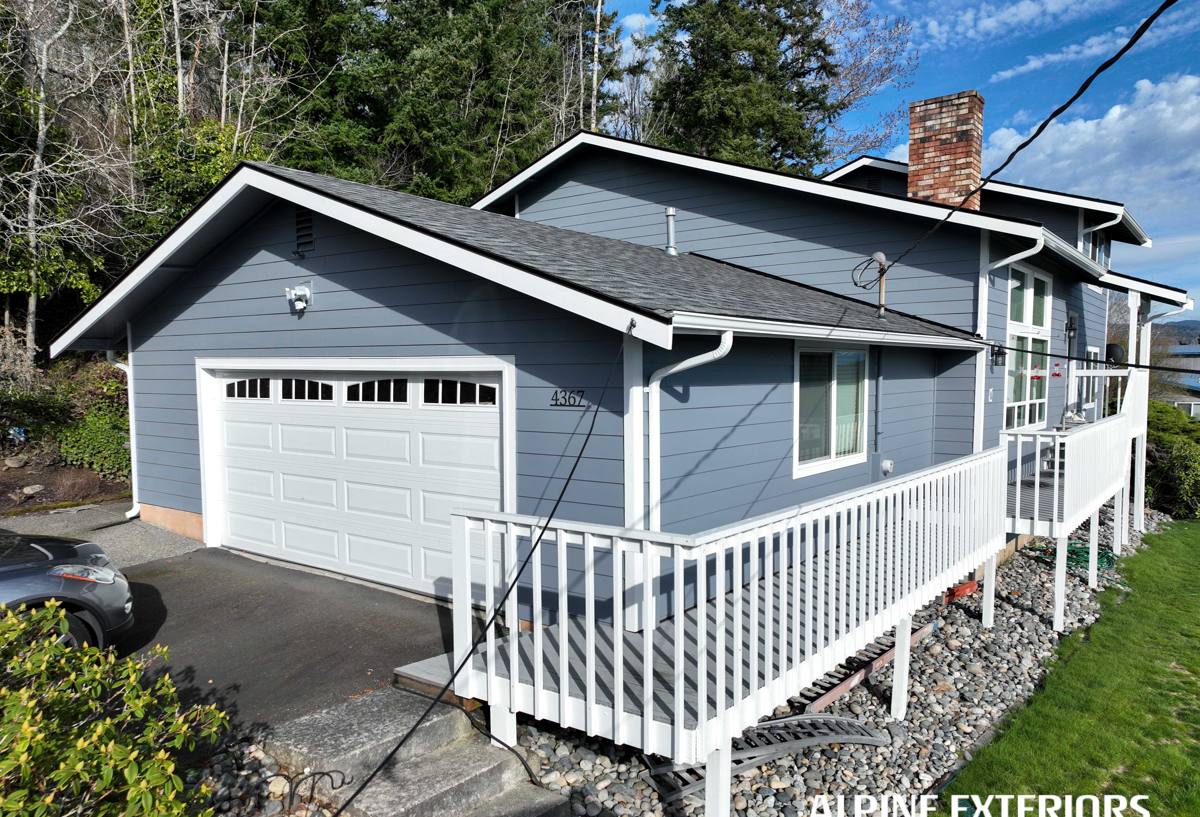
Signs a California Creek Roof Has Reached the End of Its Life
Not every roof problem calls for a full replacement. Part of doing this job honestly is telling a homeowner when a repair will genuinely hold and when it's just delaying a bigger cost. A few signs point clearly toward replacement rather than patching.
Moss That Keeps Coming Back After Cleaning
Light surface moss on a healthy roof is a maintenance issue. Moss that regrows heavily within a season of being cleaned, or that's visibly lifting shingle edges and holding moisture against the deck, usually means the roof has lost enough of its protective granule layer that it can't shed water and dry out the way it used to.
Granule Loss and Shingle Curling
Asphalt shingles shed granules as they age; you'll often see them collecting in gutters or downspouts. Combined with curling, cracking, or shingles that look brittle rather than flexible, this is a sign the material has aged out, even if there's no active leak yet.
Soft Decking, Staining, or Leaks at Valleys and Flashing
Persistent damp climates are hard on roof decking, especially where moss has been trapping moisture for years. Soft spots underfoot, interior ceiling staining, or repeated leaks around valleys, chimneys, and vent flashing usually mean the problem has moved past the shingles and into the structure underneath.
What a Proper Roof Replacement Involves in This Climate
A roof replacement done right for California Creek isn't just swapping old shingles for new ones on top of the same deck. It's a handful of decisions, each one aimed at the specific stress this area puts on a roof.
Full Tear-Off and Decking Inspection
We remove the existing roofing down to the deck rather than layering over it. That's the only way to actually see the condition of the sheathing underneath — soft, delaminated, or water-stained decking gets replaced before anything new goes down. Roofing over a compromised deck just hides the problem for a few more years.
Underlayment Built for Wind-Driven Rain
Given how often rain here comes sideways rather than straight down, underlayment choice matters more than it would in a calmer climate. We use synthetic or self-adhering underlayment at vulnerable areas — eaves, valleys, and around penetrations — specifically because standard felt performs worse against wind-driven moisture over time.
Ventilation to Fight Moss and Trapped Moisture
A roof that can't breathe stays damp longer, and damp roofs grow moss faster. Proper intake and exhaust ventilation lets warm, moist air escape the attic instead of condensing against the underside of the deck, which helps the roof surface dry out between rain events instead of staying saturated for days.
Flashing and Edge Details
Most roof leaks trace back to flashing, not the field of the roof itself. Chimneys, skylights, valleys, and roof-to-wall transitions all get new flashing during a replacement, sized and installed to shed water rather than just caulked over old metal.
Choosing a Roofing Material That Holds Up Here
There's no single "best" roofing material for every home in California Creek — the right choice depends on how much tree cover the lot has, how close it sits to the water, and what the homeowner wants to maintain over time. Here's how the common options compare against this area's specific conditions.
| Material | Moss/Moisture Resistance | Salt Air Durability | Ongoing Maintenance |
|---|---|---|---|
| Architectural asphalt shingle | Good, especially with algae-resistant granules | Solid with corrosion-resistant fasteners and flashing | Periodic moss treatment and gutter clearing |
| Standing seam metal | Excellent — sheds water fast, little surface for moss to grip | Requires marine-grade coatings and fasteners near the water | Low; occasional inspection of seams and fasteners |
| Cedar shake | Poor without diligent upkeep — holds moisture and feeds moss/rot | Weathers naturally but needs regular treatment near salt air | High; regular cleaning and treatment expected |
| Synthetic/composite shingle | Very good — engineered to resist moisture absorption | Strong, with less corrosion risk than natural wood | Low to moderate |
We don't push one material on every roof. A shaded, tree-heavy lot near the creek is a different conversation than an open lot with more sun exposure closer to Blaine proper. What we won't do is install a product where the maintenance burden or moisture behavior is a poor match for the site, just because it's cheaper up front — that's a decision that costs the homeowner more down the road.
Cost Factors Worth Understanding Before You Get Quotes
Pricing on a roof replacement depends on enough variables that any number given without a real inspection is a guess. What we can tell you is what actually drives the cost up or down, so you can ask informed questions when comparing estimates:
- Total roof size and number of facets, valleys, and penetrations
- Roof pitch — steeper roofs take longer and require more safety equipment
- How much decking needs to be replaced once the old roofing comes off
- Material choice, from standard architectural shingle up through metal
- Whether existing ventilation needs to be added to or corrected
- Tree cover and site access, which affect setup, cleanup, and debris removal
- Permit and inspection requirements through Whatcom County
A fair estimate walks through each of these with you rather than handing over a flat number sight unseen.
Our Process, Start to Finish
- On-site inspection. We walk the roof and attic, check decking condition, ventilation, and flashing, and take note of anything specific to the lot — shade, moss buildup, drainage patterns.
- Written estimate. You get a clear breakdown of scope, material options, and what's driving the price, not a vague lump sum.
- Scheduling around weather. We plan tear-off and installation for realistic dry windows rather than gambling on an open deck during a storm system.
- Tear-off and decking repair. Old roofing comes off completely; any compromised sheathing is replaced before new materials go down.
- Underlayment, material installation, and flashing. Installed in the sequence and detail level appropriate for wind-driven rain, not a generic dry-climate install.
- Ventilation check and correction. Intake and exhaust ventilation confirmed or upgraded as part of the job, not treated as an afterthought.
- Cleanup and magnetic sweep. Debris and stray fasteners cleared from the yard and driveway before we consider the job done.
- Final walkthrough. We go over the finished roof with you directly and answer any questions before wrapping up.
Why Local Experience in California Creek Matters
A crew that only shows up in this specific pocket of Whatcom County occasionally will treat every roof the same way. A crew that works California Creek regularly knows which lots hold moisture longest under tree cover, which areas catch the harshest wind-driven rain off the water, and how to sequence a job around this area's weather rather than losing days to it. That familiarity shows up in fewer surprises mid-project and a roof that's built for the conditions it will actually face, not a textbook average.
It also means knowing the permitting and inspection process through Whatcom County well enough that it doesn't slow the job down, and being upfront when a roof genuinely just needs a repair rather than a full replacement — even though that's the less profitable answer for us in the short term.
Keeping a New Roof Performing After Installation
A correctly installed roof still benefits from basic upkeep, especially in a moss-prone, tree-shaded area like this one. A short list of habits goes a long way toward protecting the investment:
- Clear gutters and downspouts at least twice a year so water actually drains instead of backing up under the roof edge
- Address light moss growth early with an appropriate treatment before it spreads and lifts shingle edges
- Trim back overhanging branches to reduce shade, debris buildup, and physical abrasion on the roof surface
- Have the roof looked at after major storms, particularly ones with high wind, to catch any lifted flashing or displaced material early
- Schedule a periodic inspection every few years even if nothing looks obviously wrong
None of this requires a big time investment, but skipping it is one of the most common reasons a well-installed roof underperforms its expected lifespan in a climate like this one.
Get a Straight Answer About Your Roof
If your California Creek home is showing moss that won't quit, aging shingles, or signs of a leak, the first step is a straightforward, no-pressure look at what's actually going on — not a sales pitch. Fill out the form below for a free estimate, and we'll give you an honest read on whether you're looking at a repair or a full replacement, and what it would take to get it right for this area.