 Blaine Siding
 Why Cherry Point's Location Is Hard on a Shingle Roof
Cherry Point sits right up against the water in Whatcom County, and that location cuts both ways. It's a beautiful place to own a home, but the roof over that home is working harder than a roof twenty miles inland. Salt-laden air moves in off the Strait of Georgia almost constantly, wind-driven rain hits roof edges and valleys sideways instead of straight down, and the shade, humidity, and mild winters that make this area green also make it one of the better environments in the county for moss to take hold on a roof. None of that means asphalt shingles are the wrong choice here — they're still the most practical, cost-effective roofing material for most Cherry Point homes. It means the installation and the maintenance plan have to account for what this specific location does to a roof over time.
Salt Air and Metal Components
Asphalt shingles themselves handle salt exposure reasonably well, but the metal parts of a roofing system — flashing, drip edge, nail heads, vent housings, gutters — are where salt air does its damage. Standard galvanized fasteners and light-gauge flashing can start showing corrosion years before an equivalent roof would inland. On a Cherry Point roof, the material spec for anything metal matters as much as the shingle brand.
Driving Rain and Underlayment
Wind off the water doesn't let rain fall straight down onto a roof — it pushes water sideways and up under shingle tabs, especially at eaves, rakes, and low-slope sections. A roof that would be fine with minimal underlayment in a calmer inland setting needs a more complete water-resistant barrier here, particularly at the vulnerable edges.
The Long Moss Season
North-facing slopes, shaded sections under tree cover, and roofs that don't get much direct sun through the fall and winter are prone to moss and algae growth for a good stretch of the year in this part of Whatcom County. Moss isn't just cosmetic — it holds moisture against the shingle surface, works its way under tabs, and can lift shingles enough to let water in underneath.
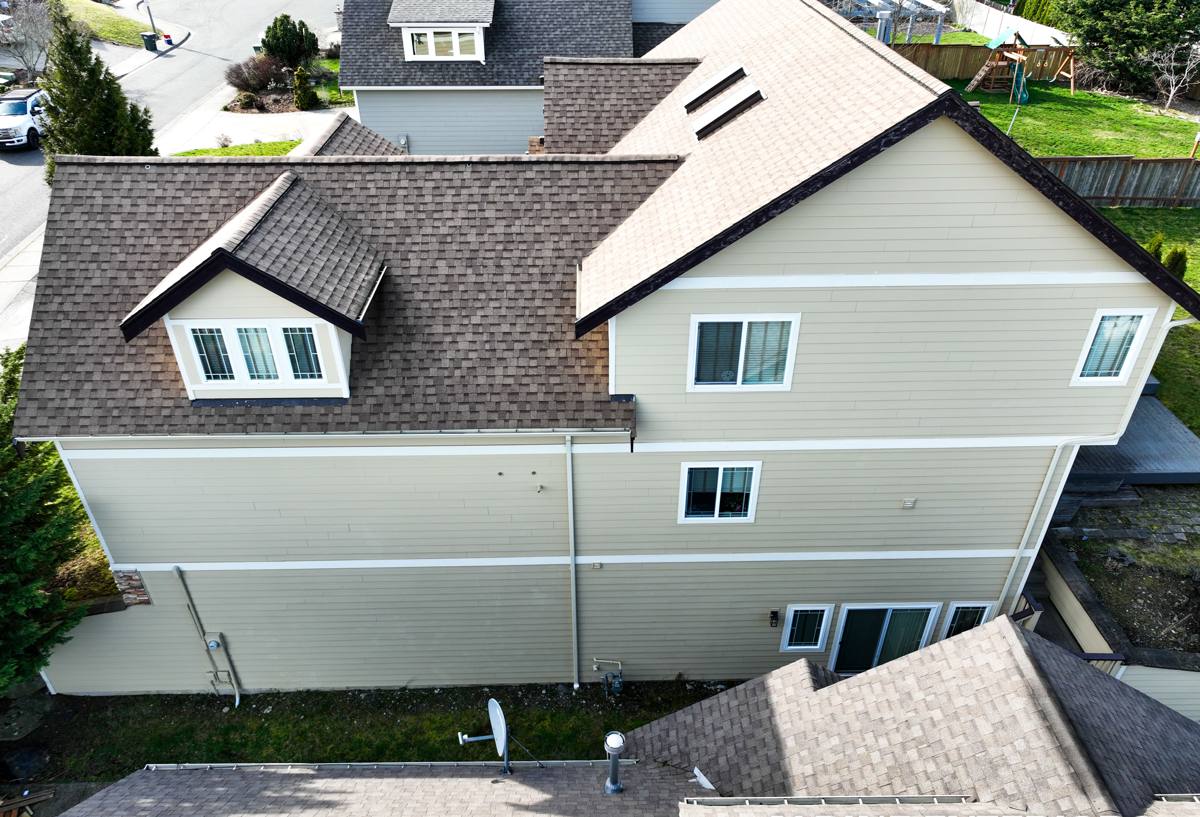
What a Correct Asphalt Shingle Roof Looks Like in Cherry Point
A roof built right for this location isn't a different product than what goes on a roof anywhere else in Whatcom County — it's the same asphalt shingle system installed with attention to the details that matter most given the exposure.
Shingle Class and Wind Rating
Look for a shingle rated for higher wind speeds and impact resistance rather than the lowest-cost economy line. The upfront difference in material cost is modest; the difference in how the roof performs during a coastal windstorm is not.
Ventilation
Balanced intake and exhaust ventilation keeps the underside of the roof deck dry and helps shingles cure and age properly. In a climate with this much ambient humidity, poor attic ventilation shows up as premature shingle wear and, in some cases, mold or rot in the attic long before the shingles themselves fail.
Flashing and Edge Details
This is where most roof leaks in this area actually start — not in the open field of shingles, but at valleys, chimney flashing, skylight curbs, and roof-to-wall transitions. Given the wind-driven rain typical here, these details need to be built to shed water that's moving sideways, not just water falling straight down.
Signs Your Cherry Point Roof Needs Attention
Most roofing problems in this area develop slowly and give warning signs well before there's an active leak. Worth checking for:
- Moss or algae streaking on north-facing or shaded roof slopes
- Granules collecting in gutters or at the base of downspouts
- Shingle tabs that look curled, cupped, or lifted at the edges
- Rust staining around vent pipes, flashing, or exposed fasteners
- Soft spots or discoloration on interior ceilings near exterior walls
- Visible daylight or water staining in the attic, especially near valleys
- Shingles that are noticeably brittle or cracking when walked on
Any one of these on its own isn't necessarily an emergency, but they're worth having looked at before the next round of coastal storms.
Our Installation Process
The process for a Cherry Point re-roof follows the same core steps as any quality asphalt shingle job, with the exposure-specific details built in rather than treated as upgrades.
- On-site inspection of the existing roof, deck condition, ventilation, and any moss or moisture damage
- Written estimate covering material spec, tear-off scope, and any deck repair that's needed
- Removal of old roofing down to the deck, with the deck inspected and repaired before anything new goes down
- Installation of a water-resistant underlayment system, with extra attention at eaves, valleys, and low-slope sections
- Corrosion-resistant flashing and fasteners installed at all transitions, penetrations, and edges
- Shingle installation to manufacturer spec, matched to the wind and exposure conditions of the site
- Ventilation check and correction if intake or exhaust airflow is inadequate
- Final walkthrough and cleanup, with photos and documentation of what was done
Repair, Recover, or Full Replacement
Not every roofing issue in Cherry Point calls for a full tear-off. The right call depends on the roof's age, how much of the deck is affected, and how much moss or moisture damage has already occurred.
| Option | Best For | Key Trade-Off |
|---|---|---|
| Spot repair | Isolated leak, storm damage, or flashing failure on an otherwise sound roof | Doesn't address underlying moss, ventilation, or age issues elsewhere on the roof |
| Full tear-off and replace | Roofs near or past their expected lifespan, or with deck damage found underneath | Higher upfront cost, but the only option that lets you fix ventilation and underlayment properly |
| Moss and debris treatment only | A roof still in good structural condition with early moss growth | Buys time but won't fix existing granule loss or lifted shingles |
We'll tell you honestly which category a roof falls into rather than defaulting to the most expensive option. A roof with a sound deck and isolated damage doesn't need to be replaced early, and a roof with widespread moisture damage under the shingles isn't a good candidate for a patch.
Shingle Choices for This Climate
Most manufacturers offer three general tiers of asphalt shingle, and the differences matter more here than in a drier, calmer climate.
| Tier | Typical Lifespan | Fit for Cherry Point |
|---|---|---|
| 3-tab / economy | 15–20 years | Lower upfront cost, but less wind resistance and generally weaker algae resistance — moss and lifting tend to show up sooner |
| Architectural / dimensional | 25–30 years | Better wind rating and thicker profile; the standard choice we recommend for most homes in this area |
| Premium / designer | 30+ years | Best wind and impact ratings, often with built-in algae-resistant granules — worth it on heavily shaded or north-facing roofs prone to moss |
Algae-resistant shingles, which use copper- or zinc-infused granules to slow moss and algae growth, are worth the modest price difference on most Cherry Point roofs given how much of the year conditions favor growth. We'll walk through the specific options and trade-offs for your roof's slope, sun exposure, and tree cover rather than pushing one line of product on every job.
Maintenance That Actually Matters Here
A well-installed roof still needs upkeep in this climate. The maintenance that makes the biggest difference for Cherry Point homes is straightforward: keeping gutters and valleys clear of needles and debris so water has somewhere to go, addressing moss growth before it spreads rather than after it's covering a whole slope, and having flashing and fastener condition checked periodically given how salt air accelerates corrosion. None of this requires walking on the roof yourself — a periodic professional check catches problems while they're still cheap to fix.
Why a Crew That Already Works Cherry Point Matters
A roofer who works across Blaine and the surrounding Whatcom County coastline sees how roofs in this specific exposure actually age — which flashing details fail first, which slopes hold moss, which fastener and metal specs hold up and which corrode early. That's different knowledge than general roofing experience, and it shows up in fewer callbacks and a roof that's built for the conditions it will actually face rather than a generic install. We're not guessing at how salt air and driving rain treat a roof here — we see it on every job.
If you're dealing with moss, a suspected leak, or a roof that's simply getting old, we're happy to come take a look. The estimate is free, there's no pressure to sign anything on the spot, and you'll get a straight answer about whether your roof needs a repair, a partial fix, or a full replacement. Use the form below to get started.