 Blaine Siding
 Why Cherry Point Siding Wears Differently Than Siding Inland
Cherry Point sits right on the water along the Strait of Georgia in Whatcom County, and that waterfront position changes how siding ages compared to a house even a few miles inland. Homes here take a steady dose of salt-laden air, wind-driven rain that hits siding at an angle instead of straight down, and a long wet season that keeps north- and shade-facing walls damp for weeks at a time. Add the moss and algae that thrive in that dampness, and you get a set of conditions that stress siding in ways manufacturers' general warranty language doesn't always account for.
None of this means siding is doomed at Cherry Point. It means repairs have to be diagnosed and executed with the actual cause in mind, not just patched over. A crew that treats every repair the same way it would in a dry inland neighborhood is going to miss the underlying moisture or salt-exposure problem, and the same damage will come back within a season or two.
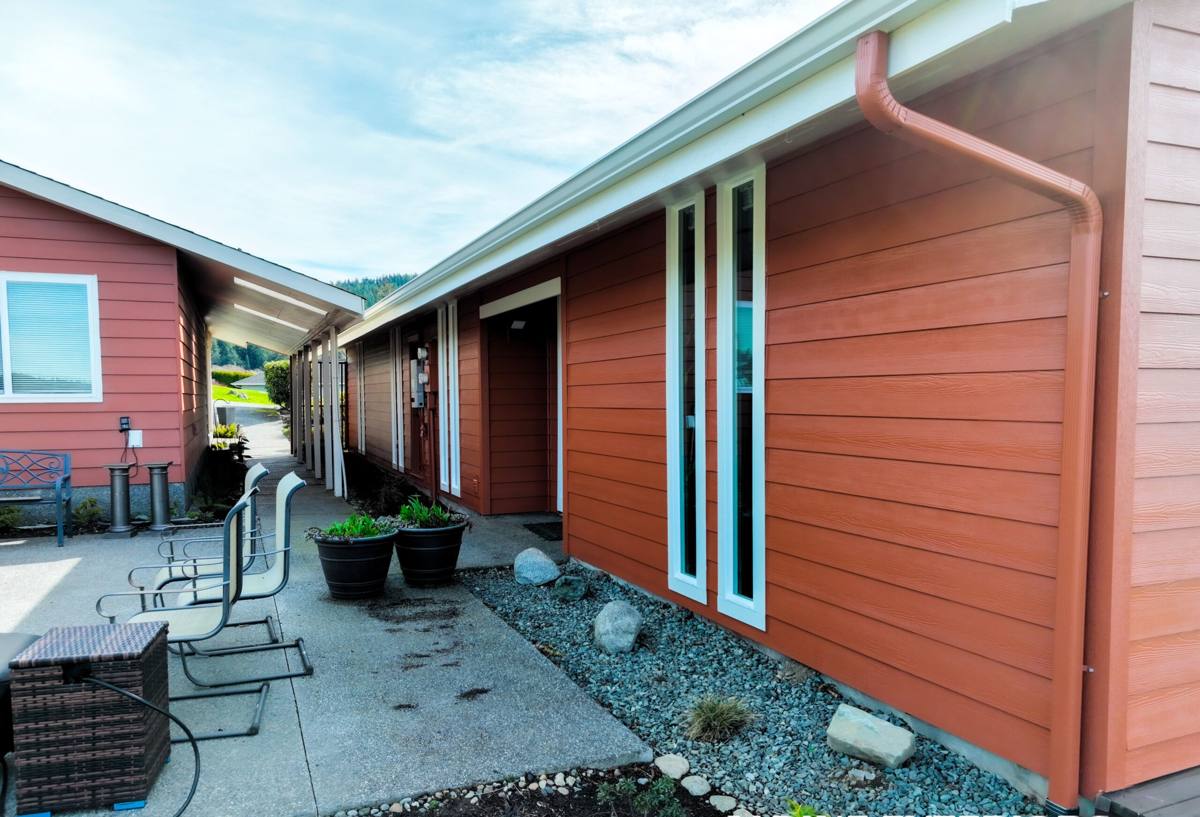
Signs Your Cherry Point Home Needs Siding Repair
Some damage is obvious. Some isn't, and it's the damage you can't see from the ground that usually causes the most expensive problems down the line. Walk your home's exterior a couple of times a year, paying particular attention to walls that face the water or stay shaded most of the day.
- Soft, spongy, or crumbling spots when you press on the siding, especially near the bottom courses and around windows
- Visible cracking, splitting, or buckled panels, particularly after a windstorm
- Persistent moss, algae, or dark streaking that keeps returning within weeks of cleaning
- Bubbling, peeling, or chalky paint that suggests moisture is trapped behind the finish
- Gaps opening up at seams, corners, or where siding meets trim, window frames, or the foundation
- Rust staining around fasteners or trim, a common sign in salt-air environments
- Warping or separation where two courses of siding overlap
- Interior clues — musty smell, damp drywall, or peeling interior paint on an exterior wall
Any one of these on its own might be minor. Several showing up on the same wall usually points to a water intrusion problem that's bigger than the visible damage suggests.
What a Correct Siding Repair Actually Involves
Diagnosing the Cause, Not Just the Symptom
Replacing a cracked or rotted section of siding without figuring out why it failed is the most common shortcut in this trade, and it's the reason homeowners end up paying for the same repair twice. A proper repair starts by pulling back the damaged section and checking what's underneath: is the house wrap or building paper intact, is flashing directing water away from the wall or trapping it against the sheathing, is there evidence of long-term moisture in the framing itself? At Cherry Point, where wind-driven rain and salt exposure are constant, that inspection step matters more than it would somewhere drier.
Matching Materials and Finish
Siding repair only looks right if the replacement section matches the existing siding in profile, exposure, and color. This is where factory-finished fiber cement has a real advantage — a matched piece cut from the correct product line and color holds its finish the same way the surrounding siding does, instead of weathering at a different rate and standing out as an obvious patch. When we're repairing sections of James Hardie siding, matching the exact HZ5 profile and ColorPlus color keeps the repair invisible over time, not just on installation day.
Water Management Comes First
Before any new siding goes back on, the water management details underneath it — flashing, house wrap laps, sealant at penetrations — get corrected. Siding is the visible layer, but it's the drainage plane behind it that actually keeps a Whatcom County home dry through a wet winter. Skipping this step is the single biggest reason siding repairs fail early on the water side of a Cherry Point property.
Repair vs. Replacement: How We Decide
Not every damaged wall needs full replacement, and not every repair is worth doing instead of replacing. We walk through the same factors on every Cherry Point job before recommending either path.
| Factor | Repair Usually Makes Sense | Replacement Usually Makes Sense |
|---|---|---|
| Extent of damage | Isolated to one or two sections or walls | Spread across multiple walls or the whole exterior |
| Underlying cause | Localized issue (impact damage, one bad flashing detail) | Systemic moisture intrusion or failed original installation |
| Siding material | Fiber cement or other durable material in otherwise good condition | Original material failing broadly (widespread rot, chronic paint failure) |
| Age of siding | Well within its expected service life | Near or past the end of its realistic lifespan |
| Color/finish match | Replacement material and finish can be closely matched | Discontinued color or product makes seamless patching impossible |
We'll always tell you honestly when a repair is the right call, even though a smaller job is a smaller invoice. A repair-first approach only backfires if it's used to avoid an honest conversation about siding that's actually at the end of its life.
Our Siding Repair Process
1. On-Site Inspection
We look at the full exterior, not just the spot you called about. Water problems at Cherry Point rarely stay contained to one panel, so we check adjacent walls, trim, and penetrations while we're there.
2. Diagnosis and Straight Talk
We explain what caused the damage, what's involved in fixing it correctly, and what it will cost — before any work starts. If we think the smarter move is replacement rather than repair, we'll say so and explain why.
3. The Repair Itself
Damaged material comes out, the sheathing and water management layer underneath get inspected and corrected as needed, and new material goes in matched to the surrounding siding's profile and finish.
4. Final Check
Before we consider the job done, we check that seams, fasteners, caulking, and paint or finish lines are clean and that water is being directed away from the wall, not just covered up.
Why We Repair with James Hardie Fiber Cement
We install James Hardie fiber cement siding exclusively, and that standard carries into how we handle repairs. When a home already has Hardie siding, we can match the exact product line and ColorPlus finish so a repaired section blends in and weathers consistently with the rest of the wall — a factory-baked finish behaves predictably in salt air and rain in a way field-applied paint doesn't. When a home has vinyl, wood, or another fiber cement brand, we'll repair it honestly and correctly, but we'll also tell you plainly if that material is a poor long-term fit for a Cherry Point exposure, and what switching to Hardie during a larger repair or re-side would actually involve. That's not a sales pitch tacked onto a repair visit — it's the same standard we hold every job to, because we don't want to hand a homeowner a repair we wouldn't stand behind in five years.
Why Hiring a Crew That Already Works Cherry Point Matters
Siding repair looks like a simple trade until you're standing in front of a wall that's been taking direct salt spray and driving rain for twenty years. A crew that mostly works drier, more sheltered neighborhoods can still do competent carpentry, but they're guessing at how a Cherry Point wall will behave once it's closed back up. We've worked enough homes along this stretch of Whatcom County to know which details — flashing laps, fastener choice, finish selection — actually hold up here, and which ones look fine on installation day and fail two winters later. That local pattern recognition is the difference between a repair that lasts and one that's really just a cosmetic fix.
Keeping Repaired Siding in Good Shape
A correct repair buys you years of protection, but Cherry Point's climate keeps working on your siding the day the job is finished. A little regular attention goes a long way toward making sure it stays that way.
- Rinse siding, especially shaded and water-facing walls, once or twice a year to clear salt residue and slow moss growth
- Keep gutters clear so overflow doesn't run down the siding face
- Trim back vegetation and tree cover that keeps walls damp and shaded
- Walk the exterior after major windstorms to catch new damage early
- Address small cracks or gaps promptly, before water gets behind the siding
- Have a full exterior inspection every couple of years, even if nothing looks obviously wrong
If you're seeing damage, staining, or recurring moss on your Cherry Point home's siding, we're happy to take a look and give you a straight answer about what it needs — repair, partial replacement, or just a maintenance fix. Reach out for a free, no-pressure estimate using the form below.