 Blaine Siding
 Siding Repair Is a Different Job Than a Re-Side
Most of the repair calls we get in Custer start the same way: a homeowner notices one bad spot on a wall — a soft patch, a stain, a section that looks off-color — and wants to know if that's a quick fix or the start of something bigger. It's a fair question, and the honest answer is that it depends on what's actually happening behind the surface, not just what's visible from the driveway. Siding repair isn't a smaller version of a full re-side. It's its own discipline: diagnosing what failed, why it failed in this specific spot, and whether a targeted fix will actually hold up under the same conditions that caused the damage in the first place.
We work Custer regularly out of our base near Blaine, and we see the same handful of failure patterns repeat across the area's homes. That repetition is useful. It means we're rarely guessing at what's going on under a damaged section of wall — we've usually already pulled a dozen similar ones off other Custer houses and know what tends to be sitting behind them.
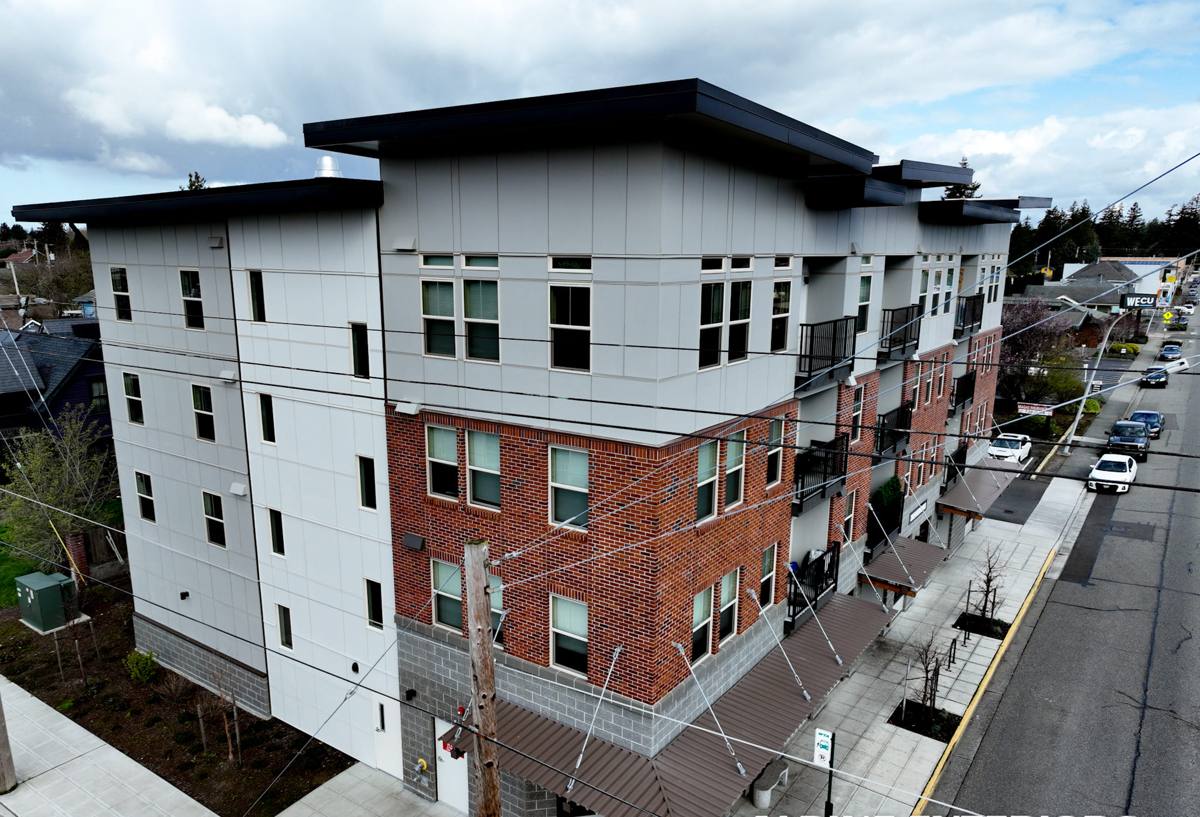
What Custer's Climate Does to Siding Over Time
Custer sits close enough to the water and the Canadian border that its houses take a steadier, harder version of the weather than towns set further inland in Whatcom County. Three conditions in particular drive most of the repair work we do here.
Salt Air
Salt-laden air moves inland off the water and settles on everything, not just waterfront properties. It accelerates corrosion on fasteners, flashing, and any exposed metal trim, and it breaks down lower-grade paint and caulk faster than a dry inland climate would. A lot of the fastener staining and corroded trim we find during repair calls traces back to this steady salt exposure rather than any single storm event.
Driving Rain
Rain here doesn't fall straight down for much of the year — wind off the water pushes it sideways into lap joints, trim seams, and anywhere a gap has opened up. That sideways load finds weaknesses a light, straight-down rain never would, which is why repair issues in Custer often show up first at butt joints, corner boards, and window and door trim rather than in the middle of an open wall.
A Long Moss Season
Mild temperatures and near-constant moisture give moss and mildew a growing season that runs most of the year on shaded and north-facing walls. Moss holds water against a surface far longer than bare siding would dry on its own, and that trapped moisture is one of the more common quiet causes behind soft or delaminating siding we find once we start pulling boards.
Common Repair Issues We See in Custer
- Soft or swollen board edges — usually at the bottom courses closest to grade, decks, or roof-to-wall transitions where water sits longest.
- Cracked or missing caulk at joints and trim — once a sealed joint opens up, wind-driven rain has a direct path behind the siding.
- Rust staining or corroded fasteners — more common here than in inland towns, and a sign the original fastener spec may not have matched the exposure.
- Moss and mildew buildup on shaded walls — cosmetic at first, but it traps moisture against the surface if left alone.
- Damaged corner boards and trim — often from impact, age, or the same moisture cycling that affects the siding field.
- Color mismatch from past patch jobs — a common problem when repairs were done with unmatched material or field-applied paint instead of a factory finish.
Individually, most of these look minor. The pattern that matters is whether they're isolated to one spot or showing up in the same form across multiple walls — that spread is usually the difference between a straightforward repair and a job that needs a wider look.
Repair vs. Replace: Making the Right Call
Not every damaged section needs a full re-side, and not every damaged section should just be patched and left alone. The honest answer sits somewhere in between, and it depends on a few concrete factors we check on site rather than guess at over the phone.
| Factor | Favors Repair | Favors Full Replacement |
|---|---|---|
| Extent of damage | Isolated to one or two sections or walls | Recurring across multiple walls or the whole exterior |
| Underlying sheathing | Dry, sound wood behind the damaged boards | Soft, rotted, or water-stained sheathing found on inspection |
| Age of existing siding | Still within its expected service life | Already near or past the end of its expected life |
| Material match | Matching Hardie material or profile is available | Original product discontinued or a poor match for the climate |
| Cause of failure | A specific, fixable cause (one bad joint, one impact spot) | A systemic cause (wrong original fastener spec, missing rain screen) |
We'll tell you straight when a repair is the right call and when it isn't. There's no reason to sell a homeowner a full re-side for damage that's genuinely isolated, and there's no reason to patch a wall when the underlying problem is going to keep resurfacing every year or two.
Working on Hardie Siding vs. Other Materials
We install James Hardie fiber cement exclusively, and repairing existing Hardie siding is straightforward work for us — matching board profiles and ColorPlus finish colors is part of what we do routinely. If a Custer home has vinyl, LP SmartSide, cedar, or another product on it, we'll still assess the damage honestly and repair what can reasonably be repaired. But if the damage is tied to a characteristic weakness of that material — a wood-based core that's swelled repeatedly, or vinyl that's cracked from age and UV exposure — we'll say so plainly, and that's usually the point where a conversation about replacing with fiber cement makes more sense than repeatedly patching a product that's working against the climate rather than with it.
What a Correct Repair Job Involves
A repair that just covers the visible damage without addressing what caused it tends to fail again in the same spot. We treat every repair call as a small diagnostic project first, then a fix.
- Confirm the cause before cutting anything out. A damaged board is a symptom; we want to know if it's a one-time impact, a chronic moisture path, or a fastener or flashing problem before we decide the scope.
- Check the sheathing behind the damage. If water has been getting behind the siding for a while, the wall sheathing underneath may be soft or stained, and that has to be addressed before any new siding goes back up — otherwise the repair is cosmetic only.
- Restore flashing and drainage, not just the board. If a flashing detail or the drainage plane behind the siding was the actual failure point, replacing the board without fixing that just resets the clock on the same problem.
- Match material and finish. For Hardie repairs, that means the correct board profile and, where possible, a ColorPlus match rather than a field-painted patch that will visibly age at a different rate than the surrounding siding.
- Fasten and seal to spec. Correct fastener type and placement, and properly sealed joints and trim transitions, matter as much on a repair as they do on a full installation — this is exactly the detail that failed the first time on a lot of the repair calls we take.
How Our Repair Process Works
- On-site inspection. We look at the damaged area and the surrounding wall, check for moisture behind the siding where we can, and get a sense of whether the issue is isolated or part of a wider pattern.
- Honest scope and estimate. We tell you what we found, what we recommend, and why — including if we think a repair isn't the right long-term answer.
- Material sourcing and matching. For Hardie repairs, we source the correct profile and finish match before scheduling the work so there's no color or texture surprise once it's installed.
- The repair itself. Remove the damaged material, address any underlying sheathing or flashing issue, install and finish the new siding to spec.
- Final check and cleanup. We walk the repair with you before we consider the job done, and we don't leave debris or old material behind.
Repair Cost Factors
| Cost Driver | Why It Matters |
|---|---|
| Size of the damaged area | A single board is a different job than an entire wall section |
| Condition of underlying sheathing | Rotted sheathing adds carpentry work beyond the siding itself |
| Material match availability | Discontinued colors or profiles can add sourcing time and cost |
| Access and height | Second-story or hard-to-reach sections take more setup time |
| Root-cause fixes | Flashing or drainage corrections add scope but prevent repeat failures |
These are general drivers, not a quote — every Custer property sits at a slightly different distance from the water and under different tree cover, and the only way to give you a real number is to look at the actual damage in person.
Signs a Custer Home Needs Siding Repair
- Soft or spongy siding when pressed, especially near the bottom of the wall
- Visible cracking, gaps, or missing caulk at joints and trim
- Rust streaks or visibly corroded fasteners
- Moss or dark staining that returns quickly after cleaning
- Peeling or mismatched paint from a prior patch job
- Warping, bowing, or separation at corner boards or trim
- Interior signs like staining or a musty smell near an exterior wall
Why a Local Crew Matters for Repair Work
Repair work rewards local experience more than a full installation does, because so much of it comes down to correctly reading what a specific failure pattern means before you cut into a wall. A crew that works Custer and the surrounding Blaine area regularly has already seen how salt air, wind-driven rain, and a long moss season show up on real houses here — which walls fail first, which details were commonly missed on older installs in the area, and what a quick cosmetic fix will and won't actually solve. That local pattern recognition is the difference between a repair that holds for years and one that quietly reopens the same problem a season or two later.
If you've got a damaged section of siding in Custer, or you're not sure whether what you're looking at is a simple fix or a sign of something bigger, we're glad to take a look. Reach out using the form below to schedule a free, no-pressure estimate — we'll give you a straight answer either way.