 Blaine Siding
 Siding Replacement in Custer: A Coastal Whatcom County Problem
Custer sits in a stretch of Whatcom County where weather doesn't ease up for long. Homes here take a steady combination of salt-laden air blowing in off the water, driving rain that hits siding sideways during winter storms, and a moss season that can stretch from late fall through spring. Individually, none of these are unusual for the Pacific Northwest. Together, year after year, they're exactly the conditions that wear out the wrong siding material faster than a homeowner expects.
If you're researching siding replacement for a Custer property, the goal of this page is to walk through what the climate actually does to exterior walls out here, what a correct replacement job involves, and why we only install one product system on homes in this area.
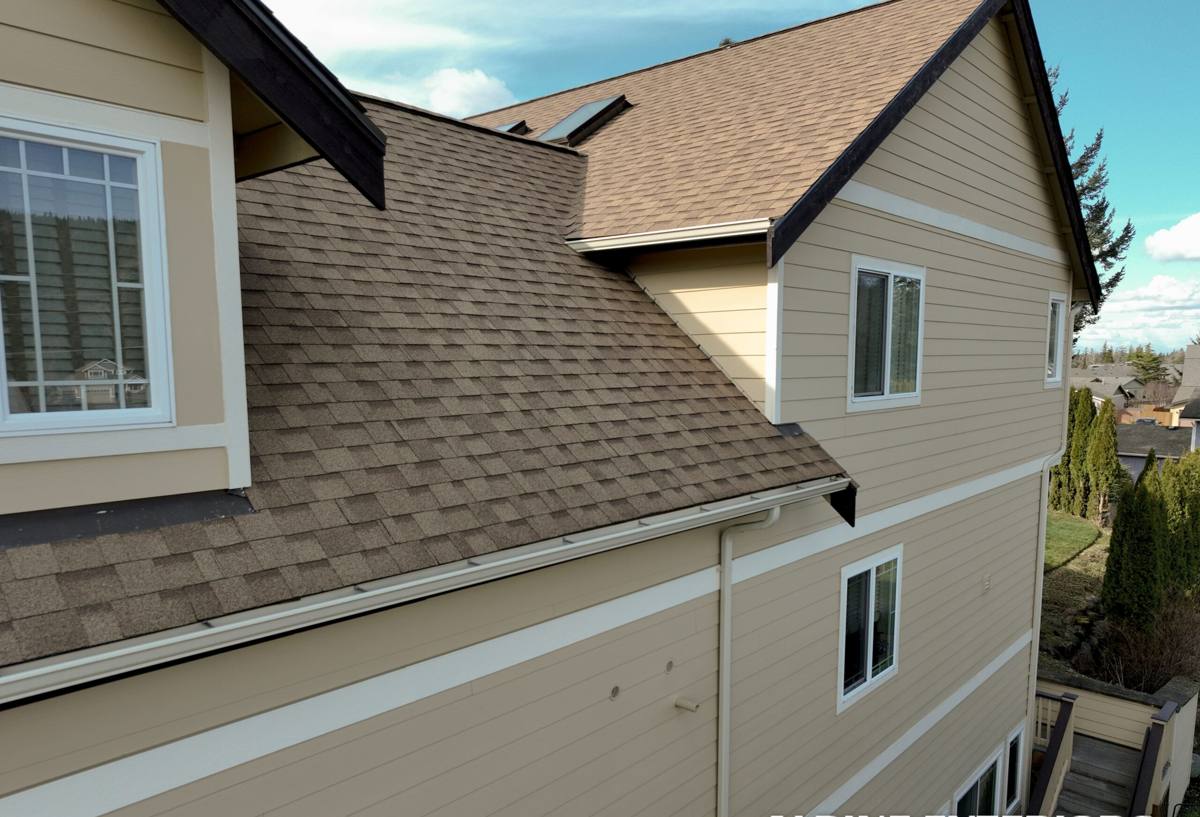
What Custer's Climate Does to Siding Over Time
Salt Air and Corrosion
Proximity to the water means airborne salt settles on every exterior surface, including siding, trim, and fasteners. Salt is hygroscopic — it pulls moisture out of the air and holds it against whatever surface it's sitting on. On siding materials that aren't built to handle that, this shows up as premature fading, chalking finishes, and in some cases corrosion at fastener heads or metal flashing details.
Driving Rain
Rain that falls straight down is a much easier problem to manage than rain that's being pushed sideways by wind off the water. Wind-driven rain forces water into laps, seams, and butt joints that would otherwise shed water passively. This is where installation detail matters as much as the siding product itself — housewrap laps, flashing, and caulk joints all have to be sequenced correctly, because gravity alone won't keep water out.
Moss Season
A long moss season means extended periods where siding stays damp, shaded, and cool — ideal conditions for moss, algae, and mildew to take hold, especially on north-facing walls and anywhere tree cover blocks sun and airflow. Moss doesn't just look bad; it holds moisture against the siding surface for extended periods, which is a problem for any material that isn't dimensionally stable or resistant to moisture absorption.
Signs a Custer Home Needs Siding Replacement
- Visible warping, buckling, or separation at panel seams
- Soft spots or a "give" when you press on the siding, especially near the bottom courses
- Persistent moss or algae growth that returns within weeks of cleaning
- Paint that's failing faster than a normal repaint cycle would suggest
- Rust staining running down from nail heads or metal trim
- Visible gaps at corners, window trim, or butt joints
- Rising energy bills that point to a compromised weather barrier behind the siding
Any one of these on its own might just need a repair. Several of them together, especially on a home more than 20-25 years old, usually means the siding system itself has reached the end of its useful life and patching individual boards won't solve the underlying moisture problem.
Why We Only Install James Hardie Fiber Cement in This Area
For a climate that combines salt exposure, wind-driven rain, and extended damp periods, the siding material matters more than most homeowners realize when they start shopping. We standardized on James Hardie fiber cement for every siding replacement we do, including in Custer, for a few specific reasons tied directly to what this climate does to a home over decades, not just years.
Non-Combustible Material
James Hardie siding is fiber cement, which is non-combustible. That's a meaningful consideration anywhere in Washington given wildfire risk in dry summer months, and it's simply a safer long-term material choice regardless of proximity to the water.
Engineered for This Climate
Hardie's HZ5 product line is engineered specifically for climates with significant moisture exposure and freeze-thaw cycling, which describes Whatcom County's coastal weather well. The material is dimensionally stable, meaning it doesn't swell, warp, or rot the way wood-based or wood-adjacent siding products can when they take on repeated moisture.
Factory-Applied ColorPlus Finish
Rather than relying on a job-site paint job, Hardie's ColorPlus finish is baked on in a controlled factory environment and backed by its own finish warranty. In a salt-air environment where standard paint jobs tend to chalk and fade faster, a factory finish designed to hold color longer is a real practical advantage, not just a marketing point.
Strong, Transferable Warranty
Hardie backs its siding with a substantial product warranty that's transferable to a new owner if the home sells. That matters to homeowners thinking about resale value, and it reflects the manufacturer's confidence in the product's long-term performance when installed correctly.
We don't install vinyl, LP SmartSide, Cemplank, Allura, primed spruce, or cedar siding. Each of those products has legitimate uses and reasonable advocates. Our decision to standardize on Hardie isn't a claim that those materials don't work anywhere — it's that after years of servicing homes in this specific climate, Hardie is the material we're willing to stand behind with our own installation warranty.
What a Correct Siding Replacement Involves
Swapping old siding for new isn't just a cosmetic swap. A correct replacement rebuilds the entire weather barrier system behind the visible siding.
Tear-Off and Inspection
Old siding comes off first, which is also the point where hidden damage gets found — rotten sheathing, compromised framing, or old moisture trapped behind the wall. This step matters most in a climate like Custer's, where water intrusion behind old siding can go unnoticed for years.
Weather-Resistive Barrier
A new housewrap or weather-resistive barrier goes on with properly lapped and taped seams, oriented to shed wind-driven rain rather than trap it. This is the layer doing the real waterproofing work — the siding itself is the second line of defense, not the first.
Flashing at Every Penetration
Windows, doors, vents, and any other wall penetration need correctly integrated flashing so water is directed out and away rather than behind the barrier. This is one of the most common places poor installations fail, regardless of what siding product sits on top.
Hardie Panel Installation to Manufacturer Spec
James Hardie publishes specific installation requirements around fastener spacing, clearances from grade and roof lines, caulking, and painting cut edges. Following spec isn't optional detail work — it's what keeps the manufacturer's warranty valid and what determines whether the siding actually performs the way it's engineered to over the next several decades.
Trim, Caulk, and Final Detailing
Corner trim, J-channel, and caulk joints get finished last. In a driving-rain climate, these small details are frequently where water finds its way in if they're rushed or done inconsistently.
Comparing Siding Options for a Coastal Whatcom County Home
| Factor | Vinyl | Wood / Cedar | James Hardie Fiber Cement |
|---|---|---|---|
| Moisture absorption | Doesn't absorb, but seams can trap water behind it | Absorbs moisture, prone to rot without diligent maintenance | Engineered for moisture resistance, dimensionally stable |
| Salt air exposure | Can become brittle and fade over time | Finish breaks down faster, exposing wood to moisture | Factory finish holds color longer in salt exposure |
| Fire resistance | Combustible | Combustible | Non-combustible |
| Maintenance | Low, but cracks and fades without repair options | High — regular refinishing needed | Low — periodic caulk and paint touch-up only |
| Warranty | Varies widely by manufacturer | Typically none beyond installer workmanship | Substantial, transferable manufacturer warranty |
Cost Factors for Siding Replacement in Custer
Every home is different, but a few factors consistently move the price of a siding replacement in this area:
- Total square footage of exterior wall area
- Number of stories and roof pitch, which affect access and labor
- Condition of the sheathing underneath the old siding — hidden rot adds cost once it's found
- Number of windows, doors, and trim details that need flashing and finishing
- Whether the home needs the current siding fully removed versus a simpler tear-off scope
- Product line and profile chosen within the Hardie system (lap width, shingle style, panel style)
We won't quote a number without seeing the home, but we can walk through these factors on-site and give you a clear, itemized estimate before any work starts.
Why a Crew That Already Works Custer Matters
A contractor who regularly works homes in Custer and the surrounding Blaine area already understands how this specific stretch of coastline behaves — where wind-driven rain hits hardest, which orientations grow moss fastest, and how far salt exposure extends inland from the water. That local pattern recognition shows up in small decisions during installation: extra attention to flashing on the windward side of a home, or flagging a moss-prone north wall for closer inspection before the old siding comes off. It's the kind of judgment that comes from repetition in this exact climate, not from a general installation manual.
Get an Honest Look at Your Siding
If you're weighing a siding replacement for a home in Custer, we're happy to take a look, walk you through what we find, and explain exactly what a correct James Hardie installation would involve for your specific house. There's no pressure and no cost for the estimate — just a straightforward assessment from a crew that works this climate regularly.