 Blaine Siding
 Board and batten siding has become one of the most requested exterior looks in Whatcom County, and homes in the Dakota Creek area near Blaine are a good match for it — clean vertical lines, strong shadow lines from the battens, and a look that reads as both farmhouse and modern coastal. But this style lives or dies on installation quality. Vertical panel siding has more seams, more fastening points, and more opportunities for water to find its way behind the cladding than horizontal lap siding does. In a climate that delivers salt air, driving rain off the water, and a long moss season, those details matter more here than almost anywhere else in the state.
What Blaine's Marine Climate Does to Vertical Siding Over Time
Blaine sits at the edge of Whatcom County where the land meets saltwater, and that proximity shapes what siding has to withstand year-round. Board and batten's vertical grooves and batten strips create more surface detail than flat lap siding — which looks great, but every one of those details is a place where moisture, salt, and organic growth can collect if the material and installation aren't built for it.
Salt Air and Metal Fasteners
Homes near the water pick up airborne salt that settles on exterior surfaces and accelerates corrosion on exposed metal — nail heads, flashing, and trim fasteners included. Untreated or undersized fasteners can streak, rust, and eventually loosen, which is a bigger problem on board and batten than lap siding because the battens themselves are held on with additional fastening points. Corrosion-resistant fasteners rated for coastal exposure aren't optional here — they're the baseline.
Wind-Driven Rain and Vertical Seams
Storms off the water don't just drop rain straight down — they drive it sideways into vertical seams and butt joints. Board and batten relies on the battens overlapping the panel joints to shed that water, which means the batten spacing, fastening pattern, and the water-resistive barrier underneath all have to work together. Get the lap and gap wrong, or skip a proper drainage plane, and wind-driven rain will find the one seam that wasn't sealed correctly — often not until it's already done damage behind the siding.
Moss, Shade, and Trapped Moisture
Whatcom County's long wet season and heavy tree cover mean moss and algae growth are a fact of life for exterior surfaces, not a rare problem. Board and batten's raised battens create small ledges and shadow lines where moisture lingers longer than it does on a flat surface, especially on north-facing walls or sections shaded by trees. Siding that doesn't handle sustained moisture well will show moss and staining faster in these conditions than it would in a drier part of the state.
What Correct Board & Batten Installation Actually Requires
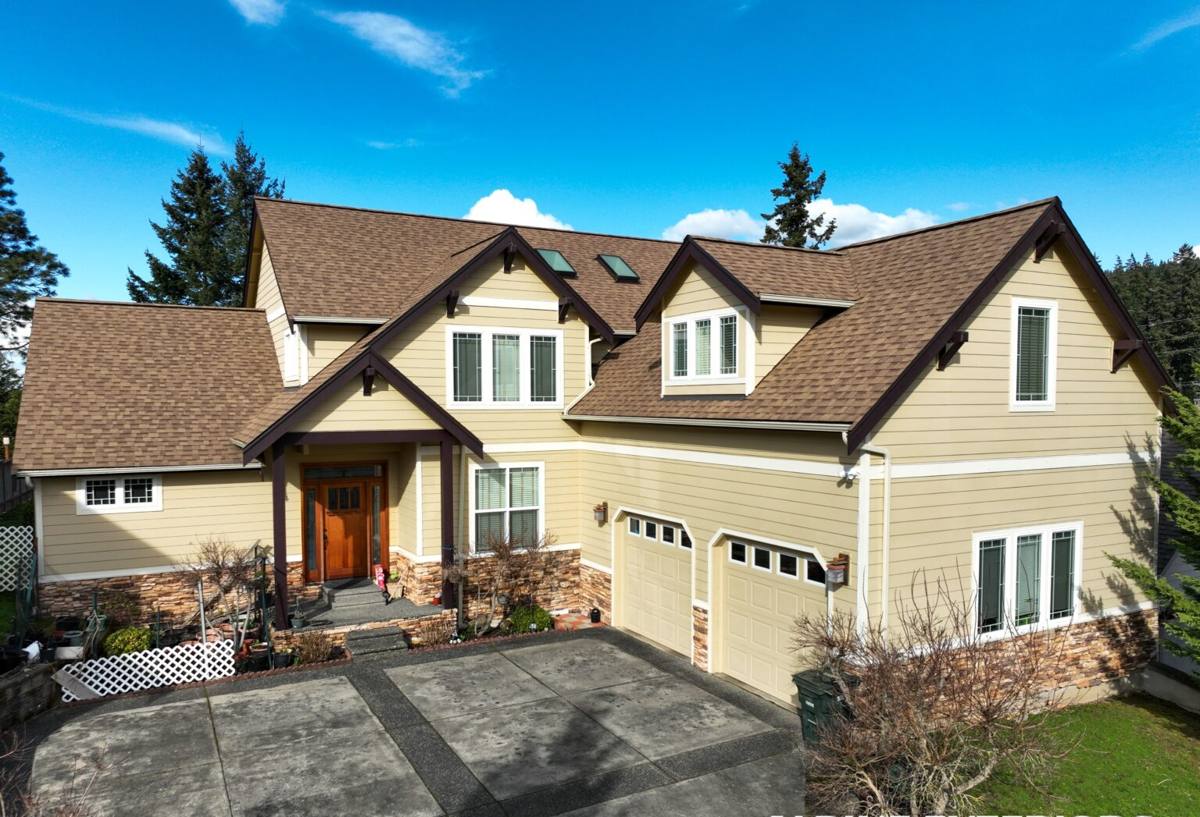
Board and batten looks simple from the street — vertical panels with strips covering the seams — but a correct installation has several layers most homeowners never see. Behind the visible siding there needs to be a properly lapped water-resistive barrier, correctly flashed window and door openings, and fastening that follows the manufacturer's engineering, not just what looks straight from the ground. On a home near Dakota Creek, where wind-driven rain and salt air are part of the deal, cutting any of these corners shows up faster than it would in a milder climate.
| Detail | Correct Approach | Common Shortcut |
|---|---|---|
| Water-resistive barrier | Continuous, properly lapped house wrap with all seams taped and integrated with flashing | Wrap installed but not properly lapped or tied into flashing at penetrations |
| Panel fastening | Fastened to manufacturer spec, corrosion-resistant fasteners, correct penetration depth | Fasteners driven too shallow, too deep, or spaced too far apart |
| Batten placement | Battens spaced and fastened to fully cover panel joints with room for material movement | Battens tacked on for appearance without covering the drainage path underneath |
| Window and door flashing | Integrated pan and head flashing tied into the barrier system | Caulk used as a substitute for proper flashing |
| Bottom edge and clearance | Siding held above grade, decks, and roof lines with a drainage gap | Siding installed tight to grade or hard surfaces, trapping moisture |
Timing matters too. In a climate where wet stretches can run for days, we plan tear-off and re-wrap in sections so bare sheathing isn't left exposed to weather overnight, and we won't install over sheathing that's still reading damp from the last storm.
Why We Install James Hardie for This Style, Not Wood or Engineered Wood
Board and batten can be built out of several materials, and the material choice matters more for this style than almost any other, because of how much surface area and how many seams are exposed to the weather. We install James Hardie fiber cement exclusively — for board and batten and every other style — because it's engineered for exactly the conditions Blaine sees: moisture cycling, salt exposure, and long stretches of damp weather. We don't install cedar, primed spruce, vinyl, or engineered wood board and batten, and that's a deliberate standard, not a limitation of what we're capable of installing.
| Material | How It Holds Up Near Dakota Creek | Long-Term Trade-Off |
|---|---|---|
| James Hardie fiber cement | Non-combustible, dimensionally stable, factory ColorPlus finish resists fading without a repainting cycle | Requires installation to spec; heavier material to work with correctly |
| Cedar or primed spruce | Traditional look, but wood panels and battens absorb moisture, swell, and feed moss and mildew in wet climates | Ongoing repainting, caulking, and moisture maintenance; shorter service life near the water |
| Engineered wood (e.g. LP SmartSide) | Resin-treated to resist some moisture, lighter to install | Cut-end and edge swelling risk if the factory seal is compromised over time |
| Vinyl board and batten | Low maintenance, lower material cost | Can warp or fade with sun and temperature swings; battens are often a decorative overlay, not a true drainage detail |
For this style, we typically use James Hardie vertical panel siding paired with Hardie trim boards as the battens, in the HZ5 formulation engineered for the wetter, cooler conditions of the Pacific Northwest. The ColorPlus factory finish is baked on under controlled conditions rather than field-painted, which matters most on a profile like board and batten where there's more exposed trim edge to hold color evenly over time.
Our Process for Dakota Creek Board & Batten Projects
Because we already work in and around Blaine, we're not learning this climate on your home. Our process for board and batten projects here looks like this:
- On-site assessment of the existing wall assembly, moisture readings anywhere there's a sign of past water intrusion, and a look at sun, shade, and wind exposure specific to that lot.
- Removal of old siding down to the sheathing so the water-resistive barrier and flashing can be inspected and corrected, not just covered over with new material.
- Installation of a continuous, properly lapped barrier with flashing integrated at every window, door, and penetration before any siding goes up.
- Panel and batten installation to James Hardie's fastening specification, using corrosion-resistant fasteners and correct clearance at grade, roof lines, and decks.
- Final walk-through covering seams, caulking points, and touch-up needs specific to the ColorPlus finish.
Maintenance Board & Batten Owners Near Dakota Creek Should Actually Do
Correct installation does most of the work, but board and batten siding in this climate still benefits from a short annual routine:
- Rinse siding with a garden hose once or twice a year to clear salt residue and airborne grime, especially on sides facing the water or prevailing wind
- Check battens and panel edges for early moss or algae growth, particularly on shaded, north-facing walls
- Inspect caulking around windows, doors, and trim for cracking or separation, and re-caulk before the wet season sets in
- Keep gutters clear so overflow doesn't run down and pool against siding seams
- Trim back vegetation and tree limbs that keep sections of the wall shaded and damp longer than the rest of the house
- Watch fastener heads and metal trim for early rust staining and address it before it spreads
Cost Factors That Affect Board & Batten Pricing Here
Board and batten typically costs more than horizontal lap siding on the same wall, mainly because of labor — more pieces, more cuts, and more fastening points per square foot. A few things tend to move the number on a Dakota Creek-area project specifically:
| Factor | Why It Affects Cost |
|---|---|
| Wall condition underneath | Sheathing repair or rot from past water intrusion adds work before new siding can go on |
| Wall height and complexity | Multiple stories, dormers, and cut-ins around windows increase labor and material waste |
| Exposure to wind and water | Sides facing the water or prevailing storms may need extra flashing and fastening attention |
| Trim and batten detail level | Wider trim boards, corner detailing, and batten spacing choices change both material and labor |
| Access | Tight lot lines, decks, or landscaping close to the house slow down tear-off and install |
We give a firm, written estimate after walking the property — not a phone quote — because board and batten pricing depends too much on what's actually happening behind your existing siding to guess accurately from a description alone.
Why Hiring a Crew That Already Works Dakota Creek Matters
Board and batten forgives fewer mistakes than lap siding in a wet, salt-exposed climate, which makes installation experience the biggest variable in how the job performs ten years out. A crew that already works the Blaine area knows which wall orientations take the worst of the weather, how the wet season affects install timing and drying, what local permitting expects, and what correct flashing and fastening actually looks like under real coastal conditions — not just on paper. That local track record is worth more than a lower bid from a crew unfamiliar with what this specific stretch of Whatcom County does to exterior siding over time.
If you're considering board and batten siding for a home near Dakota Creek, we're glad to walk the property, take a look at what's happening behind your current siding, and give you a straightforward, no-pressure estimate — use the form below to get started.